
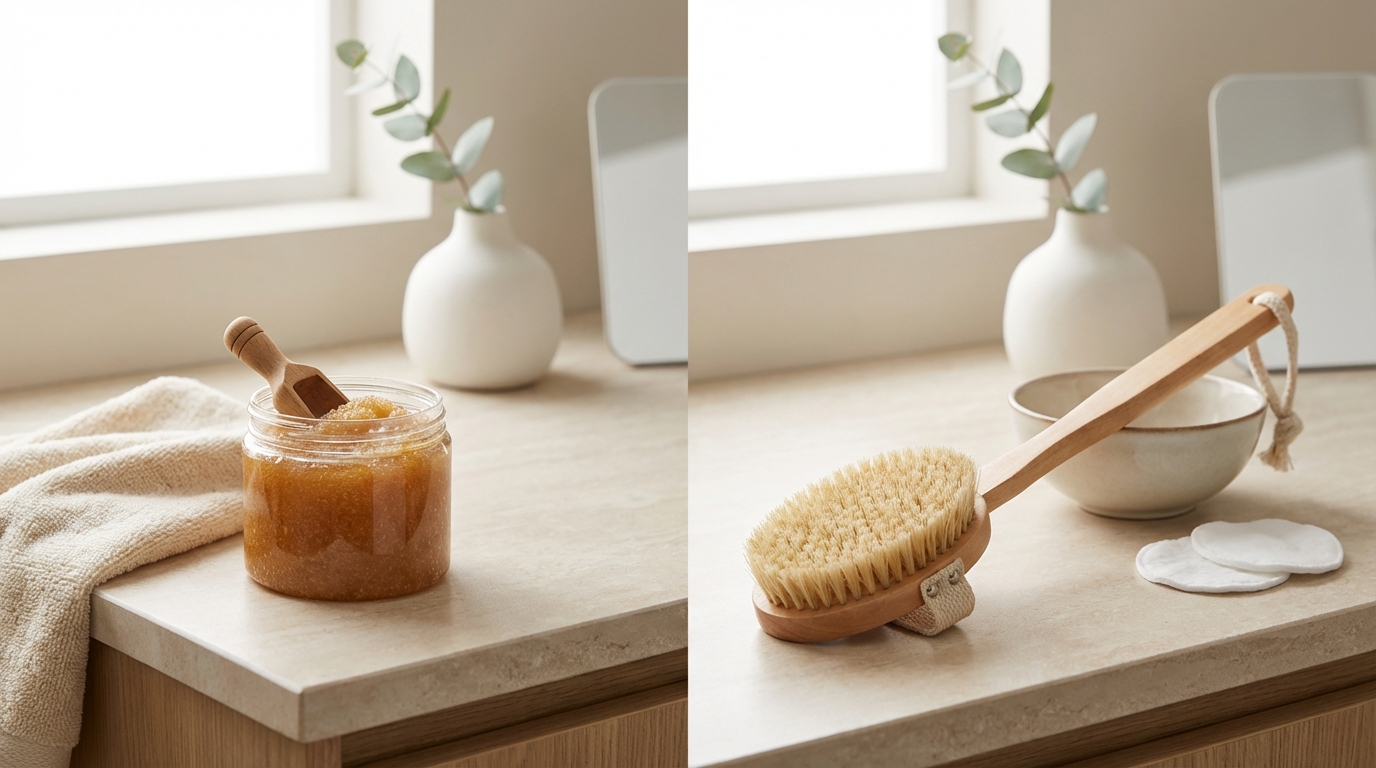
Quick Verdict: Best for Different Needs
- Best for busy routines: Body scrub — use it in the shower without adding extra steps
- Best for budget-conscious care: Dry brushing — one-time purchase, no refills needed
- Best for sensitive skin: Body scrub with gentle ingredients — easier to control pressure and rinse immediately
- Best for circulation and energy boost: Dry brushing — the firm bristles stimulate blood flow more noticeably
You’ve probably seen both methods praised online as the secret to smooth, glowing skin. But when it comes to body scrub vs. dry brushing, which one actually fits into a normal person’s life? Not everyone has twenty minutes for a full-body ritual before work. And not everyone wants to buy yet another product that ends up collecting dust in the bathroom cabinet.
This post breaks down what each method does, how much time and money they require, and which scenarios suit each one. By the end, you’ll know which approach matches your skin type, your schedule, and your budget — no guesswork involved.
What Each Method Actually Does
Body Scrub Basics
A body scrub is a product (cream, gel, or paste) that contains physical exfoliants — usually sugar, salt, or finely ground seeds. You apply it to damp skin, massage in circular motions, and rinse off. The granules slough away dead skin cells while oils or moisturizers in the formula leave skin softer.
Most people use a body scrub once or twice a week. It works well in the shower since everything rinses away, and you’re already wet. If you’re someone who forgets extra skincare steps, this one slots in without much fuss.
Dry Brushing Basics
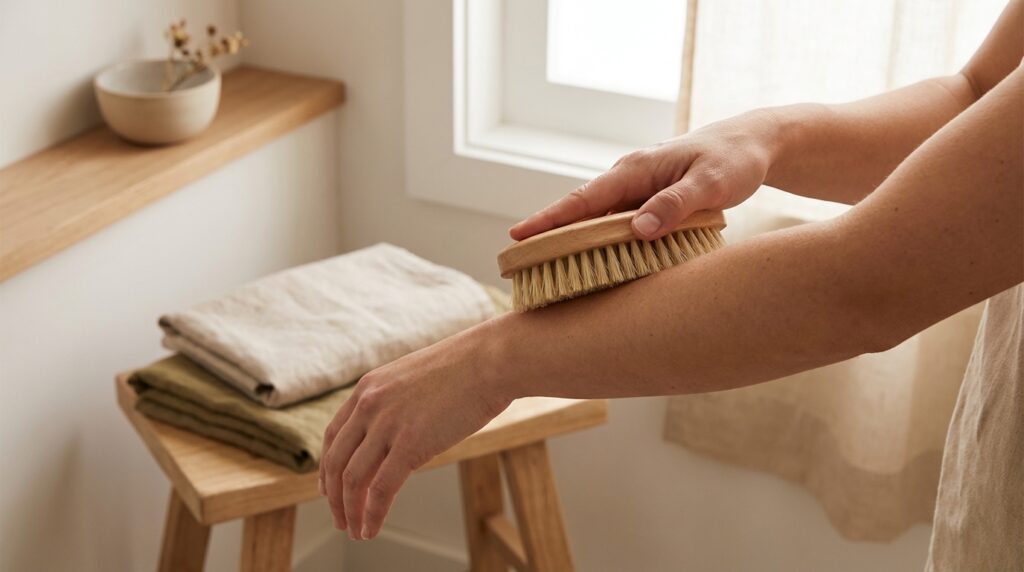
Dry brushing uses a firm-bristled brush (usually natural fibers) on completely dry skin before you shower. You brush in long strokes toward your heart, starting from your feet and working upward. The goal is physical exfoliation plus stimulating circulation and the lymphatic system.
It’s done on dry skin because wet bristles soften and lose their exfoliating effect. Most people dry brush a few times a week, though some do it daily. The whole process takes about five minutes once you get the hang of it.
Body Scrub: Pros and Cons
What Works Well
- Convenient: Fits into your existing shower routine with no extra time block
- Moisturizing options: Many scrubs contain oils that leave skin soft without needing lotion immediately after
- Gentler control: You can adjust pressure easily, and the product rinses off if it feels too harsh
- Variety: Available in different formulas for sensitive, dry, or oily skin types
- Pleasant experience: Often scented, which can make shower time feel more luxurious
What Doesn’t
- Ongoing cost: You’ll need to repurchase every few weeks or months depending on use
- Messy in the tub: Oil-based scrubs can leave your shower floor slippery — a safety issue worth noting
- Ingredient concerns: Some scrubs contain microplastics or overly abrasive particles that can irritate skin
- Easy to overdo: Because it feels good, people sometimes scrub too hard or too often, leading to irritation
A common mistake with body scrubs is using them on freshly shaved or waxed skin. The granules can irritate open pores and cause redness or bumps. Wait at least 24 hours after hair removal before exfoliating.
Dry Brushing: Pros and Cons
What Works Well
- One-time purchase: A quality brush lasts for years with proper care — no refills needed
- Invigorating: The brushing action wakes you up and leaves skin feeling tingly and alive
- No product buildup: Nothing to rinse off, no residue on your skin or shower
- Circulation boost: Many people notice their skin looks temporarily flushed and more even-toned
- Simple routine: No ingredients to research, no formulas to compare
What Doesn’t
- Learning curve: It takes a few sessions to figure out the right pressure and stroke pattern
- Not for everyone’s skin: If you have eczema, psoriasis, or very sensitive skin, the bristles can cause irritation or flare-ups
- Requires extra time: You need to do it before your shower, which adds a step to your routine
- No moisturizing effect: You’ll still need to apply lotion afterward, especially in dry climates
- Brush maintenance: Needs regular cleaning to prevent bacteria buildup
If you’re new to dry brushing and it feels scratchy or uncomfortable, you might be pressing too hard. The strokes should be firm but not painful. Think of it as sweeping, not scrubbing. Redness that fades within an hour is normal; redness that lasts longer or itches means you need a lighter touch or softer bristles.
The Practical Breakdown: Time, Cost, and Effort
Time Commitment
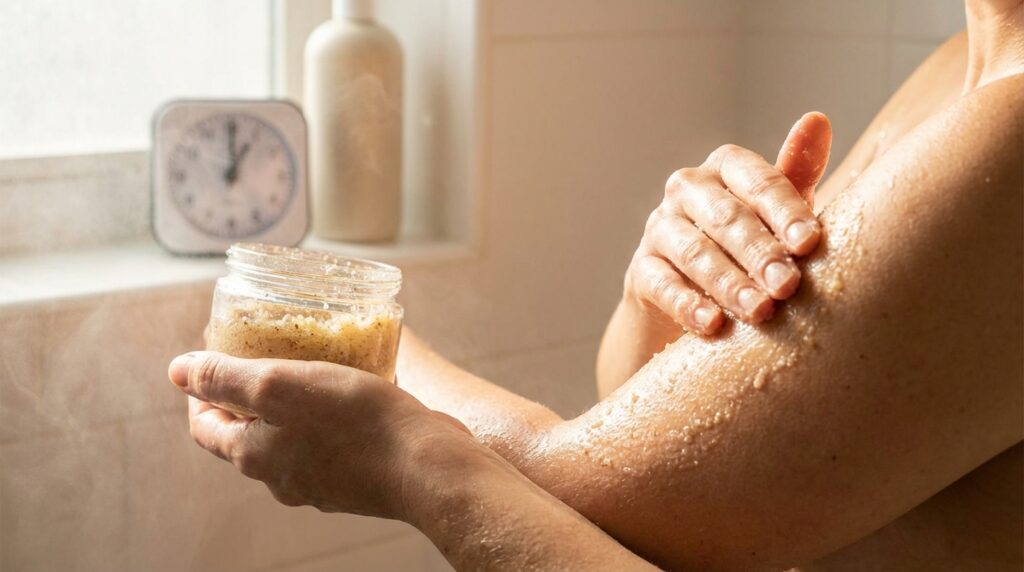
Body scrubs add almost no time if you’re already showering. You apply, massage for a minute or two, and rinse. Dry brushing requires a dedicated five minutes before you step into the bathroom. For someone rushing through mornings, the scrub wins on convenience. But if you’re a night showerer with a calmer routine, dry brushing fits in more easily.
Budget Comparison
A decent body scrub typically costs between $8and $20and lasts one to three months depending on how often you use it. Over a year, that’s roughly $30 to $80 or more. A quality dry brush ranges from $10 to $25 and lasts for years if you clean it regularly. For long-term savings, dry brushing is the clear budget winner.
If you live in a small apartment and storage space is precious, dry brushing also wins — one brush versus multiple jars taking up shelf space.
Skin Results
Both methods exfoliate effectively. In practice, body scrubs tend to leave skin feeling softer immediately because of the oils in the formula. Dry brushing leaves skin feeling smoother and slightly tighter, but you’ll want to follow up with moisturizer for that soft finish. Neither method will dramatically change cellulite or “detox” your body — those claims are exaggerated. What they will do is remove dead skin, help products absorb better, and make your skin look more even.
Who This Is For (and Who It’s Not)
Body Scrub Is Better For You If:
- You want a low-effort addition to your existing shower
- You have dry skin that benefits from built-in oils
- You prefer a sensory experience with nice scents and textures
- You’re prone to forgetting extra steps — this one’s harder to skip when you’re already wet
Dry Brushing Is Better For You If:
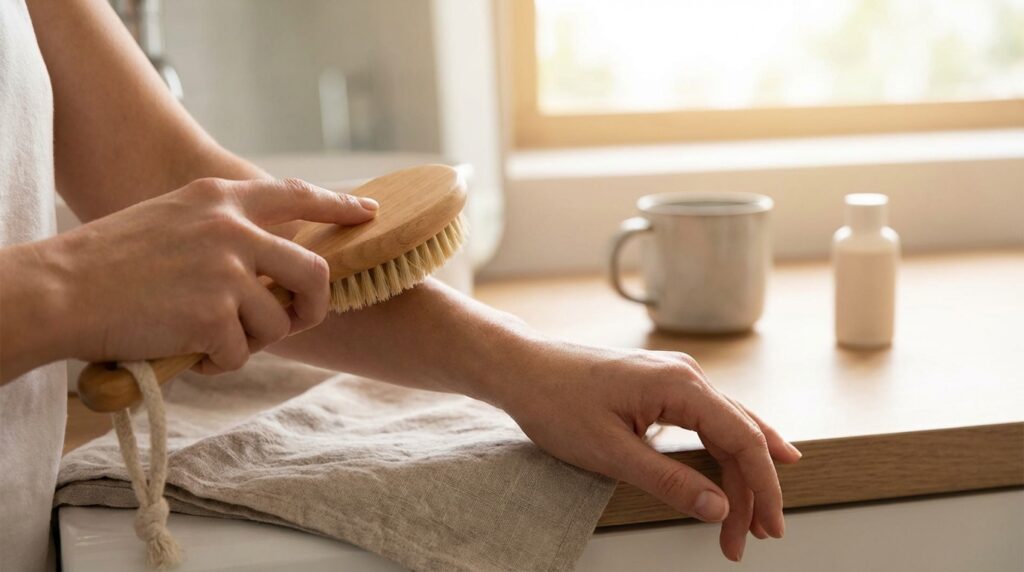
- You’re on a tight budget and want a one-time purchase
- You enjoy the energizing, wake-up feeling before a shower
- You prefer minimal products with no ingredient lists to worry about
- You already have a slower morning or evening routine with room for an extra step
Skip Both (or Be Very Careful) If:
- You have active eczema, psoriasis, or inflamed skin — exfoliation can worsen flare-ups
- You have sunburned or broken skin
- You’re dealing with a skin condition that hasn’t been checked by a professional
When in doubt, especially with persistent skin concerns, it’s worth consulting a dermatologist before adding exfoliation to your routine.
Frequently Asked Questions
Can I use both methods together?
You can, but not on the same day. Over-exfoliating strips your skin’s protective barrier and leads to dryness, irritation, or breakouts. If you want to rotate, try dry brushing twice a week and using a gentle body scrub once a week on different days.
How do I know if I’m exfoliating too much?
Signs include persistent redness, tightness, flakiness (ironically), or skin that feels raw. If your skin stings when you apply lotion, you’ve overdone it. Scale back and let your skin recover for a week before trying again with a gentler approach.
Do I need a special brush for dry brushing?
Look for natural bristles (like sisal or boar) and a long handle if you want to reach your back. Avoid anything labeled “extra firm” if you’re a beginner. A medium-firm brush gives enough exfoliation without scratching.
Summary and Next Step
When it comes to body scrub vs. dry brushing, neither is universally better — it depends on your lifestyle. Body scrubs are easier to work into a rushed routine and leave skin feeling moisturized. Dry brushing costs less over time and offers an invigorating, product-free approach. Both will smooth your skin and improve texture when done consistently and gently.
If you’re unsure which to try first, consider what’s already in your bathroom. Have a shower routine you don’t want to disrupt? Start with a gentle body scrub. Prefer a minimalist approach with fewer products? Grab a natural-bristle brush and give dry brushing a week. Either way, start slowly — once or twice a week — and pay attention to how your skin responds. That’s the real secret to finding what works for you.