
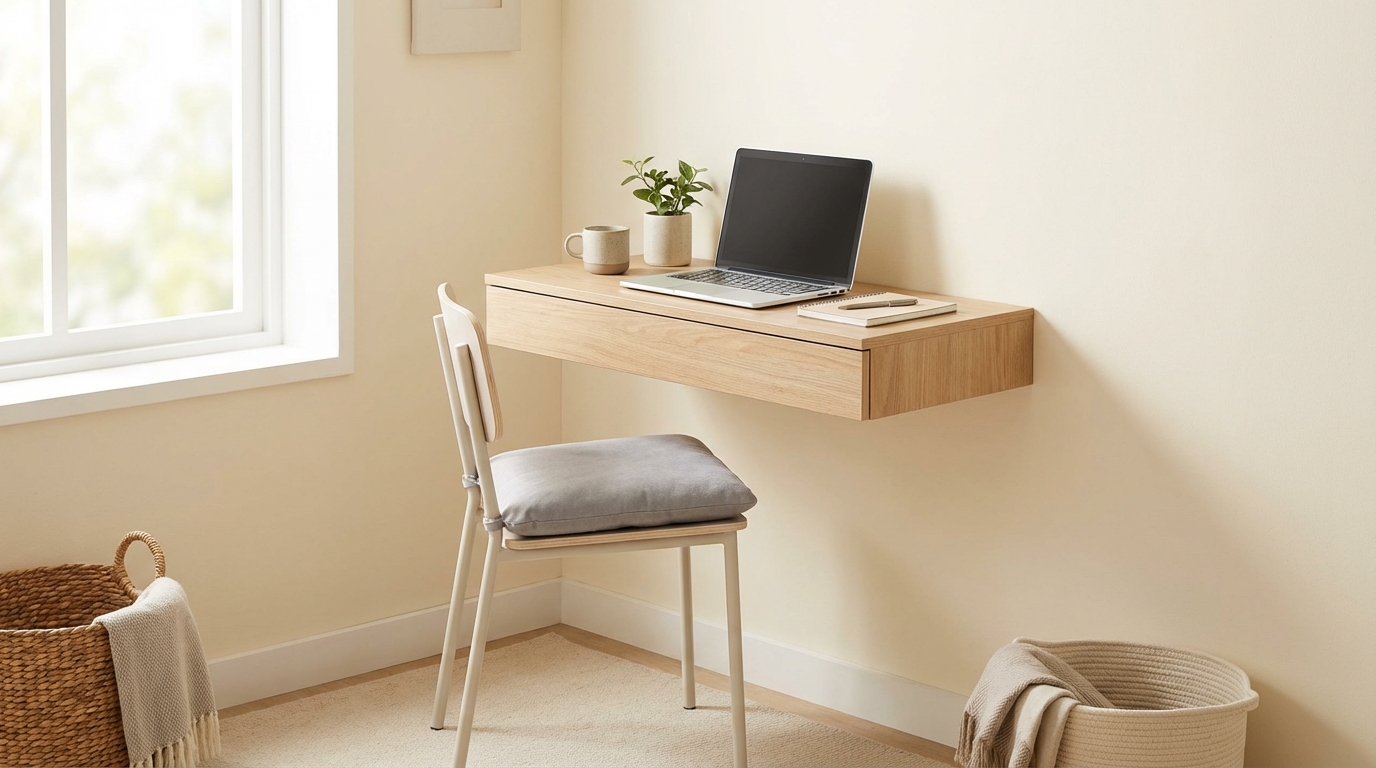
You’ve measured your corner three times, stared at it from every angle, and you’re still not sure a desk will fit. Maybe you’re working from a studio apartment, a bedroom that doubles as an office, or a hallway nook that gets about four hours of natural light. Finding the best small desks for tight spaces isn’t just about shrinking dimensions—it’s about choosing a design that actually works with your room, your habits, and your sanity.
This guide breaks down the main types of compact desks, what to look for before you buy, and which style suits different needs. You’ll walk away knowing exactly what kind of desk deserves that precious square footage.
Quick Verdict: Best Small Desk by Need
- Best for ultra-tiny spaces: A wall-mounted fold-down desk (folds flat when not in use)
- Best for renters who can’t drill walls: A slim writing desk under 36 inches wide
- Best for corner nooks: A compact corner or L-shaped desk
- Best for multi-taskers: A ladder desk with built-in shelving
- Best for standing desk fans: A compact standing desk around 36×24 inches
What to Look for in a Small Desk
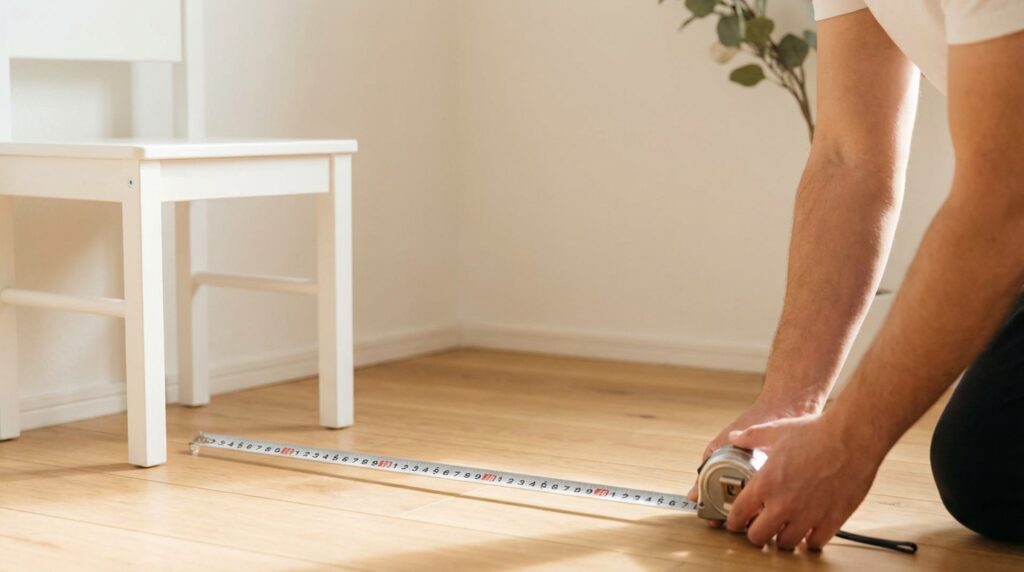
Before you fall for a cute desk online, grab a tape measure. Sounds obvious, but a common mistake is eyeballing the space and ending up with a desk that blocks a door or makes the room feel cramped. Measure the width, depth, and height of your available area—and don’t forget to account for your chair pushing back.
Here’s what actually matters when shopping:
- Width: Most compact desks range from 28 to 48 inches. Under 36 inches is ideal for very tight spots.
- Depth: Look for 18–24 inches if you only need a laptop. Deeper desks (24–30 inches) work better for monitors.
- Storage: Drawers and shelves are great, but they add bulk. Decide if you need them or if a simple surface will do.
- Weight capacity: If you’re using a monitor, printer, or multiple devices, check that the desk can handle it.
- Assembly: Some compact desks arrive fully assembled or fold out of the box. Others require an engineering degree and three hours of your weekend.
If you’re renting and can’t put holes in the wall, skip wall-mounted options and stick with freestanding styles. If you move often, lightweight desks with simple assembly will save you headaches.
Types of Small Desks (and Who They’re For)
Option: Wall-Mounted Fold-Down Desk
This style mounts to your wall and folds flat when you’re done working. It’s the ultimate space-saver for micro-apartments or rooms that need to serve multiple purposes. When folded, it looks like a cabinet or floating shelf—your guests won’t even know there’s a desk hiding there.
- Pros: Frees up floor space completely, clean look, great for occasional use
- Cons: Requires wall mounting (not renter-friendly without permission), limited surface area, not ideal for heavy equipment
If you work from home full-time and need space for dual monitors, this probably isn’t your match. But if you just need a spot to pay bills or use a laptop a few times a week, it’s hard to beat.
Option: Slim Writing Desk
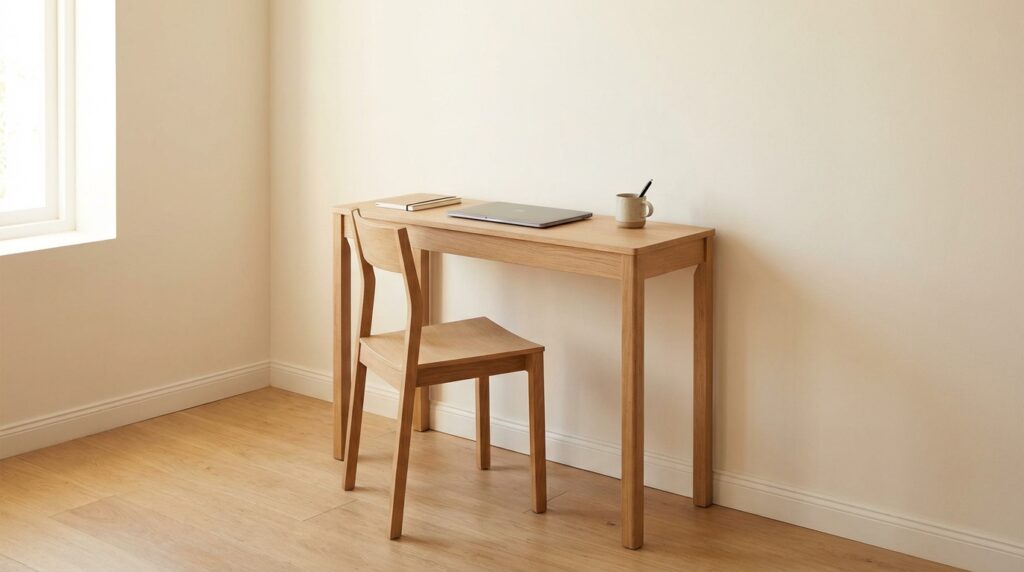
A classic writing desk with a simple top and minimal storage. These typically run 30–40 inches wide and around 18–20 inches deep. They’re lightweight, easy to move, and fit against almost any wall.
- Pros: Affordable, no installation needed, fits narrow spaces, easy to relocate
- Cons: Limited or no storage, may feel flimsy if you go too cheap, not great for heavy monitors
This is the go-to for renters, students, or anyone who wants a no-fuss workspace. If you’re the type who keeps things minimal—laptop, notebook, coffee—a slim writing desk handles the job without drama.
Option: Compact Corner Desk
Corner desks tuck into that awkward 90-degree angle that usually collects dust or a sad houseplant. A small L-shaped or triangular corner desk can turn dead space into a functional work area.
- Pros: Uses otherwise wasted space, often provides more surface area than it looks, keeps your setup out of the main traffic flow
- Cons: Harder to find in truly compact sizes, can feel cramped if the corner is too tight, limited placement options
If you’ve got a corner that’s at least 40 inches on each wall, this style is worth exploring. Just make sure there’s enough room for your chair to swivel without hitting anything.
Option: Ladder Desk with Shelving
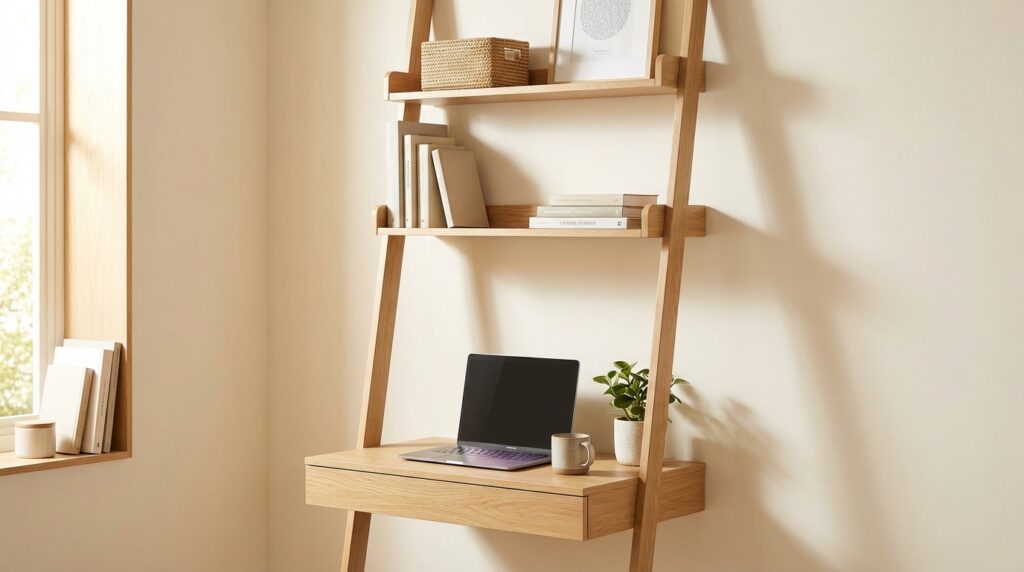
A ladder desk leans against the wall and combines a small desktop with vertical shelves above. It’s a smart choice when you need storage but don’t have room for a desk plus a bookshelf.
- Pros: Built-in storage, vertical design saves floor space, stylish and modern look
- Cons: Desktop is usually shallow (around 16–20 inches), not stable enough for heavy use, shelves can feel cluttered quickly
Ladder desks work well for light tasks—journaling, browsing, video calls. If you need to spread out papers or use multiple screens, you’ll feel cramped fast.
Option: Compact Standing Desk
Standing desks aren’t just for spacious home offices. Compact versions with desktops around 36×24 inches fit smaller rooms while still letting you switch between sitting and standing. Some even come with manual crank adjustments to keep the price down.
- Pros: Health benefits of standing, adjustable height, surprisingly compact options available
- Cons: Pricier than basic desks, heavier and harder to move, still needs clearance for the frame
If you’re working from home full-time and want the flexibility to stand, a compact standing desk is a solid investment. Just measure carefully—the base frame needs room even when the desktop is small.
Common Mistakes When Buying a Small Desk
- Ignoring chair space: Your desk might fit, but can you actually sit at it? Account for at least 24 inches behind the desk for your chair.
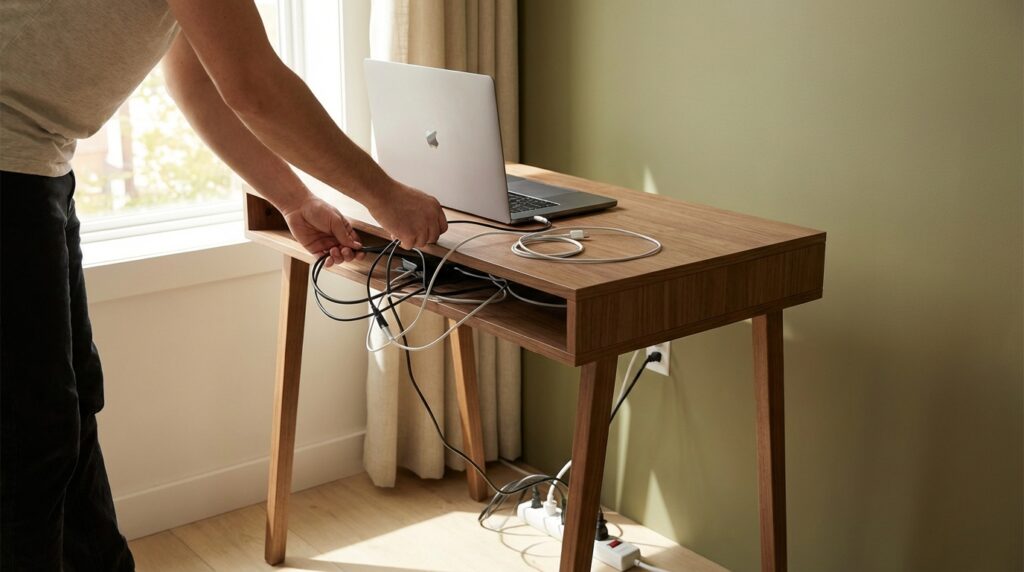
- Forgetting about cables: A sleek desk loses its charm when cables dangle everywhere. Look for desks with cable management holes or plan to add clips and trays.
- Prioritizing looks over function: That Instagram-worthy floating desk might not hold your monitor. Check weight limits and surface depth before you commit.
- Skipping reviews on stability: Wobbly desks are a nightmare for video calls and typing. User reviews often reveal stability issues that product descriptions gloss over.
- Buying too small: There’s compact, and then there’s unusable. If you regularly use a mouse, notebook, and coffee cup alongside your laptop, a 24-inch-wide desk will drive you crazy.
Who This Is For (and Who It’s Not)
A small desk is a great fit if you:
- Live in a studio, small apartment, or shared space
- Only need a workspace for a laptop or light tasks
- Want a dedicated spot without sacrificing your entire room
- Move frequently and need something portable
A small desk might not work if you:
- Use multiple monitors or bulky equipment
- Need lots of desk space for crafts, drawing, or paperwork
- Spend 8+ hours a day at your desk and need ergonomic support
- Require heavy-duty storage for files and supplies
If you’re in the second group, consider whether a slightly larger desk in a different room—or a fold-out table you can expand when needed—might serve you better.
Frequently Asked Questions
What’s the smallest desk size that’s still functional?
For laptop-only use, you can get away with a desk around 28 inches wide and 18 inches deep. Anything smaller starts to feel like a shelf rather than a workspace. If you use a mouse, aim for at least 32 inches wide.
Are wall-mounted desks sturdy enough for daily use?
Most wall-mounted desks hold 30–50 pounds when properly installed into studs. That’s enough for a laptop, lamp, and a few books. They’re not designed for heavy monitors or printers, so check the weight rating before loading them up.
Can I use a small desk with a desktop computer?
It depends on the setup. A compact desk with 24 inches of depth can fit a monitor, but you’ll likely need to place the tower on the floor or on a nearby shelf. Measure your monitor’s base and keyboard to make sure everything fits comfortably.
Summary and Next Step
The best small desk for tight spaces depends on how you work, what equipment you use, and how permanent you want the setup to be. Wall-mounted desks win for maximum space savings, slim writing desks are perfect for renters, and compact standing desks offer flexibility without hogging the room. Measure your space, be honest about what you need on the surface, and don’t forget to leave room for your chair.
Start by measuring that corner or wall you’ve been eyeing. Write down the dimensions, then compare them against the desk styles above. A little planning now saves a lot of frustration—and returns—later.