
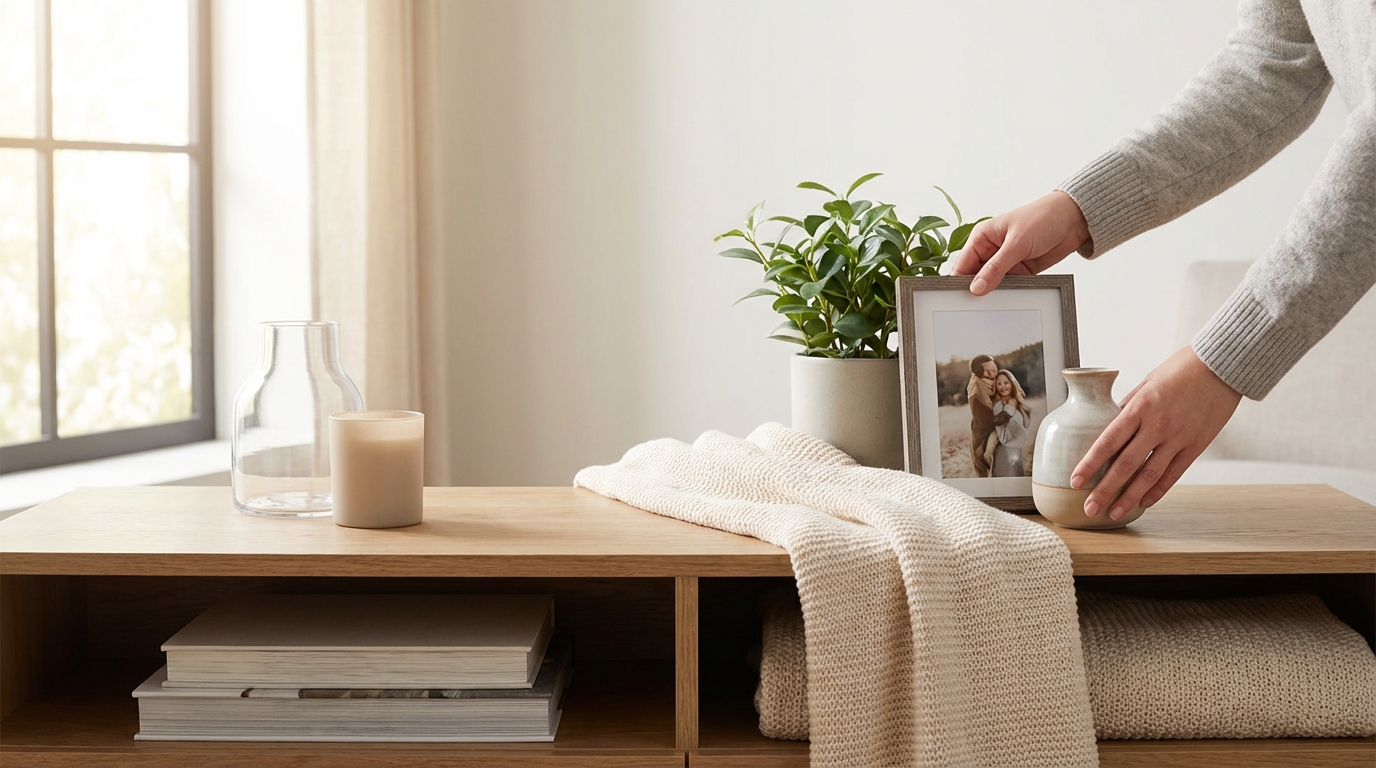
You walk into your living room and something feels… off. Not broken, not ugly, just not quite right. Maybe it’s the throw pillows that came with the couch, or the generic print you grabbed because the wall looked empty. The good news? You don’t need a full renovation or a designer’s budget to fix this. A few simple decor swaps can shift your space from “fine” to genuinely yours—without emptying your wallet or spending a weekend rearranging furniture.
This post covers easy, low-commitment changes that add personality to any room. You’ll walk away with practical ideas for swapping out forgettable pieces, tips for small spaces, and a clearer sense of what actually makes a home feel personal.
Quick Wins: Decor Swaps You Can Do Today
- Swap generic throw pillows for ones in colors or textures you genuinely love (not just what “goes”).
- Replace mass-produced wall art with something meaningful—a photo, a postcard, a page from an old book.
- Trade plastic hangers for matching wooden or velvet ones—small detail, surprisingly satisfying.
- Switch out basic lamp shades for warmer tones or interesting shapes.
- Ditch the builder-grade switch plates for brass, matte black, or ceramic versions.
Why “Neutral and Safe” Often Feels Flat
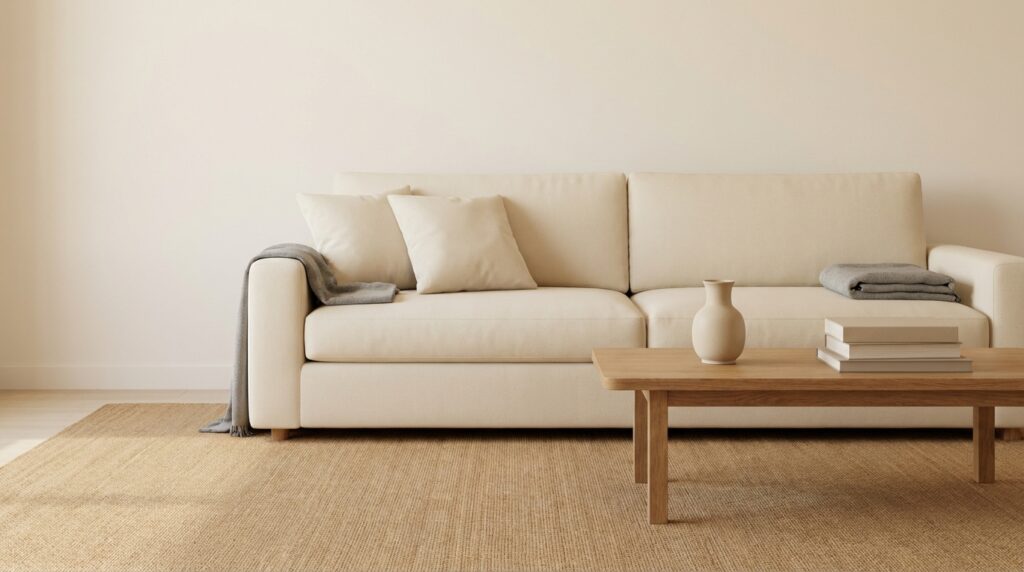
There’s nothing wrong with neutrals. Beige, gray, white—they’re calming and versatile. But when every single item in a room plays it safe, the space can start to feel like a waiting room. No offense to waiting rooms, but you probably don’t want to live in one.
The issue isn’t the color palette itself. It’s the lack of anything that says “someone specific lives here.” A room full of coordinated, catalog-perfect pieces can look polished and still feel hollow. What’s missing is usually texture, contrast, or objects with a story behind them.
A common mistake is thinking personal style means bold or maximalist. It doesn’t. Personal style can be quiet—a single vintage bowl on a shelf, a blanket your grandmother made, a plant you’ve kept alive for three years. The point is intention, not volume.
Simple Decor Swaps That Actually Make a Difference
Textiles: The Easiest Starting Point
Pillows, throws, curtains, rugs—these are the lowest-risk, highest-impact swaps you can make. If your couch came with matching pillows, consider replacing at least two of them with something that reflects your taste. Maybe it’s a bold pattern, a nubby texture, or a color you’ve always been drawn to but never “allowed” yourself to use.
Curtains are another overlooked opportunity. Builder-grade blinds or plain white panels do the job, but swapping them for linen, velvet, or even a patterned fabric can completely change how a room feels. If you’re renting or on a tight budget, even adding a simple curtain rod with clip rings and a thrifted fabric panel works.
Lighting: Warmth Over Brightness
Overhead lighting is functional, but it’s rarely flattering—for you or your space. If your room relies on a single ceiling fixture, adding a floor lamp or table lamp with a warm-toned bulb can make the whole room feel cozier.
Swap out harsh white bulbs for soft white or warm white options. It’s a tiny change, but the difference in ambiance is noticeable. If you have a lamp with a dated or boring shade, replacing just the shade (not the whole lamp) is a budget-friendly fix.
Wall Decor: Less Matching, More Meaning
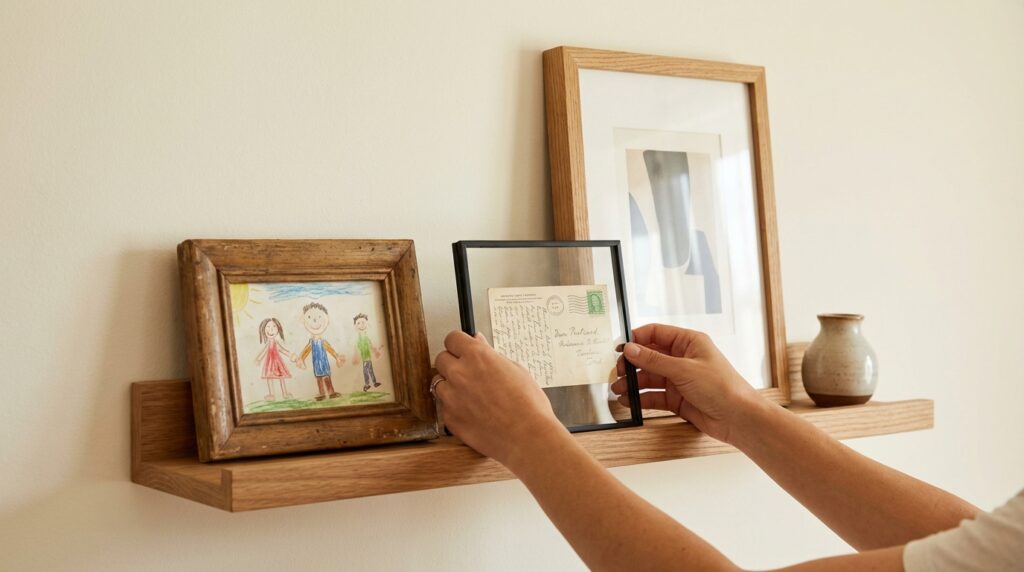
Gallery walls are popular, but they can also feel forced if every frame is identical and every print is from the same home goods store. A more personal approach: mix frames, mix sizes, and include at least one piece that has actual meaning to you.
This could be a concert ticket, a kid’s drawing, a postcard from a trip, or a page torn from a magazine years ago. If you’re not ready to commit to nails and hooks, leaning art against the wall on a shelf or mantel works just as well—and lets you rotate pieces easily.
Small Objects: The Details That Add Up
Think about the small stuff you see every day: soap dispensers, tissue boxes, trays, coasters, hooks by the door. These are often afterthoughts, grabbed quickly at a big-box store. But swapping even a few of them for pieces you actually like can shift how your home feels.
A ceramic soap dish instead of a plastic pump. A woven basket instead of a cardboard box. A brass hook instead of a plastic one. None of these are expensive or time-consuming, but they add up to a space that feels considered.
Decor Swaps for Small Spaces and Cozy Corners
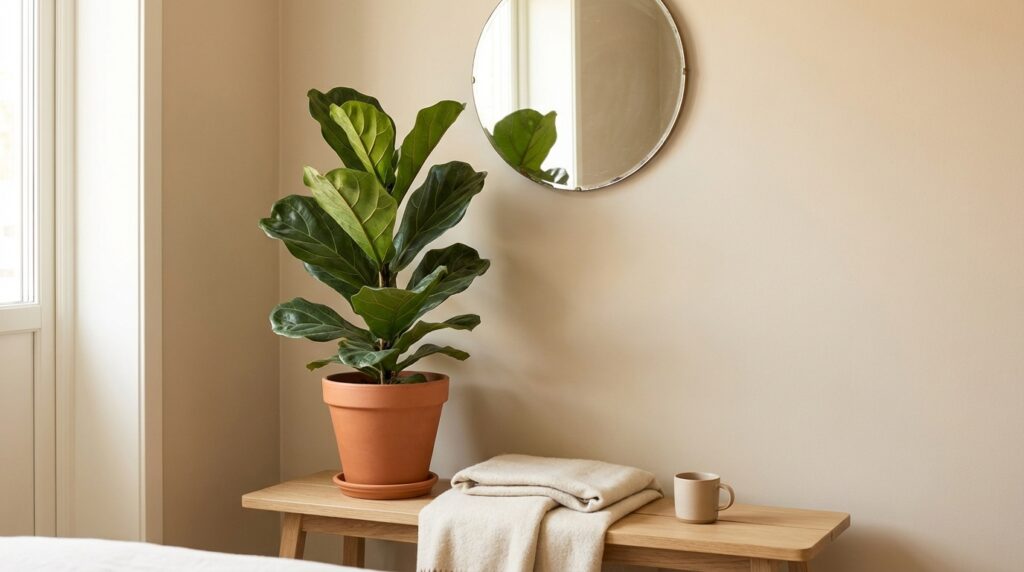
If you’re working with limited square footage, you might think decor is a luxury you can’t afford—literally or spatially. But small spaces actually benefit the most from intentional swaps, because every item is more visible.
In a tiny apartment, a single well-chosen object can anchor a whole room. A vintage mirror, a statement plant, a colorful rug—these don’t take up much space, but they give the eye something to land on. The mistake is filling small spaces with lots of small, forgettable things. Better to have fewer pieces that actually mean something.
For cozy corners—a reading nook, a window seat, a desk area—focus on comfort and personality. A good throw blanket, a lamp with warm light, and one or two objects you love looking at. That’s it. You don’t need to decorate every inch.
Common Mistakes to Avoid
- Buying everything at once from the same store. Your space ends up looking like a showroom, not a home. Mix sources, mix eras, mix price points.
- Ignoring what you already own. Before buying new, look around. You might have a vase, a book, or a piece of fabric that just needs a better spot.
- Overthinking “style.” You don’t need to commit to “boho” or “mid-century modern.” Most real homes are a mix. Trust what you’re drawn to.
- Forgetting function. A beautiful throw pillow that’s uncomfortable to lean on will just end up on the floor. Decor should work for your life, not against it.
- Waiting for “someday.” You don’t need to own your home or have a bigger budget to make it feel like yours. Start with one swap.
Frequently Asked Questions
Do decor swaps really make a difference if I’m renting?
Absolutely. Renters often have more restrictions, but textiles, lighting, and small objects are all fair game. You can transform a rental without touching the walls or making permanent changes. Removable wallpaper, peel-and-stick tiles, and tension rods for curtains are also renter-friendly options.
How do I know what my “style” actually is?
Pay attention to what you’re drawn to—not what you think you should like. Save images that catch your eye, notice what you linger on in stores, and look at what you’ve kept for years. Patterns will emerge. Your style is already there; you just need to notice it.
What if my partner or roommate has different taste?
Find the overlap. Maybe you both like warm tones, or natural materials, or a clutter-free look. Start with shared spaces and compromise on the big pieces, then let personal taste show up in smaller details—your side of the bed, your desk, your corner.
How much should I spend on decor swaps?
There’s no magic number. Thrift stores, estate sales, and even your own closet can provide great options for free or cheap. Spend more on pieces you’ll see and use daily; save on things that are purely decorative.
Summary and Next Step
Making your home feel more “you” doesn’t require a big budget, a Pinterest-perfect plan, or a weekend of heavy lifting. It’s about noticing what feels generic and swapping it—one piece at a time—for something that actually reflects your taste. Textiles, lighting, wall decor, and small objects are all easy places to start.
Pick one room, one corner, or even one shelf. Find one thing that doesn’t feel like you, and replace it with something that does. That’s it. The rest will follow.