
You finally found a gorgeous set of press-on nails, applied them with care, and two days later they’re popping off one by one. Sound familiar? The frustrating truth is that the actual application takes about five minutes, but the prep work beforehand is what determines whether your manicure lasts three days or three weeks. Learning how to prep your nails before press-ons is the single biggest factor in getting that salon-level hold at home.
This guide walks you through every step of proper nail prep, from cleaning to shaping to that final wipe-down. You’ll learn what supplies actually matter, which corners you can cut when you’re short on time, and the common mistakes that sabotage even the best press-on sets.
Quick Routine Overview
- Remove old polish and oils with acetone or alcohol
- Push back and clean up cuticles gently
- Lightly buff the nail surface (don’t skip this)
- Shape and trim natural nails if needed
- Final wipe with alcohol or prep pad
- Apply press-ons to completely dry nails
What You’ll Need
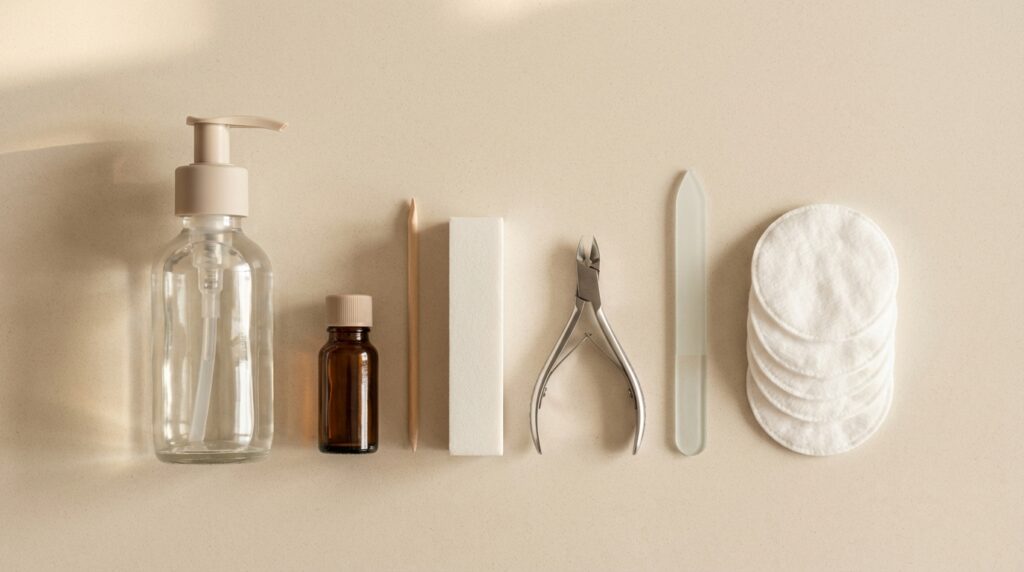
Good news: you probably own most of these already. No need to buy a fancy kit unless you want one.
- Acetone or nail polish remover (acetone works better for degreasing)
- Rubbing alcohol (70% or 90%) or alcohol prep pads
- Cuticle pusher (wooden orange stick or metal tool)
- Nail buffer or fine-grit file (180 grit or higher)
- Nail clippers and a regular nail file
- Cotton pads or lint-free wipes
- Optional: cuticle oil for aftercare, cuticle remover gel
A common mistake is using cotton balls instead of pads or lint-free wipes. Cotton balls leave tiny fibers behind, and those fibers create gaps between your nail and the press-on. Lint-free wipes are cheap and worth grabbing.
Step-by-Step Nail Prep for Press-Ons
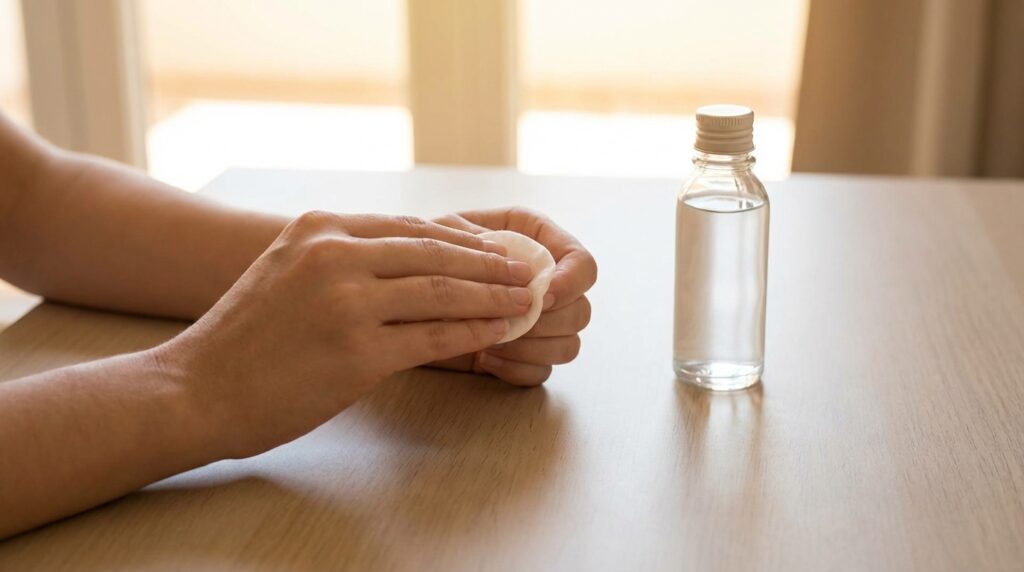
Step 1: Remove any existing polish. Even if your nails look bare, there might be residue from old polish, base coats, or treatments. Soak a cotton pad in acetone and press it against each nail for a few seconds before wiping. This dissolves stubborn bits without aggressive scrubbing. If you’ve been using peel-off base coats or nail strengtheners, make sure those are completely gone.
Step 2: Wash your hands thoroughly. Use regular soap and warm water. This removes surface dirt and starts the oil-removal process. Dry your hands completely afterward. Some people skip this step and go straight to alcohol, but soap helps break down lotions and hand creams that alcohol alone might not fully remove.
Step 3: Push back your cuticles. Soak your fingertips in warm water for two to three minutes to soften the cuticle area. Then use a cuticle pusher at a 45-degree angle, gently nudging the cuticle back toward the base of your nail. Work in small circular motions rather than shoving straight back. If you have stubborn cuticles, a cuticle remover gel can help dissolve the dead skin without cutting.
Here’s something most people don’t realize: that thin, transparent layer of skin that creeps onto your nail plate (called the eponychium) needs to go. It’s nearly invisible but creates a barrier that prevents adhesive from bonding properly. Gently scrape it away with your cuticle pusher after pushing back the main cuticle.
Step 4: Trim and shape your natural nails. Press-ons hold best when your natural nail doesn’t extend past your fingertip by much. Trim them short if needed, then file into a shape that roughly matches your press-on set. Round or squoval shapes tend to work well because they reduce lifting at the corners.
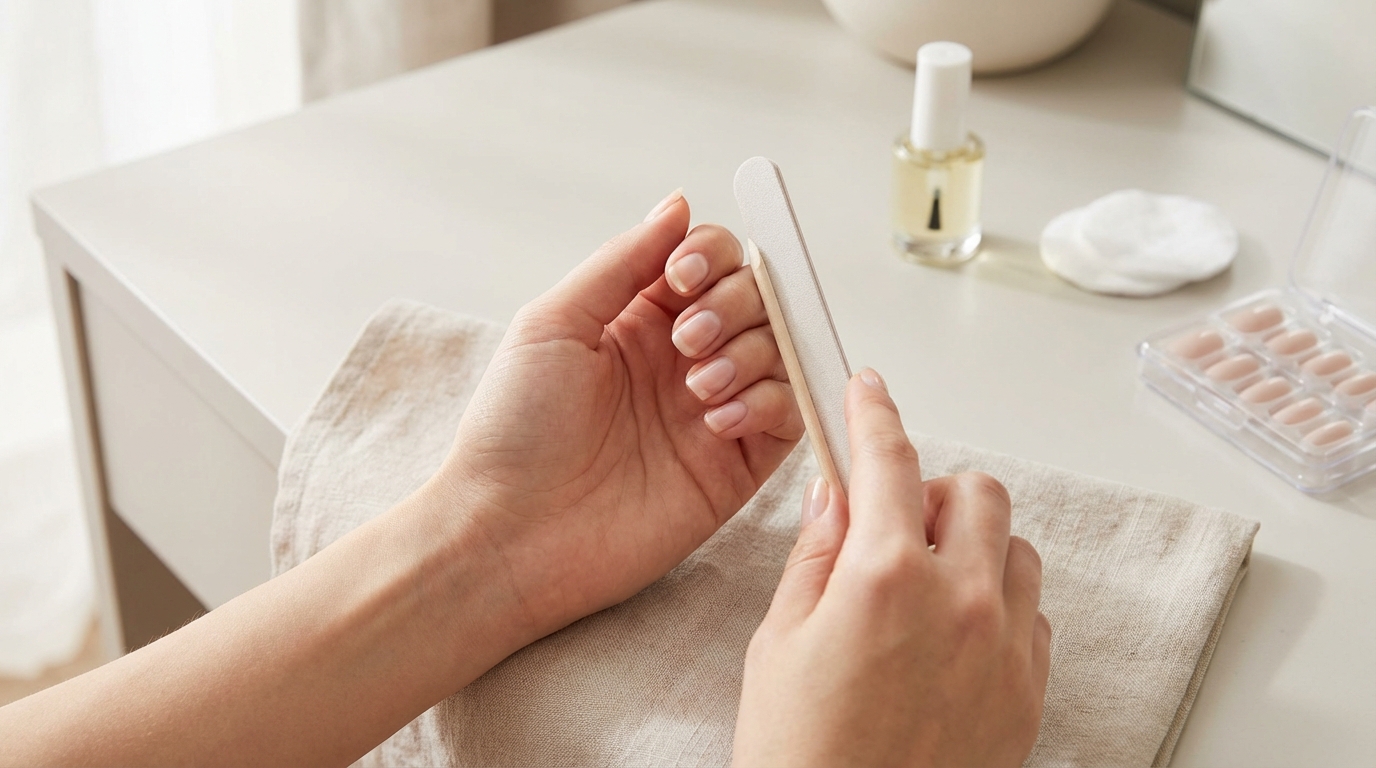
Step 5: Buff the nail surface lightly. This is the step that makes the biggest difference, and it’s also the one people skip most often. Use a fine-grit buffer (not a coarse file) and make a few gentle passes across each nail. You’re not trying to thin your nails or create visible scratches. You’re just removing the shiny top layer so the adhesive has something to grip.
Think of it like sanding wood before painting. A smooth, shiny surface repels adhesive. A slightly textured surface lets it bond. Five to ten light strokes per nail is plenty. If your nails start looking white and powdery, you’ve gone too far.
Step 6: Wipe with alcohol or a dehydrator. This final step removes every trace of oil, dust, and buffing residue. Soak a lint-free wipe in rubbing alcohol and thoroughly clean each nail. Let them air dry for about thirty seconds. Your nails should look slightly matte and feel almost chalky. That’s exactly what you want.
Do not touch your nail beds after this step. Even a quick scratch of your nose transfers oils back onto the surface. If you accidentally touch them, wipe again.
Shortcut If You’re Short on Time
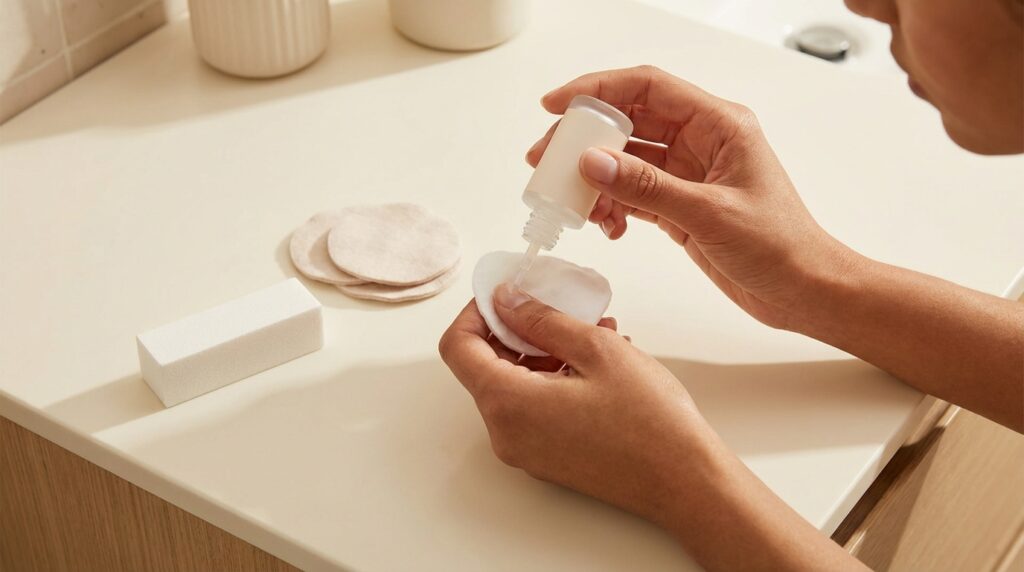
- Skip the water soak and use a cuticle remover gel instead (works in 60 seconds)
- Combine steps by using an acetone-soaked pad to remove polish and degrease at once
- Use a prep pad that contains both alcohol and a dehydrating agent
- Focus buffing on the center and edges of each nail rather than the entire surface
- Keep a dedicated “press-on prep kit” ready so you’re not hunting for supplies
Common Mistakes That Ruin Your Hold
Even with perfect technique, a few habits can undo all your prep work.
- Applying press-ons right after a shower or bath. Your nails absorb water and expand slightly. When they dry and shrink back, the press-on loses contact. Wait at least an hour after getting your hands wet, or prep your nails before showering.
- Using hand lotion before application. Lotion is oil-based and creates a slippery barrier. If you moisturized earlier in the day, the alcohol wipe in Step 6 should handle it, but freshly applied lotion is harder to remove completely.
- Over-buffing thin or damaged nails. If your nails are already weak, aggressive buffing makes them weaker and more prone to breakage. A few gentle passes are enough. You can also try a nail dehydrator product instead of buffing if your nails are very thin.
- Skipping the cuticle cleanup. Press-ons that overlap onto cuticle skin will lift within hours. The adhesive can’t bond to skin the way it bonds to nail plate. Make sure there’s a tiny gap between the press-on and your cuticle line.
- Rushing the drying time. Alcohol evaporates fast, but give it a full thirty seconds. Applying press-ons to even slightly damp nails reduces adhesion significantly.
Frequently Asked Questions
Do I need to use a nail primer or dehydrator?
For most people, rubbing alcohol works fine as a dehydrator. Dedicated nail primers add an extra bonding layer and can help if you have naturally oily nail beds or live in a humid climate. They’re not required, but they’re a nice upgrade if you find your press-ons lifting after a few days despite good prep.
Can I prep my nails the night before?
It’s better to prep right before application. Overnight, your nails will accumulate oils from your skin and bedding. If you must prep ahead, at minimum do a fresh alcohol wipe immediately before applying your press-ons.
How short should I trim my natural nails?
Trim them so they don’t extend past your fingertip, or leave just a millimeter or two. Longer natural nails create a leverage point that makes press-ons more likely to pop off when you bump them against things.
Is buffing bad for my nails?
Light buffing with a fine-grit buffer is safe for healthy nails. The concern comes from over-buffing or using coarse files, which can thin the nail plate over time. If you wear press-ons frequently, give your nails a break every few weeks and use a strengthening treatment.
Summary and Next Step
Proper nail prep before press-ons comes down to three things: removing oils, creating texture, and starting with completely dry nails. The whole process takes about ten minutes once you get the hang of it, and the payoff is a manicure that actually stays put through hand washing, typing, and daily life.
If you’ve been frustrated with press-ons lifting or popping off, try this full prep routine on your next set. Pay special attention to the buffing and final alcohol wipe, since those two steps make the biggest difference. Once you see how much longer your press-ons last, you’ll never skip prep again.