
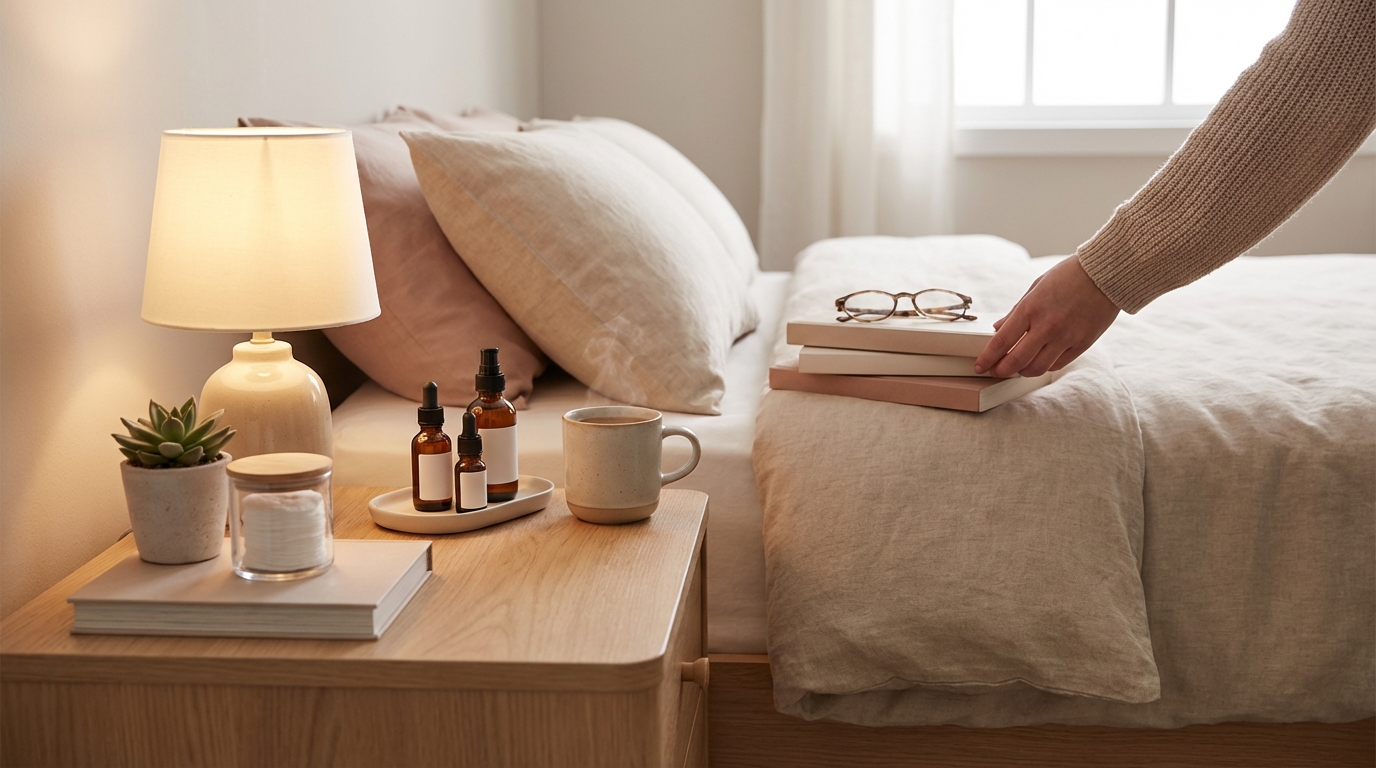
You finally crawl into bed after a long day, reach over to grab your phone charger, and knock over a glass of water in the dark. Sound familiar? A cluttered or poorly planned bedside area can turn what should be a relaxing wind-down into a nightly obstacle course. The good news is that creating a cozy bedside setup doesn’t require a big budget or a massive bedroom. With a few intentional choices, you can build a small corner that actually supports your nighttime routine instead of working against it.
This post walks you through practical ideas for organizing your bedside space, choosing items that earn their spot, and creating a setup that helps you unwind and sleep better. Whether you’re working with a tiny nightstand or no nightstand at all, there’s something here for you.
Quick Ideas at a Glance
- Keep only 3–5 items on your nightstand surface to avoid visual clutter
- Use vertical space (wall shelves, hooks, clip-on lights) if your surface area is limited
- Group items by routine: wind-down essentials vs. morning grab-and-go
- Soft, warm lighting beats overhead lights for relaxation
- A small tray or dish corrals tiny items like rings, lip balm, or earplugs
Why Your Bedside Setup Matters More Than You Think
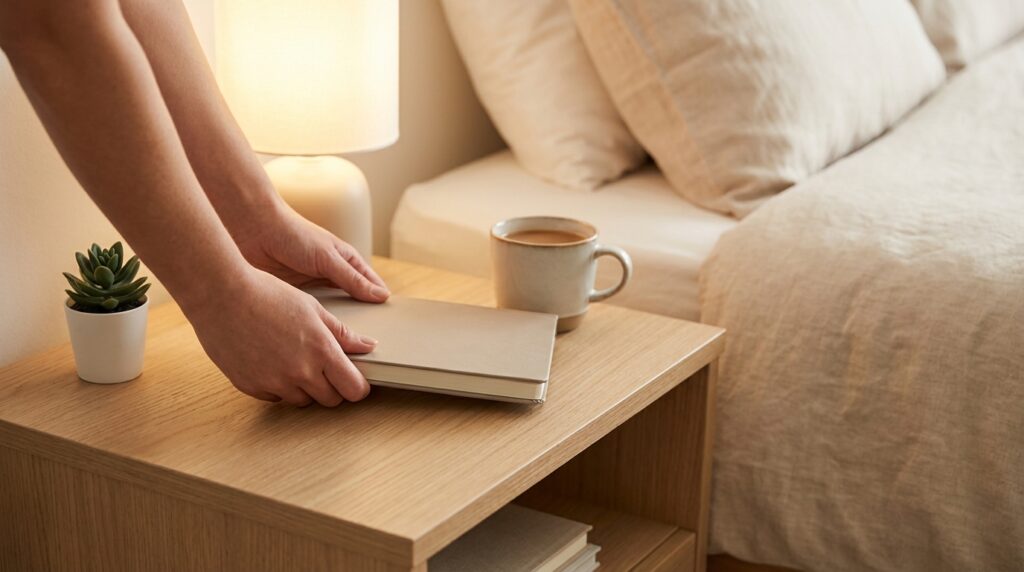
Your bedside area is the last thing you interact with before sleep and the first thing you reach for in the morning. When it’s chaotic, it sets a stressful tone. When it’s intentional, it quietly supports better habits. A common issue is treating the nightstand as a dumping ground for whatever ends up there—receipts, half-empty water bottles, three books you’re “currently reading,” and a tangle of charging cables.
Most people notice they sleep a bit better when their immediate surroundings feel calm. You don’t need to go full minimalist, but editing down to what you actually use at night makes a real difference. Think of your bedside as a tiny command center for rest, not a storage unit.
The “Earn Your Spot” Rule
Before adding anything to your bedside, ask: do I use this every single night or morning? If the answer is “sometimes” or “I might,” it probably belongs in a drawer or elsewhere. Items that typically earn their spot include a lamp or light source, a phone charger, a water glass or bottle, and maybe one book or journal. Everything else is negotiable.
Cozy Bedside Setup Ideas for Different Spaces
Not everyone has room for a traditional nightstand, and that’s okay. Here are a few approaches depending on what you’re working with.
If You Have a Standard Nightstand
Lucky you—surface space is a luxury. Use a small tray or shallow dish to corral tiny items like jewelry, hair ties, or lip balm. This keeps things from scattering and makes cleaning easier. Place your lamp toward the back corner so it doesn’t eat up prime real estate. If your nightstand has a drawer, use it for items you need but don’t want visible: sleep masks, earplugs, hand cream, or a phone charger you can snake up through the back.
A common mistake here is overloading the surface just because you can. Resist the urge. White space is part of the cozy factor.
If You Have a Tiny Shelf or Floating Nightstand
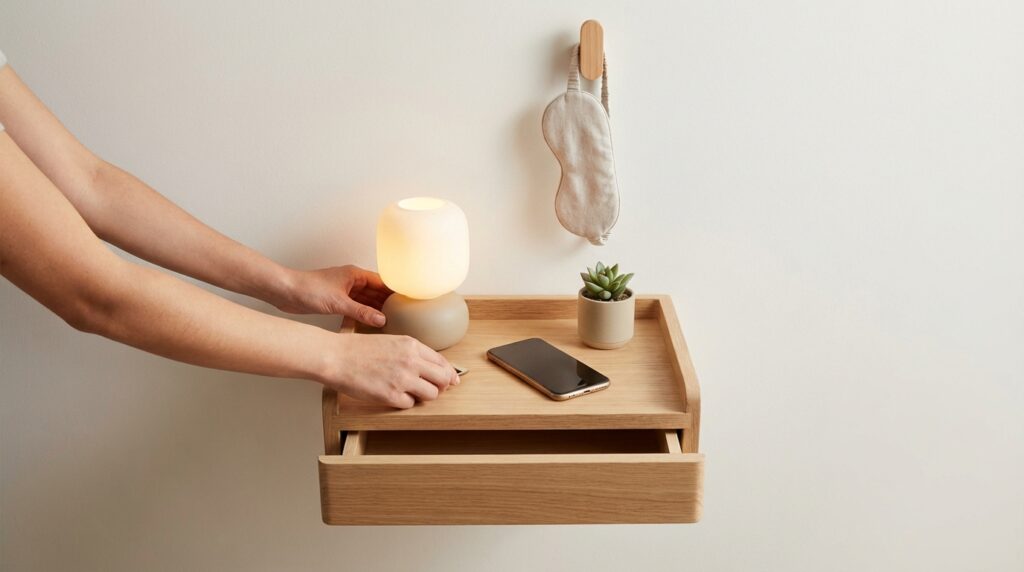
Small shelves force you to be ruthless, which is actually helpful. Stick to the absolute essentials: a compact lamp or wall-mounted reading light, your phone, and one small item like a candle or plant. Use the wall above or beside the shelf for hooks (great for headphones or a sleep mask) or a second floating shelf for books.
If you’re constantly knocking things off, try a shelf with a small lip or rim. Some floating nightstands come with a built-in drawer or cubby underneath, which helps a lot.
If You Have No Nightstand at All
This is more common than people admit, especially in small apartments or shared spaces. A few workarounds that actually work:
- A sturdy stool or small side table pulled up to the bed
- A wall-mounted pocket organizer with compartments for essentials
- A clip-on shelf that attaches to your bed frame (if it’s compatible)
- A small basket or caddy on the floor beside your bed—not glamorous, but functional
If you’re using the floor, keep items in a contained vessel so they don’t migrate under the bed or collect dust.
Lighting That Actually Helps You Wind Down
Overhead lights are the enemy of relaxation. Harsh, bright light signals your brain to stay alert, which is the opposite of what you want before bed. A bedside lamp with a warm bulb (look for “soft white” or around 2700K) creates a much calmer atmosphere.
If you read in bed, a small reading light with adjustable brightness is worth considering. Some clip onto books or headboards, which saves surface space. For the ultimate low-effort cozy vibe, a battery-operated candle or a small string of fairy lights adds warmth without any fire risk or complicated wiring.
Shortcut if You’re Short on Time
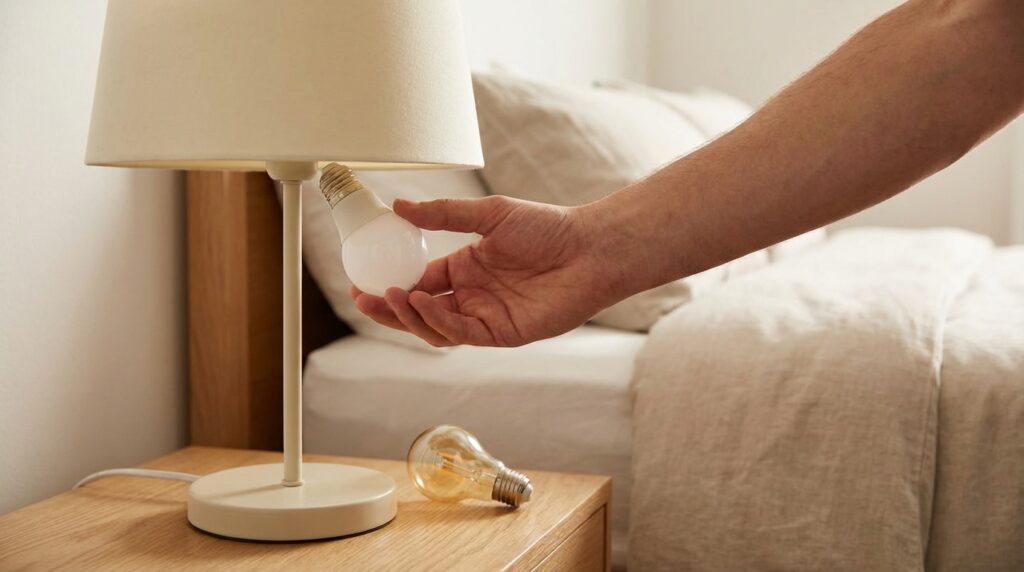
- Swap your current bulb for a warmer one—instant upgrade
- Use a smart plug to turn your lamp on and off from bed
- Skip the lamp hunt and use a clip-on book light for now
- Place your phone face-down to avoid screen glow disrupting your wind-down
Building a Simple Nighttime Routine Around Your Setup
A cozy bedside setup works best when it supports a consistent routine. You don’t need a 12-step skincare ritual or an hour of journaling—small, repeatable habits are more sustainable.
Here’s a simple framework: about 20–30 minutes before you want to sleep, move to your bedroom and switch to your bedside lamp. Put your phone on its charger (ideally out of arm’s reach if you’re trying to reduce scrolling). Do one small wind-down activity—read a few pages, write a quick note about tomorrow, or just sit with a cup of herbal tea. Then lights out.
The setup supports the routine by keeping everything you need within reach and removing distractions. If your nightstand is cluttered with random stuff, it’s harder to settle into that calm headspace.
Common Mistakes to Avoid
- Keeping your phone right next to your pillow: Too tempting. Even a few feet of distance helps.
- Piling up books you’re not actively reading: One book at a time. Rotate the rest to a shelf.
- Ignoring cable chaos: A simple cable clip or cord organizer makes a surprising difference.
- Skipping a water source: Waking up thirsty and having to get out of bed is a small but annoying disruption.
- Overcomplicating it: If your setup requires too much maintenance, you won’t keep it up.
Small Touches That Add Comfort
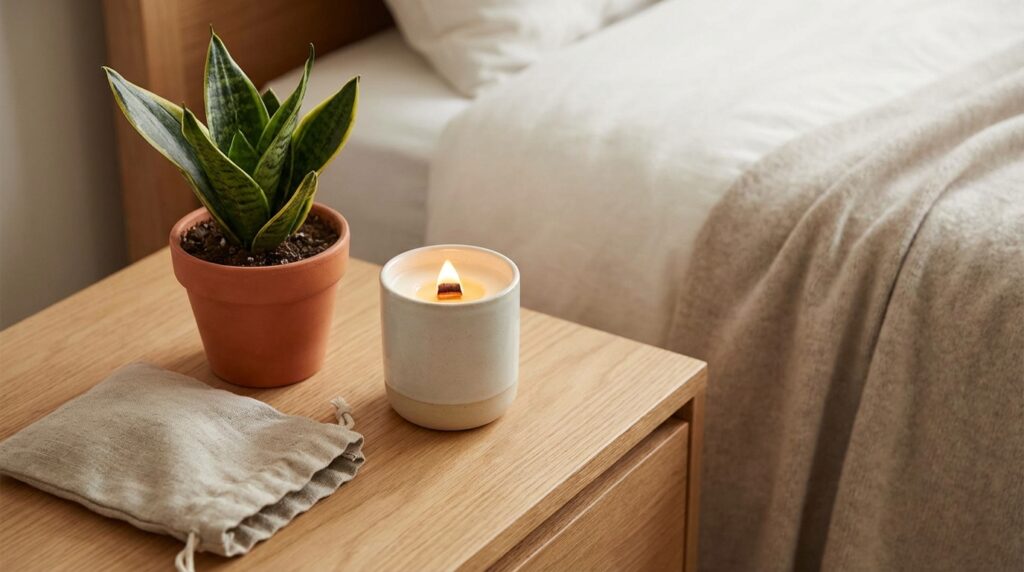
Once the basics are covered, a few optional extras can make your bedside feel more personal and inviting. A small plant (low-light varieties like pothos or snake plants do well in bedrooms) adds life without much upkeep. A scented candle or a small dish with a few drops of lavender oil can signal relaxation if you’re into that. A soft fabric tray or linen pouch for small items feels nicer than plastic.
If you tend to get cold, keeping a lightweight throw blanket folded at the foot of your bed or draped over a nearby chair means you won’t have to get up to grab one. These aren’t essentials, but they’re the kind of low-effort additions that make a space feel genuinely cozy rather than just functional.
Summary and Next Step
A cozy bedside setup is less about buying the perfect nightstand and more about editing down to what you actually use, choosing warm lighting, and creating a small routine that helps you transition into rest. Start by clearing off your current bedside surface and putting back only the items you reach for every night. From there, tweak the lighting and add one or two comfort touches if you want.
Tonight, try spending just five minutes tidying your bedside area before you get into bed. Notice how it feels to reach for your lamp without knocking anything over. Small wins like that add up to better sleep and calmer mornings.