
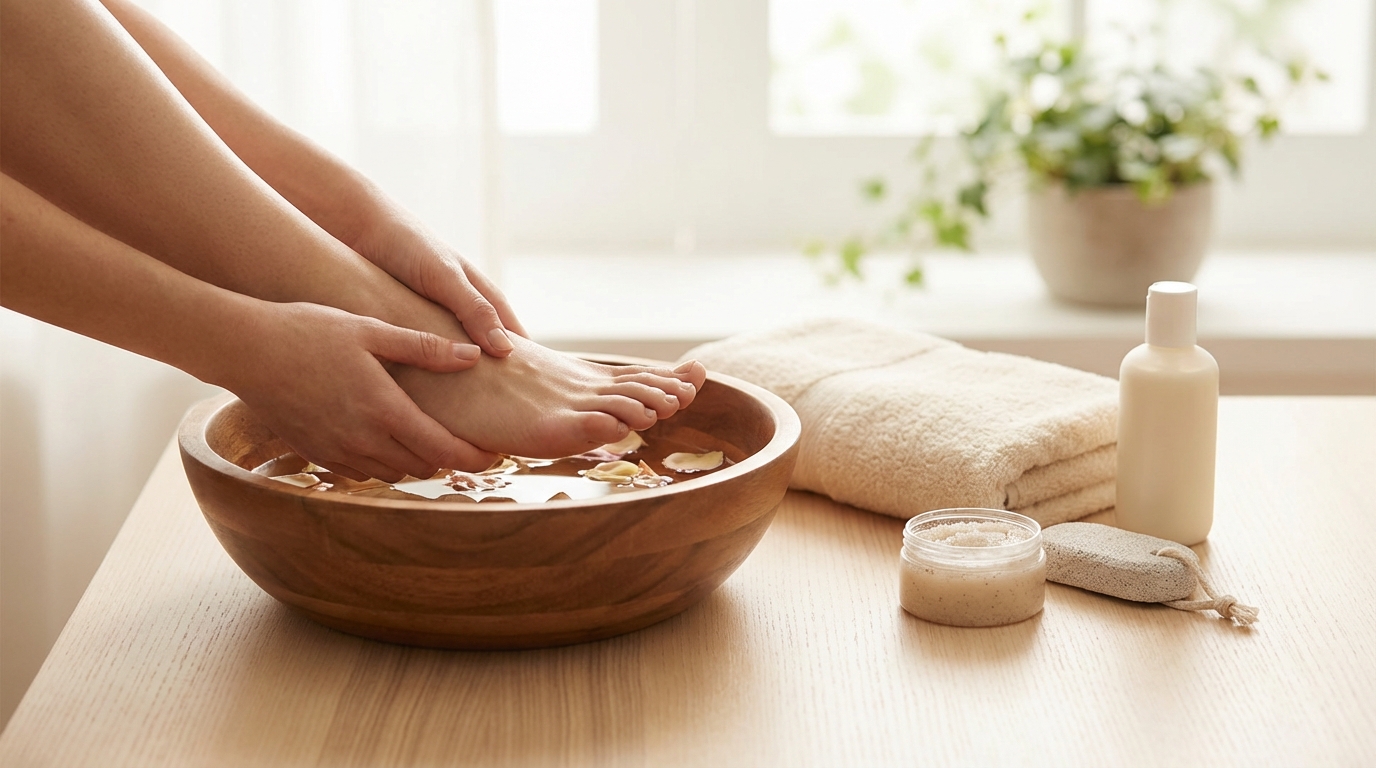
Your feet carry you everywhere, yet they’re often the last body part to get any real attention. Maybe you’ve noticed rough heels catching on your socks, or your toenails look a bit neglected. The good news is you don’t need expensive pedicures or fancy gadgets to take care of your feet at home. A simple routine with basic supplies can make a noticeable difference in how your feet look and feel.
In this guide, you’ll learn a practical foot care routine you can do with items you probably already own, common mistakes that make foot problems worse, and easy ways to keep your feet soft and healthy without spending much time or money.
Quick Routine for Foot Care at Home
- Soak feet in warm water for 10–15 minutes to soften skin
- Gently exfoliate rough areas with a foot file or pumice stone
- Trim and file toenails straight across
- Rinse, dry thoroughly (especially between toes), and apply moisturizer
- Wear clean cotton socks afterward to lock in moisture
What You’ll Need
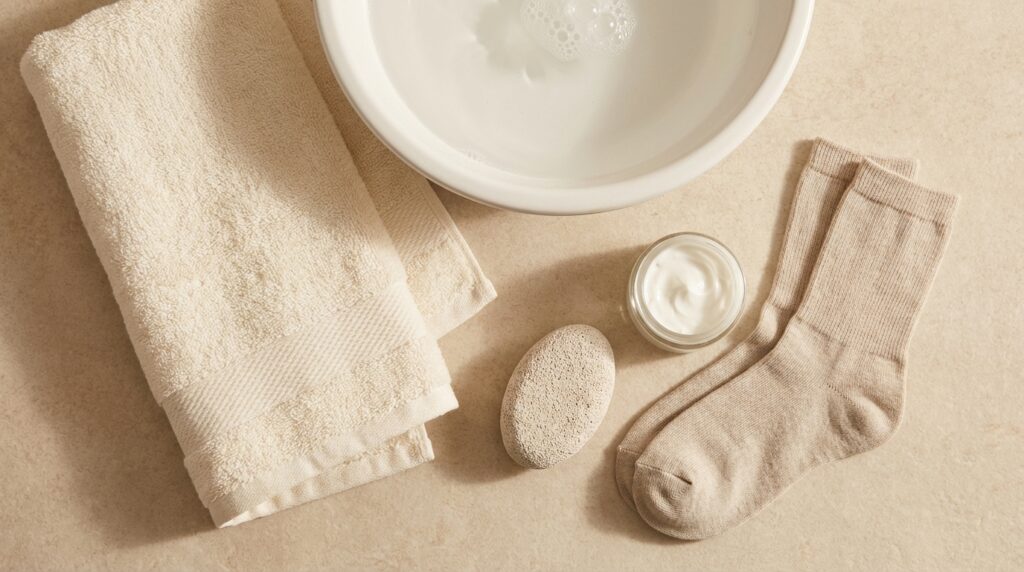
You don’t need a drawer full of products. Most people already have these basics at home, and if not, they’re inexpensive to pick up.
- A basin or tub large enough for both feet
- Warm water
- Mild soap or a splash of gentle body wash
- Pumice stone or foot file
- Nail clippers and a nail file
- A thick moisturizer or foot cream
- Clean towel
- Cotton socks
Optional additions include Epsom salt for the soak (nice for tired feet), a few drops of tea tree oil if you’re prone to foot odor, or a cuticle pusher if you like neat-looking toenails. But honestly, the basics above will handle most foot care needs.
Step-by-Step Home Foot Care
Step 1: Fill your basin with warm water—comfortable to the touch, not hot enough to scald. Add a small amount of soap or Epsom salt if you have it. Soak your feet for 10 to 15 minutes. This softens calluses and makes dead skin much easier to remove. If you’re watching something on your phone or reading, the time passes quickly.
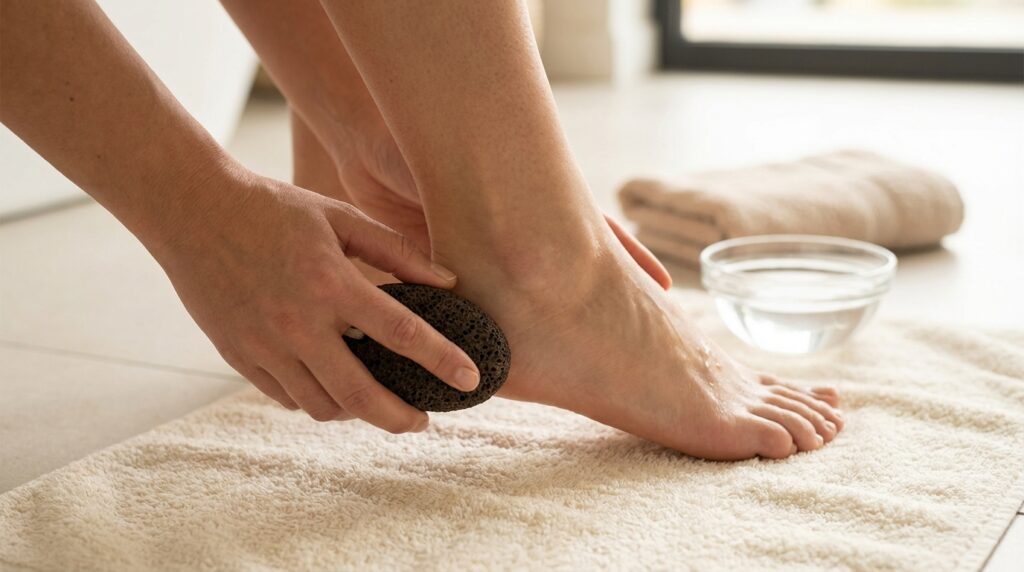
Step 2: While your feet are still damp, use a pumice stone or foot file on rough patches. Focus on heels, the balls of your feet, and the sides of your big toes—these areas tend to build up the most. Use gentle, circular motions. You’re not trying to remove everything in one session. Overdoing it can leave skin raw and actually cause more callus buildup as your feet try to protect themselves.
Step 3: Trim your toenails straight across, not curved at the corners. This helps prevent ingrown toenails, which are painful and annoying to deal with. Use a nail file to smooth any sharp edges. If your cuticles look overgrown, gently push them back with a cuticle pusher or even the edge of a towel—don’t cut them, as this can lead to infection.
Step 4: Rinse your feet and dry them completely. This step matters more than people realize. Moisture trapped between toes creates a perfect environment for fungal infections. Take an extra few seconds to dry between each toe.
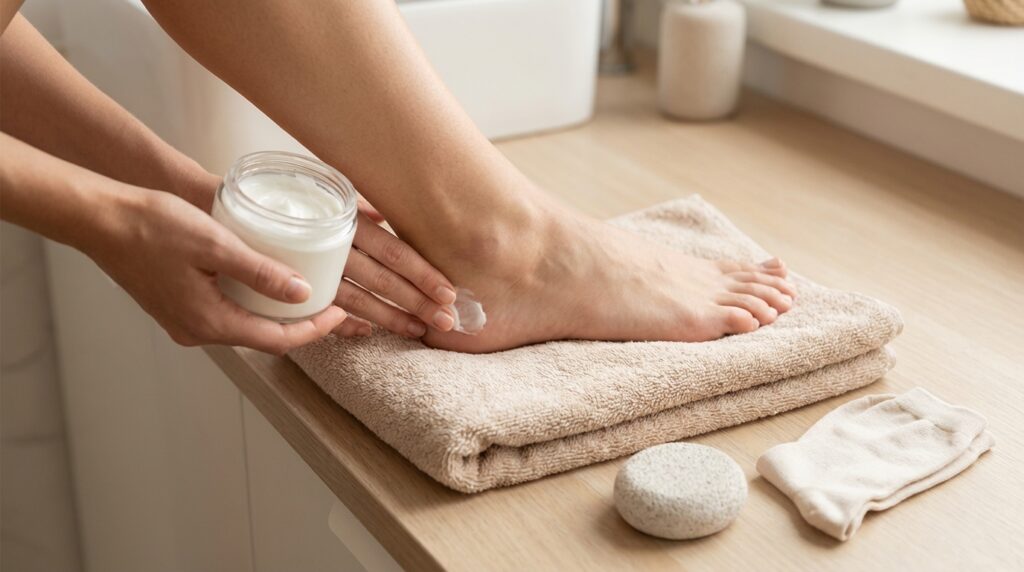
Step 5: Apply a thick moisturizer or foot cream while your skin is still slightly warm. This helps it absorb better. Pay attention to heels and any dry patches, but skip the areas between your toes (again, moisture there isn’t your friend). Put on clean cotton socks right after to help the moisturizer sink in and protect your sheets or floors.
Shortcut If You’re Short on Time
- Skip the soak—just do your routine right after a shower when skin is already soft
- Focus only on heels and the worst dry spots
- Apply moisturizer and socks before bed, let it work overnight
- Do a quick nail trim without the full exfoliation
- Even five minutes once a week beats doing nothing for months
Common Mistakes That Make Foot Problems Worse
A few habits seem helpful but actually backfire. Here’s what to watch out for:
- Scrubbing too hard or too often: Aggressive exfoliation damages healthy skin and triggers your body to produce more calluses as protection. Once or twice a week is plenty for most people.
- Using a foot file on dry skin: This can cause micro-tears. Always soften skin first with a soak or shower.
- Cutting toenails too short or rounded: This is the main cause of ingrown toenails. Leave a bit of white at the tip and cut straight across.
- Skipping the drying step: Rushing to moisturize while feet are still wet dilutes the product and leaves moisture in the wrong places.
- Ignoring cracks in heels: Small cracks can deepen and become painful or even infected. Consistent moisturizing prevents this from getting worse.
- Wearing the same shoes every day: Shoes need time to air out. Rotating between pairs reduces odor and fungal issues.
Daily vs. Weekly Foot Care
You don’t need to do the full routine every day. Here’s a realistic breakdown:
Daily Habits (Takes 2 Minutes)
Wash your feet in the shower—actually wash them, not just let soapy water run over them. Dry thoroughly, especially between toes. Apply a light moisturizer to heels before bed if they tend to get dry. Wear clean socks and rotate your shoes.
Weekly Routine (Takes 15–20 Minutes)
This is when you do the full soak, exfoliation, and nail care. Pick a day that works for you—many people like Sunday evenings as a reset before the week. If your feet are in good shape, every other week might be enough. If you’re dealing with significant calluses or dryness, stick with weekly until things improve.
Seasonal Adjustments
Feet tend to get drier in winter due to indoor heating and closed shoes. You might need heavier moisturizer or more frequent care during colder months. In summer, open shoes mean more exposure to dirt and sun—don’t forget sunscreen on the tops of your feet if you’re wearing sandals.
When to See a Professional
Home foot care handles most everyday concerns, but some issues need professional attention. If you notice persistent pain, signs of infection (redness, swelling, warmth, discharge), toenails that are very thick or discolored, or cracks that won’t heal despite consistent care, it’s worth seeing a podiatrist or your doctor. People with diabetes should be especially careful with foot care and may benefit from professional guidance, as circulation issues can make small problems more serious.
For stubborn calluses that don’t respond to regular exfoliation, a professional pedicure or podiatry visit can safely remove more buildup than you should attempt at home.
Summary and Next Step
Taking care of your feet at home comes down to a few simple habits: regular soaking and gentle exfoliation, proper nail trimming, thorough drying, and consistent moisturizing. You don’t need expensive products or complicated routines. The basics work well when you do them regularly.
If you haven’t paid much attention to your feet lately, start with one full routine this week. Set aside 15 minutes, gather your supplies, and see how much better your feet feel afterward. Once you notice the difference, it’s easier to keep up with it. Your feet do a lot for you—a little care goes a long way.