
You spent fifteen minutes on your makeup this morning. By noon, your foundation has migrated, your eyeliner is smudging, and your lipstick vanished somewhere between your second coffee and that unexpected meeting. Sound familiar? Learning how to make your makeup last longer on busy days isn’t about piling on more product or buying the most expensive formulas. It’s about working smarter with what you already have and tweaking a few small habits that make a real difference.
This guide walks you through a simple routine that keeps your look intact from morning to evening. You’ll learn which prep steps actually matter, how to layer products for staying power, and a few quick fixes for when life gets chaotic. No complicated techniques, no expensive tools required.
Quick Routine for Long-Lasting Makeup
- Start with clean, moisturized skin (but let it absorb first)
- Use a primer suited to your skin type
- Apply thin layers of foundation instead of one thick coat
- Set with powder in your oily zones only
- Use a setting spray as your final step
- Carry one multi-use product for midday touch-ups
What You’ll Need
- A lightweight moisturizer
- Primer (mattifying for oily skin, hydrating for dry skin)
- Your usual foundation or tinted moisturizer
- Translucent or pressed powder
- Setting spray
- Blotting papers or a clean tissue (for touch-ups)
- One portable product for midday fixes (a lip-and-cheek tint works well)
Step-by-Step: Making Your Makeup Last All Day
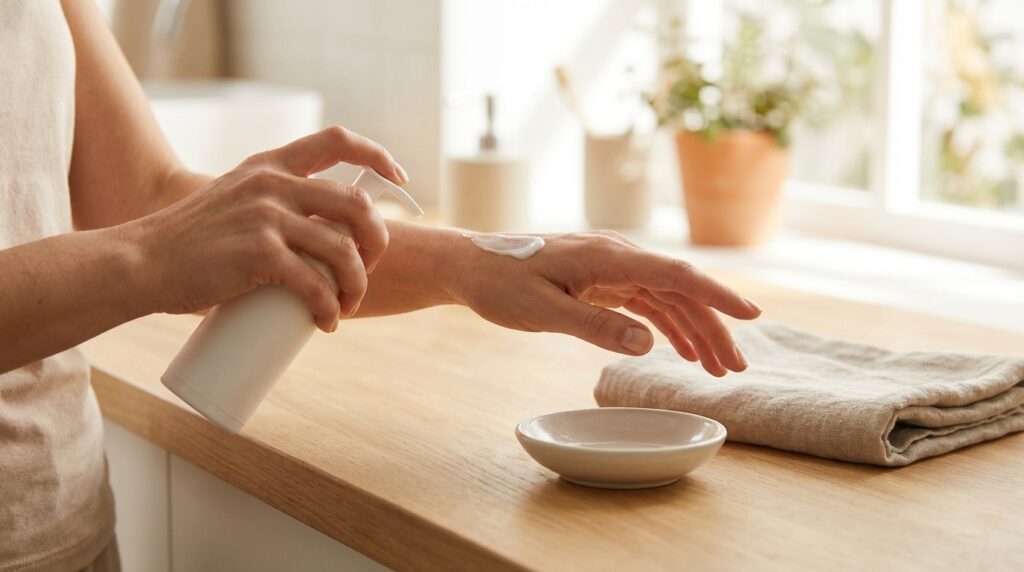
Step 1: Prep your skin properly. This is where most people go wrong. Slapping makeup onto skin that’s either too dry or too greasy sets you up for failure. Wash your face, apply a thin layer of moisturizer, and then wait two to three minutes before moving on. Seriously, give it time. If you rush this, your primer won’t adhere properly and everything slides around by lunchtime.
Step 2: Apply primer where you need it most. You don’t necessarily need primer all over your face. Focus on areas that tend to break down first: the T-zone, around your nose, and under your eyes if you wear concealer there. A common mistake is using too much primer, which can actually make makeup pill or separate. A pea-sized amount for your whole face is usually enough.
Step 3: Build foundation in thin layers. Here’s a counterintuitive truth: less product often lasts longer than more. A thick layer of foundation sits on top of your skin and is more likely to crack, crease, or transfer onto everything you touch. Apply a thin layer, blend it out completely, and add a second layer only where you need more coverage. Your skin will look better and your makeup will hold up longer.
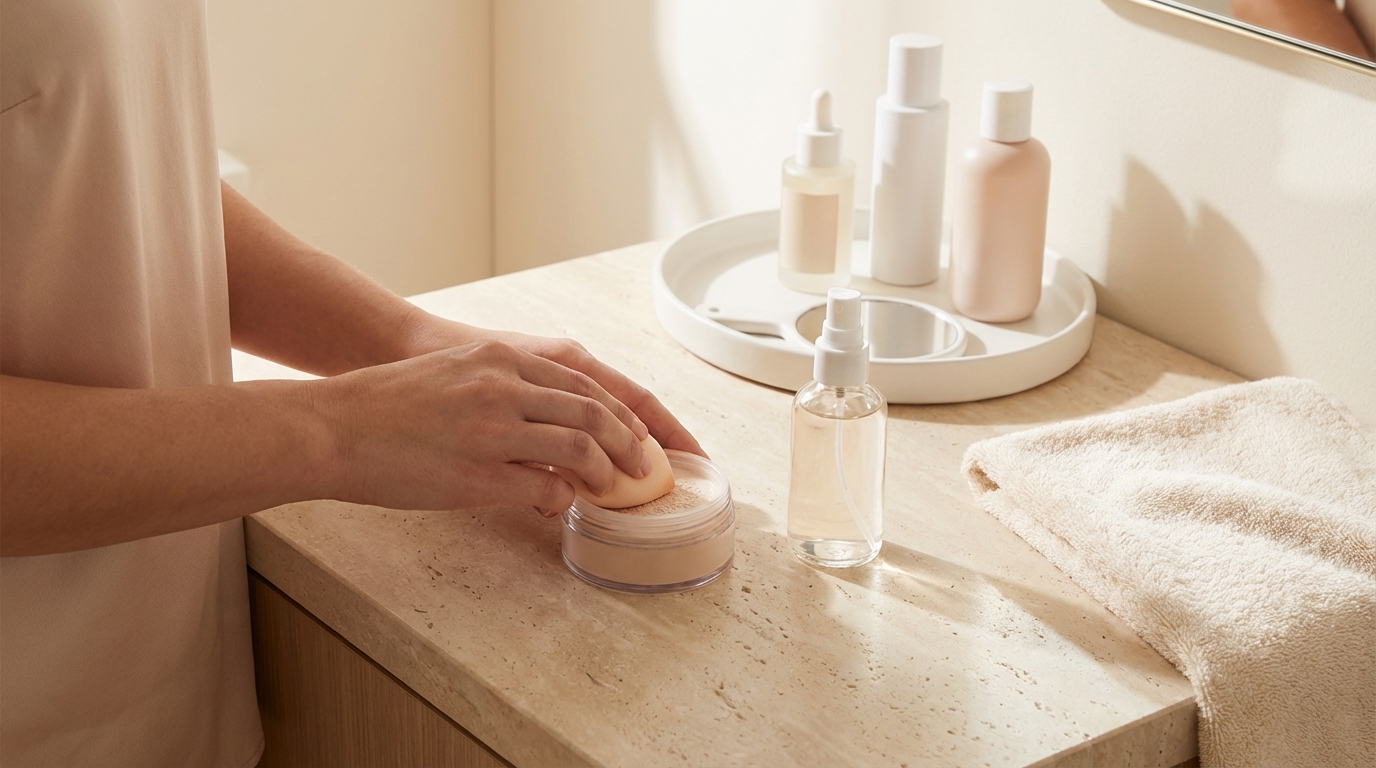
Step 4: Set strategically with powder. If you have oily skin, powder is your friend, but only in certain areas. Dust translucent powder lightly over your forehead, nose, and chin. Skip the cheeks if they tend to be dry, or you’ll end up looking cakey by afternoon. If you have dry skin overall, you might skip powder entirely and rely on setting spray instead.
Step 5: Lock everything in with setting spray. Hold the bottle about eight inches from your face and mist in an X pattern, then a T pattern. Let it dry naturally without fanning or touching. This creates a light seal over your makeup that helps it resist humidity, oil, and general life chaos. One coat is usually fine for normal days; two coats if you know you’ll be sweating or out for twelve-plus hours.
Step 6: Plan for touch-ups. Even the best routine won’t make your makeup completely bulletproof. Carry blotting papers to absorb oil without disturbing your base. A small lip product that doubles as blush means you can refresh your color in thirty seconds without hauling your entire makeup bag around.
Shortcut If You’re Short on Time
- Skip primer and use a mattifying moisturizer instead (two steps in one)
- Use a BB cream or tinted moisturizer rather than full foundation
- Set only your T-zone with powder and skip everywhere else
- A single coat of setting spray still helps, even if you’re rushing
- Choose cream products over powders for blush and bronzer; they blend faster and often wear better
Common Mistakes That Ruin Your Makeup by Noon

Even with the right products, a few habits can sabotage your staying power. Here’s what to watch out for.
- Touching your face constantly. Every time you rest your chin on your hand or rub your eyes, you’re moving product around. If this is a habit, try to notice when you’re doing it and redirect.
- Using the wrong primer for your skin type. A hydrating primer on oily skin won’t control shine. A mattifying primer on dry skin will emphasize flakiness. Match the formula to what your skin actually does throughout the day.
- Skipping skincare because you’re in a rush. Makeup clings better to well-prepped skin. Even if you only have time for a quick splash of water and a light moisturizer, do it.
- Over-powdering. More powder doesn’t mean longer wear. It means a heavier, more obvious finish that’s prone to creasing. Light dustings are the way to go.
- Applying makeup in bad lighting. If you can’t see what you’re doing, you’ll likely apply too much in some areas and not enough in others. Natural light near a window is ideal.
Adjusting for Different Situations
If You Work in a Hot or Humid Environment
Heat and humidity are the enemies of long-lasting makeup. In these conditions, waterproof or water-resistant formulas for mascara and eyeliner make a noticeable difference. Consider using a lighter base, like a tinted sunscreen, instead of full foundation. Heavy coverage tends to melt faster. And definitely double up on setting spray.
If You Have an Unpredictable Schedule
Some days you leave the house at seven and don’t get home until ten at night. For these marathon days, the midday touch-up becomes essential. Find a bathroom break around lunch, blot any oily areas, and reapply lipstick or a bit of concealer under your eyes if needed. It takes two minutes and extends your look for several more hours.
If You Have Oily Skin
Oil production is the main reason makeup breaks down for most people. Beyond using mattifying products, consider keeping oil-absorbing sheets in your bag. They remove excess shine without adding more product. Some people also find that a thin layer of loose powder applied before foundation (yes, before) helps absorb oil throughout the day. It sounds odd, but it works for many.
Frequently Asked Questions
Does expensive makeup really last longer than drugstore options?
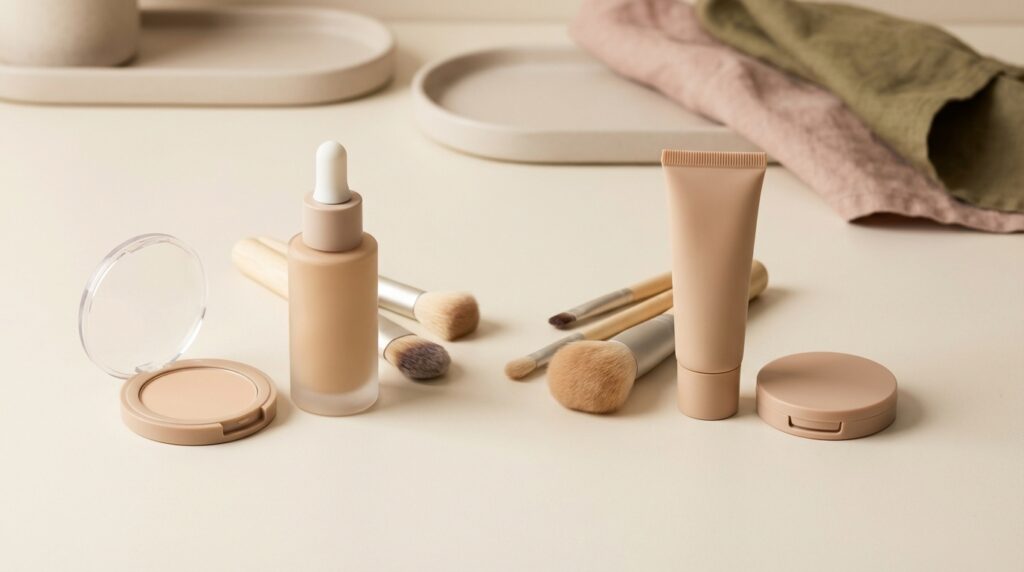
Not necessarily. Longevity depends more on formula type, application technique, and how well the product suits your skin. Plenty of budget-friendly options perform just as well as high-end ones. The key is finding what works for your specific skin type and concerns.
Can I use hairspray as a setting spray?
This is an old trick that’s best avoided. Hairspray contains alcohol and other ingredients that can irritate facial skin and clog pores. Actual setting sprays are formulated for your face and won’t cause the same issues. They’re worth the small investment.
How often should I touch up my makeup during the day?
For most people, once around midday is enough. If you have very oily skin or you’re in challenging conditions (heat, humidity, long hours), a second quick touch-up in the late afternoon can help. But if you find yourself needing constant fixes, it might be worth revisiting your base routine.
Will setting spray make my skin break out?
Most setting sprays are fine for regular use, but if you’re prone to breakouts, look for formulas labeled non-comedogenic. Always remove your makeup thoroughly at the end of the day, regardless of what products you use. Leftover makeup and setting spray sitting on skin overnight is a recipe for clogged pores.
Summary and Next Step
Making your makeup last longer on busy days comes down to a few simple adjustments: proper skin prep, strategic product placement, thin layers, and a good setting spray. You don’t need to overhaul your entire routine or buy a dozen new products. Start by adding one or two of these steps to what you already do and see how your makeup holds up.
If you’re not sure where to begin, try the primer-and-setting-spray combination first. Those two additions alone make a noticeable difference for most people. Pay attention to how your makeup wears throughout the day, and adjust from there. Small tweaks lead to big improvements over time.