
You’ve been eyeing that sun-kissed glow on everyone’s Instagram, but the idea of ending up streaky, orange, or smelling like a biscuit factory has kept you firmly on the sidelines. Fair enough. The world of self-tanning can feel intimidating when you’re starting from scratch. The good news? Drugstore self-tanners have come a long way, and there are genuinely beginner-friendly options that won’t punish you for being new at this.
This guide breaks down the best drugstore self-tanners for beginners based on formula type, ease of application, and how forgiving they are when your technique isn’t perfect yet. You’ll walk away knowing which format suits your comfort level, how to avoid the most common rookie mistakes, and which products give you room to learn without disaster.
Quick Verdict: Best Drugstore Self-Tanners by Need
- Best for total beginners: A gradual tanning moisturizer (builds slowly, very forgiving)
- Best for a faster result with training wheels: A tinted mousse with a guide color
- Best for sensitive skin: A fragrance-free gradual formula
- Best for face only: Tanning drops you mix into your moisturizer
- Best if you hate the smell: A clear tanning water or newer mousse formulas
Understanding Self-Tanner Formats: Which One Is Actually Easiest?
Before you grab whatever’s on sale, it helps to know that self-tanners come in several formats—and they’re not all equally beginner-friendly. The format you choose matters more than the brand when you’re just starting out.
Gradual Tanning Lotions
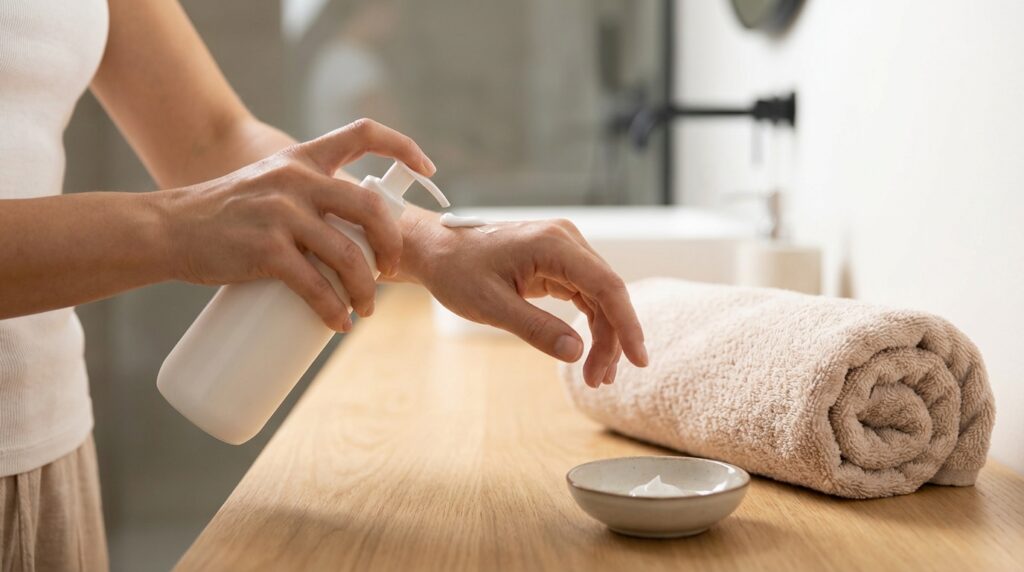
These are moisturizers with a small amount of tanning agent mixed in. You apply them daily like regular lotion, and color builds over three to five days. The margin for error here is huge. Miss a spot? You’ll barely notice because the color is so subtle per application. This is the training-wheels option, and there’s no shame in it.
Pros:
- Nearly impossible to mess up
- No weird tan lines or streaks
- Doubles as your daily moisturizer
- Very affordable at the drugstore
Cons:
- Takes several days to see real color
- Results are subtle, not dramatic
- Some formulas feel sticky
Tanning Mousses and Foams
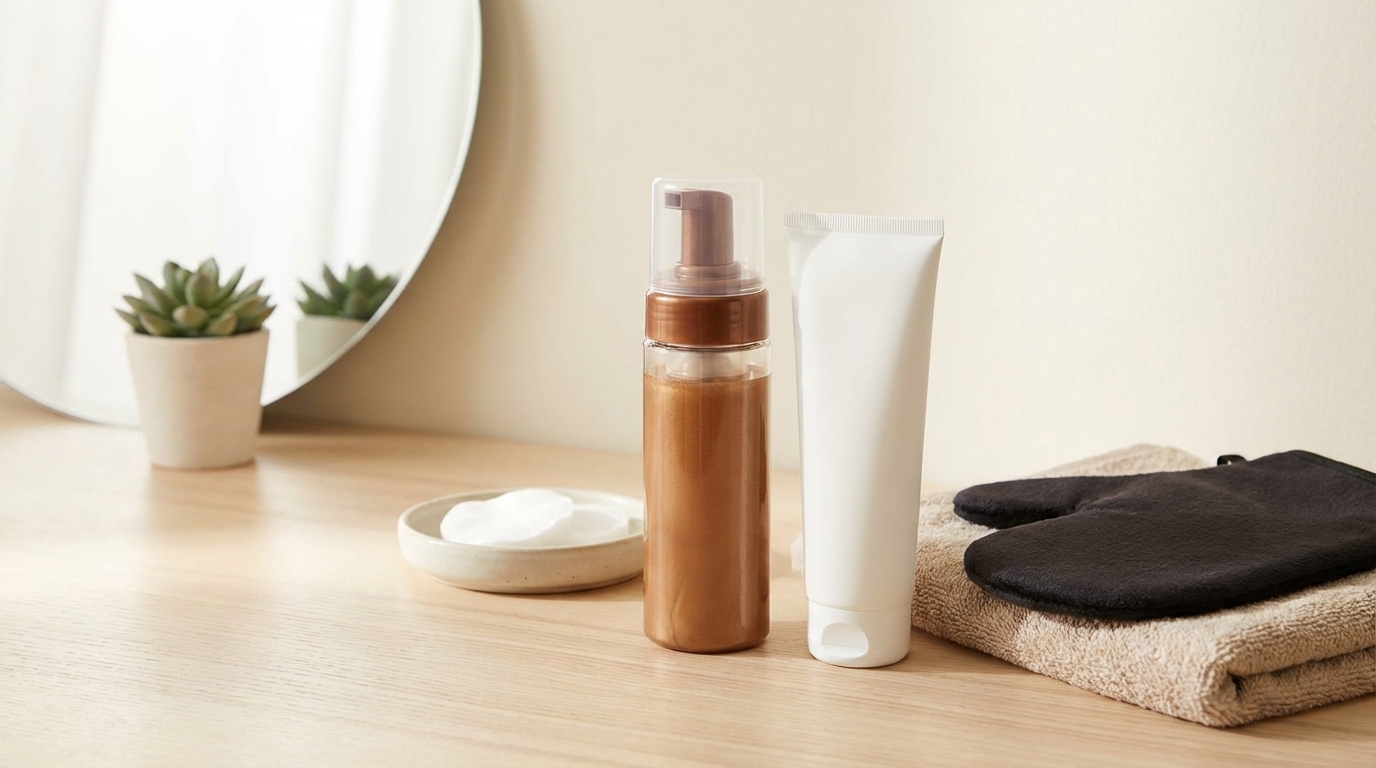
Mousse formulas are what most beauty editors and self-tan enthusiasts recommend for beginners who want faster, more visible results. According to recent reviews, mousse applies smoothly with a mitt, spreads evenly, and often comes with a guide color so you can see exactly where you’ve applied. The guide color washes off in your first shower, leaving the “real” tan behind.
Pros:
- Easy to spread evenly
- Guide color helps you see coverage
- Dries quickly, less transfer onto clothes
- Results in one application
Cons:
- Requires a tanning mitt (budget an extra few dollars)
- More technique involved than gradual lotion
- Mistakes are more visible
Tanning Waters and Drops
These are lightweight, often clear formulas. Tanning waters spray on like a mist, while drops get mixed into your regular moisturizer or serum. They’re popular for faces and for people who hate the typical self-tanner smell. However, because many are clear with no guide color, beginners sometimes struggle with even application.
Pros:
- Lightweight, no heavy residue
- Great for face tanning
- Often minimal or no scent
Cons:
- No guide color means you’re working blind
- Easy to over-apply in some areas
- Can be pricier per use
What to Look for as a Beginner
When you’re browsing the drugstore aisle, keep these criteria in mind. They’ll steer you toward formulas that work with you, not against you.
A Guide Color or Tint
Tinted formulas show you exactly where you’ve applied product. This is genuinely helpful when you’re learning. You’ll see if you missed your ankles or went too heavy on your knees. The tint washes off, so don’t panic when you look like a bronzed statue immediately after application.
A Forgiving Development Time
Some self-tanners develop in two to four hours, others take six to eight. Longer development times are more forgiving because the color builds gradually. If you’re nervous, look for formulas that let you shower after four hours minimum—this gives you a lighter result you can build on.
Hydrating Ingredients
Self-tanners cling to dry patches and create darker spots there. Formulas with built-in moisturizers (like hyaluronic acid, aloe, or glycerin) help prevent that patchy look. Gradual tanners are especially good here since they’re essentially tinted moisturizers.
Who This Is For (and Who It’s Not)
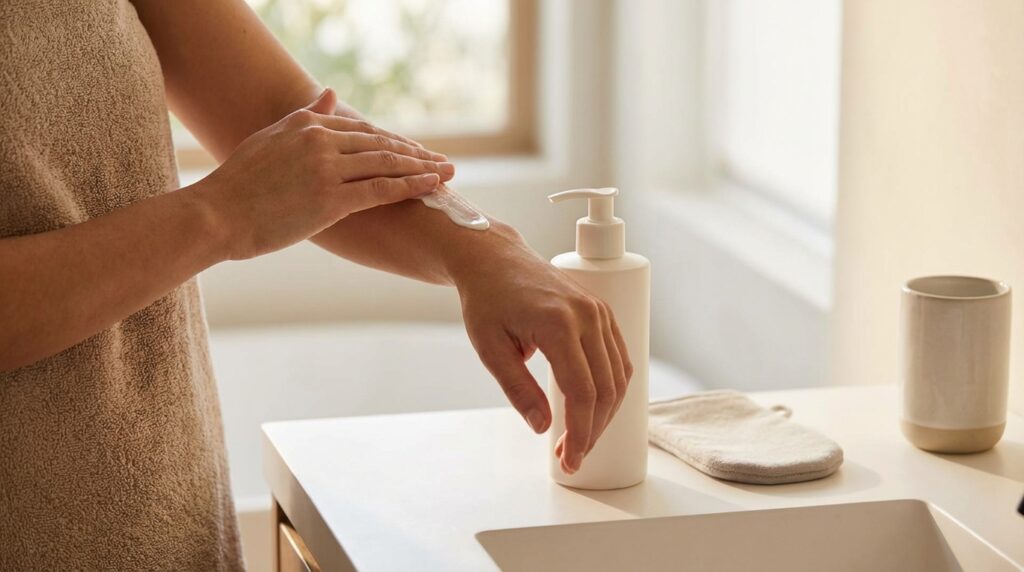
Drugstore self-tanners are ideal if you want a low-commitment way to experiment with faux glow. They’re budget-friendly, widely available, and the gradual options especially are perfect for dipping your toe in without a big investment.
This approach works well for:
- First-timers who want to learn without expensive mistakes
- Anyone on a budget who can’t justify luxury tanning products
- People who want subtle, natural-looking color
- Those who prefer to build color slowly rather than go dark overnight
You might want to look elsewhere if:
- You want a deep, dramatic tan in one session (salon spray tans or higher-end mousses may serve you better)
- You have a specific event tomorrow and zero practice (this is not the time to experiment)
- You’re extremely sensitive to DHA, the active tanning ingredient (patch test first, always)
Common Mistakes Beginners Make
Most self-tanning disasters aren’t about the product—they’re about the prep and application. Here’s where people typically go wrong:
- Skipping exfoliation: Dead skin cells grab onto tanner unevenly. A gentle scrub the day before makes a real difference.
- Forgetting to moisturize dry areas: Elbows, knees, ankles, and knuckles are naturally drier and will absorb more product. Apply a thin layer of regular moisturizer to these spots before tanning.
- Using too much product: A little goes further than you think. Start with less; you can always add more.
- Not using a mitt: Bare hands mean orange palms. A tanning mitt costs a few dollars and saves you from looking like you’ve been handling Cheetos.
- Rushing the dry time: Putting on clothes or going to bed before the product dries leads to streaks and fabric stains. Give it at least ten to fifteen minutes.
- Expecting perfection on the first try: Your first self-tan probably won’t be flawless. That’s normal. You’re learning a skill.
Frequently Asked Questions
How long does drugstore self-tanner last?
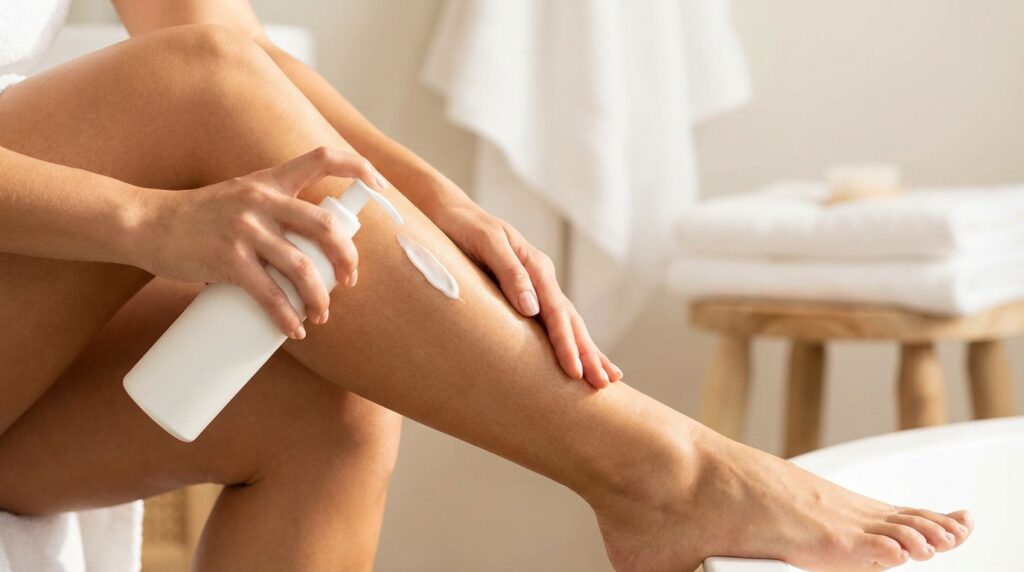
Most self-tanners last about five to seven days before fading noticeably. Gradual tanners fade faster since the color is lighter to begin with. Moisturizing daily helps extend the life of your tan, and avoiding long baths or heavy exfoliation slows the fade.
Will self-tanner make me look orange?
Modern formulas have improved significantly. Orange tones usually happen when you apply too much, don’t prep your skin, or choose a shade too dark for your natural skin tone. Start with a light or medium shade and build from there. Most people find drugstore options look quite natural when applied correctly.
Can I use self-tanner on my face?
You can, but facial skin is different from body skin. Many people prefer tanning drops mixed into their moisturizer for more control. If you use a body mousse on your face, use a very small amount and blend carefully around your hairline, eyebrows, and ears. Patch test first if you have sensitive or acne-prone skin.
Do I need to do anything before applying self-tanner?
Yes. Shower, exfoliate gently (especially rough areas like elbows and heels), and shave if you plan to. Apply a light moisturizer to dry patches. Make sure your skin is completely dry before applying tanner. This prep takes ten minutes and makes a noticeable difference in your results.
What if I mess up?
Don’t panic. Self-tanner mistakes fade within a few days on their own. To speed things up, exfoliate the area gently or use a self-tan remover product. Baby oil left on for twenty minutes before showering can also help lift excess color. It’s fixable.
Summary and Next Step
Finding the best drugstore self-tanner for beginners really comes down to choosing a forgiving format and prepping your skin properly. Gradual tanning moisturizers offer the gentlest learning curve, while tinted mousses give faster results with a helpful guide color. Either way, the key is starting light, using a mitt, and giving yourself grace while you figure out your technique.
If you’ve never self-tanned before, grab a gradual formula on your next drugstore run and try it on your legs for a week. Low stakes, low cost, and you’ll learn how your skin responds before committing to a full-body application. That small experiment is worth more than any product recommendation.