
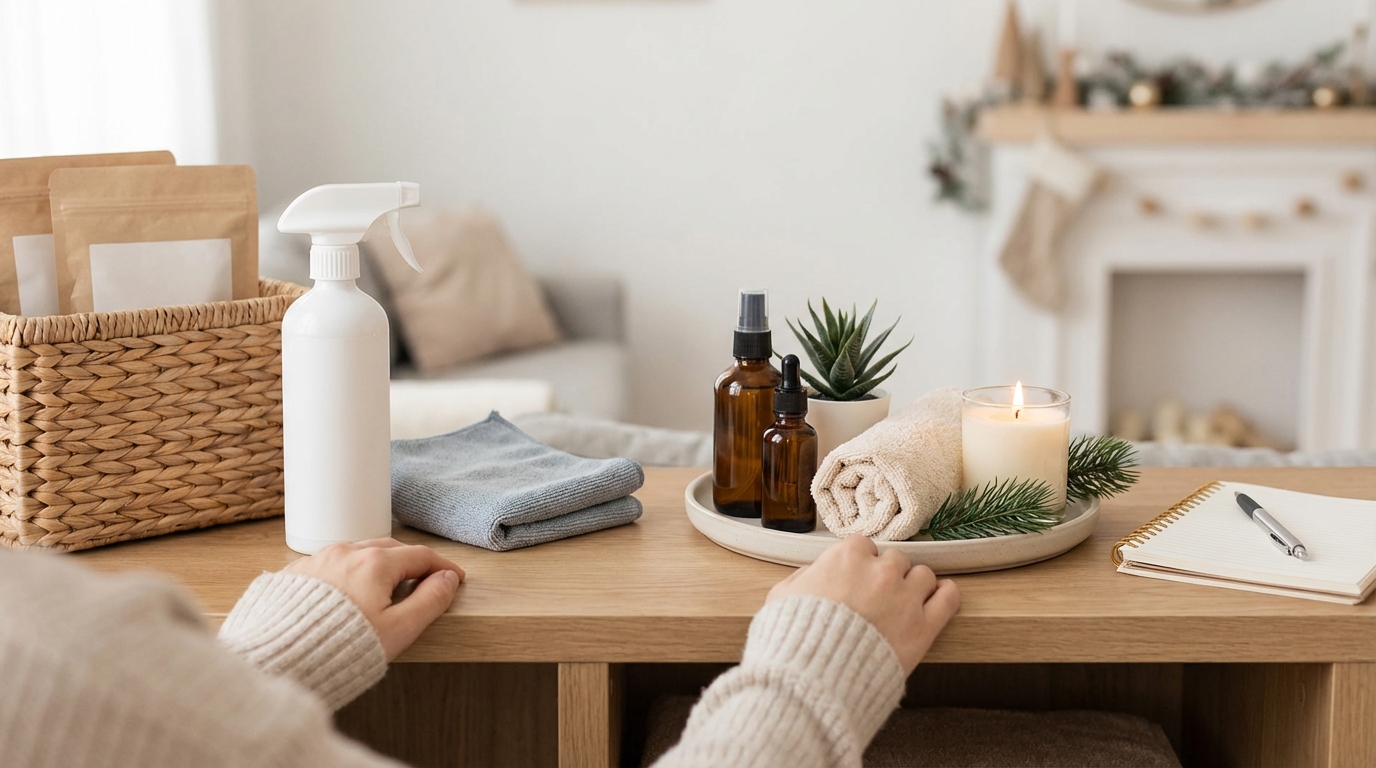
The holidays have a way of sneaking up on you. One minute you’re enjoying autumn, and the next you’re staring at a cluttered living room wondering how you’ll host dinner in two weeks while also finding time to breathe. Creating a holiday cleaning and self-care plan sounds like extra work, but it’s actually the opposite. It’s a way to protect your energy, keep your home guest-ready without panic cleaning, and carve out moments for yourself when everything feels chaotic.
This guide walks you through building a realistic plan that covers both your space and your sanity. You’ll learn how to break cleaning into manageable chunks, schedule self-care that actually happens, and avoid the burnout that makes January feel like a recovery month.
Quick Routine Overview
- Divide cleaning tasks across 3–4 weeks instead of one frantic weekend
- Assign 15–30 minute daily tasks rather than marathon sessions
- Block self-care time on your calendar like any other appointment
- Focus on high-impact areas guests actually see
- Build in buffer days for unexpected holiday chaos
What You’ll Need
Before diving into your plan, gather a few basics. Nothing fancy required here.
- A calendar or planner (paper or digital, whatever you’ll actually use)
- Basic cleaning supplies you already own
- A timer or phone for timed cleaning sessions
- A short list of self-care activities that genuinely relax you
- Realistic expectations about what “clean enough” means
That last item matters more than you’d think. Holiday cleaning isn’t about achieving magazine-level perfection. It’s about creating a comfortable space where you can enjoy the season without tripping over clutter or apologizing for dust bunnies.
Building Your Holiday Cleaning Plan
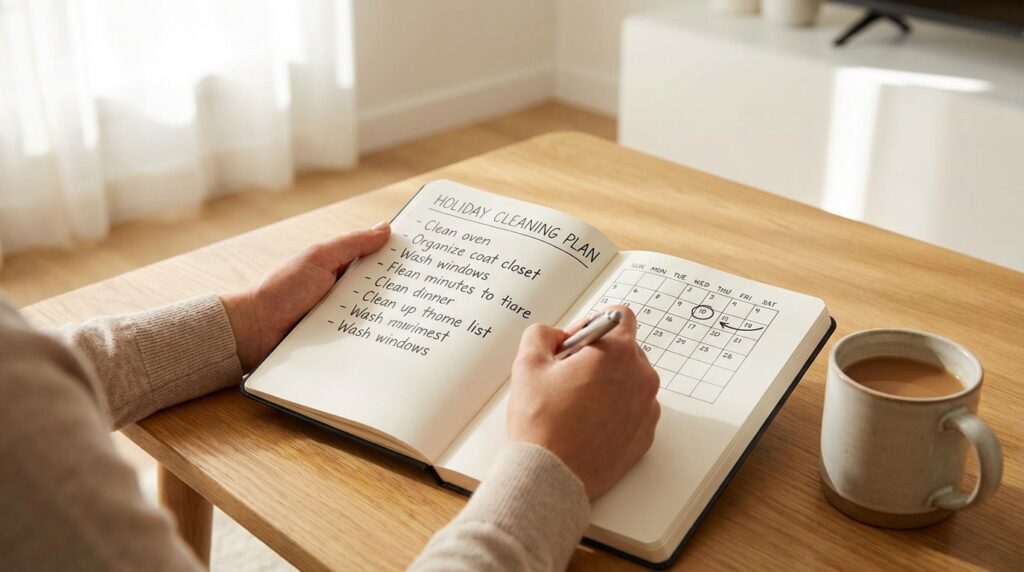
Step 1: Start by identifying your deadline. When do guests arrive, or when does your first holiday event happen? Count backward from that date to figure out how many weeks you have to work with. Most people find that 3–4 weeks gives enough breathing room without dragging things out.
Step 2: List every cleaning task you want to accomplish. Don’t filter yet—just brain dump everything from “clean the oven” to “organize the coat closet.” This might feel overwhelming, but getting it all on paper actually reduces anxiety. You can see the full scope instead of letting vague dread float around in your head.
Step 3: Sort tasks by priority. High-impact areas are spaces guests will see and use: the living room, bathroom, kitchen, and entryway. These get top priority. Secondary tasks like organizing your bedroom closet or deep-cleaning the garage can wait until January or get skipped entirely.
Step 4: Assign tasks to specific days. Here’s where most plans fall apart—people schedule too much per day. Aim for one 15–30 minute task on weekdays and one slightly longer task on weekends. If you’re working with a partner or family, divide and conquer. A common mistake is assuming you’ll “find time” without actually blocking it. You won’t. The holidays eat unscheduled time for breakfast.
Step 5: Build in buffer days. Life happens. Kids get sick, work runs late, you simply don’t feel like scrubbing the stovetop on a Tuesday. Leave at least two days per week unscheduled so you can catch up without derailing the whole plan.
Shortcut If You’re Short on Time
- Focus only on the bathroom, kitchen, and main living area
- Do a 10-minute tidy every evening instead of deep cleaning
- Close doors to rooms guests won’t enter
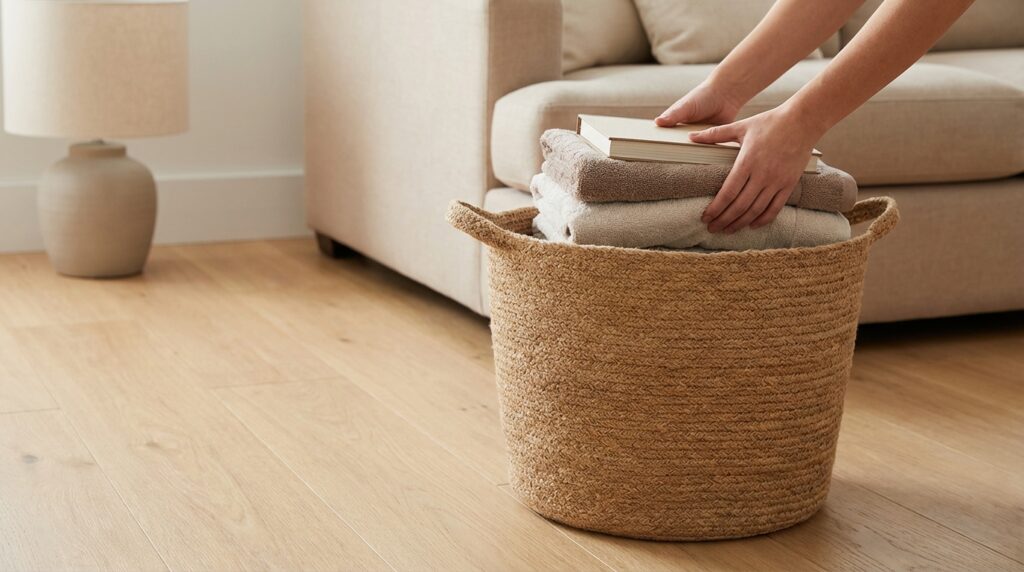
- Use baskets to quickly corral clutter out of sight
- Spot-clean floors instead of mopping the entire house
Adding Self-Care to Your Holiday Plan

Here’s where most holiday plans fail completely. People schedule every cleaning task, every shopping trip, every social obligation—and leave zero room for themselves. Then they wonder why they feel depleted by December 26th.
Self-care during the holidays doesn’t need to be elaborate. You’re not booking spa weekends or taking up meditation retreats. You’re protecting small pockets of time that keep you functional and maybe even happy.
Step 1: Identify what actually recharges you. This varies wildly from person to person. For some, it’s a quiet cup of coffee before anyone else wakes up. For others, it’s a 20-minute walk, a bath, reading a few chapters, or watching something mindless on TV. Write down 3–5 activities that genuinely help you decompress. If you’re not sure, think about what you miss most when life gets hectic.
Step 2: Schedule self-care like appointments. This sounds rigid, but it works. Put “15 min reading” or “evening walk” on your calendar. When someone asks if you’re free during that time, you’re not. You have plans. The plans happen to be with yourself, but they’re still plans.
Step 3: Protect your sleep. Holiday schedules tend to push bedtimes later and mornings earlier. If you can guard even 7 hours most nights, you’ll handle stress better, make clearer decisions, and feel less like a holiday zombie. This is unsexy advice, but it’s the foundation everything else rests on.
Step 4: Practice saying no. Not every invitation requires a yes. Not every tradition needs to continue if it drains you. If your family’s cookie exchange has become a source of dread rather than joy, it’s okay to skip a year or simplify your contribution. Boundaries are self-care too.
Low-Effort Self-Care Ideas
- A 10-minute stretch while watching TV
- Drinking your morning coffee without looking at your phone
- A short walk around the block after dinner
- Listening to a podcast or music while doing dishes
- Going to bed 30 minutes earlier than usual
- Saying no to one thing you don’t actually want to do
Common Mistakes to Avoid
- Waiting until the last week: Cramming everything into a few days guarantees exhaustion. Start earlier with smaller tasks.
- Perfectionism: Your home doesn’t need to look like a holiday catalog. Clean and comfortable beats spotless and stressful.
- Ignoring your own needs: Running on empty helps no one. A burned-out host isn’t a good host.
- Over-scheduling: Packing every day with tasks leaves no room for rest or the unexpected. Build in slack.
- Comparing to others: Social media shows highlight reels, not reality. Your holiday doesn’t need to match anyone else’s.
Sample Weekly Plan
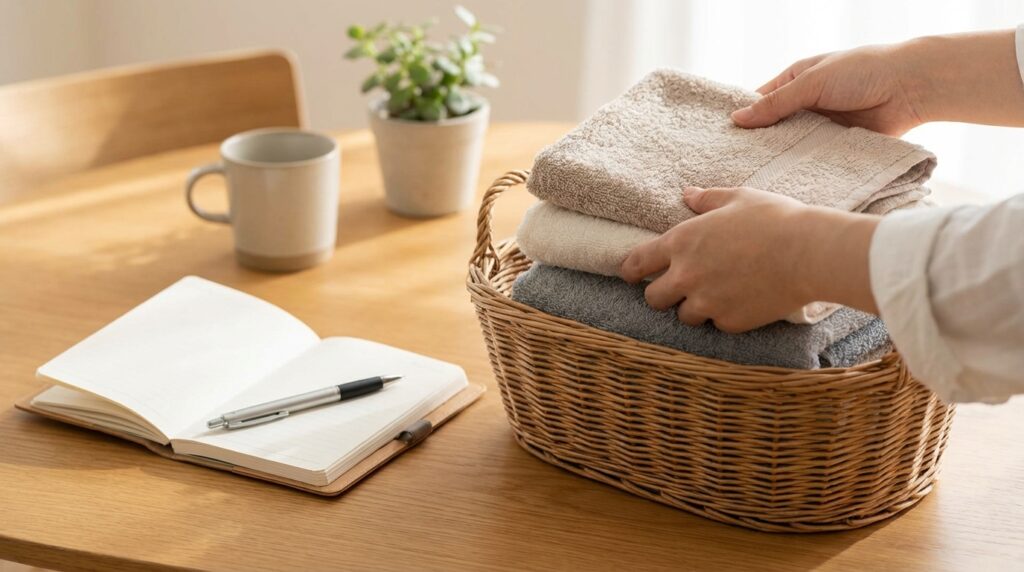
If you’re not sure how to structure your weeks, here’s a simple template to adapt. This assumes you have about three weeks before your main holiday event.
Week 1: Declutter and organize. Tackle one room per day—remove items that don’t belong, donate what you don’t need, and create space. Schedule two self-care blocks this week.
Week 2: Deep clean high-traffic areas. Focus on the kitchen, bathroom, and living room. Wipe down surfaces, clean floors, and address anything guests will notice. Keep self-care blocks on the calendar.
Week 3: Final touches and maintenance. Light cleaning to maintain what you’ve done, plus any last-minute tasks like setting up decorations or prepping guest spaces. Increase self-care time as stress peaks.
Adjust this based on your actual timeline and priorities. The goal is progress, not perfection.
Frequently Asked Questions
How do I stick to the plan when I’m already exhausted?
Lower the bar. If a 30-minute task feels impossible, do 10 minutes instead. Something is better than nothing, and momentum builds. Also, check whether you’re skipping self-care—exhaustion often means you’re giving too much without refilling.
What if I have guests arriving with very little notice?
Focus on the bathroom, clear surfaces in the main living area, and take out the trash. Close doors to messy rooms. Light a candle. Most guests care far less about your home’s condition than you think they do.
Is it selfish to prioritize self-care during the holidays?
Not even a little. You can’t pour from an empty cup, as the saying goes. Taking care of yourself makes you more present and pleasant for everyone around you. It’s practical, not selfish.
How do I get my family to help with the cleaning plan?
Assign specific, small tasks with clear deadlines. “Clean the bathroom by Saturday” works better than “help out more.” Make it concrete, and consider tying completion to something everyone wants, like movie night or a favorite meal.
Summary and Next Step
A holiday cleaning and self-care plan isn’t about adding more to your plate. It’s about being intentional so the season doesn’t steamroll you. Break cleaning into small daily tasks, prioritize what guests actually see, and treat your own rest as non-negotiable. The holidays should include some joy for you too, not just labor.
Your next step is simple: grab a calendar and block out the weeks between now and your first holiday event. Write down one cleaning task and one self-care activity for tomorrow. Start small, stay consistent, and give yourself permission to do enough rather than everything.