
Most people assume self-care requires blocking out an hour for a bubble bath or booking a spa day. The reality? The most sustainable daily self-care habits that don’t take extra time are the ones woven into things already happening—brushing teeth, commuting, waiting for coffee to brew. Zero extra minutes. Same 24 hours. Just smarter use of the moments in between.
This isn’t about adding more to an already packed schedule. It’s about upgrading what’s already there.
Why “No Extra Time” Actually Works Better
Habits that require carving out dedicated time tend to collapse first when life gets chaotic. A 20-minute meditation practice sounds lovely until a toddler wakes up early or a work deadline explodes. Habits attached to existing routines—called “habit stacking”—stick around because they don’t compete for calendar space.
Here’s the logic: the brain already has neural pathways for brushing teeth, making coffee, and walking to the car. Attaching a small self-care action to these automatic behaviors means less willpower required and higher follow-through rates.
Counter-Intuitive Insight: Shorter, scattered moments of self-care throughout the day often reduce stress more effectively than one long session. The nervous system benefits from frequent micro-resets rather than waiting until evening to finally exhale.
Morning Habits That Piggyback on Existing Routines
While the Coffee Brews (2-4 minutes)

That dead time waiting for coffee or tea is prime real estate. Options that fit:
- Three slow breaths: Inhale for 4 counts, hold for 4, exhale for 6. Activates the parasympathetic nervous system before the day’s chaos begins.
- Gentle neck rolls: Five circles each direction. Releases tension from sleep position.
- Mental gratitude scan: Name three specific things (not vague “family” or “health”—more like “that the dishwasher actually worked last night”).
During Teeth Brushing (2 minutes, twice daily)
Two minutes of standing still happens anyway. Upgrade it:
- Calf raises: 15-20 raises while brushing. Builds strength without gym time.
- Body scan: Notice where tension lives—jaw clenched? Shoulders up by ears? Consciously release.
- Posture check: Stand tall, roll shoulders back. Two minutes of good posture twice daily adds up.
Smart Tip: Keep a small bottle of hand cream next to the toothbrush. After brushing, the 10-second moisturizing ritual signals “taking care of myself” without adding a separate skincare step. Cost: roughly $0.03 per use for a basic unscented cream.
Commute and Transit Time Upgrades
Whether driving, riding the bus, or walking to a home office down the hall, transition time between “home self” and “work self” already exists. Most people spend it scrolling or stressing about the day ahead.
For Drivers (hands on wheel, eyes on road)
- Audiobook or podcast that feeds the soul: Swap news anxiety for something that genuinely interests or relaxes. Fiction, comedy, language learning—anything that feels like a gift rather than obligation.
- Singing: Seriously. Singing activates the vagus nerve, improves breathing, and releases tension. The car is a judgment-free zone.
- Intentional silence: No radio, no phone, no podcasts. Just quiet. Rare and surprisingly restorative.
For Public Transit or Passengers
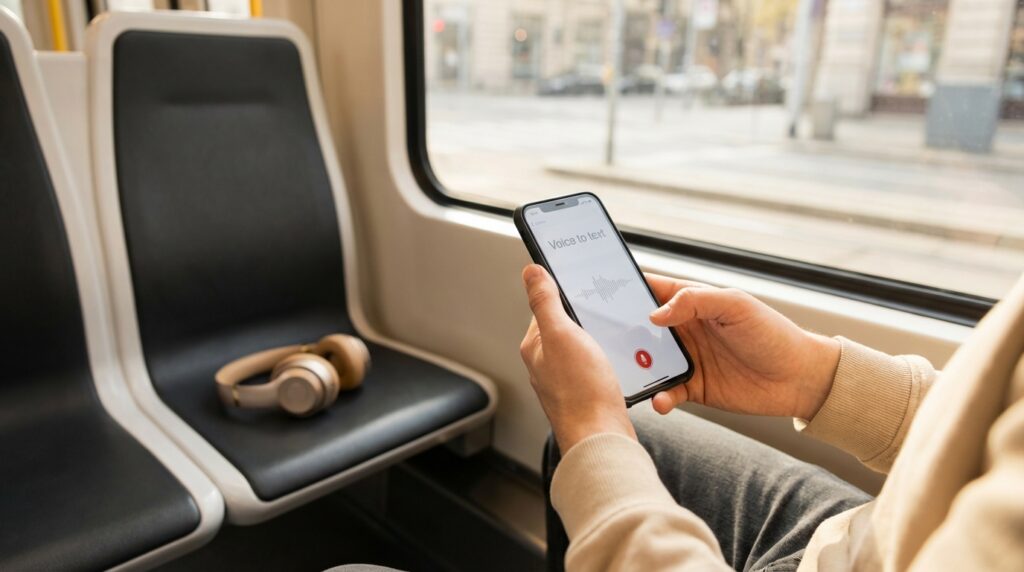
- Five-minute journaling app: Voice-to-text a brain dump of thoughts. Clears mental clutter before arriving.
- Guided breathing on headphones: Free apps offer 3-5 minute sessions perfect for a short commute.
- People-watching with curiosity instead of judgment: A subtle mindset shift that practices compassion.
Workday Micro-Moments
The workday contains dozens of tiny gaps—waiting for a file to load, sitting on hold, walking to refill water. These add up to 20-40 minutes daily for most people.
The “Loading Screen” Reset
Every time a computer loads, a page refreshes, or an app opens slowly:
- Drop shoulders away from ears.
- Unclench jaw (tongue should rest on roof of mouth, not pressed against teeth).
- Take one full breath.
This takes 5-10 seconds. Done 15 times throughout a workday, that’s over a minute of conscious relaxation without scheduling anything.
Walking Meetings or Calls
If a meeting doesn’t require screen-sharing, take it while walking—even just pacing a room. Movement improves creative thinking and prevents the stiffness of sitting for hours. A 30-minute call becomes 30 minutes of gentle movement.
Hydration as Ritual
Refilling a water glass requires standing up and walking. Instead of rushing back to the desk:
- Take three sips slowly, actually tasting the water.
- Look out a window for 20 seconds (reduces eye strain and mental fatigue).
- Stretch arms overhead once.
Total added time: maybe 30 seconds. Benefit: a genuine pause that compounds throughout the day.
Evening Wind-Down Without Extra Steps
During Dinner Prep (15-30 minutes)

Cooking already happens. Make it feel less like a chore:
- Play music that shifts mood: Upbeat for energy, mellow for decompression. The right playlist transforms “making dinner” into “enjoying the kitchen.”
- Engage senses intentionally: Smell the garlic. Notice the color of vegetables. This is informal mindfulness without sitting cross-legged.
- Batch-prep as future self-care: Chopping extra vegetables now means easier meals later. A small act of kindness toward tomorrow’s version of yourself.
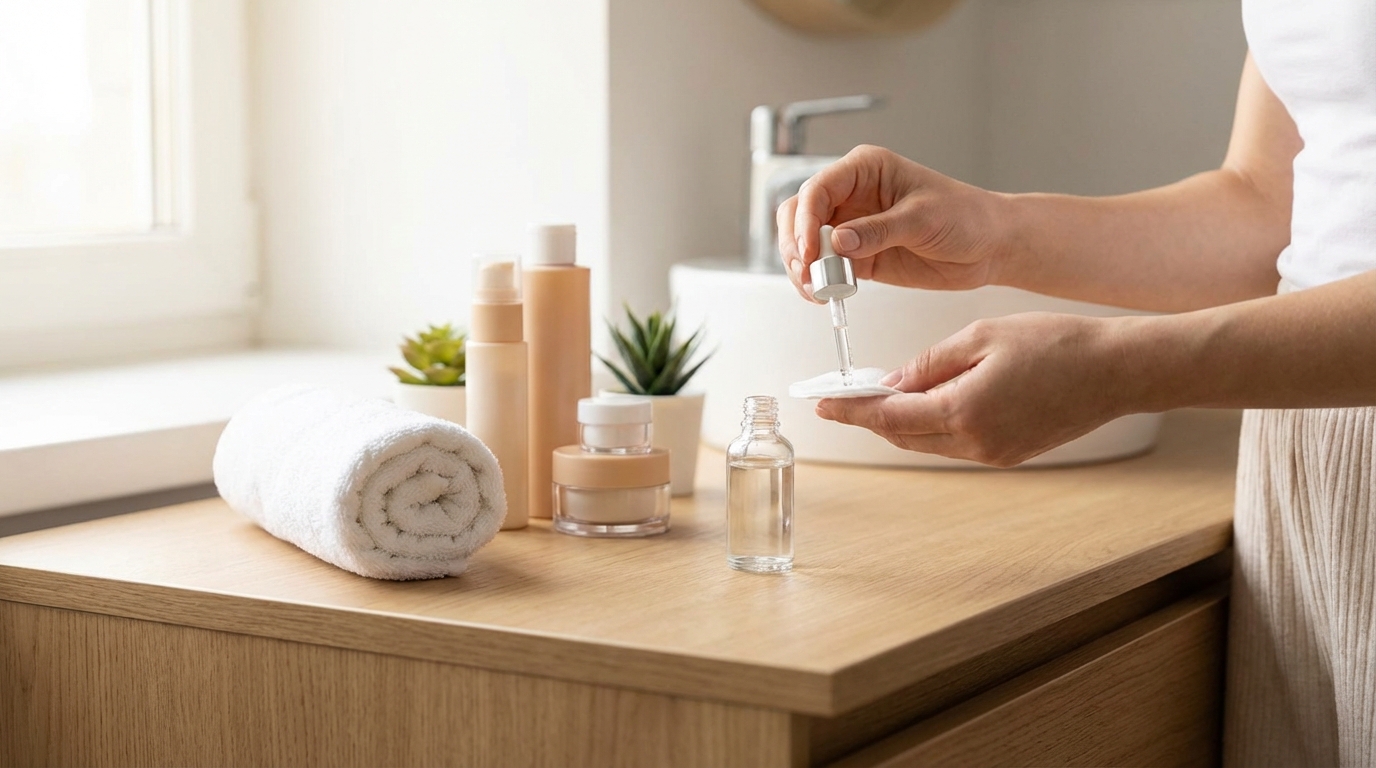
Skincare as Transition Ritual
A basic evening skincare routine—cleanser, moisturizer—takes 2-3 minutes. Instead of rushing through it:
- Apply cleanser with slow, circular motions (30 seconds of gentle facial massage).
- Use moisturizer application to check in: How does the skin feel today? Dry? Oily? Tired?
- Take one breath before leaving the bathroom.
Same products, same time, but approached as a ritual rather than a task.
Patch test reminder: When trying any new skincare product, test on a small area first and wait 24 hours to check for reactions.
The “Already in Bed” Moment
Most people scroll phones for 10-30 minutes before sleep anyway. Redirect even five of those minutes:
- Legs up the wall: Lie flat, swing legs up against the headboard or wall. Reduces leg swelling and signals relaxation to the body.
- Three good things: Mentally list three things that went okay today. Not “best” things—just okay. Lowers the bar and trains the brain to notice positives.
- Body relaxation scan: Starting at toes, consciously relax each body part moving upward. Often leads to falling asleep faster.
Expected Results (Realistic Version)
These habits won’t transform life overnight. What they do: create small pockets of calm that accumulate. After a week or two of consistent practice, most people notice they feel slightly less frazzled by evening. Stress doesn’t disappear, but it gets more breathing room.
The real win is sustainability. Because none of these require extra time, they’re far more likely to stick during busy seasons, travel, or life disruptions. Self-care that survives real life beats elaborate routines that collapse under pressure.
Quick-Start Checklist
Pick just one or two to start. Adding all at once defeats the “no extra time” purpose.
- Morning: Attach one habit to coffee/tea brewing time.
- Teeth brushing: Add calf raises or a body scan.
- Commute: Choose intentional audio or silence.
- Workday: Practice the “loading screen” reset.
- Evening: Slow down skincare by 30 seconds.
- Bedtime: Replace 5 minutes of scrolling with legs-up-the-wall.
The cabinet, the commute, the coffee maker—self-care opportunities are already built into the day. No extra time required. Just a small shift in attention toward moments that were there all along.