
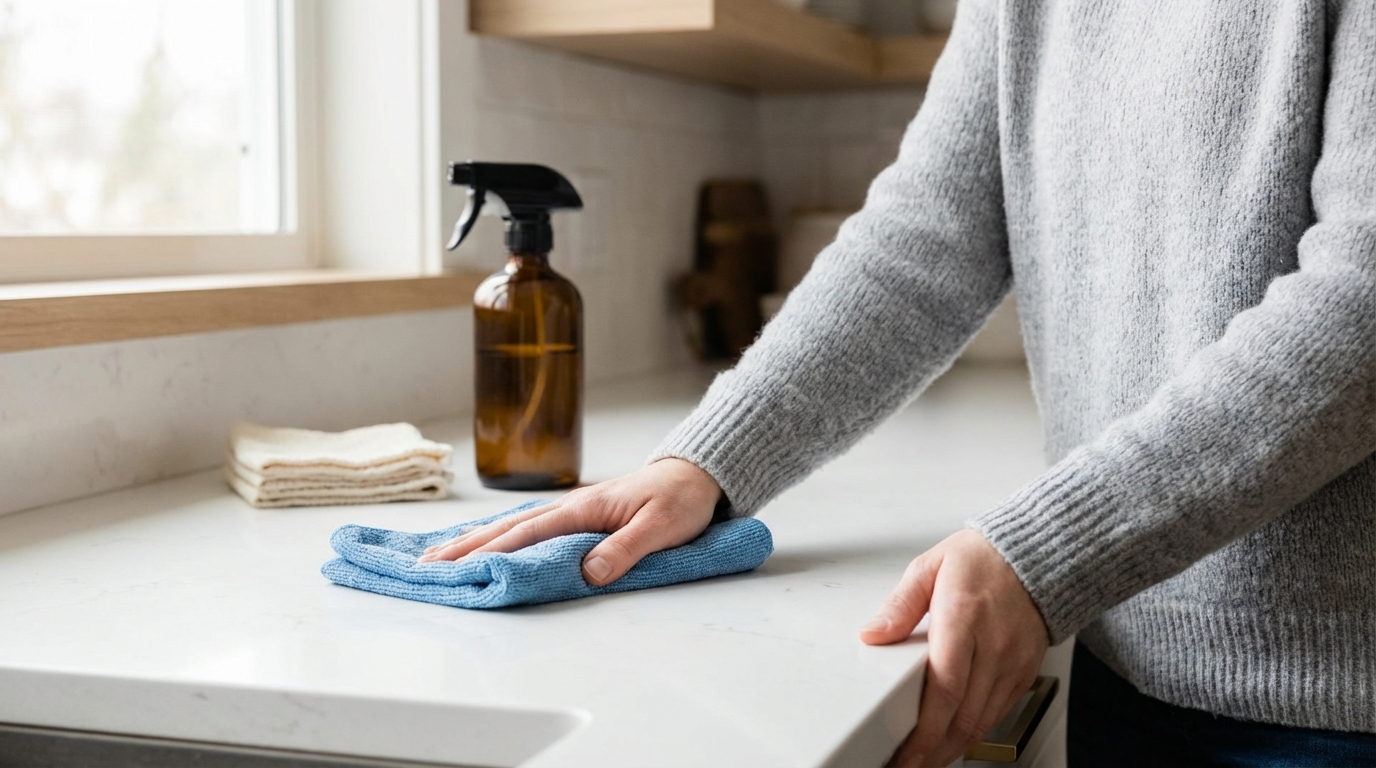
You’ve probably watched someone wipe down a mirror with a paper towel, only to leave behind a constellation of lint and streaks. Frustrating, right? Microfiber cloths for faster cleaning aren’t just marketing hype—they genuinely cut cleaning time in half while using less (or zero) chemical spray. One cloth can replace dozens of paper towel sheets, saving roughly $50–80 per year for an average household. The trick is knowing how to use them properly, because a microfiber cloth used wrong is just an expensive rag.
Why Microfiber Actually Works
Microfiber isn’t magic, but the science behind it is pretty clever. Each cloth contains millions of tiny fibers—about 1/100th the diameter of a human hair—split into star-shaped strands. These fibers create a massive surface area that traps dust, dirt, and bacteria instead of pushing them around.
Here’s the practical difference:
- Cotton towels absorb liquid but smear dirt across surfaces
- Paper towels leave lint and require constant replacement
- Microfiber grabs particles and holds them until you rinse or wash the cloth
Studies from cleaning industry groups suggest microfiber removes up to 99% of bacteria with just water, compared to about 30% with traditional cloths. That means fewer chemical cleaners, less scrubbing, and faster results.
Counter-Intuitive Insight
More cleaning product doesn’t help microfiber work better—it actually clogs the fibers. A damp microfiber cloth with nothing on it outperforms a cotton rag soaked in all-purpose cleaner for most everyday messes.
What You Need to Get Started
You don’t need a massive collection. Start with these basics:
- 3–4 general-purpose microfiber cloths (medium weave, around 300 GSM)
- 1–2 glass/mirror cloths (tighter weave, often waffle-textured or suede-like)
- 1 heavy-duty cloth (thicker, for scrubbing tile or stovetops)
- A small bucket or spray bottle with plain water
Color-coding helps prevent cross-contamination. A simple system: blue for glass, green for kitchen, yellow for bathrooms, red for toilets only. This isn’t obsessive—it’s practical hygiene that takes zero extra effort once set up.
Smart Tip: Skip the expensive “cleaning system” kits. Bulk packs of plain microfiber cloths (often $10–15 for a dozen) work identically to branded versions costing three times as much. Check the GSM rating—anything between 250–350 GSM handles most household tasks well.
How to Use Microfiber Cloths Room by Room
Kitchen (10–15 minutes)
- Dampen a general-purpose cloth with warm water—wring until just slightly moist
- Wipe countertops in one direction, not circles (this prevents redistributing grime)
- Fold the cloth into quarters; when one section gets dirty, flip to a clean side
- For stuck-on food, let the damp cloth sit on the spot for 30 seconds before wiping
- Finish stainless steel appliances with a dry microfiber cloth, wiping with the grain
Time saved: About 5 minutes compared to spray-and-wipe methods, plus no chemical residue near food surfaces.
Bathroom (8–12 minutes)
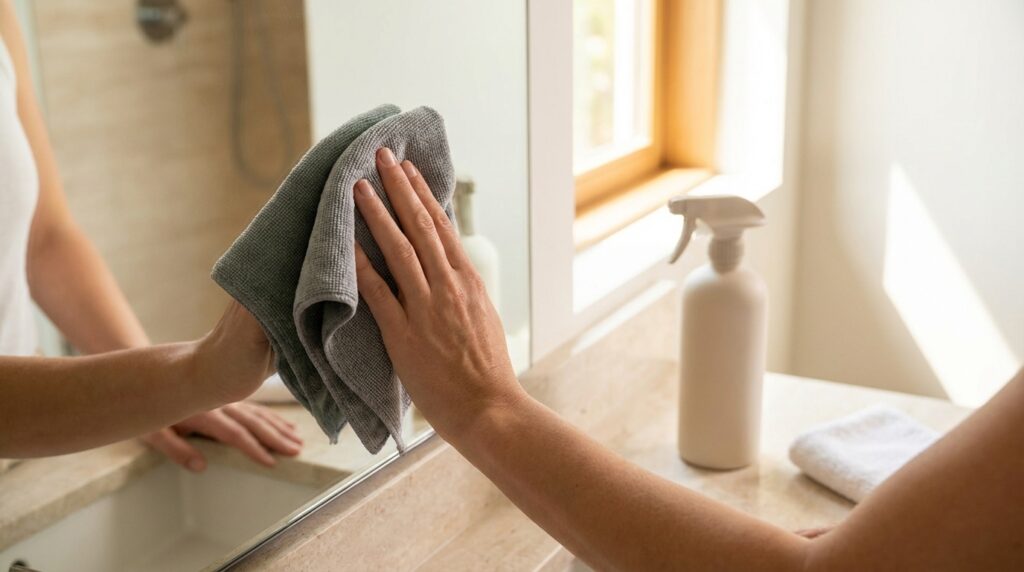
- Start with mirrors using a dry glass cloth—no water needed for light dust
- For water spots or toothpaste splatter, lightly mist the mirror (not the cloth) and wipe
- Switch to a damp general cloth for counters and fixtures
- Use a separate cloth for the toilet exterior—never mix this with other surfaces
Soap scum on shower doors responds well to a damp microfiber cloth with a tiny drop of dish soap. Rinse the cloth frequently.
Living Areas and Bedrooms (5–10 minutes)
- Dust from top to bottom—ceiling fan blades, shelves, then furniture
- Use a dry cloth for dusting; the static charge attracts particles
- For TV and computer screens, use a dry, clean microfiber cloth with zero pressure
- Baseboards and blinds: wrap a damp cloth around your hand or a flat tool and slide along
Expected Result: Surfaces stay cleaner longer because microfiber removes dust rather than scattering it into the air to resettle. Most people notice they need to dust half as often once they switch from feather dusters or dry rags.
Mistakes That Ruin Your Microfiber Cloths
Microfiber cloths can last 200–500 washes if treated properly. Here’s what kills them early:
- Using fabric softener: Coats the fibers and destroys their grabbing ability. This is the #1 mistake.
- Washing with cotton towels: Lint from cotton embeds in microfiber permanently.
- High heat drying: Melts the synthetic fibers. Use low heat or air dry.
- Bleach: Breaks down the fiber structure. Use white vinegar instead for disinfecting.
- Cleaning greasy surfaces without pre-treating: Oil clogs fibers. For heavy grease, use a degreaser first, then wipe with microfiber.
If your cloths start smearing instead of cleaning, they’re either dirty or damaged. Try a deep wash first (hot water, no detergent, add 1/2 cup white vinegar). If that doesn’t restore them, it’s replacement time.
How to Wash Microfiber Cloths Properly
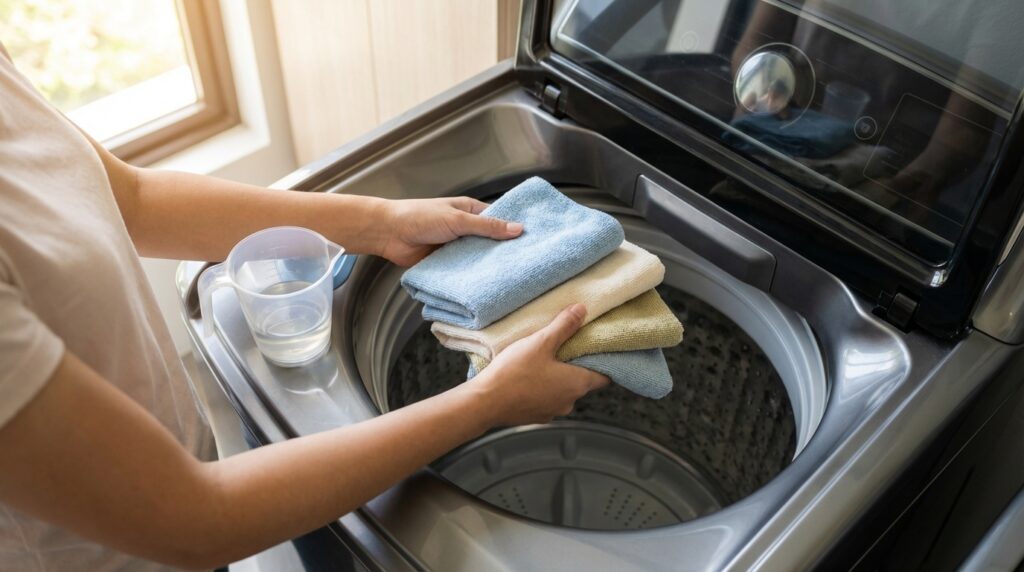
- Rinse cloths after each use to remove loose debris
- Machine wash in warm or hot water with a small amount of mild detergent (no fragrance, no softener)
- Wash microfiber separately from other laundry
- Tumble dry on low heat or hang to air dry
- Store in a clean, dry place—a drawer or bin works fine
For heavily soiled cloths (bathroom cleaning, greasy kitchen messes), soak in warm water with a tablespoon of washing soda for 30 minutes before machine washing.
How Often to Wash
- Light dusting cloths: Every 3–5 uses
- Kitchen and bathroom cloths: After each cleaning session
- Toilet cloths: Every single use, no exceptions
Frequently Asked Questions
Can microfiber cloths scratch surfaces?
Quality microfiber won’t scratch glass, stainless steel, or most finishes. However, if the cloth picks up grit or sand, that debris can cause scratches. Always shake out cloths before use and wash regularly.
Do microfiber cloths work without any cleaning solution?
Yes, for most everyday cleaning. Water alone handles dust, fingerprints, and light grime. For disinfecting or heavy grease, you’ll still need appropriate cleaners—but you’ll use far less than with paper towels.
Are all microfiber cloths the same?
No. Cheaper cloths (under 200 GSM) feel thin and don’t hold dirt well. Mid-range cloths (250–350 GSM) suit most tasks. Premium cloths (400+ GSM) excel for auto detailing or delicate surfaces but aren’t necessary for household cleaning.
How long do microfiber cloths last?
With proper care, 2–5 years of regular use. Signs of wear: cloths feel flat, don’t absorb water, or leave streaks even when clean.
Wrapping Up
Switching to microfiber cleaning cloths takes about a week to feel natural, then you’ll wonder why you ever bought paper towels. The upfront cost—maybe $15–25 for a solid starter set—pays for itself within a few months. More importantly, cleaning actually goes faster because you’re not fighting streaks, lint, or constantly grabbing new sheets.
Start simple: grab one general cloth and one glass cloth, try them on your bathroom mirror and kitchen counter this week. Once you see the difference, building out a color-coded system feels like a natural next step rather than an overwhelming project.