
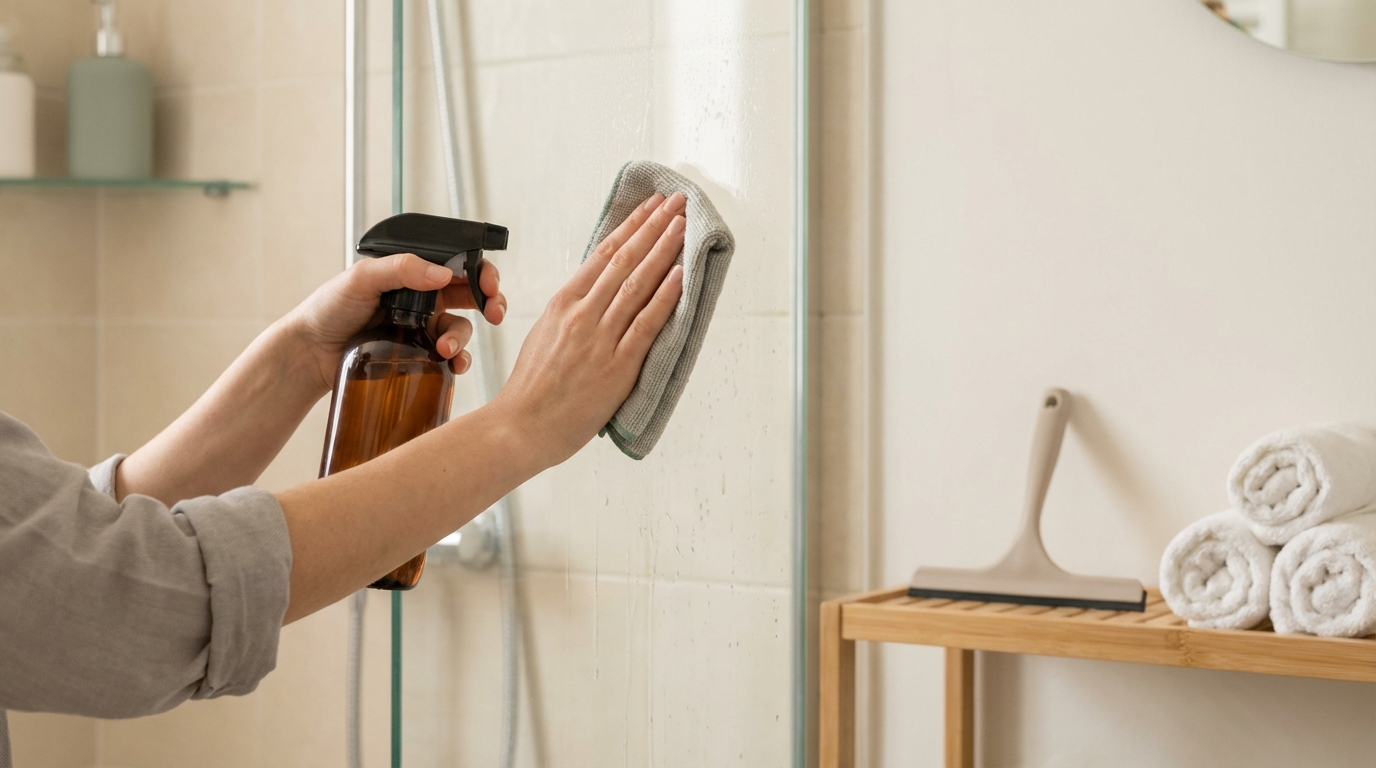
That moment when you finally scrub the shower tiles until they gleam—only to watch soap scum creep back within a week. Frustrating, right? The secret to a simple way to keep your shower cleaner daily isn’t about scrubbing harder or buying expensive products. It’s about tiny habits that take less than two minutes and cost almost nothing. With a few eco-friendly tweaks, the shower practically maintains itself between deep cleans.
Why Showers Get Grimy So Fast
Understanding the enemy helps defeat it. Shower grime comes from three main culprits:
- Soap scum: A reaction between soap and hard water minerals that leaves a filmy residue on glass and tile.
- Mildew: Thrives in warm, moist environments with poor ventilation—basically every bathroom after a hot shower.
- Body oils and product buildup: Shampoo, conditioner, and body wash leave behind residues that attract dust and grime.
Most people wait until all three have bonded into a stubborn layer before attacking with harsh chemicals. That’s the hard way. The easier path? Interrupt the buildup cycle every single day with minimal effort.
The 90-Second Daily Routine That Actually Works
This isn’t about adding another chore. It’s about replacing a monthly scrub-fest with a quick daily habit that feels almost effortless.
What You Need
- Squeegee (silicone blade preferred—gentler on glass)
- Spray bottle (16 oz or larger)
- White distilled vinegar
- Water
- Optional: 5-10 drops of tea tree or eucalyptus essential oil
- Microfiber cloth (for weekly touch-ups)
The Daily Steps
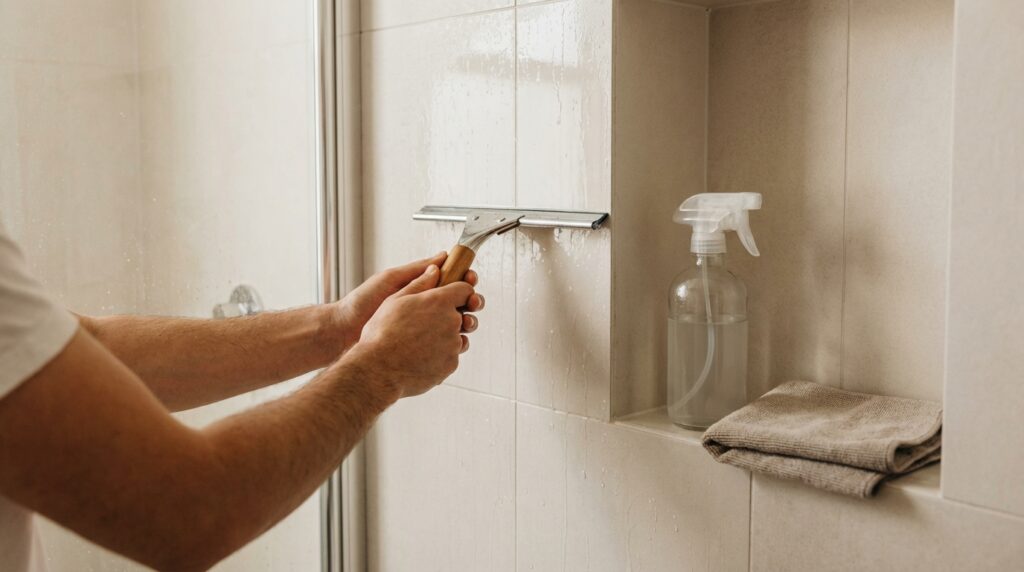
- Squeegee the walls and door immediately after showering. Start at the top and pull downward in overlapping strokes. This removes 80% of the water that would otherwise dry into mineral deposits. Takes about 30 seconds.
- Quick-spray with a DIY daily shower spray. Mist the walls, door, and fixtures lightly. No need to rinse—just let it air dry. Another 20 seconds.
- Leave the door or curtain open. Airflow is free mildew prevention. If privacy is a concern, crack it open just a few inches.
Total time: Under 90 seconds. The shower stays noticeably cleaner between deep cleans, and those deep cleans become much easier.
Smart Tip: Never mix vinegar with bleach or hydrogen peroxide—the combination creates toxic fumes. Stick to one active ingredient per spray bottle, and always test on a small hidden area first if you have natural stone tiles (vinegar can etch marble and travertine).
DIY Daily Shower Spray (Two Recipes)
Store-bought daily sprays work, but they often contain synthetic fragrances and cost $5-8 per bottle. These homemade versions cost under $1 and use ingredients already in most kitchens.
Recipe 1: Vinegar-Based Spray
Best for: Glass doors, ceramic tile, porcelain, fiberglass
- 1 cup white distilled vinegar
- 1 cup water
- 10 drops tea tree essential oil (optional, adds antifungal properties)
Combine in a spray bottle. Shake gently before each use. The vinegar smell fades within minutes as it dries.
Recipe 2: Castile Soap Spray
Best for: Natural stone, sensitive noses, households avoiding acids
- 1 tablespoon liquid castile soap
- 2 cups water
- 10 drops eucalyptus or lavender essential oil (optional)
This gentler formula won’t etch stone but still cuts through light soap residue. Shake well before spraying.
Expected Results
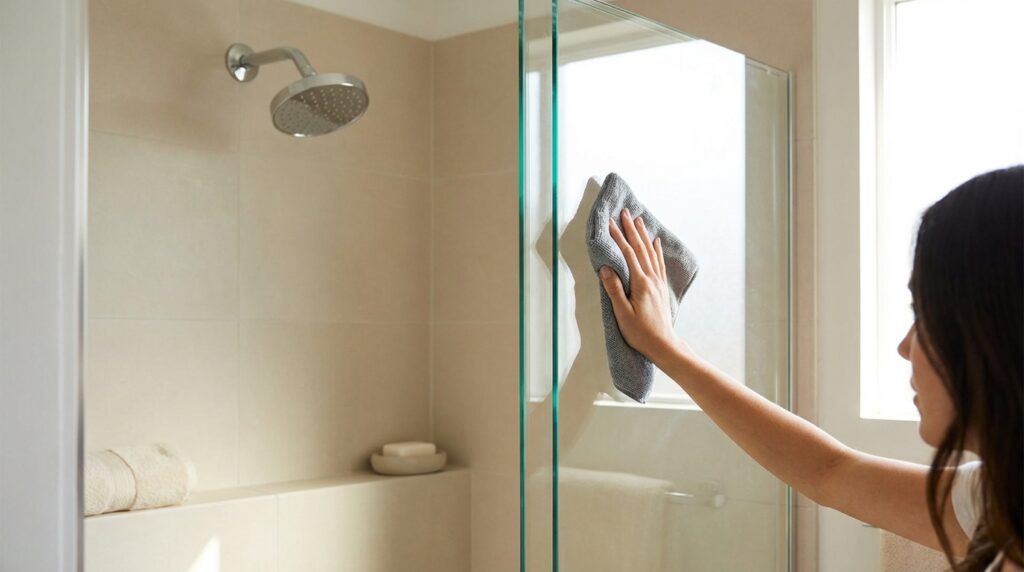
After one week of consistent use, soap scum buildup slows dramatically. Glass doors stay clearer, and that pink mildew ring around the drain becomes rare. Deep cleaning shifts from a weekly battle to a monthly (or even bi-monthly) light scrub. The shower doesn’t sparkle like a hotel bathroom every day—but it stays presentable without much thought.
Counter-Intuitive Insight: Less Soap Means Less Scum
Here’s something most cleaning guides skip: the type and amount of soap used during showers directly affects how dirty the shower gets afterward.
Bar soaps—especially those with added moisturizers—leave far more residue than liquid body washes. Switching to a clear liquid soap or reducing the amount used can cut soap scum formation by half. Not suggesting anyone give up their favorite lavender bar, but it’s worth knowing why some showers seem to attract grime faster than others.
Hard water amplifies the problem. If white crusty deposits appear on showerheads and faucets regularly, consider a simple showerhead filter (around $20-30) that reduces mineral content. Less mineral buildup means the daily spray works even better.
Ventilation: The Free Cleaning Hack
Mildew needs moisture and warmth. Remove one, and it struggles to grow. Most bathrooms have an exhaust fan—but many people turn it off the moment they leave.
Run the fan for at least 15-20 minutes after showering. If there’s no fan, open a window or door. In windowless bathrooms without fans, a small USB-powered fan pointed at the shower area helps tremendously.
This single habit—letting the bathroom dry out properly—does more for everyday shower maintenance than any spray. Combine it with the squeegee routine, and mildew becomes a rare visitor instead of a permanent resident.
Weekly Touch-Up (5 Minutes)
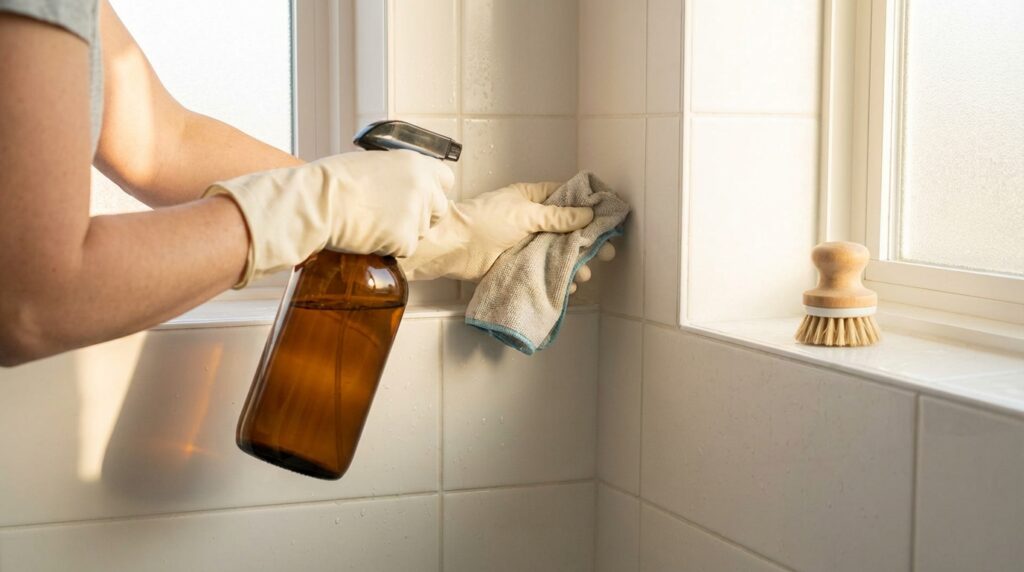
Even with daily habits, a quick weekly wipe keeps things fresh:
- Spray the entire shower with the DIY solution.
- Let it sit for 2-3 minutes.
- Wipe down with a damp microfiber cloth, focusing on corners, grout lines, and the bottom of the door.
- Rinse the cloth and do a final wipe to remove any residue.
This prevents any sneaky buildup from gaining a foothold. Five minutes once a week beats an hour of scrubbing once a month.
Frequently Asked Questions
Can vinegar damage my shower?
On ceramic, porcelain, glass, and fiberglass—no. On natural stone like marble, granite, or travertine—yes, over time. Acidic cleaners etch these surfaces. Use the castile soap recipe instead, or stick to pH-neutral cleaners specifically labeled safe for stone.
What if I already have heavy buildup?
The daily routine prevents future buildup but won’t remove existing layers. Do one thorough deep clean first (baking soda paste for scrubbing, vinegar spray for dissolving mineral deposits), then start the daily habit to maintain results.
Do I really need a squeegee?
Technically, no—but it’s the single most effective tool for preventing water spots and mineral deposits. A basic squeegee costs $5-10 and lasts years. The time savings pay for itself within a month.
Will essential oils leave residue?
In the small amounts used (5-10 drops per bottle), no noticeable residue forms. They evaporate with the water. Skip them entirely if preferred—the vinegar or castile soap does the heavy lifting.
Wrapping Up
Keeping a shower clean doesn’t require expensive products or weekend scrub sessions. A squeegee, a homemade spray, and better ventilation handle most of the work. The whole routine takes less time than scrolling through a few social media posts.
Start tonight: grab a squeegee, mix up a batch of spray, and commit to 90 seconds after each shower. Within two weeks, the difference becomes obvious—and that dreaded deep-clean day keeps getting pushed further into the future.