
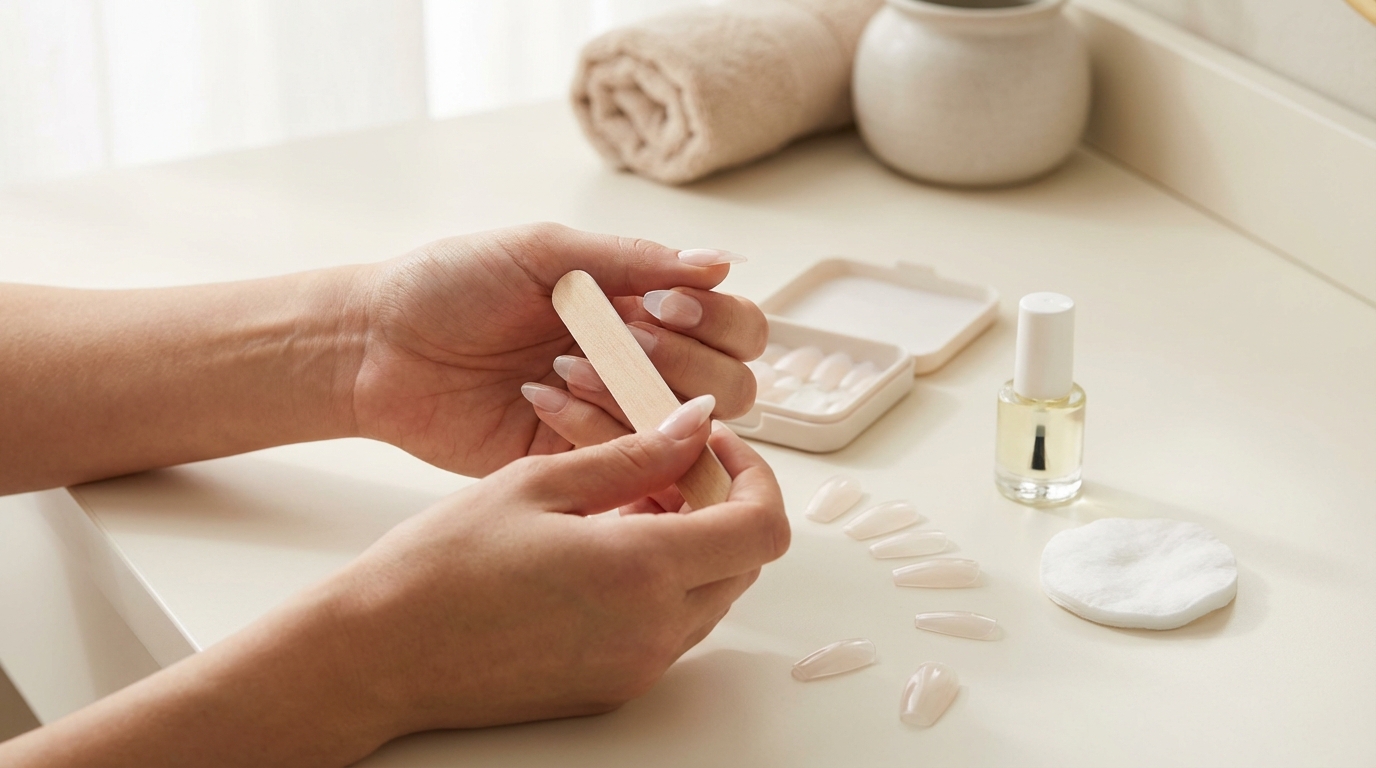
That moment when a fresh set of press-ons arrives and the shape just doesn’t match the vibe? Totally fixable. Learning how to shape press-on nails takes about five minutes and a basic nail file—no salon appointment required. Whether the goal is trendy almond tips, bold coffin edges, or classic squares, customizing press-ons at home saves money and opens up way more design options.
Most press-on sets come in a standard shape (usually oval or slightly rounded), but that doesn’t mean settling. With the right technique, any shape is achievable—even on budget sets. Here’s everything needed to file, shape, and perfect press-on nails like a pro.
Tools You’ll Need for Shaping Press-On Nails
Before touching a single nail, gather these supplies:
- Glass or crystal nail file – Gentler than emery boards and less likely to cause cracking or peeling on the plastic/acrylic material
- Fine-grit buffer block (180-240 grit) – For smoothing edges after shaping
- Nail clippers or small scissors – Only if significant length needs removing first
- A well-lit workspace – Natural light or a desk lamp prevents uneven filing
- Reference photo – Pull up the exact shape you want; eyeballing leads to lopsided results
Smart Tip: Shape press-ons before applying them. Filing while they’re on your natural nails risks damaging your nail bed and makes it harder to see the shape from all angles. Lay them flat or hold them gently between two fingers while working.
Understanding Popular Nail Shapes
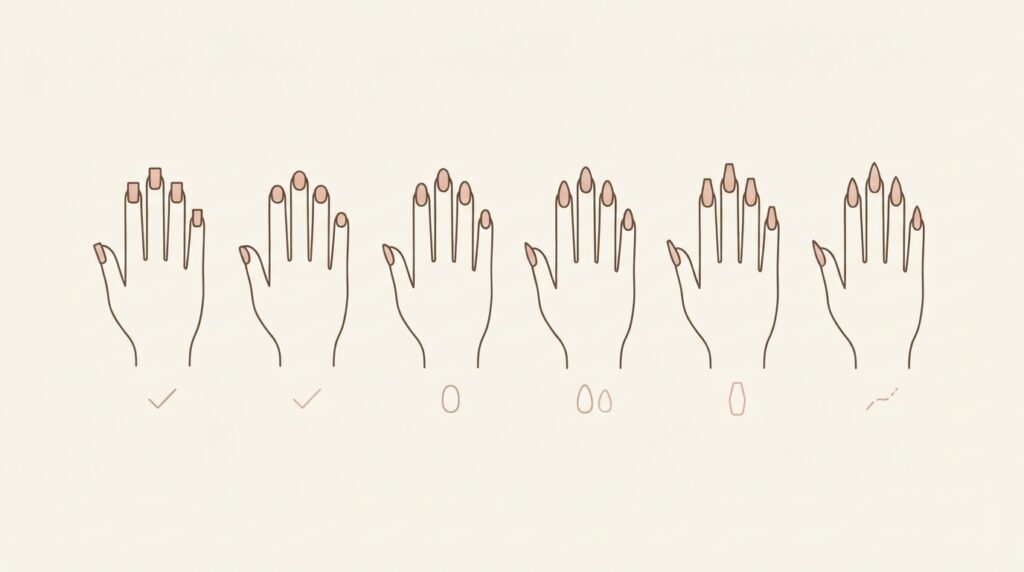
Not all shapes suit every nail length or lifestyle. Here’s a quick breakdown:
| Shape | Best For | Difficulty | Durability |
|---|---|---|---|
| Square | Short to medium nails, minimalist looks | Easy | High |
| Round | Short nails, low-maintenance wearers | Easy | High |
| Oval | Medium nails, elongating wider nail beds | Easy | Medium-High |
| Almond | Medium to long nails, elegant styles | Medium | Medium |
| Coffin/Ballerina | Long nails, bold statement looks | Medium-Hard | Medium |
| Stiletto | Extra-long nails, dramatic styles | Hard | Low |
Pointier shapes (almond, coffin, stiletto) look stunning but are more prone to breakage. If typing all day or doing hands-on work, square or oval shapes hold up better.
How to File Press-On Nails Into Each Shape
The golden rule: file in one direction only. Sawing back and forth creates micro-tears in the material, leading to rough edges and potential cracking. Start with less pressure and build up—removing material is easy, but adding it back isn’t.
Square Nails
- Trim the nail to desired length if needed
- Hold the file perpendicular (90 degrees) to the nail tip
- File straight across in one direction until the edge is flat and even
- Lightly file each corner at a slight angle (just a few strokes) to prevent sharp edges that snag on fabric
- Buff the tip smooth
Square nails work best on longer nail beds. On shorter, wider nails, they can look boxy—consider squoval (square with rounded corners) instead.
Round Nails
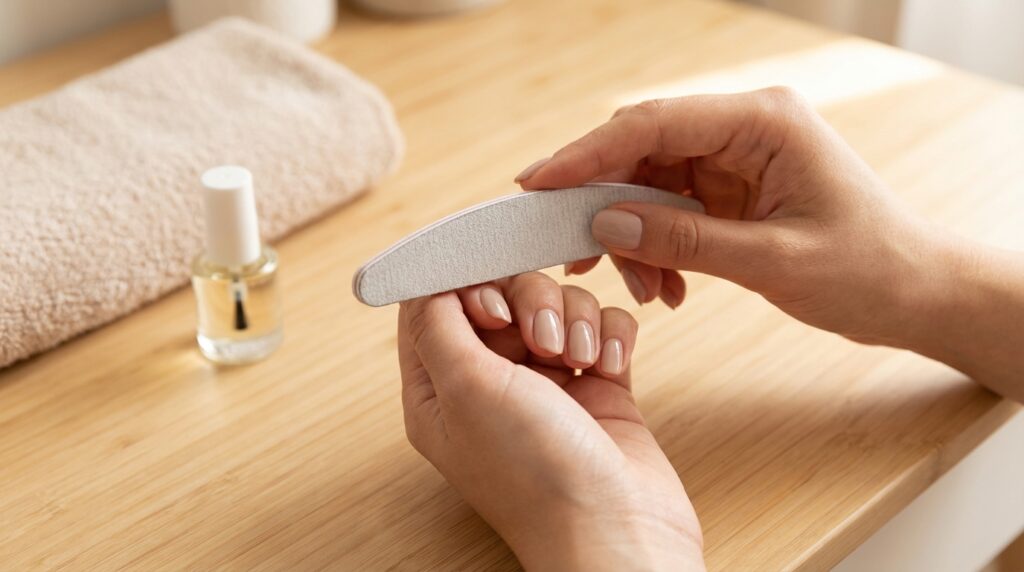
- Start with a square shape as your base
- File each corner in a curved motion, following the natural curve of your cuticle line
- Keep checking symmetry by looking at the nail head-on
- Buff edges to remove any roughness
Round is the most forgiving shape for beginners. Even slightly uneven filing looks natural.
Oval Nails
- File the sides of the nail slightly inward, tapering toward the tip
- Round the tip in a smooth, egg-like curve
- The widest point should be at the center of the nail, not the tip
- Compare both nails frequently—ovals show asymmetry more than rounds
Oval shapes visually elongate fingers, making them flattering for almost everyone.
Almond Nails
- File both sides of the nail inward at a steeper angle than oval
- Create a soft point at the tip—not sharp like stiletto, but definitely peaked
- Round off the very tip slightly so it’s not pokey
- The sides should taper evenly; uneven tapering is the most common almond mistake
Almond-shaped press-ons require medium-length nails minimum. On short nails, there’s not enough surface area to create the taper without the nail looking stubby.
Coffin (Ballerina) Nails
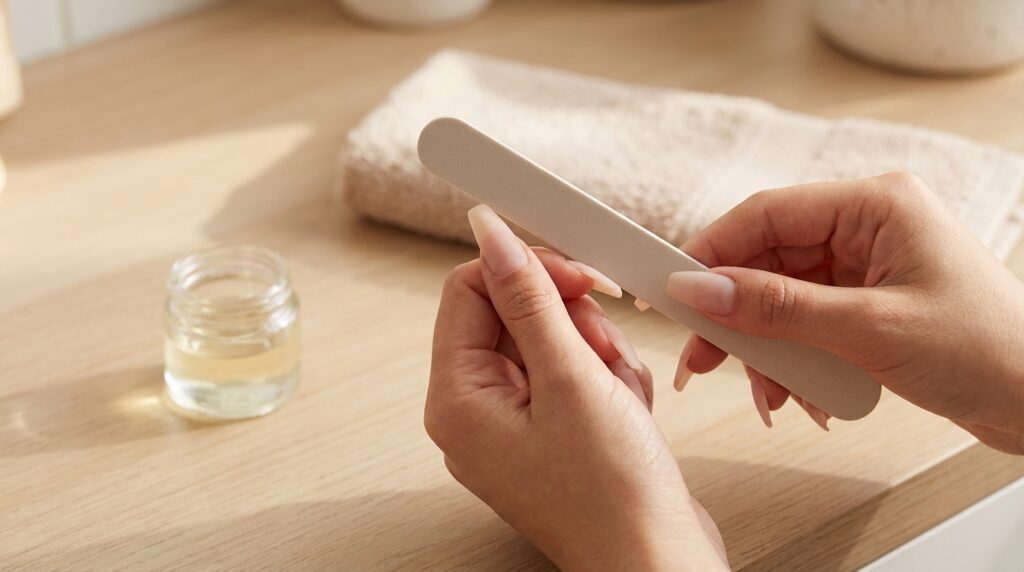
- Start by filing the sides inward like you’re making an almond shape
- Stop before creating a point—leave the tip wide enough to flatten
- File the tip straight across, creating a flat edge
- The result should look like a tapered rectangle or a coffin silhouette
- Soften the corners of the flat tip slightly to prevent snapping
Coffin nails need length to look right. Anything shorter than medium-long will just look like a weird square. This shape also requires the most precision—the flat tip must be centered and even.
Stiletto Nails
- File both sides aggressively inward toward a center point
- Create a sharp, defined point at the tip
- Keep the point centered by alternating sides every few strokes
- Slightly round the very tip (just one or two strokes) to reduce breakage risk
Fair warning: stiletto press-ons are fragile. They’re best for events or photo shoots rather than daily wear. Expect to baby them.
Common Mistakes When Shaping Press-Ons
Even with good technique, a few pitfalls trip people up:
- Filing too aggressively – Plastic and acrylic press-ons file down faster than natural nails. Go slow.
- Ignoring the sidewalls – Shaping only the tip creates an unbalanced look. The entire nail edge matters.
- Skipping the buffer – Rough edges catch on hair, clothes, and everything else. Always finish with a buffer.
- Not matching the set – File all ten nails before applying. Doing them one at a time leads to inconsistency.
- Using old emery boards – Worn-out files don’t cut cleanly. If the grit feels smooth, replace it.
What to Expect After Shaping
Freshly shaped press-ons should have smooth, snag-free edges and a consistent silhouette across all ten nails. The shape won’t be salon-perfect on the first try—and that’s fine. Most people improve dramatically after shaping just two or three sets.
If any nail feels rough after buffing, run it under water and dry it off. Sometimes tiny filing dust hides imperfections. A quick wipe reveals whether more smoothing is needed.
Frequently Asked Questions
Can you reshape press-ons after they’re already applied?
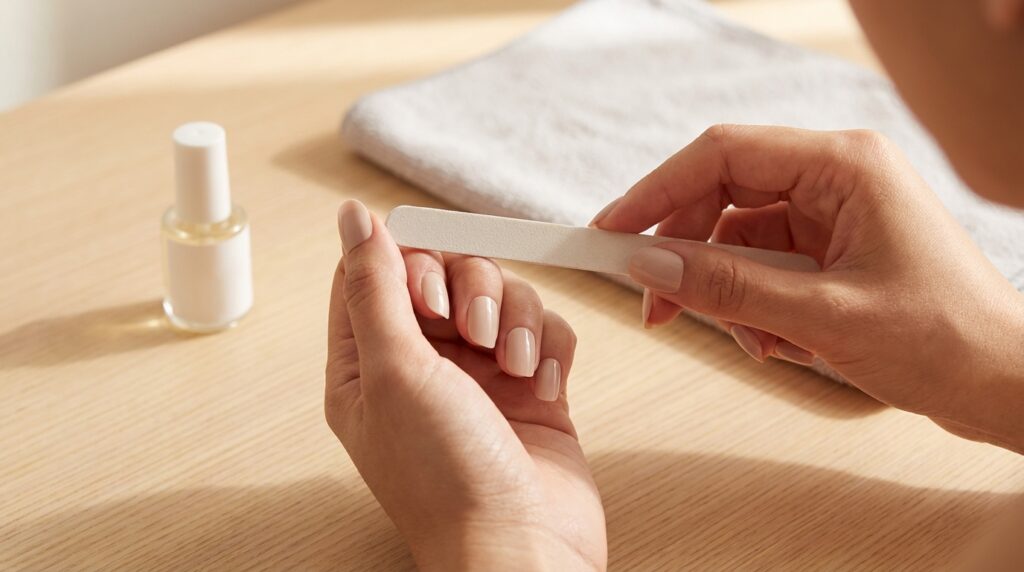
Technically yes, but it’s not ideal. Filing while wearing them puts pressure on the adhesive bond and can cause lifting. Minor touch-ups are okay; major reshaping should happen before application.
Do all press-on materials file the same way?
Mostly. ABS plastic (the most common material) and soft gel press-ons both file easily. Thicker acrylic press-ons take slightly more effort but shape the same way. Avoid using coarse files on thin press-ons—they’ll crack.
How short can press-ons be filed?
As short as needed, but keep at least 2-3mm extending past the natural nail tip. Filing them flush removes the overhang that helps them stay secure.
Will shaping weaken the press-on?
Removing material does reduce structural strength slightly, especially on pointy shapes. For maximum durability, stick with square, round, or oval. For drama, accept that stilettos and long coffins may not last as long.
Final Thoughts
Customizing press-on nail shapes turns a generic set into something that actually fits personal style. The whole process takes under ten minutes once the technique clicks, and the only real cost is a decent nail file (around $5-10 for a glass one that lasts years).
Start with an easier shape like round or square to build confidence, then work up to almond or coffin. Grab a set that’s been sitting in the drawer and practice—worst case, it’s just a learning experience. Best case, a whole new nail look without spending salon prices.