
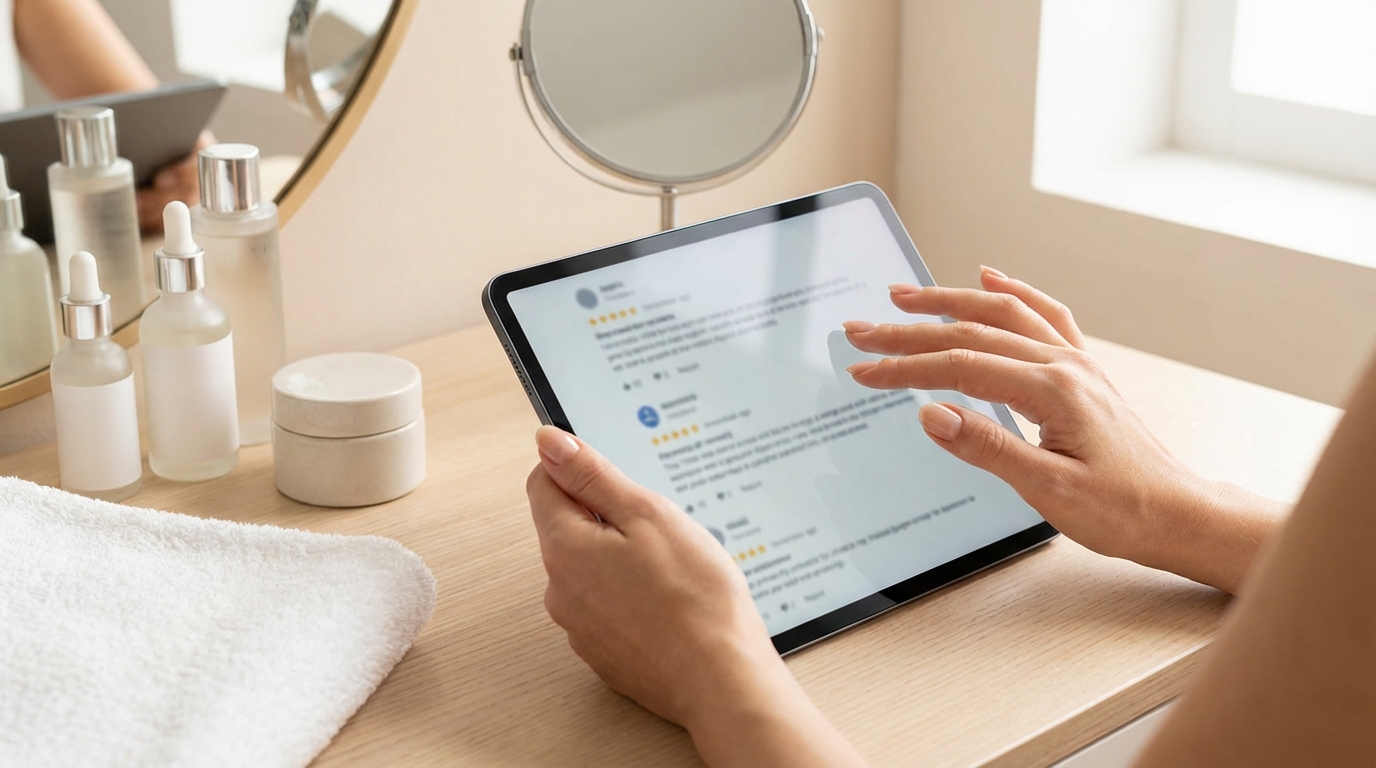
The biggest mistake when reading makeup reviews? Trying to read all of them. Scrolling through 500+ opinions on a single foundation leads to decision paralysis, not clarity. The fix is simple: learn to filter strategically, not comprehensively.
Knowing how to read makeup reviews without getting overwhelmed comes down to a handful of practical habits. Instead of absorbing every star rating and comment, focus on finding reviewers who share your specific concerns—skin type, budget, lifestyle. This post breaks down exactly how to do that in under 10 minutes per product search.
Why Beauty Reviews Feel Like Information Overload
A popular mascara on any major retailer can have thousands of reviews. Some rave about volume. Others complain about flaking. A few mention allergic reactions. And suddenly, a simple purchase feels like a research project.
Here’s what’s actually happening:
- Conflicting skin types: A matte foundation that’s “holy grail” for oily skin will feel like sandpaper on dry skin. Both reviewers are telling the truth—for them.
- Different expectations: Someone wanting “natural coverage” and someone wanting “full glam” will rate the same product completely differently.
- Timing matters: A review written after one use versus three months of use tells very different stories.
- Incentivized reviews: Free products or affiliate links can skew enthusiasm (not always, but often).
The overwhelm isn’t a “you” problem. It’s a structural problem with how reviews are presented. Once you understand that, filtering becomes much easier.
Myth vs. Reality: What Reviews Actually Tell You

Myth: A product with 4.5 stars is better than one with 4.2 stars.
Reality: Star ratings are averages that flatten nuance. A 4.2-star product might have passionate fans with your exact skin type, while the 4.5-star product works for “most people” but not necessarily you. Read the written reviews, not just the number.
Myth: More reviews = more trustworthy product.
Reality: High review counts often reflect marketing budgets and influencer campaigns, not product quality. A lesser-known brand with 200 detailed reviews can be more reliable than a viral product with 5,000 one-liners.
Myth: Negative reviews are from picky complainers.
Reality: Negative reviews often contain the most useful information. They mention specific issues—oxidation, pilling, fragrance sensitivity—that positive reviews gloss over. A product with zero negative reviews should raise eyebrows, not confidence.
Myth: Professional beauty bloggers know best.
Reality: Professional reviewers often test products under studio lighting with professional application techniques. Their experience may not translate to your bathroom mirror at 7 AM. Everyday user reviews often provide more realistic expectations.
The 5-Minute Filtering Method for Makeup Product Reviews

Instead of reading everything, use this streamlined approach:
- Identify your non-negotiables first. Before opening any review page, write down 2-3 things that matter most. Examples: “long-wearing,” “no flashback in photos,” “works on textured skin.” This prevents you from getting distracted by features you don’t care about.
- Use the search/filter function. Most review sections let you search keywords. Type in your concern—”oily,” “sensitive,” “over 40,” “acne”—and read only those results.
- Read the 3-star reviews first. These tend to be the most balanced. Reviewers who give 3 stars usually liked some aspects and disliked others, giving you a realistic picture.
- Check for specifics over superlatives. “This is amazing!” tells you nothing. “This stayed put through an 8-hour shift and didn’t settle into my smile lines” tells you everything.
- Look for repeat complaints. One person mentioning a weird smell could be a fluke. Ten people mentioning it? That’s data.
Smart Tip: Set a timer for 5-7 minutes per product. When it goes off, make a decision or move on. Endless scrolling rarely adds new information—it just adds anxiety.
Red Flags That Signal Unreliable Reviews
Not all reviews deserve your attention. Skip past these:
- Vague enthusiasm: “Love it! Best ever! 10/10!” without any detail about why or how it performed.
- Received product for free: Not automatically dishonest, but worth noting. Look for disclaimers and weigh accordingly.
- Posted within 24 hours of purchase: Makeup often performs differently after a week of use. Immediate reviews miss issues like oxidation, breakouts, or wear time.
- Reviewer has only posted one review ever: Could be genuine, but single-review accounts are sometimes created for promotional purposes.
- Extreme language without evidence: “This ruined my skin!” or “Changed my life!” without specifics is emotional, not informational.
Conversely, trust reviews that mention specific conditions (“I have rosacea and this didn’t irritate”), timeframes (“After 3 weeks of daily use”), and comparisons (“Better than [generic product type] I tried before”).
Counter-Intuitive Insight: Fewer Reviews Can Be Better

Here’s something that surprises most people: reading fewer reviews often leads to better purchasing decisions. Research on decision-making consistently shows that too many options—and too much information—leads to less satisfaction with choices, not more.
After reading 5-10 relevant, detailed reviews from people with similar needs, you have enough information. Reading 50 more won’t change the fundamental picture. It will just introduce more conflicting opinions and make you second-guess yourself.
The goal isn’t to find the “perfect” product (it doesn’t exist). The goal is to find a product that’s likely to work well enough for your specific situation. That’s a much lower bar—and a much more achievable one.
Where to Find More Reliable Beauty Reviews
Platform matters. Here’s a quick breakdown:
| Platform Type | Strengths | Watch Out For |
|---|---|---|
| Retailer sites (Sephora, Ulta) | Verified purchases, skin type filters | Incentivized reviews for points/samples |
| Reddit (SkincareAddiction, MakeupAddiction) | Brutally honest, detailed routines | Can skew toward enthusiasts, not beginners |
| YouTube | See texture and application in real time | Sponsorships, professional lighting |
| TikTok | Quick demos, trend awareness | Short format lacks nuance, algorithm pushes hype |
A good strategy: cross-reference. If a product gets consistent feedback across multiple platforms, that’s a stronger signal than rave reviews in just one place.
Quick Fix Checklist: Navigating Cosmetic Reviews
Before your next makeup purchase, run through this list:
- Define 2-3 personal priorities before reading anything
- Filter or search reviews by your skin type or concern
- Read 3-star reviews for balanced perspectives
- Look for specific details, not vague praise
- Note repeat complaints across multiple reviewers
- Skip reviews posted immediately after purchase
- Set a time limit (5-7 minutes) to prevent spiral scrolling
- Cross-check on at least two different platforms
- Remember: “good enough for you” beats “perfect for everyone”
Final Thoughts
Evaluating beauty reviews doesn’t require reading every opinion on the internet. It requires reading the right opinions—from people whose needs match yours, who provide specific details, and who’ve used the product long enough to know its quirks.
Next time you’re eyeing a new lipstick or concealer, try the filtering method above. Spend 5 focused minutes instead of 45 scattered ones. Your decision will probably be just as good—and your evening will be a lot less stressful.