
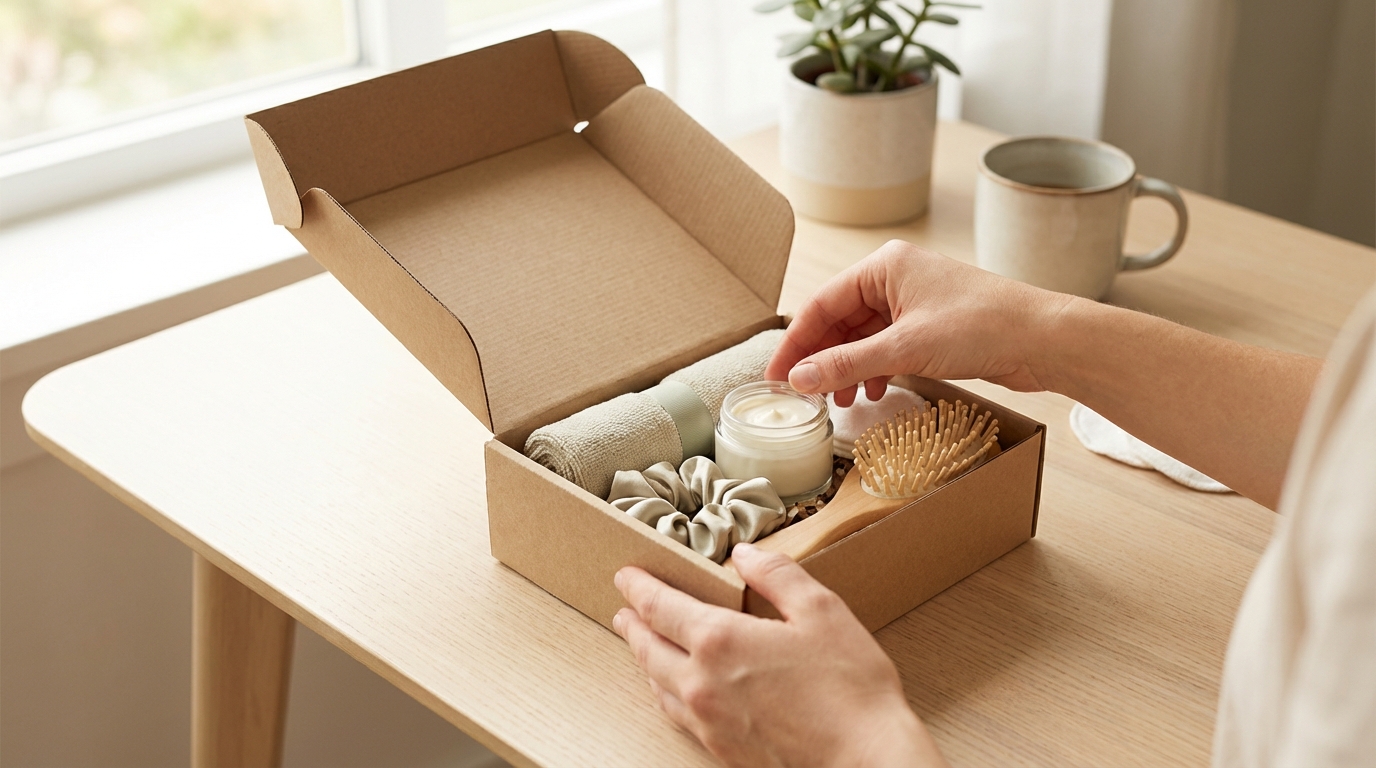
You’ve got a drawer full of little things—sample-size lotions, a cute candle, some fancy tea bags, a pair of cozy socks you bought on sale. Individually, they feel too small to gift. But together? They can become something genuinely thoughtful. Learning how to build a Save & Care gift box from small items is one of those skills that saves money, reduces waste, and makes you look like you put in way more effort than you actually did.
This guide walks you through picking a theme, choosing the right container, arranging everything so it looks intentional, and adding those finishing touches that make people say “you really didn’t have to.” Spoiler: you kind of didn’t. That’s the beauty of it.
Quick Steps to Build Your Gift Box
- Pick a theme or recipient focus (relaxation, cozy night in, self-care Sunday, etc.)
- Gather 4–7 small items that fit the theme
- Choose a container: box, basket, tin, or even a reusable tote
- Add filler for cushioning and visual appeal
- Arrange items by height and color
- Finish with a ribbon, tag, or small handwritten note
What You’ll Need
- A container (cardboard box, wicker basket, decorative tin, fabric pouch, or tote bag)
- Filler material (tissue paper, shredded paper, fabric scraps, or even a tea towel)
- 4–7 small items that share a theme or vibe
- Ribbon, twine, or a simple bow
- A gift tag or small card
- Optional: clear cellophane wrap for a polished look
Step-by-Step: Putting It All Together
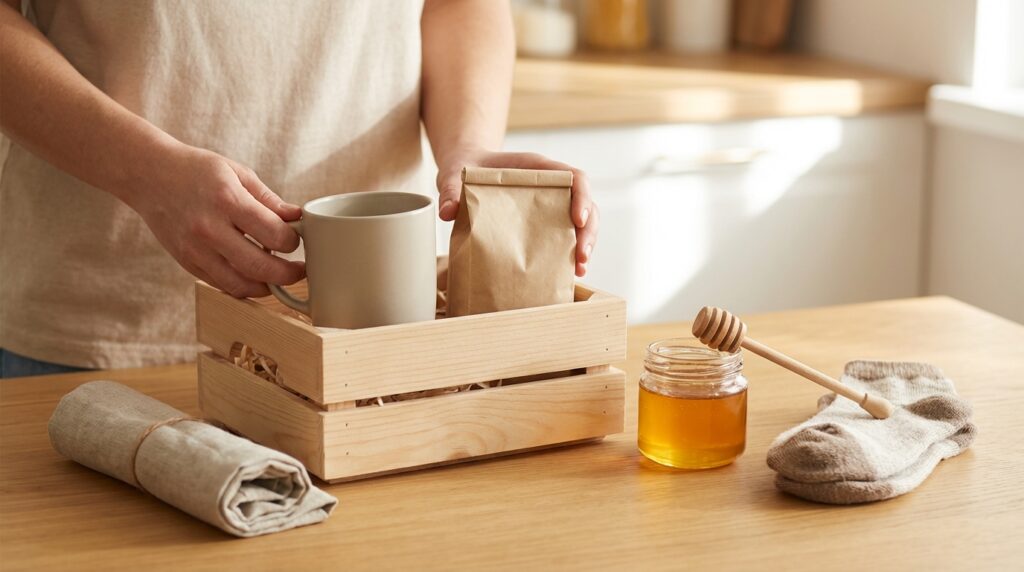
Step 1: Decide on a theme. This is where most people get stuck, but it doesn’t need to be complicated. Think about the person receiving the gift. Are they stressed? Go for relaxation. Do they love their morning coffee ritual? Build around that. A theme gives your box direction and makes random items feel curated. Common themes include: spa night, cozy evening, kitchen treats, desk essentials, or seasonal self-care.
Step 2: Gather your items. Aim for 4–7 pieces. Fewer than four can look sparse; more than seven starts to feel cluttered. Mix textures and sizes—something soft, something scented, something edible, something useful. For example, a relaxation box might include a mini candle, a sheet mask, a small bag of herbal tea, a lip balm, and a pair of fuzzy socks. None of these items cost much on their own, but together they tell a story.
Step 3: Choose your container. You don’t need to buy a fancy gift box. A shoebox wrapped in kraft paper works. A basket from the thrift store works. A reusable tote bag works and doubles as part of the gift. The container should be slightly larger than your items so there’s room for filler and arrangement. If you’re mailing the box, go for something sturdy with a lid.
Step 4: Add your filler. Filler isn’t just decorative—it cushions items and creates height variation. Crinkle-cut paper is classic, but tissue paper or even a folded tea towel can do the job. If you’re going for an eco-friendly vibe, use fabric scraps or reusable cloth. Place a layer of filler at the bottom before adding items.
Step 5: Arrange by height and color. Put taller items toward the back, shorter ones in front. Group similar colors together or create contrast—whatever looks balanced to your eye. Tilt items slightly so labels face forward. If something keeps falling over, nestle it into the filler or prop it against a sturdier item. This step takes two minutes but makes a big visual difference.
Step 6: Add finishing touches. Tie a ribbon around the box or add a simple bow. Attach a gift tag with the recipient’s name or a short message. If you want a more polished look, wrap the whole thing in clear cellophane and tie it at the top. A handwritten note—even just a sentence—adds warmth that no store-bought card can match.
Shortcut If You’re Short on Time
- Skip the box entirely—use a gift bag with tissue paper and call it done
- Stick to three items instead of five; less arranging, still thoughtful
- Use a tea towel as both filler and part of the gift
- Grab a pre-made bow instead of tying your own
- Write your note directly on the gift tag to save a step
Theme Ideas That Actually Work
If you’re drawing a blank, here are a few combinations that tend to land well. These aren’t rigid recipes—swap items based on what you have or what the recipient would actually use.
Cozy Night In
Think soft textures and warm scents. A pair of socks, a small candle, a hot chocolate packet, a mini hand cream, and a sheet mask. This works for almost anyone and suits fall or winter gifting especially well.
Morning Ritual

For the person who treasures their quiet morning time. A nice tea or coffee sample, a small mug (thrift stores are goldmines for these), a granola bar or biscotti, and a mini journal or notepad. Add a pen if you have a cute one lying around.
Desk Pick-Me-Up
Great for coworkers or friends who work from home. A small succulent or faux plant, a lip balm, a snack (chocolate, mints, or nuts), a mini hand sanitizer, and a cheerful sticky note pad. Practical and appreciated.
Pamper Yourself
Lean into self-care without going overboard. A face mask, a bath bomb or shower steamer, a travel-size body lotion, a hair scrunchie or clip, and a small bag of herbal tea. Keep scents complementary—lavender and chamomile play well together; lavender and tropical coconut, less so.
Common Mistakes (and How to Avoid Them)
- Overstuffing the box. More items don’t equal a better gift. If things are crammed in, it looks chaotic and nothing stands out. Leave breathing room.
- Ignoring the recipient’s preferences. A coffee-themed box for someone who only drinks tea misses the mark. Think about what they actually use, not what looks cute on Pinterest.
- Forgetting about scent clashes. Mixing a vanilla candle with a eucalyptus lotion and a rose-scented soap creates sensory confusion. Stick to one scent family or go fragrance-free.
- Using a container that’s too big. A half-empty box looks sad, no matter how nice the items are. Match your container size to your item count.
- Skipping the filler. Without filler, items roll around and the presentation falls flat. Even a little tissue paper makes a difference.
Making It Personal Without Overthinking
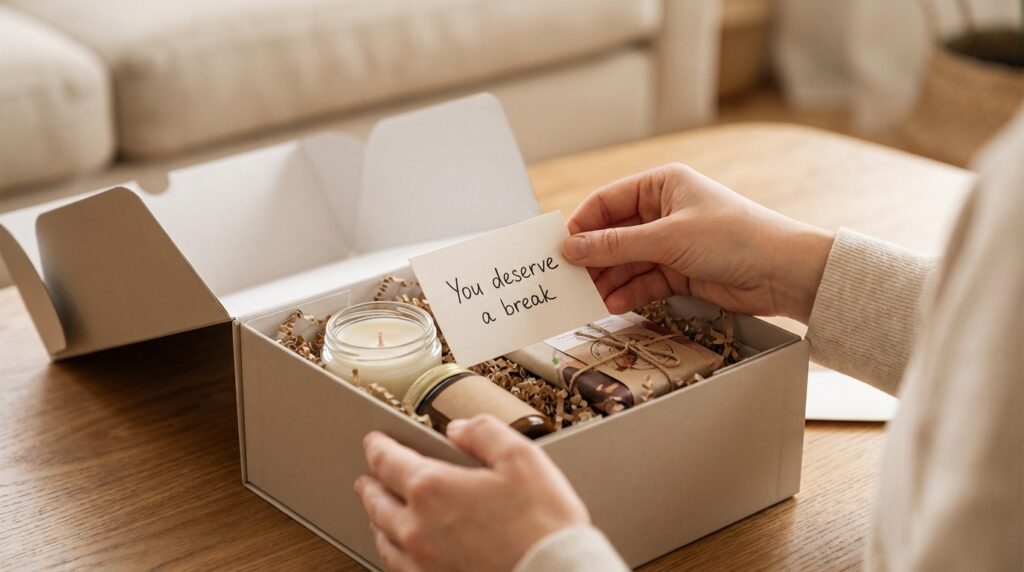
The best gift boxes feel personal, but that doesn’t mean you need to spend hours customizing every detail. Small touches go a long way. Include an inside joke on the tag. Add their favorite candy. Choose a color scheme you know they love. If you’re gifting to someone who’s been stressed, a simple “You deserve a break” note hits harder than an elaborate presentation.
Another easy personalization trick: include one item that’s slightly unexpected. A mini crossword book in a spa box. A packet of fancy hot sauce in a cozy night box for someone who loves spice. It shows you thought about them specifically, not just the theme.
Where to Find Small Items Without Overspending
You don’t need to buy everything new. Check what you already have—unopened samples, impulse buys you never used, duplicates from gift sets. Dollar stores and discount sections at drugstores are great for candles, lotions, and snacks. Thrift stores often have mugs, small baskets, and containers. End-of-season sales are perfect for stocking up on items to use later.
If you’re building multiple boxes (say, for coworkers or a group of friends), buy items in bulk and mix-and-match. A pack of ten mini candles costs less per unit than buying individually, and you can distribute them across several boxes.
Summary and Next Step
Building a Save & Care gift box from small items is less about spending money and more about thoughtful assembly. Pick a theme, gather a handful of items that fit, choose a container that matches the vibe, and arrange everything so it looks intentional. Add filler, tie a ribbon, write a quick note, and you’re done. The whole process can take fifteen minutes once you get the hang of it.
Your next step: take a quick inventory of what you already have. Check that drawer, that closet shelf, that stash of samples. You might be surprised how close you already are to a complete gift box—no shopping required.