
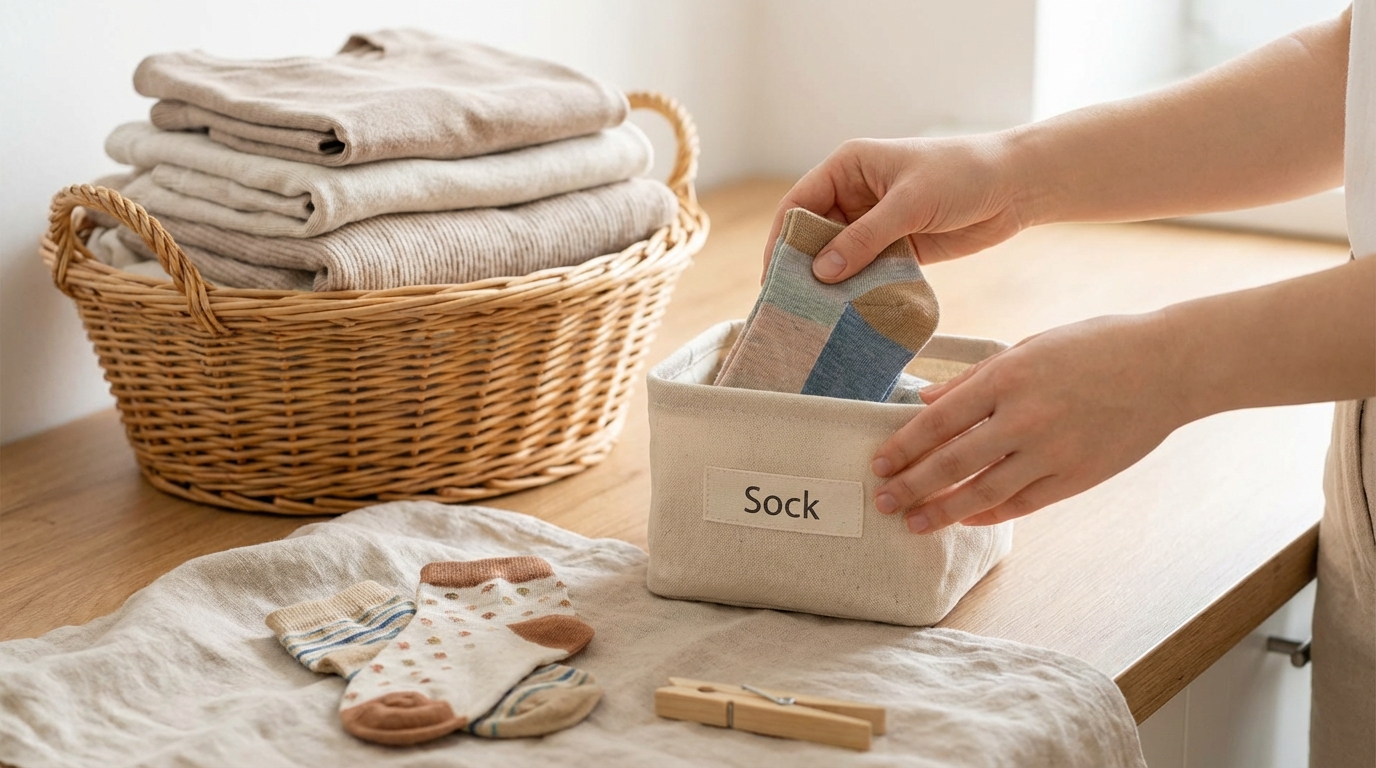
You pull the laundry out of the dryer, start folding, and there it is again—a single sock with no partner in sight. It’s one of those small household mysteries that somehow manages to be genuinely annoying. Dealing with single socks and laundry chaos might seem like a minor issue, but when it happens week after week, it adds up to wasted time, cluttered drawers, and the nagging feeling that your laundry system just isn’t working.
The good news? A few simple habits can turn your laundry routine from a sock-eating disaster into something that actually makes sense. In this post, you’ll learn why socks go missing in the first place, how to set up a system that keeps pairs together, and practical ways to reduce the overall chaos in your laundry process.
Quick Steps to Tame Laundry Chaos
- Pair socks before they hit the hamper (or use a mesh bag)
- Check washer drum edges and dryer seals for trapped items
- Designate a “lonely sock” spot and match monthly
- Simplify your sock collection—fewer styles means easier pairing
- Fold and sort immediately after drying to prevent pile-ups
What You’ll Need
- A small mesh laundry bag (or two)
- A basket, bin, or drawer section for single socks
- Sock clips or rings (optional but helpful)
- A timer or podcast to make folding less tedious
None of these items are expensive, and you likely have some of them already. The mesh bag is the real game-changer here—it keeps socks contained through the wash and dry cycle so nothing escapes into the void.
Why Socks Go Missing in the First Place

Before fixing the problem, it helps to understand where those socks actually disappear to. Spoiler: it’s rarely magic.
The Washer and Dryer Are Hungry
Small items like socks can slip between the drum and the rubber door seal on front-loading washers. In dryers, they sometimes get sucked into the lint trap area or stuck behind the drum. If you’ve never checked these spots, you might be surprised what you find. A quick inspection every few months can rescue a surprising number of “lost” socks.
Static Cling Strikes Again
Socks love to cling to the inside of fitted sheets, pant legs, and hoodie sleeves. You fold the sheet, put it away, and a sock hitchhikes into your linen closet. Weeks later, you find it and have no idea where its partner went. Shaking out larger items before folding helps catch these stowaways.
The Laundry Pile Grows Legs
If laundry sits in baskets for days before being put away, socks migrate. They fall behind furniture, get kicked under beds, or end up in random spots around the house. The longer clean laundry sits unfolded, the more likely pieces will wander off.
A Simple System to Keep Socks Together
The key to ending sock chaos isn’t complicated—it’s about creating a habit that requires almost no extra effort.
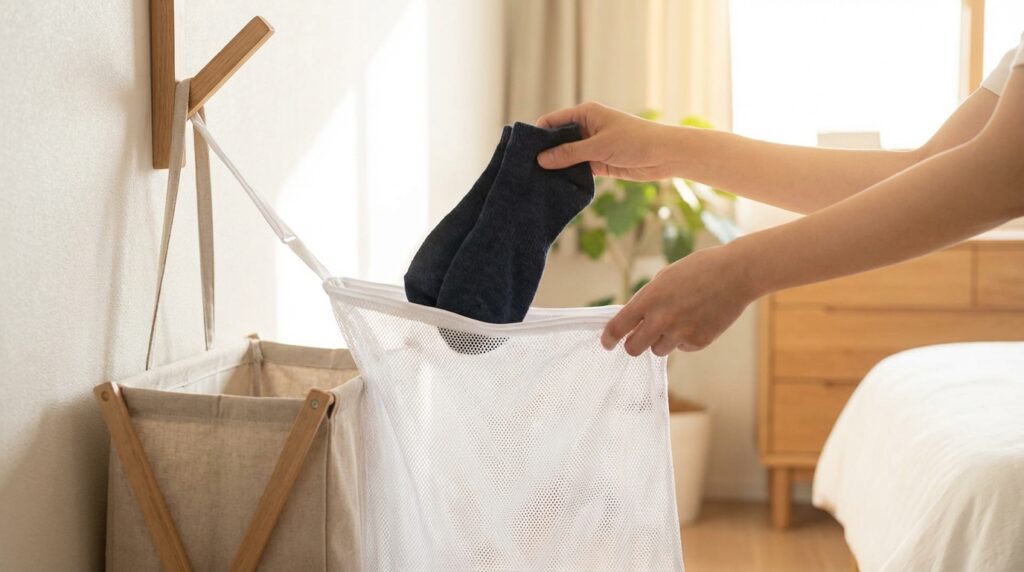
Step 1: Get a mesh laundry bag and hang it somewhere visible near your hamper. When you take off socks, toss them directly into the bag instead of the main hamper. This takes about two seconds and keeps pairs in the same place from the start.
Step 2: Wash the entire bag with your regular load. Zip it closed so nothing escapes. The mesh allows water and detergent to flow through, so your socks get just as clean as they would loose.
Step 3: Dry the bag with your clothes or hang it to air dry if you prefer. When everything’s done, open the bag and pair socks right there—no hunting through a mountain of laundry.
Step 4: If a sock still ends up solo (it happens), put it in a designated “lonely sock” spot. A small bin, a section of a drawer, or even a hook on the laundry room wall works fine. Once a month, go through the bin and match any reunited pairs. Anything that’s been solo for three months or more? Time to let it go.
Shortcut If You’re Short on Time
- Buy socks in bulk—same brand, same color, same style. Every sock matches every other sock, so losing one doesn’t matter.
- Skip folding socks entirely. Toss them loose into a drawer or bin. Matching takes seconds when they’re all identical.
- Use sock clips that keep pairs attached through washing and drying. Clip them together when you take them off, and they stay paired automatically.
- Do smaller, more frequent loads so laundry doesn’t pile up and become overwhelming.
Tackling the Bigger Picture: Laundry Chaos in General
Single socks are often a symptom of a larger issue—a laundry routine that’s gotten out of control. If you’re constantly behind, drowning in baskets, or never quite sure what’s clean, a few adjustments can help.
Set a Laundry Schedule That Actually Works

Trying to do all your laundry on one day often backfires. You start strong, then get tired, and three loads sit in baskets for a week. Instead, try doing one load per day or every other day. It sounds like more work, but smaller loads are faster to fold and put away, so the task never becomes a mountain.
Sort Less, Wash More Efficiently
Unless you have specific items that truly need special care, most everyday clothes can be washed together on a cold or warm cycle. Over-sorting creates more baskets, more waiting for “enough darks,” and more opportunities for socks to escape. Simplify where you can.
Fold Immediately (or Close to It)
The biggest source of laundry chaos is clean clothes sitting in baskets. If you can fold and put away a load within an hour of it finishing, you’ll avoid the dreaded “clean clothes mountain” that takes over a chair or corner of your room. Set a timer if it helps, or fold while watching something—whatever makes it less of a chore.
Common Mistakes That Make Laundry Chaos Worse
- Overloading the washer or dryer. Clothes don’t get as clean, items tangle together, and small things like socks are more likely to get trapped or lost.
- Ignoring the “lonely sock” pile. If you never go through it, it just grows. Schedule a quick monthly check to reunite pairs or toss hopeless cases.
- Buying too many sock varieties. Fifteen different patterns and colors means fifteen different matching puzzles. Streamlining your sock drawer saves real time.
- Leaving laundry in the washer too long. Clothes get musty, you have to rewash, and the cycle of chaos continues. Set a phone reminder when you start a load.
- Not checking pockets and crevices. Socks hide in weird places. A quick shake of larger items before folding catches most of them.
Frequently Asked Questions
What should I do with socks that never find a match?
Give them a second life. Single socks work well as dusting mitts, shoe polishers, or protective covers for fragile items when packing. If they’re worn out, toss them guilt-free—you gave them a fair chance.
Are sock clips worth buying?
If you have a household with multiple people and lots of different sock styles, clips can be genuinely helpful. For a single person with a simple sock collection, a mesh bag usually does the job just as well and costs less.
How often should I clean my washer and dryer to prevent lost items?
A quick check of the door seal and lint trap area every month or two is enough for most households. If you notice socks disappearing more than usual, it’s worth a deeper look.
Does washing socks in a mesh bag affect how clean they get?
Not noticeably. The mesh allows water and detergent to circulate freely. Just don’t overstuff the bag—leave room for things to move around.
Summary and Next Step
Dealing with single socks and laundry chaos comes down to a few simple changes: contain socks from the start, check the usual hiding spots, create a system for orphans, and stay on top of folding before it becomes overwhelming. None of this requires fancy products or a complete lifestyle overhaul—just a bit of intention and consistency.
Your next step? Grab a mesh bag (or repurpose one you already have) and start using it for your next load. It’s a small change that makes a surprisingly big difference. And if you find a stash of missing socks behind your dryer drum, well—consider it a bonus.