
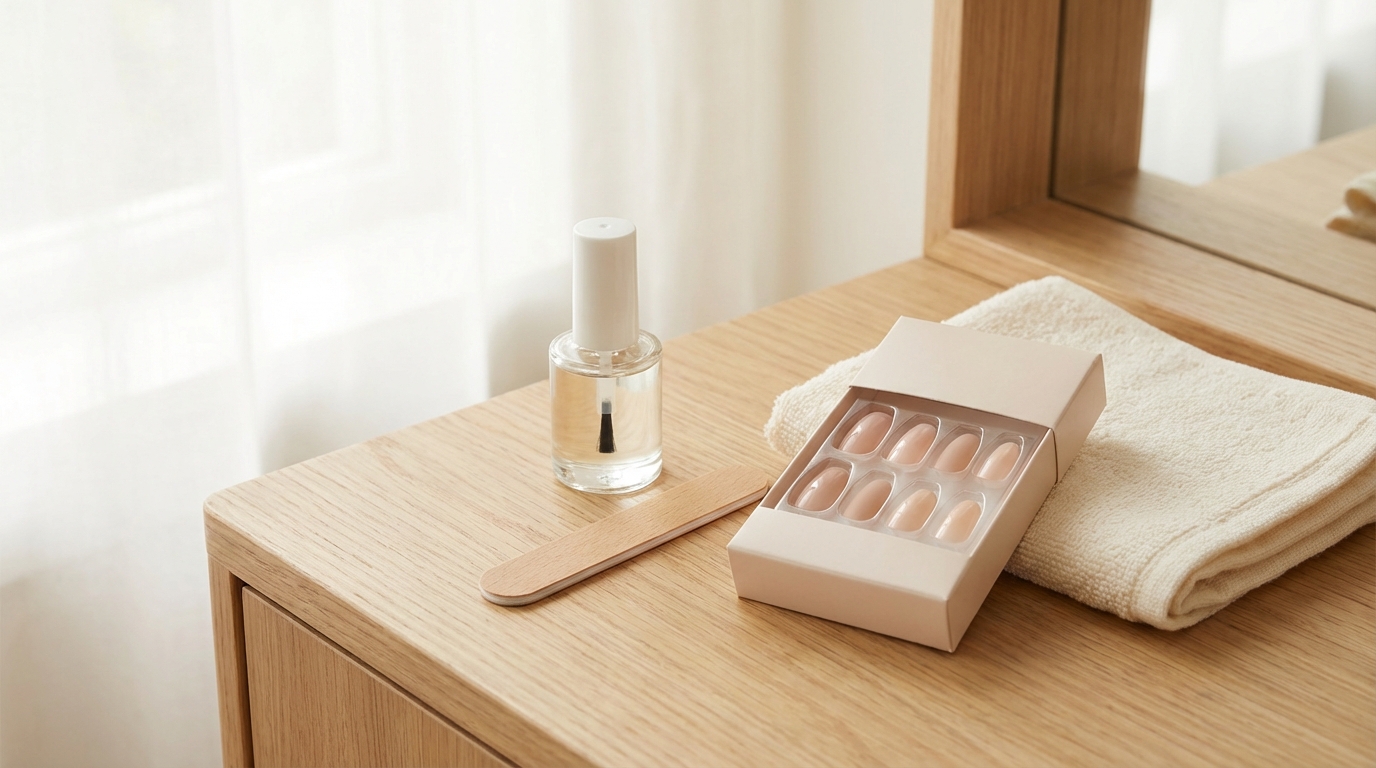
You’ve noticed your nails are thinner than they used to be, maybe a bit bendy or prone to peeling. You love the idea of a quick, salon-worthy manicure at home, but you’re wondering: are press-on nails safe for weak or thin nails, or will they make things worse? It’s a fair concern, especially if you’ve had bad experiences with acrylics or gel removals in the past. The good news is that press-ons can actually be a gentler alternative when you use them correctly. In this post, you’ll learn what makes press-ons different, how to apply and remove them without causing damage, and which habits to avoid if your nails need extra TLC.
The short answer is yes, press-on nails can be safe for weak or thin nails, but the details matter. The adhesive you choose, how you prep your nails, and especially how you remove them all play a role in whether your natural nails stay healthy or take a hit.
Key Takeaways
- Press-on nails are generally safer than acrylics or hard gels for fragile nails because they don’t require drilling or harsh UV curing.
- Adhesive tabs are gentler than nail glue and ideal for very thin or damaged nails.
- Proper removal is the most important step—never peel or force press-ons off.
- Giving your nails regular breaks between applications helps them recover.
- If your nails are extremely damaged or you notice pain, consult a professional before continuing.
Why Press-Ons Can Be a Better Choice for Fragile Nails
Traditional salon manicures like acrylics and hard gels often involve buffing down the nail surface, applying strong chemicals, and using UV or LED lamps. The removal process usually requires soaking in acetone or even filing, which can leave nails thin, dry, and brittle over time. If your nails are already weak, this cycle can feel like a losing battle.
Press-on nails skip most of that. There’s no drilling, no monomer fumes, and no extended acetone soaks if you use adhesive tabs. You’re essentially placing a pre-made nail on top of your natural one with a temporary bond. For someone with thin nails, this means less mechanical stress and less chemical exposure.
That said, press-ons aren’t damage-proof. The way you use them determines whether they help or hurt. Think of it like this: a bandage protects a cut, but ripping it off carelessly still stings. Same idea here.
Glue vs. Adhesive Tabs: Which Is Safer?
Most press-on kits come with nail glue, adhesive tabs, or both. Here’s the difference:
- Nail glue creates a stronger, longer-lasting bond (up to two weeks). However, removal requires soaking in acetone, which can dry out already fragile nails.
- Adhesive tabs are like double-sided stickers. They hold for a few days to a week and pop off more easily with warm water or gentle pressure. Much kinder to weak nails.
If your nails are particularly thin or recovering from damage, adhesive tabs are the safer bet. You sacrifice some longevity, but you protect your nail bed. Once your nails feel stronger, you can experiment with glue for special occasions.
How to Apply Press-Ons Without Stressing Thin Nails
Application matters more than most people realize. A rushed job can trap moisture, cause lifting, or lead to that dreaded moment where you accidentally rip off a press-on and half your nail layer goes with it.
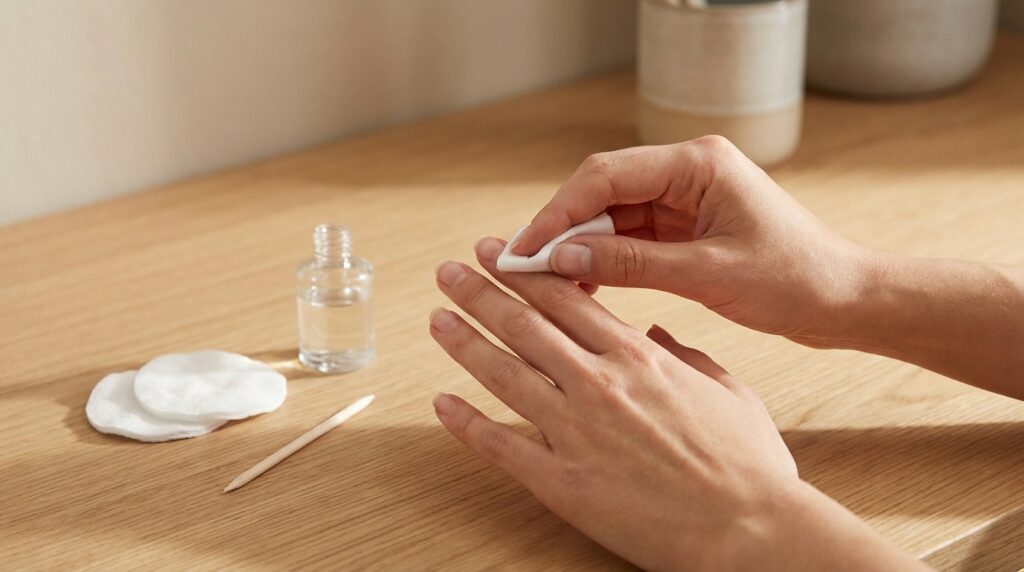
Step 1: Start with clean, dry nails. Remove any old polish and wash your hands. Oil and moisture are the enemies of adhesion, so use an alcohol wipe or a tiny bit of nail polish remover on a cotton pad to prep each nail.
Step 2: Skip aggressive buffing. Some guides tell you to rough up the nail surface for better grip. If your nails are already thin, don’t do this. A very light buff is fine, but you’re not sanding wood here. Over-buffing weakens the nail plate.
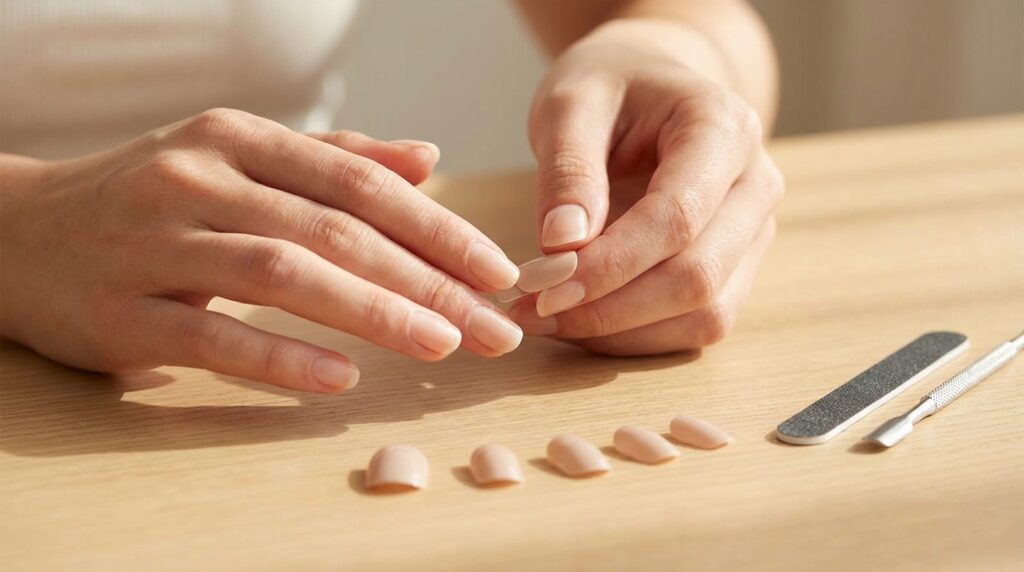
Step 3: Size your press-ons before you start sticking. Lay them out and match each one to your natural nail. A press-on that’s too wide will lift at the edges; too narrow and it looks off. Most kits include multiple sizes, so take your time.
Step 4: Apply the adhesive. If using tabs, press one onto your natural nail, remove the backing, then press the press-on firmly on top. If using glue, apply a thin layer to both your natural nail and the underside of the press-on, wait a few seconds, then press together.
Step 5: Hold each nail firmly for 20–30 seconds. This helps the bond set and reduces air bubbles. Avoid getting your hands wet for at least an hour afterward.
Shortcut If You’re Short on Time
- Pre-size all your press-ons and line them up in order before you start.
- Use adhesive tabs instead of glue—no drying time needed.
- Do your dominant hand first while your coordination is fresh.
- Keep a small file nearby to smooth any edges immediately after application.
The Removal Process: Where Most Damage Happens
Here’s the truth: press-on nails rarely damage nails during wear. The real risk is removal. Peeling, prying, or forcing off a press-on can rip off layers of your natural nail, leaving it even thinner and more vulnerable. This is the number one mistake people make.
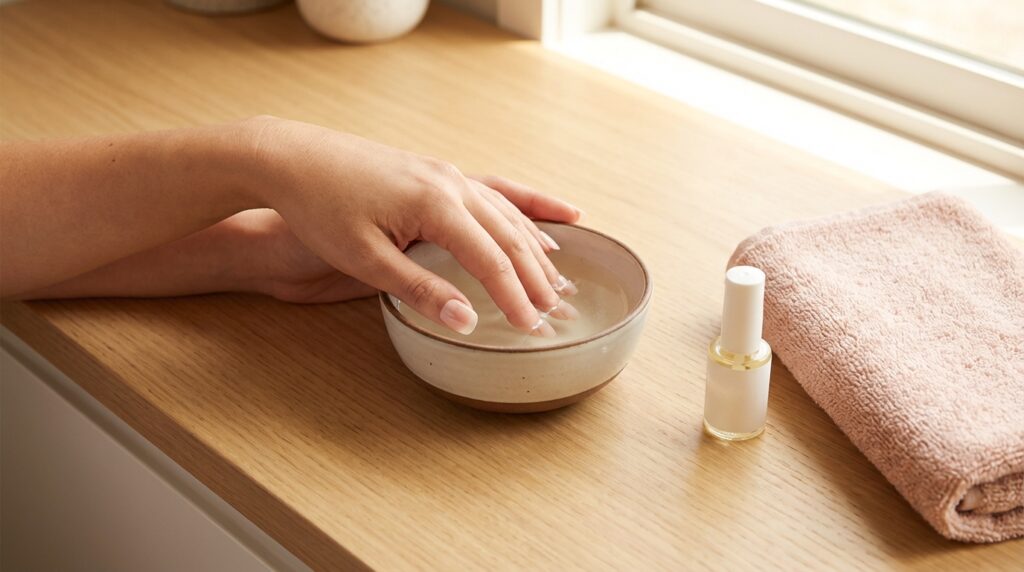
If you used adhesive tabs, removal is simple. Soak your hands in warm (not hot) water for 5–10 minutes. The tabs soften, and the press-ons should slide off with gentle wiggling. If one is stubborn, soak longer rather than forcing it.
If you used glue, you’ll need acetone. Soak cotton pads in acetone, place them on your nails, and wrap each finger in foil. Wait 10–15 minutes, then gently push the press-on off with an orange stick or cuticle pusher. Never scrape aggressively.
After removal, wash your hands and apply cuticle oil or a nourishing hand cream. Your nails just went through a process, so give them some moisture back.
Common Mistakes That Hurt Weak Nails
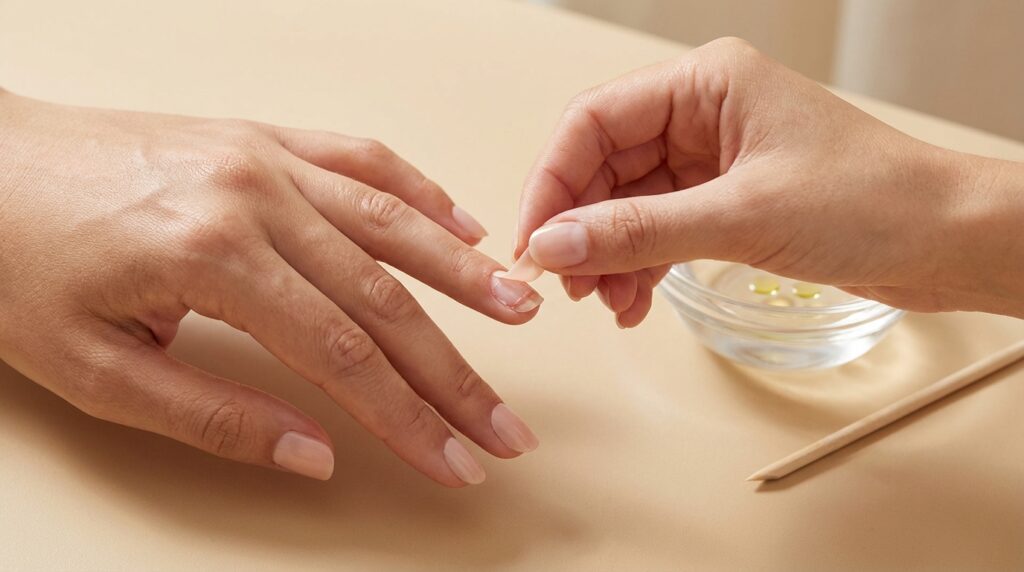
- Peeling off press-ons impatiently. This is the fastest way to damage thin nails. Always soak first.
- Wearing press-ons non-stop without breaks. Your nails need time to breathe and recover. A week on, a few days off is a reasonable rhythm.
- Using too much glue. More glue doesn’t mean better hold. It just means messier removal and more acetone exposure.
- Skipping nail prep. Oily nails lead to lifting, which leads to water getting trapped underneath, which can weaken nails or even cause fungal issues over time.
- Ignoring signs of damage. If your nails feel sore, look discolored, or seem thinner after each use, take a longer break and consider seeing a nail technician or dermatologist.
Frequently Asked Questions
Can press-on nails help protect weak nails while they grow out?
They can, in a way. Press-ons act as a shield against daily wear and tear, which might help prevent further breakage. However, they’re not a treatment. If your nails are weak due to a deficiency or health issue, the underlying cause still needs attention.
How often should I give my nails a break from press-ons?
A good rule of thumb is to go bare for at least a few days after every one to two weeks of wear. During this time, keep your nails moisturized and avoid harsh chemicals. If your nails feel particularly fragile, extend the break.
Are there press-on nails specifically designed for damaged nails?
Some brands market gentler formulas or include adhesive tabs as the default. Look for kits that emphasize easy removal or are labeled for sensitive nails. The design of the press-on itself matters less than the adhesive and your removal technique.
Is it okay to file or shape press-on nails after applying them?
Yes, and it’s often a good idea. Filing the edges to fit your nail shape better can reduce snagging and lifting. Just file gently and in one direction to avoid loosening the bond.
What should I do if a press-on pops off and takes some nail with it?
Don’t panic. Keep the area clean, apply a nail strengthener or cuticle oil, and let it heal before applying anything new. If the damage is significant or painful, it’s worth consulting a professional.
Summary and Next Step
Press-on nails can absolutely be safe for weak or thin nails, as long as you approach them thoughtfully. Choose adhesive tabs over glue when your nails need extra care, prep your nails gently without over-buffing, and never, ever peel off a press-on in a hurry. The removal step is where most damage happens, so patience pays off.
If you’re new to press-ons or recovering from nail damage, start with a short wear period using adhesive tabs. See how your nails feel afterward. With the right habits, you can enjoy pretty nails without sacrificing nail health. Your next step? Pick up a kit with adhesive tabs and give your nails a low-commitment trial run this week.