
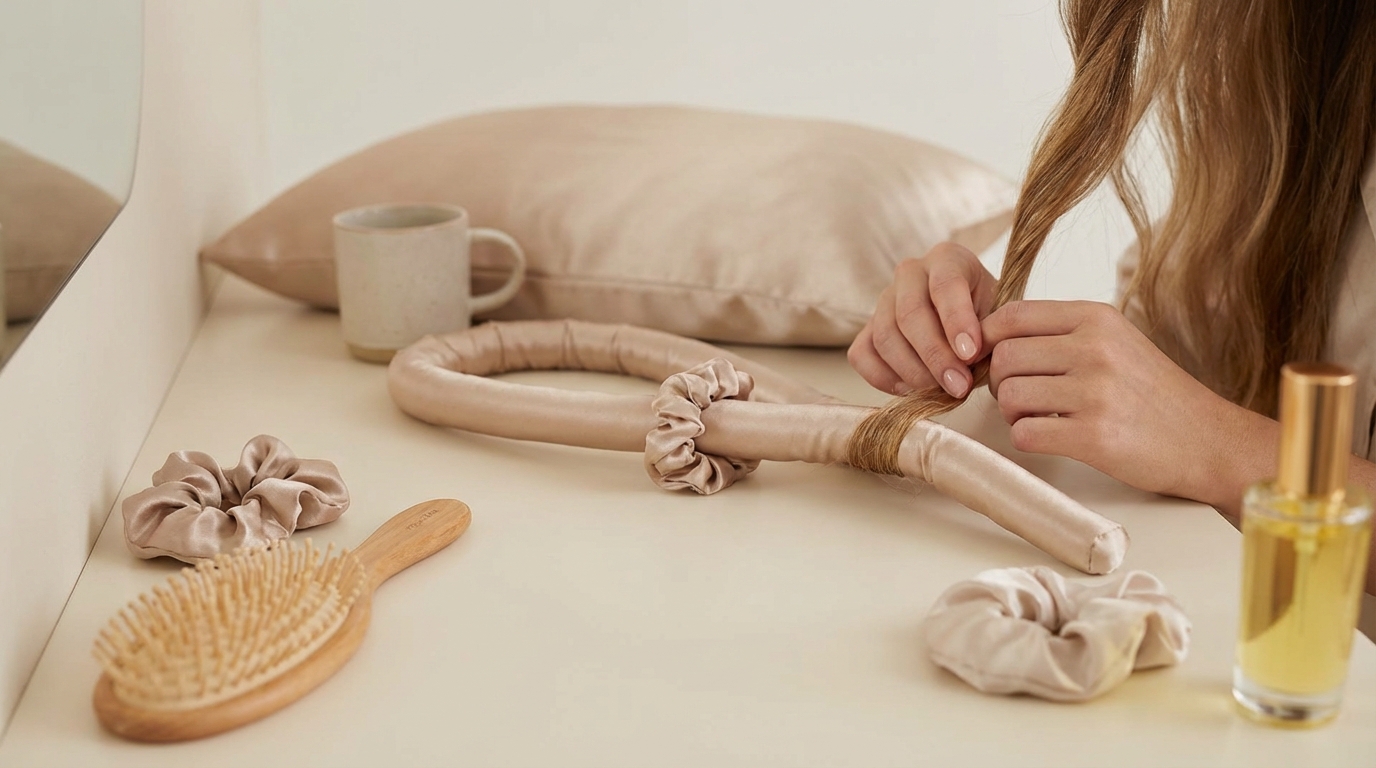
Flat, lifeless hair in the morning. A curling iron that takes 45 minutes and leaves your ends feeling like straw. Sound familiar? Heatless curls offer a way out—bouncy waves without the damage, the electricity bill, or the arm workout. The catch? There’s a small learning curve, and not every method works for every hair type. This guide breaks down exactly what you need, which techniques actually deliver, and how to avoid waking up with a tangled mess instead of soft curls.
Why Skip the Heat in the First Place?
Heat styling tools work by breaking down the hydrogen bonds in your hair, then reshaping them as the hair cools. Do this repeatedly, and you’re looking at:
- Dry, brittle strands that snap easily
- Split ends that travel up the hair shaft
- Frizz that gets worse over time
- Color fading faster (if you dye your hair)
Heat-free curls work differently. Instead of forcing your hair into shape with high temperatures, you’re training damp hair to dry in a curled position. The result? Curls that often last longer and hair that stays healthier over time.
Counter-intuitive insight: Many people assume heat styling gives better hold. In reality, curls set overnight without heat often outlast curling iron curls by a full day because the hair has more time to “memorize” the shape.
What You Need to Get Started
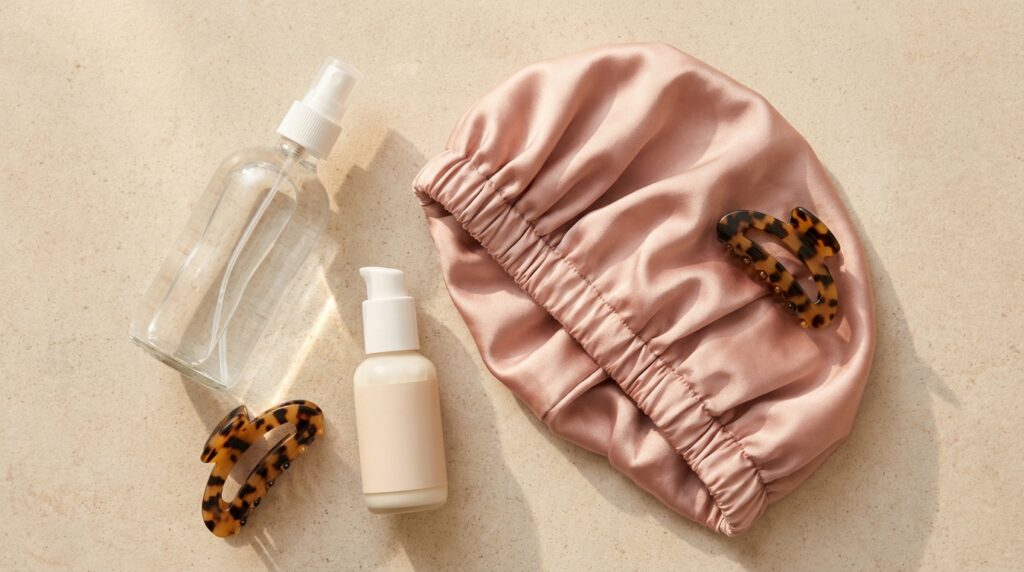
Good news: you probably own most of these already.
- A silk or satin scarf/bonnet – Prevents frizz while you sleep. Cotton pillowcases create friction that ruins curl definition.
- Hair clips or claw clips – For sectioning and securing curls in place.
- A spray bottle with water – Hair needs to be damp (not soaking) for most methods.
- Lightweight styling mousse or curl cream – Optional, but helps with hold. Avoid heavy products that weigh hair down.
- Your chosen curling tool – This could be a robe belt, fabric headband, flexi-rods, foam rollers, or even socks.
Smart Tip: Before buying anything, raid your closet. A soft cotton robe belt, an old t-shirt cut into strips, or clean knee-high socks work just as well as products marketed specifically for no-heat curls—and cost nothing.
Popular Methods for Beginners (and Who They Work For)
Not every technique suits every hair type. Here’s a realistic breakdown:
| Method | Best For | Curl Type | Time Required |
|---|---|---|---|
| Robe Belt / Heatless Rod | Medium to long hair | Loose, voluminous waves | 4-8 hours (overnight) |
| Braids | All hair lengths | Crimped waves to loose curls | 4-8 hours |
| Sock Curls | Medium to long hair | Bouncy ringlets | 6-8 hours |
| Pin Curls | Short to medium hair | Vintage-style defined curls | 4-6 hours |
| Twist-outs | Textured/curly hair | Defined, elongated curls | 4-8 hours |
If you have fine, straight hair, expect softer waves rather than tight ringlets. Thicker or naturally wavy hair typically holds curl patterns longer and more dramatically.
Step-by-Step: The Robe Belt Method
This is the most beginner-friendly technique and the one that’s taken over social media for good reason—it’s comfortable enough to sleep in and produces consistent results.
What you need:
- A soft robe belt, silk scarf, or heatless curling rod
- 2 hair ties or scrunchies
- A few bobby pins
- Spray bottle with water
- Optional: lightweight mousse
The process:
- Start with damp hair. Not wet, not dry—think 70-80% dry. If your hair is already dry, mist it with water until it feels slightly damp throughout. Apply a small amount of mousse if using.
- Place the belt on your head. Position it like a headband, with the two ends hanging down in front of your shoulders. Secure it at the crown with a bobby pin so it doesn’t slip.
- Section your hair. Part it down the middle. You’ll work one side at a time.
- Wrap the first section. Take a 1-2 inch section of hair from near your face. Split it in two. Cross one piece over the belt, then under. Add more hair from below and repeat, working your way down like a French braid that wraps around the belt.
- Secure the end. Once you reach the bottom, tie off with a scrunchie or soft hair tie. Avoid tight elastics that leave crimps.
- Repeat on the other side.
- Sleep on it. A silk pillowcase or bonnet helps, but isn’t mandatory.
- Unwrap gently in the morning. Don’t pull—let the hair fall naturally. Flip your head upside down and shake out the roots for volume.
Expected result: Soft, bouncy waves with more volume at the roots than a curling iron typically provides. The curls will be tighter near the ends and looser toward the scalp. First-timers often find one side turns out better than the other—this is normal and improves with practice.
Common Mistakes That Sabotage Your Curls
If your first attempt flopped, one of these is probably why:
Hair too wet: This is the number one beginner error. Soaking wet hair won’t dry overnight, and you’ll wake up with damp, limp strands that fall flat within an hour. The fix? Start with 70-80% dry hair, or blow-dry your roots (just the roots) before wrapping.
Wrapping too loosely: Loose wraps create barely-there waves. You want tension—not painful, but snug enough that the hair stays in place all night.
Skipping product entirely: Some hair types hold curls naturally. Most don’t. A lightweight mousse or curl cream gives the hair something to “grip” onto. Heavy serums and oils do the opposite—skip those until after you unwrap.
Unwrapping too fast: Yanking the belt out creates frizz and disrupts the curl pattern. Take your time. Let each section fall before moving to the next.
Brushing immediately: A brush will turn your curls into a fluffy cloud (not in a good way). Use your fingers to separate and shape instead. If you want looser waves, wait 30 minutes before gently brushing through.
How Long Do Overnight Curls Actually Last?
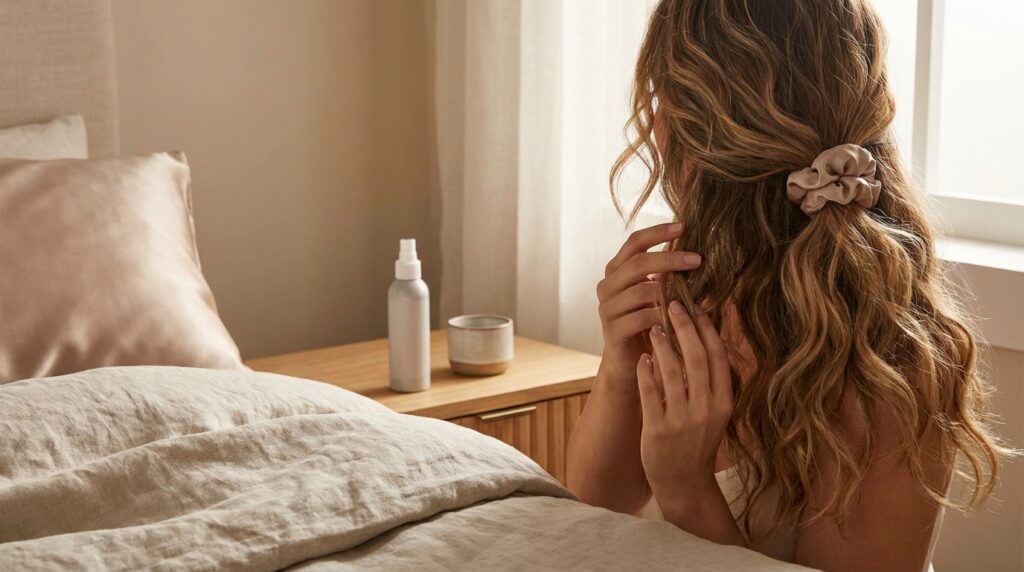
Realistically? One to three days, depending on your hair type and how much product you use.
- Fine, straight hair: Expect curls to relax into waves by evening. A light hairspray helps extend the life.
- Medium-textured hair: Usually holds well through day two with minimal touch-up.
- Thick or naturally wavy hair: Can last up to three days, especially if you pineapple your hair (loose, high ponytail) while sleeping.
Humidity is the enemy. If you live somewhere humid, a light anti-humidity spray makes a noticeable difference.
Frequently Asked Questions
Can curls without heat work on short hair?
Yes, but your method options are more limited. Pin curls and small flexi-rods work best for hair above shoulder length. The robe belt method requires at least 6-8 inches of length to wrap properly.
Do I need to wash my hair first?
Not necessarily. Day-old hair often holds curls better than freshly washed hair because it has more natural texture. Just dampen it with a spray bottle.
Why are my curls frizzy?
Usually friction. Sleeping on cotton, unwrapping too roughly, or touching your hair too much before it’s fully set all contribute. A silk or satin pillowcase is the easiest fix.
Is this method damaging at all?
Far less than heat styling, but not zero. Wrapping too tightly or using rough elastics can cause breakage over time. Be gentle, use soft materials, and give your hair a break between styling sessions.
Your Next Step
Tonight, try the robe belt method with whatever you have on hand—a scarf, a belt, even a pair of clean leggings works in a pinch. Set expectations low for your first attempt. The technique takes two or three tries to master, but once it clicks, you’ll wonder why you ever bothered heating up a curling iron. Your hair (and your electricity bill) will thank you.