
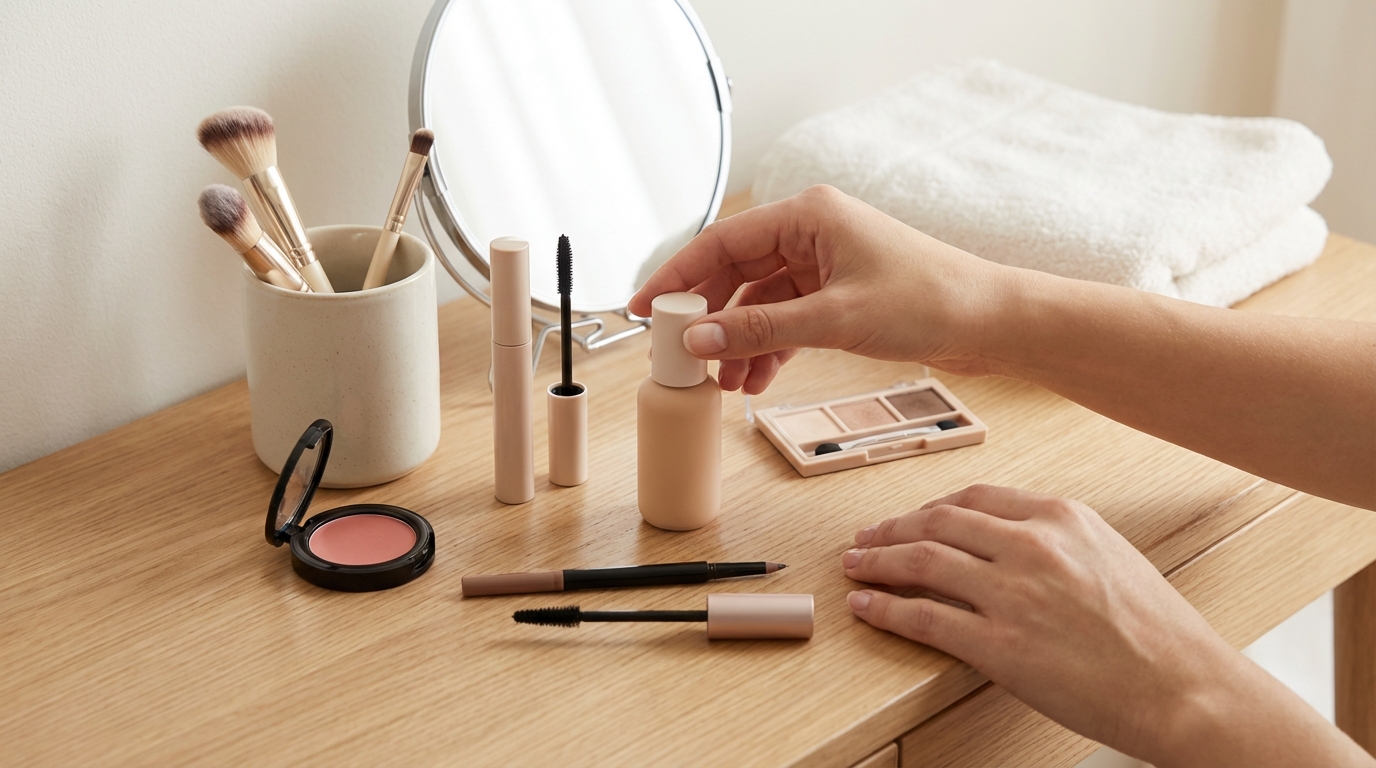
You’ve watched a few tutorials, maybe saved some looks on Pinterest, and now you’re standing in front of an overwhelming wall of products wondering where on earth to begin. The options are endless, the price tags vary wildly, and everyone seems to have a different opinion about what’s “essential.” If this sounds familiar, you’re not alone. A beginner’s guide to makeup should simplify things, not add more confusion to your cart.
This post breaks down the products you actually need to start wearing makeup, explains what each one does in plain terms, and helps you avoid the classic beginner mistakes that waste money and time. By the end, you’ll have a clear, minimal shopping list and the confidence to build from there.
Quick Starter Kit: The Essentials List
Before diving into the details, here’s a quick snapshot of what a true beginner needs. You can start with as few as five products and still create a polished, everyday look.
- A base product (tinted moisturizer, BB cream, or light foundation)
- Concealer for under-eyes and blemishes
- Mascara
- A multi-use blush or lip-and-cheek product
- A neutral lip product (tinted balm or simple lipstick)
That’s it. Everything else is optional until you feel ready to expand. Let’s talk about each one.
What You’ll Need (And What You Can Skip for Now)
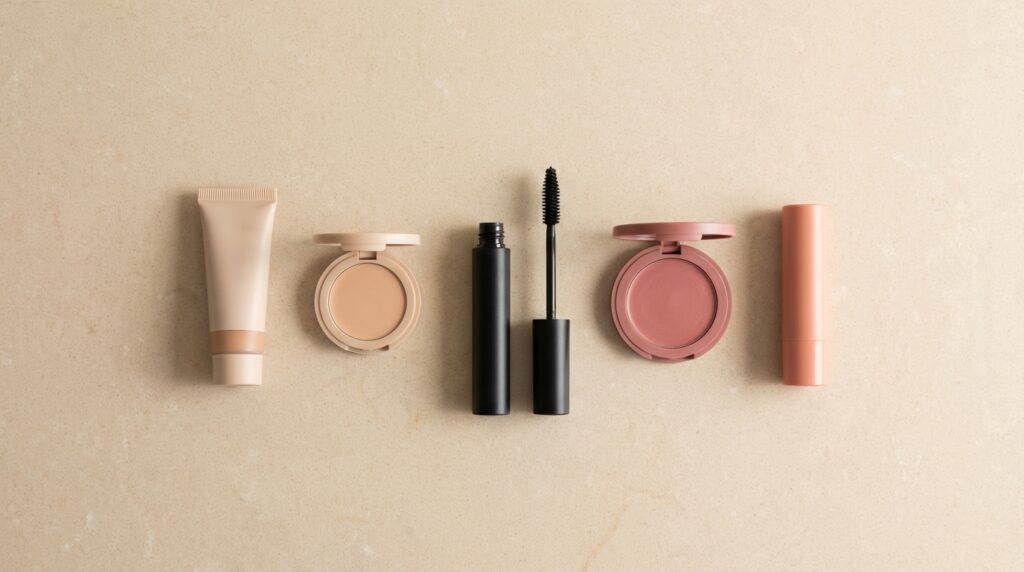
The makeup industry loves convincing us that we need seventeen products for a “natural” look. In practice, most beginners do best with fewer items they actually understand and enjoy using. Here’s what belongs on your starter list:
- Base product (pick one: tinted moisturizer, BB cream, or lightweight foundation)
- Concealer in a shade close to your skin tone
- Mascara in black or brown-black
- Blush (cream or powder, whichever feels easier)
- Lip color (tinted balm, gloss, or a comfortable lipstick)
- Basic brushes or sponge (one for base, one for blush)
What can you skip? Primer, setting spray, contour kits, multiple eyeshadow palettes, lip liner, and brow products are all nice additions later, but they’re not where you start. If you buy everything at once, you’ll feel overwhelmed and half of it will expire before you learn to use it properly.
Breaking Down Each Essential Product
Base Product: Evening Out Your Skin
A base product creates a more even skin tone without masking your face. Beginners often reach for full-coverage foundation, but this is actually harder to apply well. A tinted moisturizer or BB cream is more forgiving. It blends easily with fingers, looks natural even if application isn’t perfect, and feels lighter on the skin.
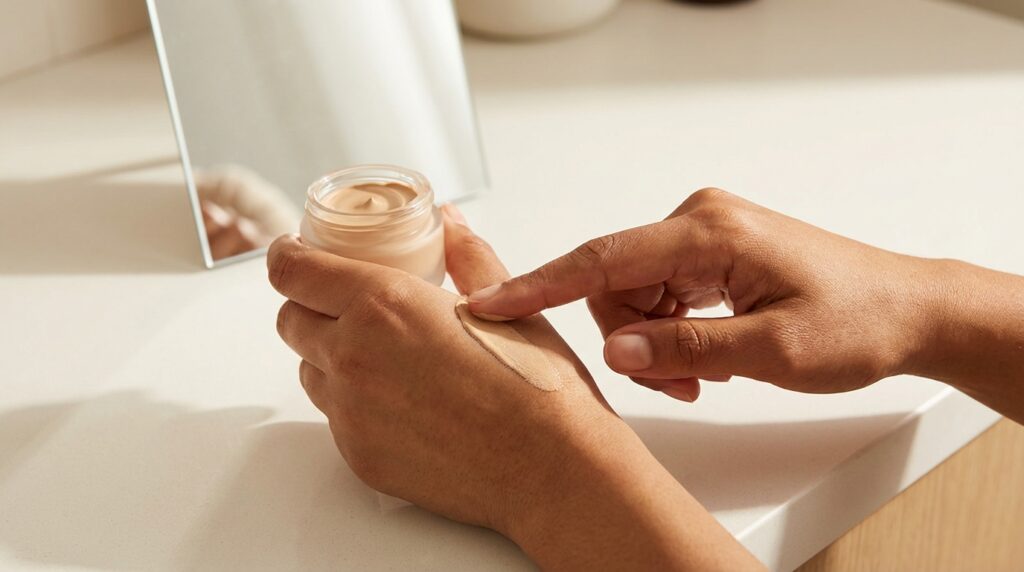
If you’re unsure about your shade, test a few options on your jawline in natural light. The right shade should blend into your neck without a visible line. A common mistake is choosing a shade that’s too light or too pink. When in doubt, go slightly warmer rather than lighter.
Concealer: Your Spot-Fixer
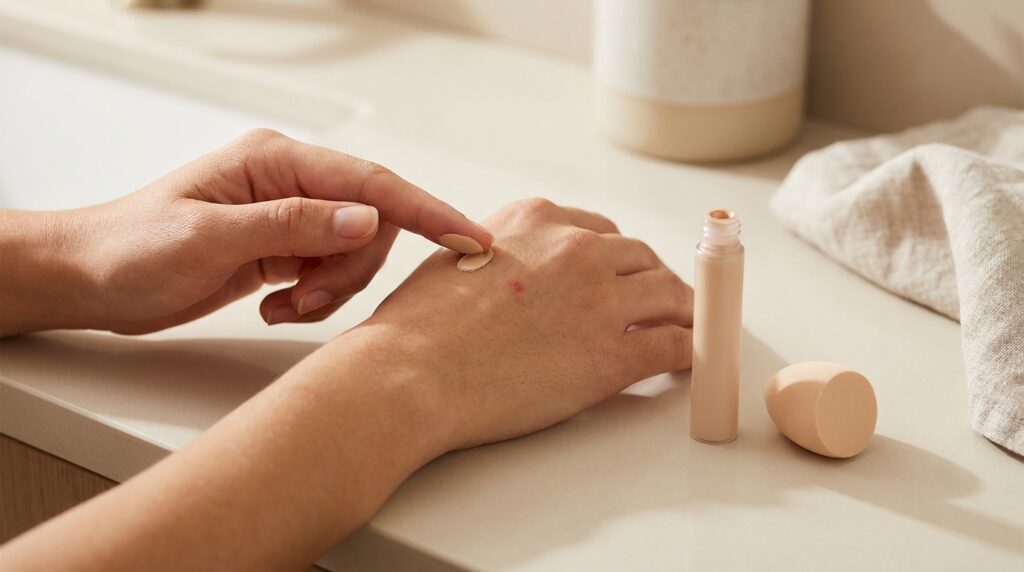
Concealer handles the jobs your base product can’t. Dark circles, redness around the nose, the occasional blemish—a smalldab of concealer covers these without caking on more product everywhere else. Look for a creamy formula that blends easily.
For under-eyes, apply in a small triangle shape and blend outward. For blemishes, dab directly on the spot and pat gently. Avoid rubbing, which just moves the product off the area you’re trying to cover. If you’re running late, concealer alone on problem spots plus mascara is a perfectly acceptable minimal routine.
Mascara: The Easiest Impact
Mascara is the one product that makes the biggest difference with the least skill required. It opens up your eyes and makes you look more awake, even if you’ve skipped everything else. A simple black or brown-black formula works for almost everyone.
Wiggle the wand at the base of your lashes and sweep upward. Two coats are usually enough. More than that, and you risk clumpy spider lashes. If clumps happen, a clean spoolie brush (or an old, cleaned mascara wand) can comb them out while the product is still wet.
Blush: Bringing Life Back to Your Face
Foundation and concealer can sometimes flatten your complexion. Blush adds that healthy flush back. Cream blush is beginner-friendly because you can apply it with your fingers and blend mistakes easily. Powder blush works great too, especially if your skin tends toward oily.
Smile and apply to the apples of your cheeks, blending slightly upward toward your temples. Start with less than you think you need—you can always add more. A peachy-pink shade tends to be universally flattering and safe for a first purchase.
Lip Color: Finishing the Look
A tinted lip balm or sheer lipstick is the easiest way to complete your makeup without worrying about precise application. Bold, matte lipsticks require more skill and often need lip liner to look polished. Save those for later.
Stick with something moisturizing and close to your natural lip color, just slightly enhanced. You can swipe it on without a mirror, touch it up throughout the day, and it won’t require constant maintenance.
Putting It All Together: Your First Routine
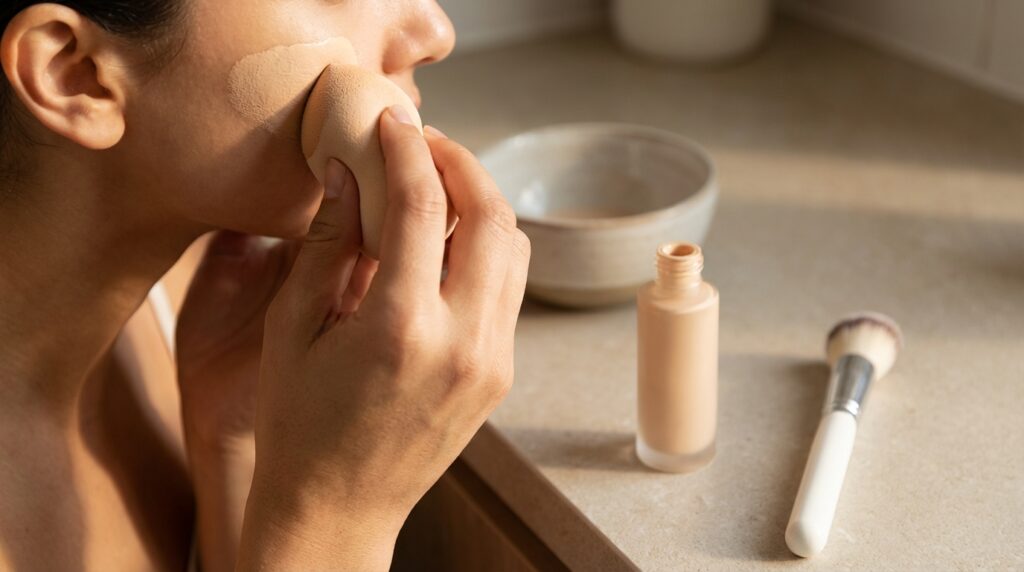
Step 1: Start with clean, moisturized skin. If your moisturizer has SPF, even better. Give it a minute to absorb before applying makeup.
Step 2: Apply your base product. Use your fingers, a damp makeup sponge, or a brush—whatever feels natural. Blend outward from the center of your face. Don’t forget your jawline and blend down slightly onto your neck to avoid a harsh line.
Step 3: Dab concealer on any spots that need extra coverage. Pat gently to blend. Under the eyes, blend in a triangle shape pointing down toward your cheek.
Step 4: Add blush to the apples of your cheeks. Smile, apply, blend upward. Check both sides for evenness.
Step 5: Apply mascara. Wiggle at the root, sweep to the tip. Let the first coat dry slightly before adding a second if needed.
Step 6: Finish with your lip product. Blot once if you prefer a softer look.
This entire routine takes about five to ten minutes once you get comfortable. In the beginning, give yourself a little extra time to experiment.
Shortcut If You’re Short on Time
- Skip the base product entirely—just use concealer on problem spots
- Use a multi-stick product that works on lips and cheeks
- One coat of mascara is enough for a quick, natural look
- Blend everything with your fingers to skip brush cleanup
- A tinted lip balm applied on the go counts as a complete look
Common Beginner Mistakes to Avoid
- Buying too much at once: You end up with products that don’t suit you, and they expire before you figure that out. Start minimal, then expand based on what you actually enjoy using.
- Skipping skincare: Makeup applies better on hydrated skin. Even a basic moisturizer makes a noticeable difference.
- Applying in bad lighting: Natural light is your friend. Bathroom lighting often distorts colors and makes blending look uneven.
- Matching foundation to your hand: Your hand is a different color than your face. Test on your jawline or cheek.
- Ignoring expiration: Mascara should be replaced every three to four months. Other products last longer, but check for changes in smell or texture.
Frequently Asked Questions
Do I need to buy expensive makeup as a beginner?
Not at all. Many affordable drugstore products perform just as well as high-end options, especially for basics like mascara and lip balm. Spend more on items you’ll use daily, like a base product, and save on things you’re still experimenting with.
What if I have sensitive skin?
Look for fragrance-free formulas and do a patch test on your jaw before applying a new product all over your face. If you notice redness, itching, or irritation, stop using the product immediately. For persistent skin concerns, consult a dermatologist.
How do I know which shades suit me?
Start with neutral, muted versions of colors. A dusty rose blush or a nude-pink lip works on most skin tones. As you get more comfortable, experiment with brighter or deeper shades based on what looks good in natural light.
Do I need brushes or can I use my fingers?
Fingers work great for cream products and even some powder blushes. A basic sponge helps with base products. You don’t need a full brush set to start—one fluffy blush brush and a sponge cover most beginner needs.
Summary and Next Step
Starting with makeup doesn’t require a massive haul or hours of practice. A handful of essentials—base, concealer, mascara, blush, and a lip product—will take you surprisingly far. Focus on products that feel easy to use and build your skills gradually.
Your next step: pick just one category to explore first. If you already own mascara, maybe it’s time to find a blush shade you love. Small, intentional purchases help you learn what works for your skin and lifestyle without cluttering your bathroom drawer or draining your budget.