
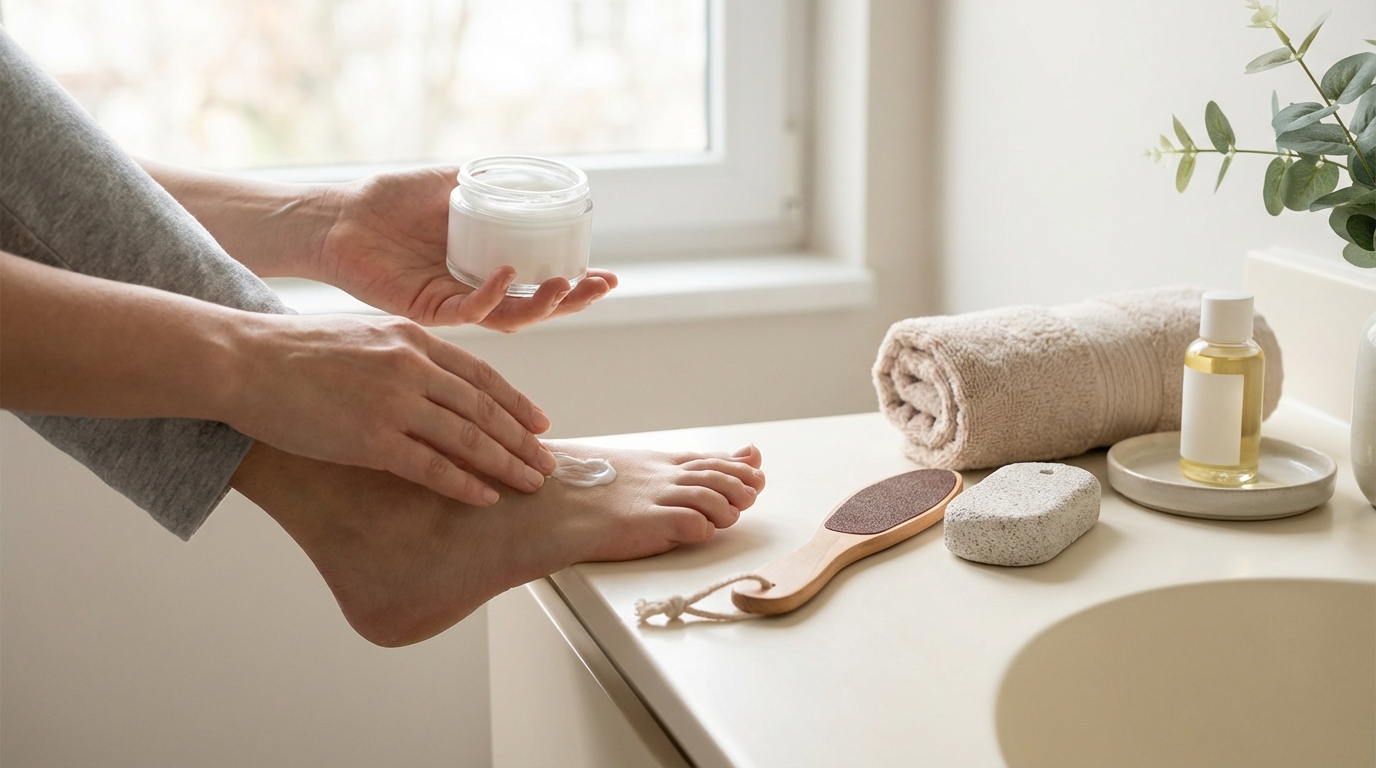
Cracked heels, rough patches, and tired-looking feet have a way of sneaking up on you. One day everything seems fine, and the next you’re hiding your feet in socks because they look like they’ve been through a desert trek. Professional pedicures are lovely, but they add up fast—and sometimes you just want results without leaving your house. The good news is that DIY-like foot care using store-bought products can deliver genuinely soft, healthy feet without the salon price tag. In this post, you’ll learn a simple at-home routine, which affordable products actually work, and how to avoid the mistakes that keep feet looking rough no matter what you try.
This approach isn’t about recreating a fancy spa experience. It’s about building a low-effort habit that fits into your week and actually makes a difference. Most people notice real improvement within two to three sessions when they follow a consistent routine with the right products.
Quick Routine Overview
- Soak feet in warm water for 10–15 minutes to soften skin
- Use a foot file or pumice stone on damp (not wet) heels
- Apply a scrub or exfoliating product to remove remaining dead skin
- Rinse, dry thoroughly, and apply a thick foot cream
- Wear cotton socks for at least 30 minutes (or overnight) to lock in moisture
That’s the core of it. The details below will help you get better results and avoid wasting money on products that don’t deliver.
What You’ll Need
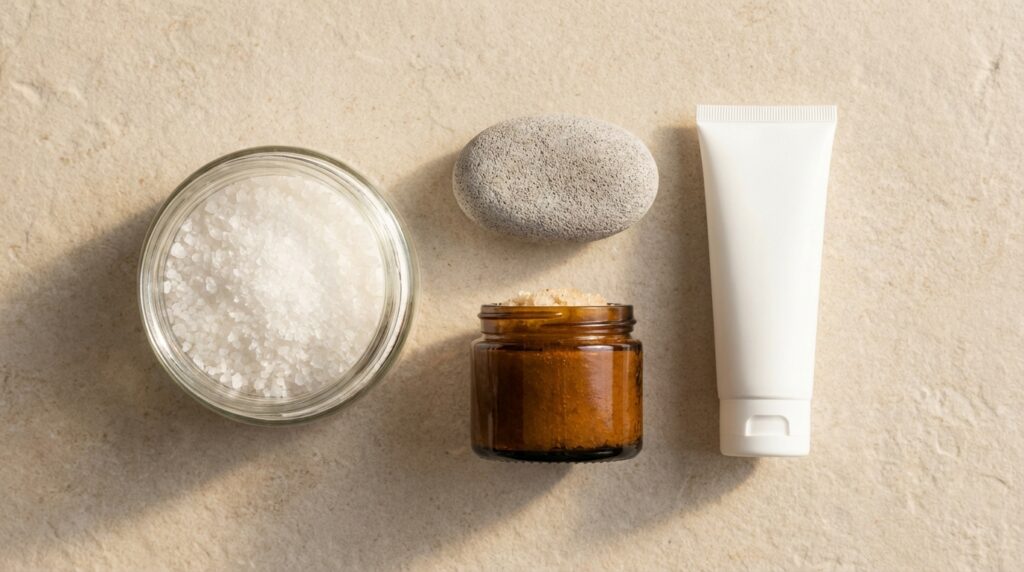
You don’t need a cabinet full of specialty items. A few well-chosen products will cover everything. Here’s a practical shopping list:
- Foot soak: Epsom salt, a gentle foot soak tablet, or even plain warm water with a splash of mild soap
- Exfoliating tool: A pumice stone, foot file, or electric callus remover (budget versions work fine)
- Foot scrub: Any body scrub works, or look for one labeled for feet with slightly coarser texture
- Heavy moisturizer: A thick foot cream, heel balm, or even a basic petroleum-based ointment
- Cotton socks: Clean, breathable socks to wear after moisturizing
- Small basin or tub: Anything that fits both feet comfortably
- Towel: Dedicated to foot care so you’re not mixing it with face towels
If you’re on a tight budget, skip the fancy foot soak products. Warm water with a tablespoon of Epsom salt does the job. The real results come from consistent exfoliation and moisturizing, not expensive soaking solutions.
Step-by-Step DIY Foot Care Routine
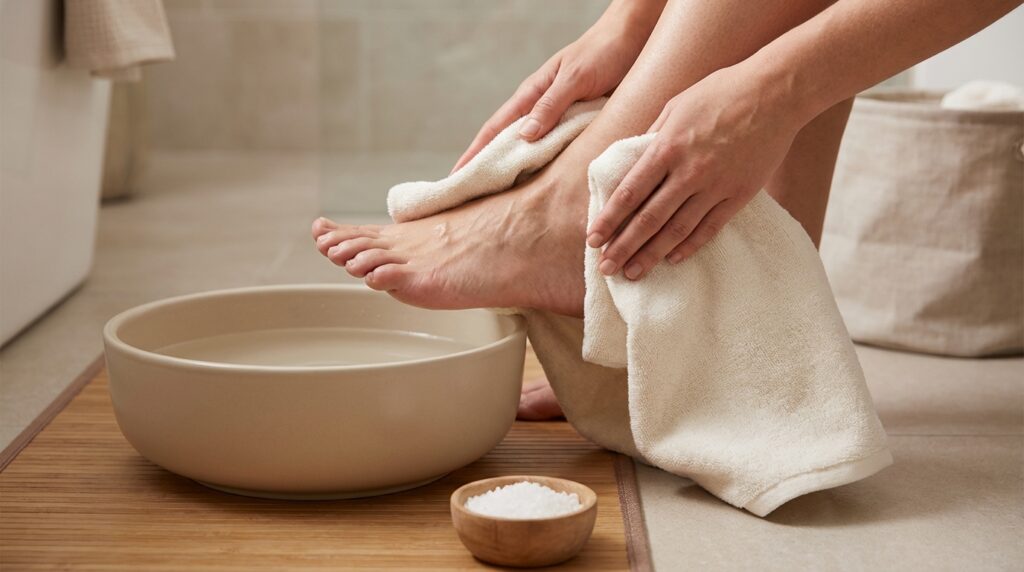
Step 1: Fill your basin with warm (not hot) water. Add your foot soak product or a handful of Epsom salt. Soak your feet for 10–15 minutes. This softens the dead skin and makes exfoliation much easier. If you’re short on time, even 5 minutes helps—but longer soaks give better results for stubborn calluses.
Step 2: Remove your feet from the water and pat them lightly with a towel. You want them damp, not dripping wet. Wet skin is too slippery for effective filing, and you risk removing too much or irritating healthy skin. This is where most people go wrong—they file while still soaking or immediately after, and wonder why their heels stay rough.
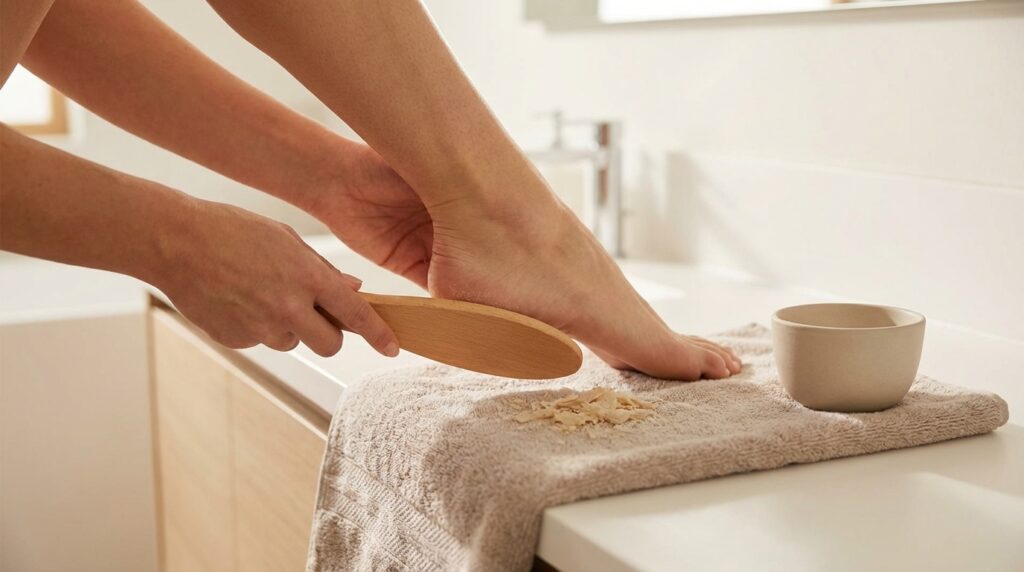
Step 3: Use your pumice stone or foot file on the heels and any rough patches. Work in one direction rather than back-and-forth sawing motions. Apply gentle, consistent pressure. You’re not trying to remove everything in one session. Think of it as gradual maintenance, not aggressive renovation.
Step 4: Apply your foot scrub and massage it into the entire foot, focusing on heels, the balls of your feet, and around the toes. This catches any remaining dead skin and leaves the surface smoother. Rinse thoroughly with warm water.
Step 5: Dry your feet completely, especially between the toes. Moisture trapped between toes can lead to fungal issues, so take an extra minute here. Use a clean towel and don’t rush this part.
Step 6: Apply a generous layer of foot cream or heel balm. Really generous—more than you think you need. Massage it in, paying extra attention to the heels and any dry areas. Then put on your cotton socks immediately. The socks trap the moisture and help the product absorb instead of rubbing off on your floors.
For best results, do this routine once or twice a week. If your feet are in rough shape, start with twice weekly for a few weeks, then drop to maintenance mode.
Shortcut If You’re Short on Time
- Skip the soak—file dry heels gently before your shower, then moisturize after
- Use an exfoliating foot peel mask once a month instead of weekly scrubbing (these take a week to show results but require almost no effort)
- Keep foot cream and socks by your bed and apply right before sleep
- Use a quick-absorbing foot lotion for daily maintenance between full routines
- Focus only on heels if that’s your main problem area—you don’t need to treat the whole foot every time
Common Mistakes That Keep Feet Rough
Even with the right products, a few habits can sabotage your results. Here’s what to watch for:
- Filing too aggressively: Over-filing triggers your skin to produce more calluses as protection. Gentle and consistent beats aggressive and occasional.
- Skipping moisturizer: Exfoliation without moisture leaves skin dry and prone to cracking again within days.
- Using thin lotions instead of thick creams: Regular body lotion absorbs too fast and doesn’t provide enough barrier for heels. Look for products labeled “heel balm,” “foot cream,” or anything with a thick, almost waxy texture.
- Forgetting the socks: Applying cream and then walking around barefoot means most of it ends up on your floor, not your feet.
- Inconsistency: One great session won’t fix months of neglect. Feet need regular attention, even if it’s just a quick moisturize-and-socks routine a few times a week.
- Ignoring cracks that don’t heal: Deep, painful cracks or signs of infection need professional attention. At-home care is for maintenance and mild roughness, not medical issues.
Choosing the Right Products on a Budget
You don’t need to spend a lot to get good results. Here’s how to pick wisely:
For Exfoliation
A basic pumice stone from any drugstore works well and lasts for months. If you prefer something more efficient, budget electric callus removers are widely available and speed up the process. Replace pumice stones when they get too smooth to be effective—usually every few months with regular use.
For Moisturizing
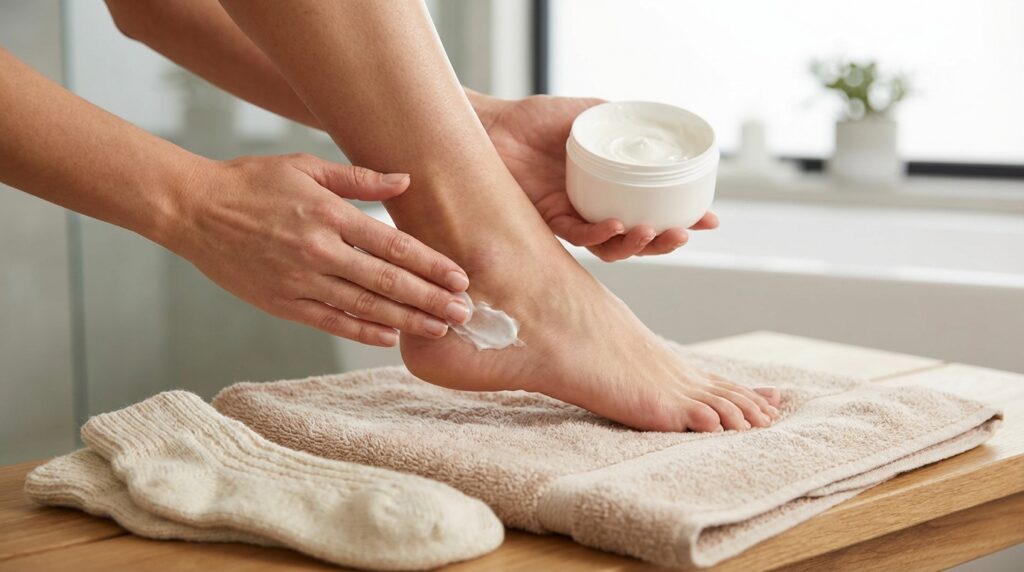
Look for creams containing urea, shea butter, or glycerin. Urea is particularly effective for very dry, cracked heels because it helps break down dead skin while moisturizing. A basic heel balm with 10–25% urea is a solid choice. If you want the most budget-friendly option, plain petroleum jelly works surprisingly well when paired with socks overnight.
For Scrubs
Any body scrub with a gritty texture works. You can also make your own by mixing sugar or salt with a bit of olive oil or coconut oil. Homemade scrubs are cheap and effective, though store-bought versions are more convenient and less messy.
Frequently Asked Questions
How often should I do this routine?
Once or twice a week for most people. If your feet are very rough, start with twice weekly until you see improvement, then switch to weekly maintenance. Daily moisturizing (even without the full routine) helps maintain results.
Can I use a foot peel instead of manual exfoliation?
Yes, foot peel masks are a low-effort alternative. They use gentle acids to make dead skin shed over about a week. They’re great for occasional deep exfoliation but shouldn’t replace regular moisturizing. Most people find a combination works best—peels every few weeks, manual exfoliation and moisturizing in between.
What if my heels are cracked and painful?
Mild cracks often improve with consistent moisturizing and gentle care. Deep cracks that bleed, cause significant pain, or show signs of infection should be seen by a healthcare professional. Don’t try to file or scrub broken skin—focus on moisturizing and protecting the area until it heals.
Is it okay to use a razor-style callus remover?
These tools remove skin very quickly, which makes it easy to overdo it and cause injury. Most dermatologists and podiatrists recommend gentler options like pumice stones or foot files for home use. If you do use a blade-style tool, be extremely cautious and never use it on wet skin.
Summary and Next Step
DIY-like foot care using store-bought products is simple once you have a routine. Soak, exfoliate gently, moisturize generously, and wear socks to lock it in. The key is consistency—small efforts each week add up to noticeably softer feet within a few sessions. Avoid the temptation to over-file, and always follow exfoliation with a thick cream or balm.
Your next step: gather your supplies and schedule your first session. Even 20 minutes this weekend can start turning things around. Your feet do a lot for you—a little regular care goes a long way.