
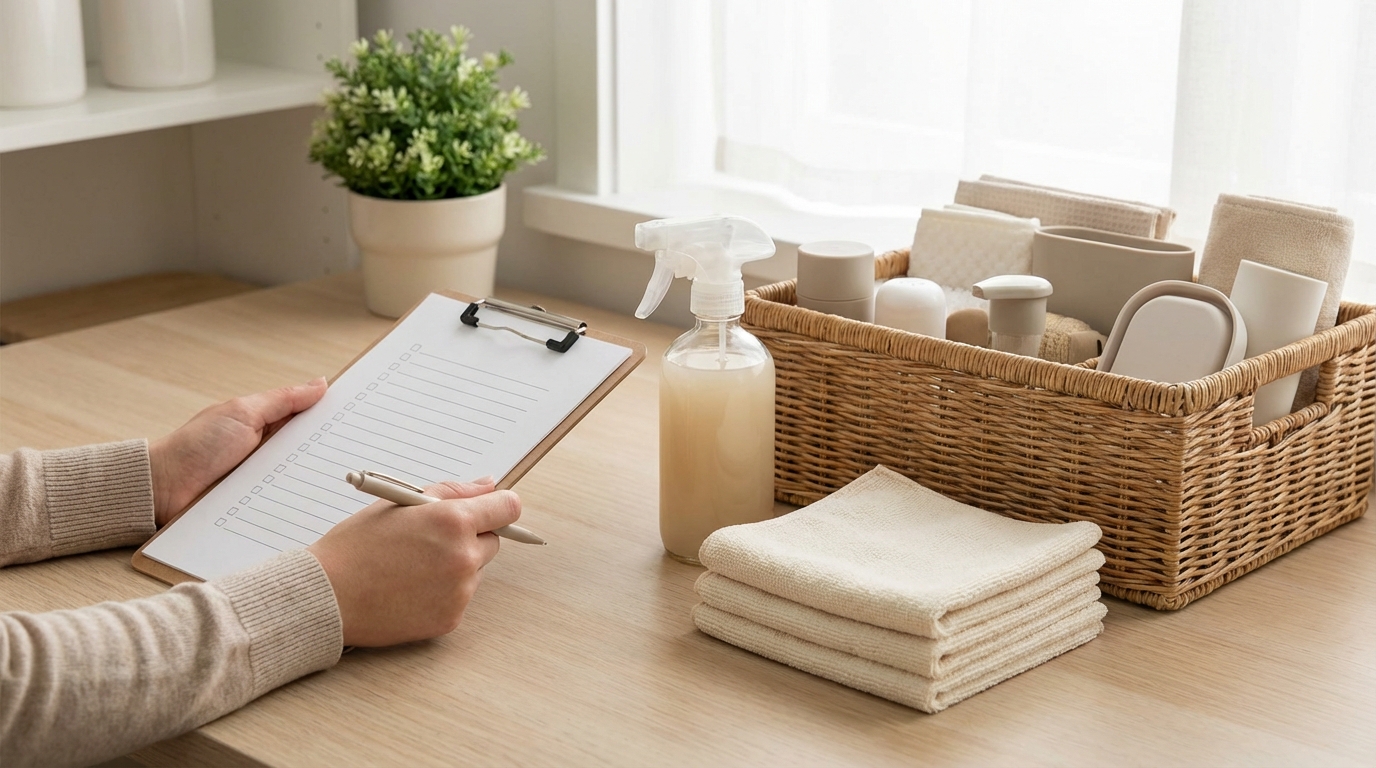
December hits, and suddenly the house looks like a tornado made of gift wrap, random Amazon boxes, and “where did this even come from?” clutter. Before the new year rolls in, there’s a small window to reset everything—without losing an entire weekend to deep cleaning. This end-of-year home reset routine checklist breaks down exactly what to tackle, room by room, in a way that takes hours instead of days. The goal isn’t perfection. It’s walking into January with clear counters, organized closets, and that satisfying “fresh start” feeling that usually costs a professional organizer $300 to achieve.
Why Bother With a Year-End Home Reset?
Here’s the thing: clutter accumulates slowly, then all at once. That junk drawer that was “manageable” in March is now a black hole. The pantry has three half-empty boxes of the same crackers. Holiday decorations from last year never made it back to storage properly.
A focused reset does three things:
- Clears decision fatigue: Less stuff means fewer daily micro-decisions about where things go.
- Saves money: Finding what you already own prevents duplicate purchases. (How many rolls of tape are hiding in various drawers right now?)
- Creates mental space: Studies consistently link cluttered environments to higher stress levels. A tidy home genuinely feels lighter.
Counter-intuitive insight: Starting with the messiest room actually backfires. Begin with a small, visible win—like a single countertop—to build momentum. Tackling the garage first leads to burnout before lunch.
What You’ll Need for the Home Reset Checklist
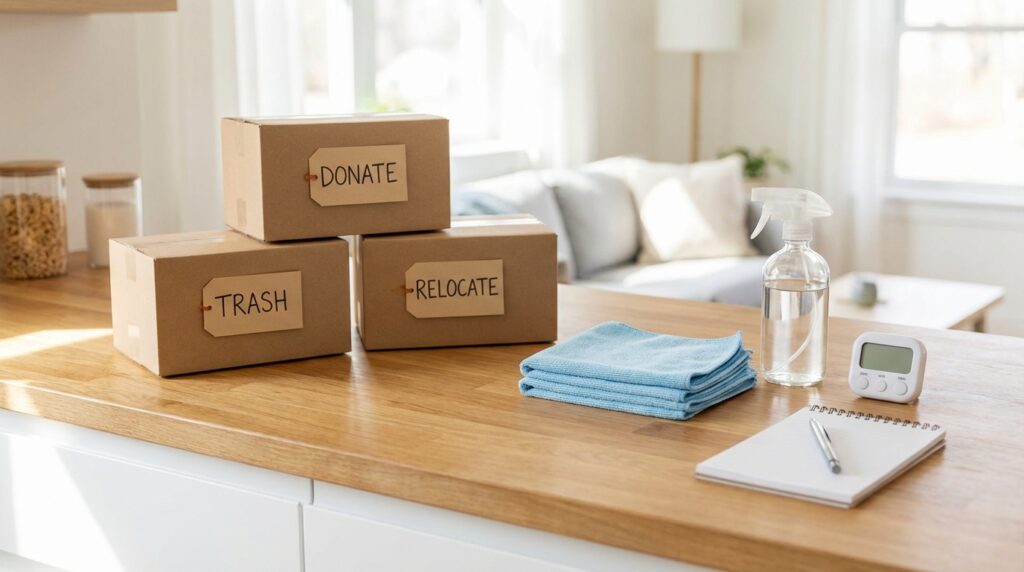
No fancy supplies required. Most of this is already in the house:
- Three boxes or bags labeled: Donate, Trash, Relocate
- Microfiber cloths (2-3)
- All-purpose cleaner or a DIY mix (1 part white vinegar, 1 part water)
- Vacuum with attachments
- Timer (phone works fine)
- Notepad for the “buy later” list
- Bluetooth speaker or podcast queue (optional but highly recommended)
Smart Tip: Set a hard stop time before starting. Open-ended cleaning sessions spiral into exhaustion. Two focused hours beat six scattered ones every time.
The Room-by-Room Year-End Home Reset Routine
This isn’t about scrubbing grout with a toothbrush. It’s strategic decluttering plus surface-level cleaning that makes the biggest visual impact.
Kitchen (45-60 minutes)
- Empty the refrigerator completely. Toss anything expired, questionable, or forgotten. Wipe shelves with a damp cloth.
- Pull everything out of the pantry. Group like items. Discard stale snacks and duplicate spices older than two years (they lose potency).
- Clear countertops entirely, then only return daily-use items. That bread maker used twice in 2019? Storage or donate pile.
- Wipe down cabinet fronts and appliance surfaces.
- Empty and sanitize the trash can.
Expected result: A kitchen that looks like it belongs in a real estate listing. Opening the fridge won’t trigger guilt anymore.
Living Room (30-40 minutes)
- Gather all items that don’t belong in this room into the “Relocate” box.
- Fluff and rotate couch cushions. Vacuum underneath them (brace for discoveries).
- Dust all surfaces, including TV screens, shelves, and lamp bases.
- Organize media consoles—untangle cords, remove dead batteries from remotes.
- Edit the bookshelf: donate books that won’t be reread.
Bedrooms (30 minutes each)
- Strip the bed. Wash all bedding, including mattress protector.
- Declutter nightstands—they attract random items like magnets.
- Do a quick closet sweep: anything unworn in 12+ months goes in the donate bag.
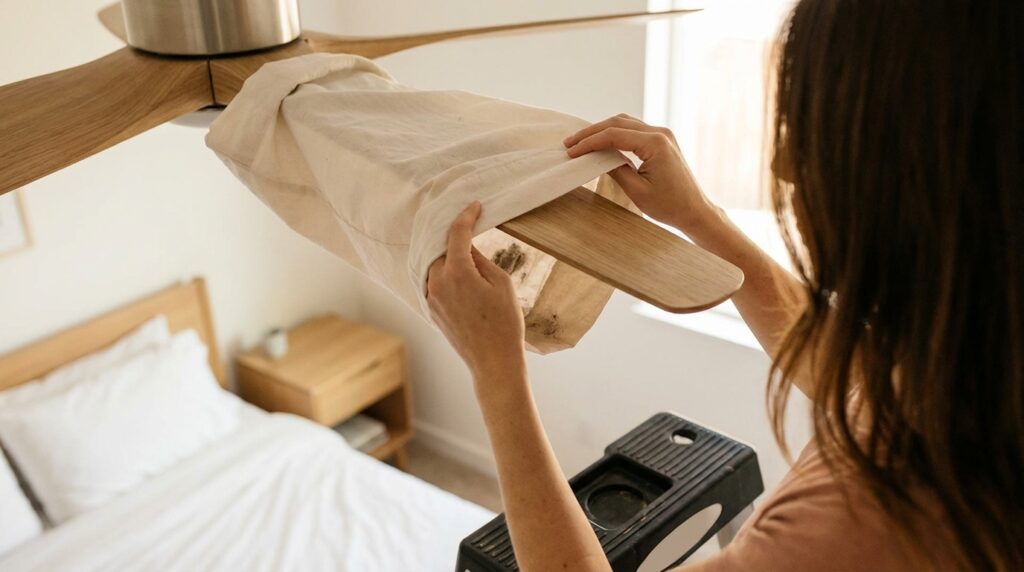
- Dust ceiling fan blades (use a pillowcase to catch dust).
- Vacuum under the bed.
Bathrooms (20-25 minutes each)
- Discard expired medications, old makeup, and nearly-empty product bottles.
- Wipe mirrors, counters, and fixtures.
- Scrub the toilet and shower surfaces.
- Wash or replace shower curtain liner if it’s looking rough.
- Restock essentials and note what needs replacing.
Entryway & Mudroom (15-20 minutes)
- Remove all shoes and sort—donate pairs that don’t fit or aren’t worn.
- Clear the catch-all bowl or tray. Actually put things where they belong.
- Wipe down door handles and light switches (high-touch germ zones).
- Sweep or vacuum the floor.
Quick Wins Under 15 Minutes
Short on time? These micro-tasks still create noticeable improvement:
- Junk drawer purge (10 min): Keep scissors, tape, a pen, and a notepad. Everything else probably has a better home.
- Digital declutter (15 min): Delete 50 photos from the camera roll. Unsubscribe from 10 email lists.
- Linen closet edit (10 min): Two sheet sets per bed is plenty. Donate the rest.
- Freezer archaeology (10 min): Toss anything with freezer burn or mystery labels.
- Medicine cabinet audit (8 min): Check expiration dates. Dispose of old prescriptions properly at a pharmacy drop-off.
The “One In, One Out” Rule for January
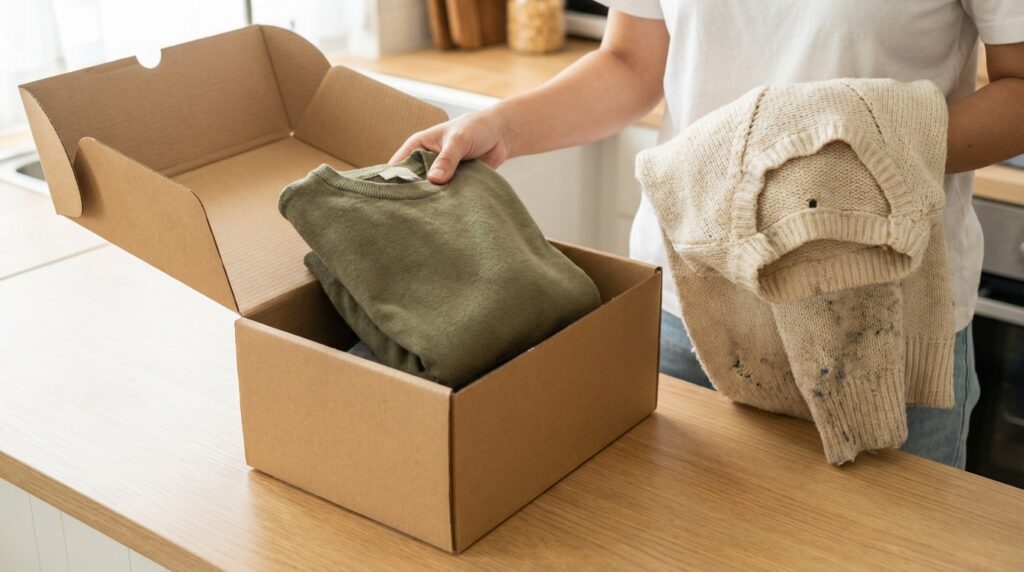
Here’s how to keep the reset from unraveling by February: for every new item that enters the house, one similar item leaves. New sweater? Donate an old one. New kitchen gadget? Something else goes.
This isn’t about deprivation—it’s about maintaining equilibrium. The goal is a home that stays functional without requiring another marathon reset session next December.
Frequently Asked Questions
How long does a full home reset take?
For an average three-bedroom home, expect 4-6 hours spread across a weekend. Breaking it into two-hour sessions over several days works better for most people than one exhausting marathon.
What should go in the donate pile versus trash?
If it’s clean, functional, and someone else could use it—donate. If it’s stained, broken, or missing pieces—trash. When in doubt, ask: “Would a friend want this?” If the answer is no, it’s trash.
How do I get family members to participate?
Assign specific, time-boxed tasks rather than vague requests. “Clear your nightstand in 10 minutes” works better than “clean your room.” A shared playlist and a reward (pizza, movie night) helps too.
What if I’m emotionally attached to clutter?
Take photos of sentimental items before donating. The memory stays without the physical space requirement. For truly difficult items, a “maybe” box that gets revisited in 30 days can ease the decision.
Wrapping Up the Year-End Reset
A home reset routine doesn’t require a complete lifestyle overhaul or a week off work. It’s about strategic effort in the right places—the spots that create the most visual and mental relief. Start with one room today, even just for 30 minutes. By January 1st, the house will feel noticeably different, and that “fresh start” energy won’t cost a dime beyond what’s already in the cleaning cabinet.
Grab those three bags, set a timer, and pick the room that’s been bothering you most. Future-you will be grateful.