
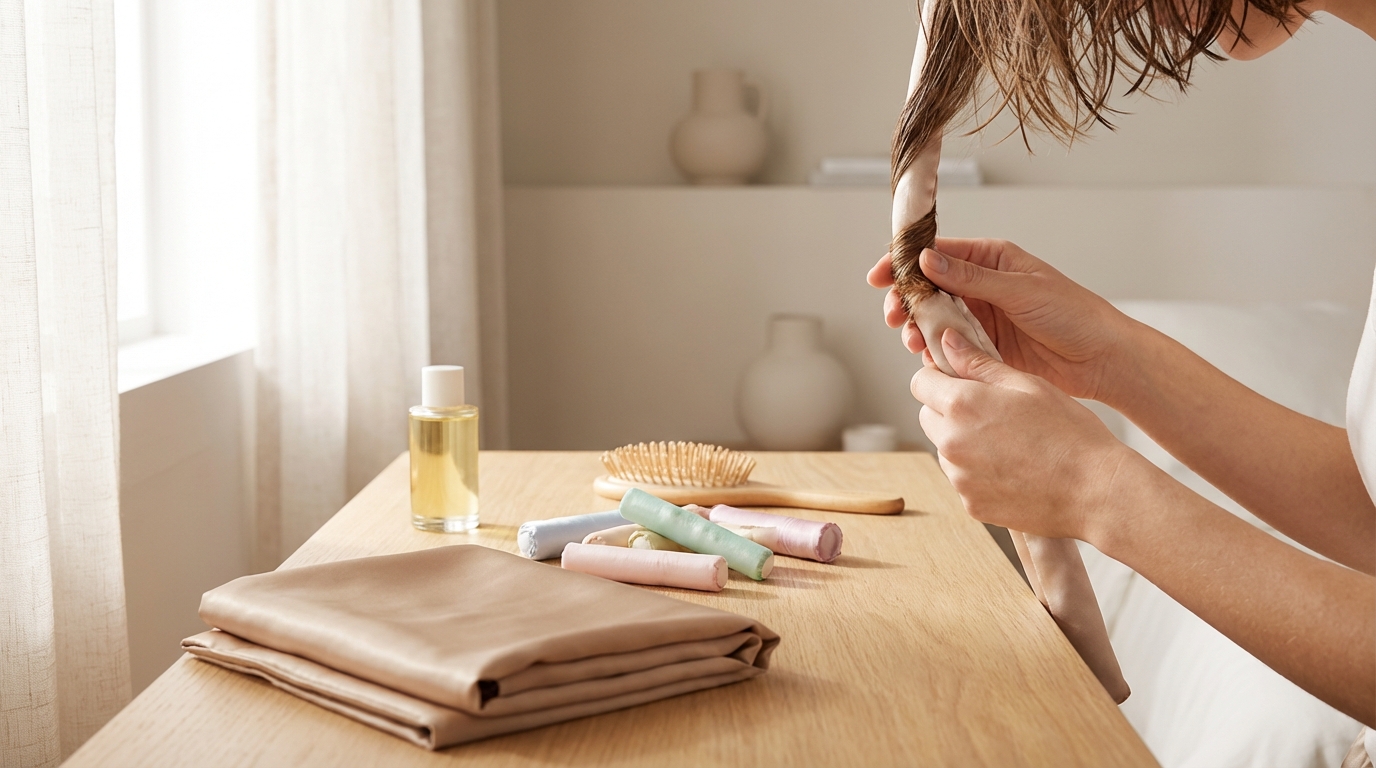
You’ve seen the gorgeous overnight curl tutorials all over social media—but most of them assume you have hair down to your waist. When you try those same methods on a bob or a pixie-adjacent cut, you end up with weird kinks, flat roots, or curls that drop out before lunch. Heatless curls for short hair require a slightly different approach, and once you know what actually works, you can wake up with bouncy, defined waves without frying your strands.
This guide covers the techniques that suit shorter lengths, the supplies you probably already own, and the common mistakes that sabotage results. By the end, you’ll have a go-to method (or two) that fits your hair type and your schedule.
Quick Routine Overview
- Choose a method based on your curl goal: tight ringlets, loose waves, or vintage-style bends.
- Work with damp (not soaking wet) hair for faster drying and better hold.
- Use smaller sections than long-hair tutorials suggest—short hair needs more wraps to create shape.
- Leave curls set for at least 4–6 hours, or overnight for best results.
- Finish with a light product to fight humidity and extend wear time.
What You’ll Need
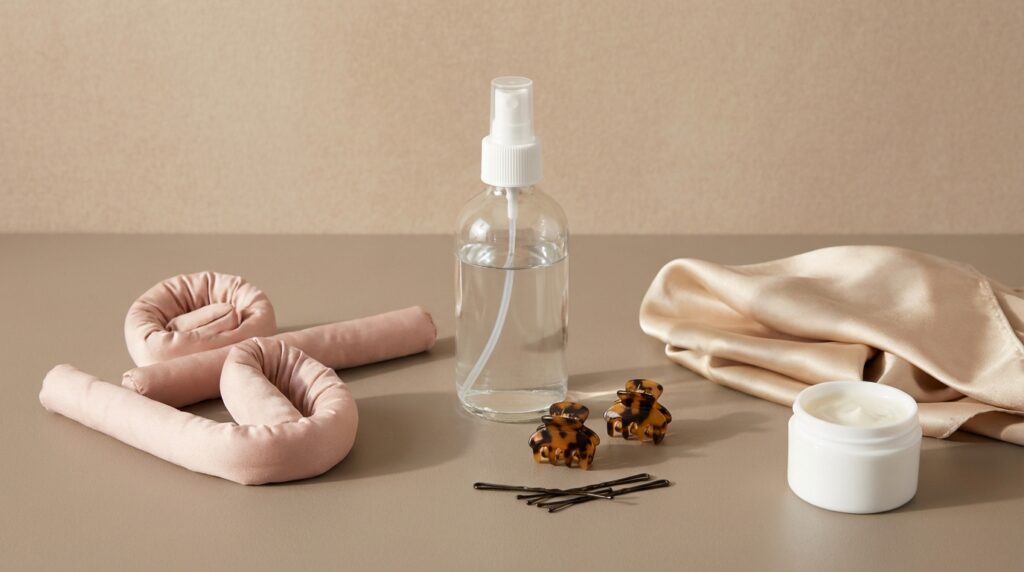
- A spray bottle with water (or a leave-in conditioner mix)
- Sectioning clips or small claw clips
- Your chosen curl tool: fabric rods, flexi rods, satin scrunchies, or even socks
- A silk or satin scarf or pillowcase to protect curls while you sleep
- A lightweight mousse or curl cream (optional, but helpful for hold)
- Bobby pins or small elastics for securing sections
You don’t need to buy a fancy heatless curling set. Many people get great results with items already in a bathroom drawer. That said, if you plan to do this regularly, a set of soft fabric rods or flexi rods makes the process faster and more comfortable for sleeping.
Best Heatless Curl Methods for Short Hair
Option 1: Flexi Rods or Foam Rollers
Flexi rods are bendable foam or rubber rods that you wrap hair around and then twist closed. They’re ideal for short hair because they come in various diameters—smaller rods create tighter curls, which is often what shorter lengths need to show visible definition.
Step 1: Start with hair that’s about 70–80% dry. If it’s too wet, it won’t dry fully overnight and you’ll wake up to limp, damp sections. Mist lightly if your hair is already dry.
Step 2: Apply a small amount of mousse or curl cream to each section before wrapping. This gives the curl something to hold onto.
Step 3: Take a one-inch section (smaller for tighter curls), place the rod at the end of the hair, and roll upward toward the scalp. Bend the rod ends together to secure.
Step 4: Repeat around your entire head. For short hair, you’ll likely use 10–15 rods depending on thickness.
Step 5: Sleep on a satin pillowcase or wrap your head loosely in a silk scarf. In the morning, gently unwind each rod, shake your roots, and scrunch lightly.
Option 2: The Sock or Robe Belt Method
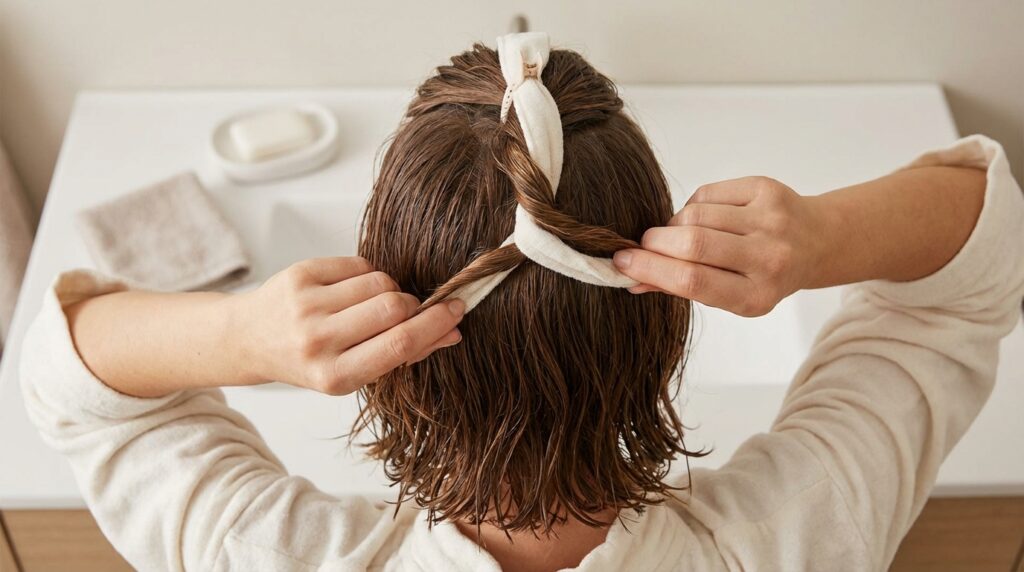
This viral technique works surprisingly well on chin-length hair and longer bobs. You wrap sections around a soft fabric tube—like a long sock with the toe cut off, or a robe belt—and secure it on top of your head.
Step 1: Place the sock or belt across the top of your head like a headband, securing it with a clip at each temple.
Step 2: Take a front section of damp hair, split it in two, and wrap each piece around the fabric in alternating directions (one over, one under) as you move toward the back.
Step 3: Continue adding sections as you go, wrapping them into the same twist. Tie the ends of the fabric together at the back or secure with a scrunchie.
Step 4: Leave in for at least six hours. When you remove it, you’ll have soft, beachy waves rather than tight curls.
A common issue with this method on short hair: the pieces near your nape may not wrap fully. If your hair is very short at the back, skip those sections or pin-curl them separately.
Option 3: Pin Curls (Old-School but Effective)
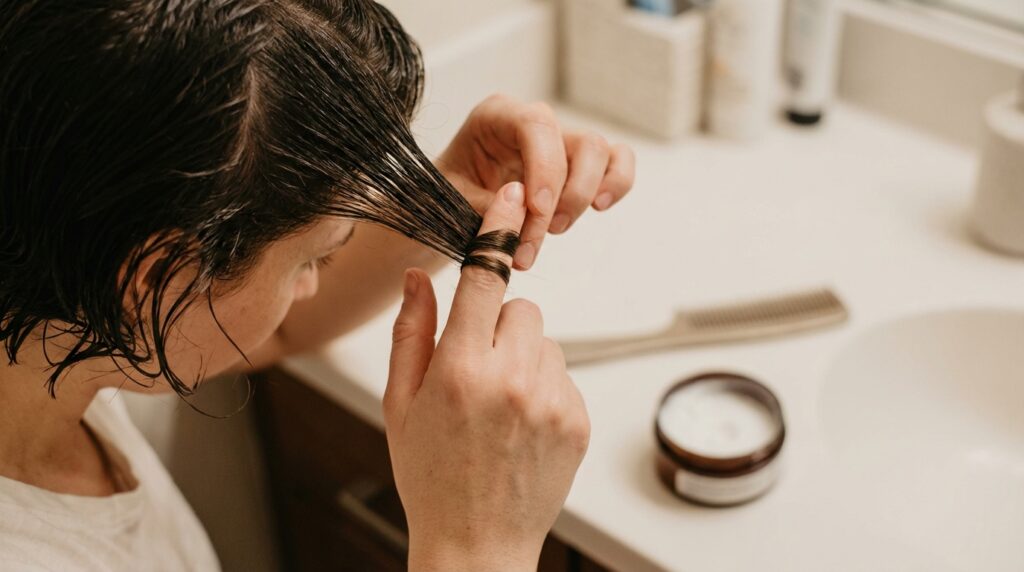
Pin curls are the original heatless curl method, and they’re perfect for pixie cuts, very short bobs, or anyone who wants precise control over curl placement. They take a bit more time to set, but the results can last for days.
Step 1: Work with damp hair and a setting lotion or light gel for extra hold.
Step 2: Take a small section (about the width of two fingers), comb it smooth, and wrap it around your finger to form a flat coil against your scalp.
Step 3: Slide your finger out and secure the coil with a bobby pin or a small clip. The direction you coil (clockwise vs. counterclockwise) affects how the curl falls, so stay consistent on each side of your head for a uniform look.
Step 4: Cover with a silk scarf and sleep. In the morning, remove pins, gently separate curls with your fingers, and finish with a light hairspray if needed.
If you’re running late and only have a few hours, pin curls on short hair can set in as little as three to four hours—especially if you add a bit of product and your hair isn’t too thick.
Shortcut if You’re Short on Time
- Use a diffuser on cool (not hot) for 10 minutes after setting to speed up drying without heat damage.
- Focus on the front sections only—the pieces that frame your face make the biggest visual impact.
- Twist damp sections into mini buns, secure with claw clips, and leave in while you do your makeup. Even 30–45 minutes adds texture.
- Braid two or three sections loosely for quick waves rather than defined curls.
- Spritz with a sea salt spray before twisting for extra grip and texture.
Common Mistakes (and How to Fix Them)
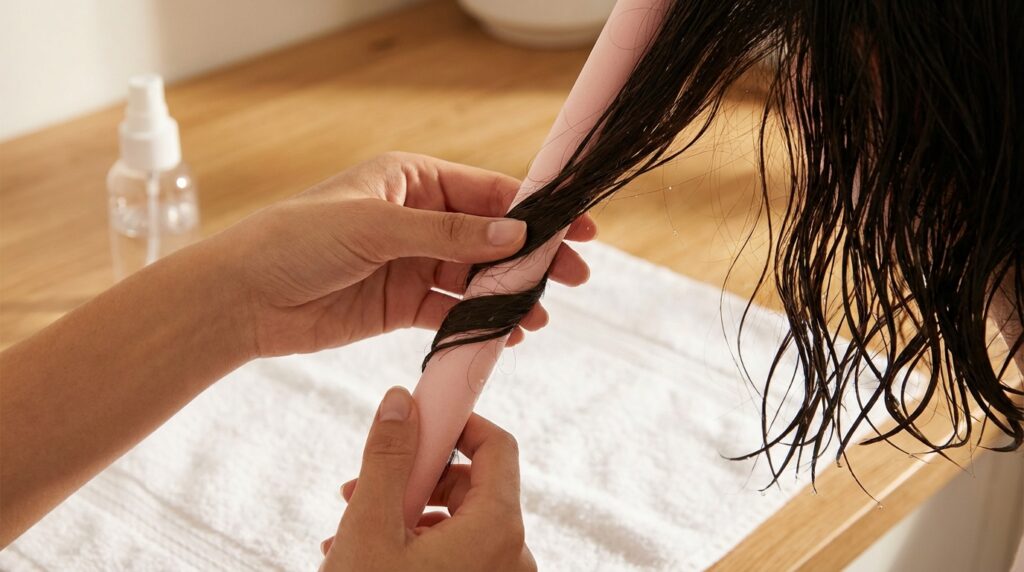
- Hair too wet: This is the number one reason heatless curls fail. If your hair is dripping, it won’t dry overnight, and you’ll unravel sad, limp strands. Aim for damp, not wet.
- Sections too large: Short hair needs smaller sections to create enough wraps for a visible curl. If your curls are falling flat, try halving your section size.
- Skipping product: Fine or slippery hair especially benefits from a mousse or curl cream. Without it, the curl has nothing to hold onto and drops within hours.
- Unwrapping too fast: Patience matters. Let each curl cool and set before shaking it out. Rushing leads to frizz and undefined waves.
- Brushing after: Never brush heatless curls unless you want a fluffy, brushed-out vintage look. Use your fingers or a wide-tooth comb to separate gently.
Who This Works For (and Who Might Struggle)
Heatless curls for short hair work best on bobs, lobs, and grown-out pixies—basically anything with at least three to four inches of length to wrap. If your hair is shorter than that, pin curls are your best bet since they don’t require wrapping around a rod.
If your hair is very resistant to holding a curl (super straight, fine, or heavy), you may need to add a stronger hold product or accept that your curls will relax into waves by midday. That’s not a failure—soft waves still look intentional and polished.
For anyone with damage concerns or hair that’s been over-processed, heatless methods are a gentle way to add style without further stress. Just be careful not to wrap sections too tightly, which can cause tension breakage at the roots.
Frequently Asked Questions
How long do heatless curls last on short hair?
Most people get one to two days of wear, depending on hair type and humidity. Using a light hairspray and sleeping on silk can extend the life of your curls. Fine hair tends to hold longer than thick, coarse hair.
Can I do heatless curls on a pixie cut?
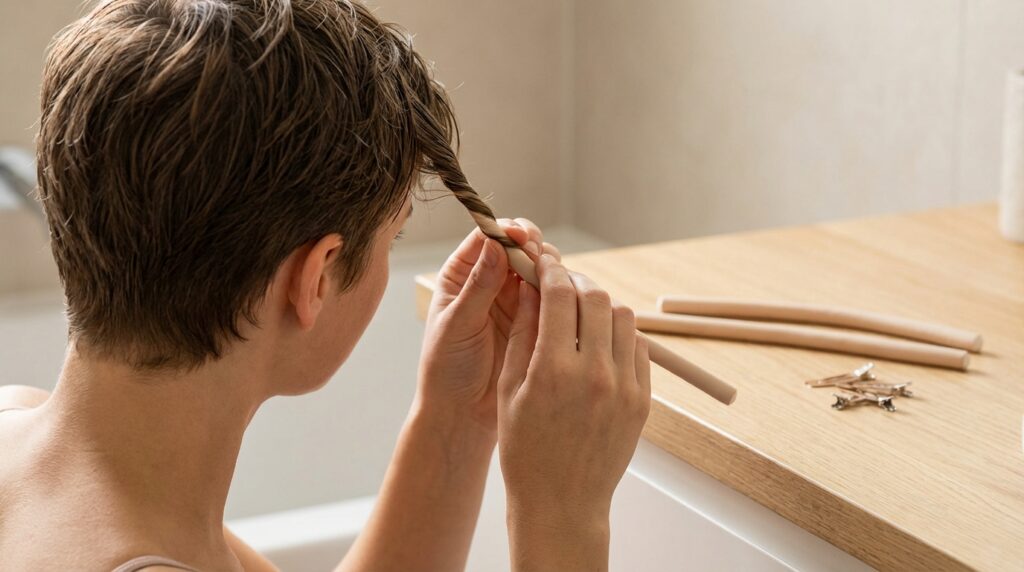
Yes, but your options are more limited. Pin curls and very small flexi rods work best. You won’t get long, flowing waves, but you can add texture, volume, and soft bends that make a pixie look more styled.
Do I need to wash my hair first?
Not necessarily. You can mist dry hair with water or a leave-in spray to dampen it. Some people find that day-old hair actually holds curls better because it has a bit of natural texture and oil.
Why do my curls fall flat so quickly?
Usually it’s one of three things: hair was too wet, sections were too large, or no product was used. Try adjusting one variable at a time until you find what works for your hair type.
Summary and Next Step
Heatless curls for short hair aren’t a myth—they just require the right technique. Flexi rods and pin curls tend to give the most reliable results on shorter lengths, while the sock method works well for chin-length bobs wanting softer waves. The keys are working with damp (not wet) hair, using smaller sections than you think you need, and giving curls enough time to fully set.
Pick one method tonight and give it a try. Start with just the front sections if you’re nervous about committing your whole head. Once you see how your hair responds, you can adjust your approach and build a low-effort routine that keeps your hair healthy and your mornings a little easier.