
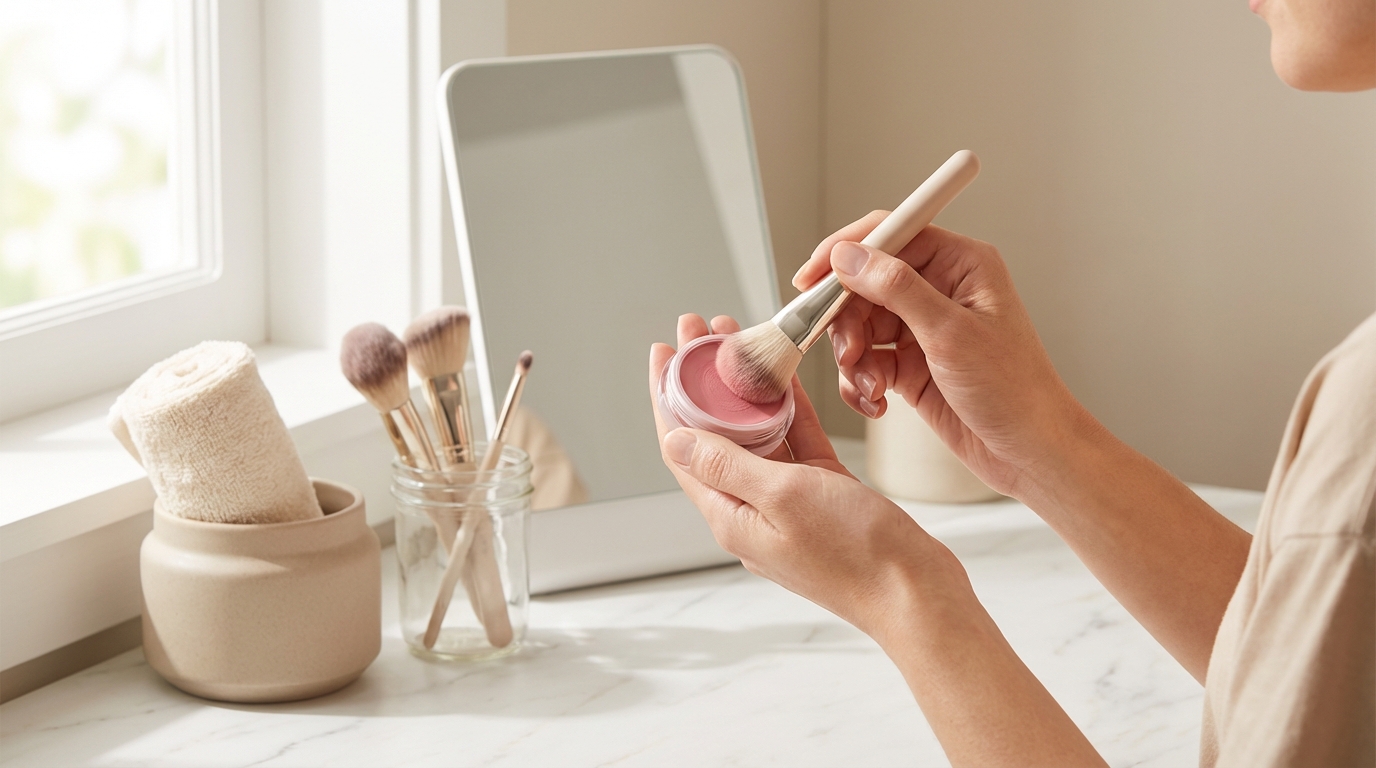
You’ve done your foundation, maybe some concealer, and yet your face still looks a bit flat. Like you slept three hours less than you actually did. That’s where blush comes in—and knowing how to apply blush properly can genuinely transform your whole look in under a minute. The problem is, most of us either skip it entirely or end up looking like we’ve been slapped by a rouge-happy aunt. In this post, you’ll learn where to place blush for a natural, lifted effect, which formulas work for different skin types, and a few tricks that make the whole process foolproof.
The goal here isn’t Instagram-level contouring. It’s that “I actually got enough sleep and maybe went for a morning walk” kind of glow. Simple, fresh, and surprisingly easy once you know the basics.
Quick Routine for Applying Blush
- Smile gently to find the apples of your cheeks
- Apply product to the apples, then blend upward toward your temples
- Use a light hand—you can always build up
- Blend edges so there are no harsh lines
- Check in natural light before you leave
What You’ll Need
- A blush in your preferred formula (powder, cream, or liquid)
- A fluffy blush brush for powder, or clean fingers/sponge for cream
- A mirror with good lighting
- Optional: setting spray if you want longer wear
You don’t need a massive collection. One blush that suits your skin tone and a decent brush will take you far. If you’re unsure about shade, a soft peachy-pink works on most skin tones and looks natural in daylight.
How to Apply Blush Step by Step
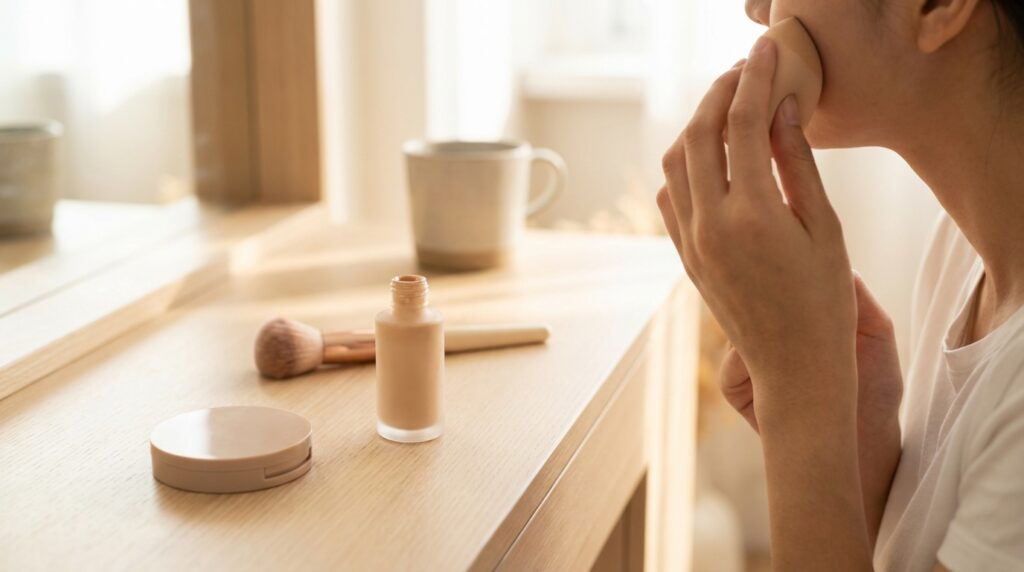
Step 1: Start with a prepped base. Your foundation or tinted moisturizer should be set before you apply powder blush. If you’re using cream blush, apply it before setting powder for the smoothest blend. A common mistake is layering cream over powder—it tends to look patchy and doesn’t sit well on the skin.
Step 2: Find your placement. Smile softly (not a full grin, just a gentle lift) and locate the roundest part of your cheeks. That’s where you’ll focus the color. But here’s the key: don’t stop there. Blend the color upward and outward toward your temples. This creates a lifted effect rather than two circles sitting on your face.
Step 3: Pick up product sparingly. Tap your brush into the blush, then tap off the excess on the back of your hand. Most people overload the brush and end up with way too much pigment on the first swipe. If you’re using cream or liquid, a pea-sized amount is plenty. You can always add more.
Step 4: Apply with light, sweeping motions. For powder, use circular or back-and-forth strokes along the cheekbone. For cream, dab the product onto your cheek and blend outward with your fingers or a damp sponge. The warmth of your fingers actually helps cream formulas melt into the skin nicely.
Step 5: Blend the edges. This is where a lot of people stop too soon. Take a clean brush or the clean side of your sponge and soften any harsh edges. You want the color to fade seamlessly into your skin, not sit like a stripe.
Step 6: Check your work in natural light. Bathroom lighting lies. Step near a window or use your phone’s front camera in daylight mode. If it looks too intense, blend more or lightly dust translucent powder over the top to soften.
Shortcut If You’re Short on Time
- Use a cream or liquid blush—it blends faster with fingers
- Skip the smile test and just tap color on the high points of your cheekbones
- Multi-use products (cheek and lip) save time and keep your look cohesive
- Apply blush before mascara so you’re not worried about smudging
- A sheer formula is more forgiving if you’re rushing
Choosing the Right Blush Formula
Powder Blush
This is the most common and beginner-friendly option. It’s easy to control, buildable, and works well over set foundation. If you have oily skin, powder blush tends to last longer without sliding around. The downside? It can look a bit flat on dry or mature skin if you’re not careful with application.
Cream Blush
Cream formulas give a dewy, skin-like finish that looks very natural. They’re great for dry or normal skin and blend beautifully with fingers. The tricky part is that they can lift your base if you’re too heavy-handed. Pat and press rather than drag.
Liquid or Gel Blush
These are lightweight and blend out to almost nothing, which makes them ideal for a “no-makeup makeup” look. They dry down quickly, so you need to work fast. A little goes a long way—start with one drop.
If you’re not sure which formula suits you, think about your skin type and how much time you have. Oily skin and rushed mornings? Powder. Dry skin and a few extra minutes? Cream. Want something barely-there? Liquid.
Common Mistakes When Applying Blush
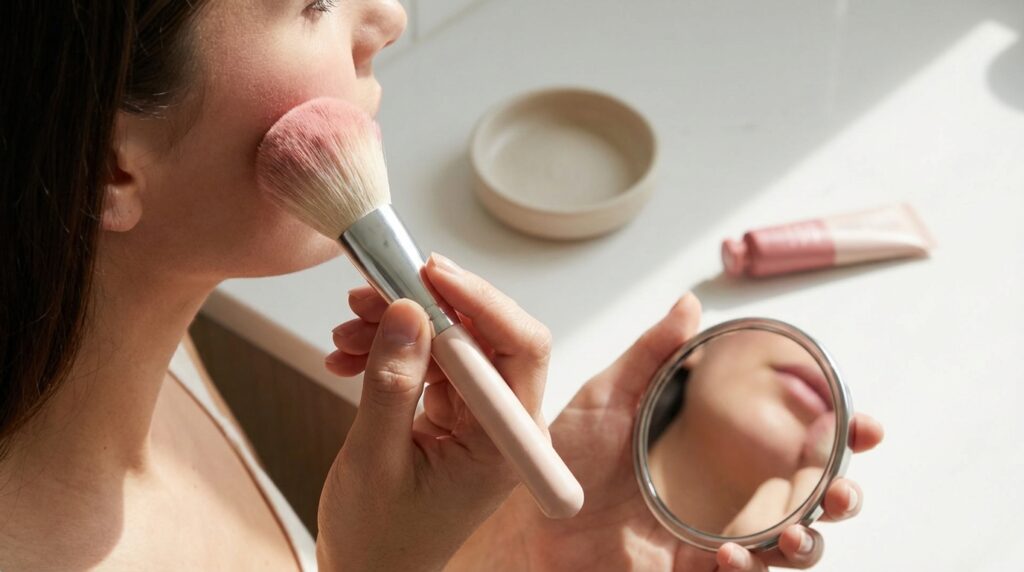
- Applying too low: Blush placed too close to your nose or below the cheekbone can drag your face down. Keep it on the upper half of your cheek and blend upward.
- Using the wrong undertone: A cool-toned pink on warm skin (or vice versa) can look off. Peachy shades suit warm undertones; rosy pinks suit cool undertones. Neutral undertones can go either way.
- Skipping blending: Harsh edges make blush look costume-y. Always blend out, even if you think it looks fine.
- Ignoring the rest of your makeup: If your blush is warm and your lipstick is cool, the overall look can feel disjointed. Aim for shades in the same color family.
- Forgetting to check lighting: What looks subtle indoors can read very differently outside. Always do a final check in natural light.
Placement Tips for Different Face Shapes
While the “apples and blend upward” rule works for most people, small tweaks can make a difference depending on your face shape.
If you have a round face, focus the color slightly higher on the cheekbones and blend toward the temples. This adds a bit of definition. For longer or oval faces, keep the blush more centered on the apples without extending too far toward the hairline. Heart-shaped faces can balance a narrower chin by applying blush a bit lower and more horizontally across the cheeks.
That said, don’t overthink it. Blush is meant to mimic a natural flush, and natural flushes don’t follow face-shape rules. If it looks fresh and healthy to you, it’s working.
Frequently Asked Questions
Where exactly should blush go for a lifted look?
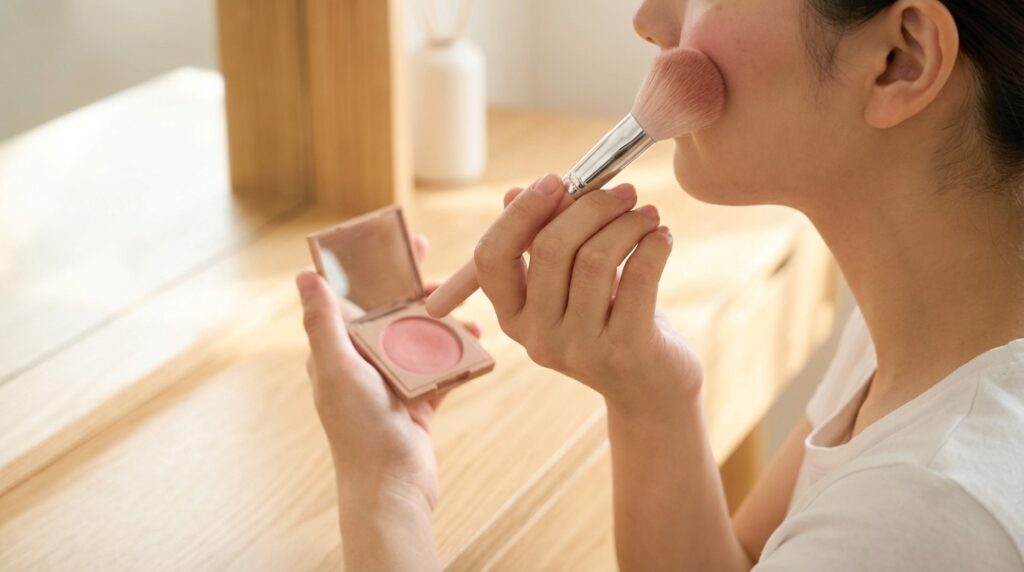
Focus on the apples of your cheeks (the round part when you smile softly), then blend upward and outward toward your temples. Avoid bringing color too close to your nose or below the cheekbone.
Can I use blush on my lips too?
Cream and liquid blushes often double as lip color. It’s a quick way to create a cohesive look without carrying extra products. Powder blush doesn’t work as well on lips—it tends to look dry and patchy.
How do I make blush last all day?
Set cream blush with a light dusting of translucent powder. For powder blush, applying it over a well-set base helps. A setting spray at the end can also extend wear, especially in humid weather.
What if I accidentally apply too much?
Don’t panic. Blend it out with a clean brush or sponge. If it’s still too intense, lightly press translucent powder over the top or blend a tiny bit of foundation over the edges to soften.
Summary and Next Step
Applying blush for a fresh, awake look comes down to placement, blending, and using a light hand. Start on the apples of your cheeks, blend upward toward your temples, and always check your work in natural light. Whether you prefer powder, cream, or liquid, the technique stays mostly the same—just adjust your tools.
If you’ve been skipping blush or feeling unsure about it, try it tomorrow morning with just one product and see how it changes your face. Sometimes the smallest step makes the biggest difference.