
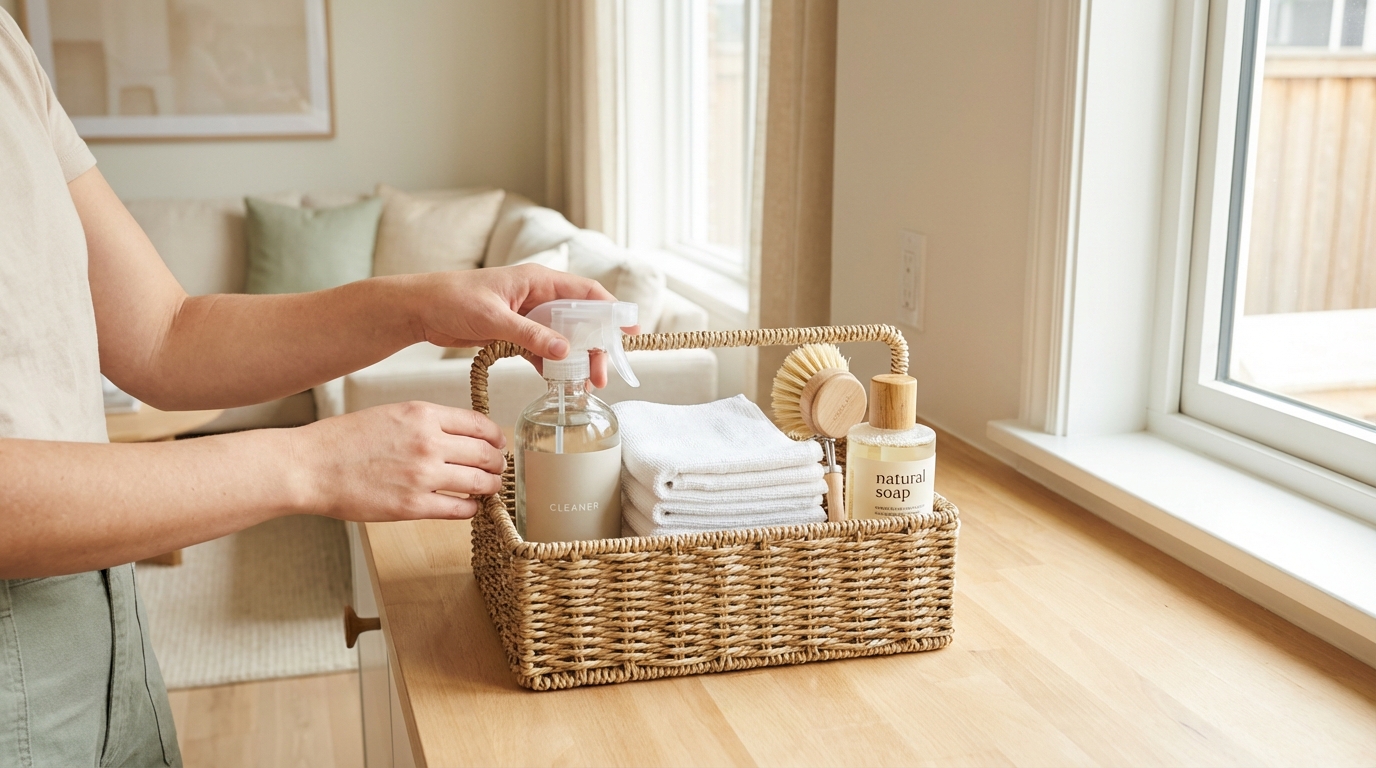
You’re halfway through wiping down the bathroom mirror when you realize the all-purpose spray is downstairs. Then you trek to the kitchen, grab it, head back up—only to discover you forgot the microfiber cloth. Sound familiar? A minimal cleaning caddy for the whole house solves this exhausting back-and-forth by keeping everything you actually need in one portable spot. No more hunting through cabinets or buying duplicates “just in case.”
In this guide, you’ll learn how to choose the right container, which supplies truly earn a spot inside, and how to keep your caddy light enough to carry room to room without dreading it. Bonus: we’ll keep it eco-friendly, because a streamlined caddy naturally means fewer products and less waste.
Quick Steps to Build Your Cleaning Caddy
- Pick a container with a handle that fits under your sink or in a closet.
- Choose 4–6 multi-purpose products instead of a dozen single-use ones.
- Add 2–3 reusable cloths and one scrub brush.
- Include a small trash bag or container for collecting debris as you go.
- Store the caddy in a central location so it’s always grab-and-go.
What You’ll Need
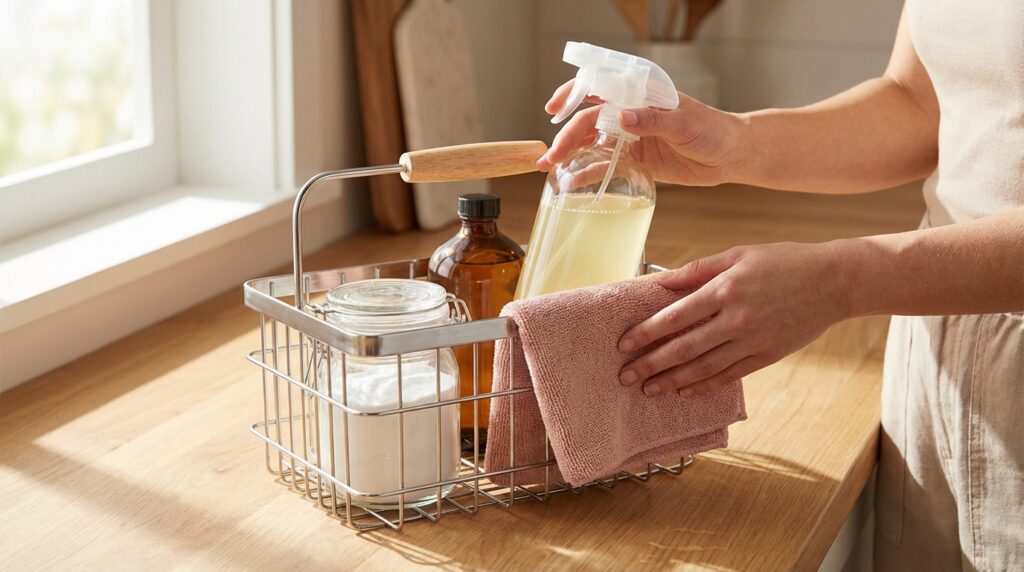
Before you start tossing bottles into a bucket, take a breath. The goal here is intentional selection, not cramming in every cleaner you own. Here’s a basic list that covers most household messes without redundancy.
- A sturdy container with a handle (bucket, cleaning caddy, or even a handled tote bag)
- All-purpose cleaner (one that works on counters, appliances, and most hard surfaces)
- Glass cleaner or a DIY vinegar-water mix
- A gentle bathroom cleaner or baking soda for scrubbing
- 2–3 microfiber cloths in different colors (one for glass, one for surfaces, one for grimy jobs)
- A scrub brush or old toothbrush for grout and tight corners
- A small squeegee (optional but great for shower doors and windows)
- A roll of compostable trash bags or a reusable debris pouch
- Rubber gloves if you prefer them
That’s it. If you’re staring at a cabinet full of specialty sprays—granite cleaner, stainless steel polish, toilet bowl foam—ask yourself how often you actually reach for each one. Most people notice that an all-purpose cleaner handles 80% of tasks just fine.
Choosing the Right Container
The container matters more than you’d think. Too big and it becomes a dumping ground for random stuff. Too small and you’ll leave essentials behind. A common mistake is grabbing whatever bucket is lying around without checking if it actually fits where you plan to store it.
Size and Shape
Aim for something that holds your supplies snugly without a lot of empty space. A rectangular caddy often works better than a round bucket because bottles sit upright without tipping. If you’re working with limited storage, measure the cabinet or closet shelf first. Nothing’s more annoying than assembling the perfect caddy only to discover it won’t slide under the sink.
Handle Comfort
You’ll be carrying this thing from room to room, possibly up and down stairs. A flimsy handle or one that digs into your palm gets old fast. Look for a wide, sturdy grip. Some people prefer a cleaning apron with pockets instead—totally valid if you’d rather keep your hands free.
Material Considerations
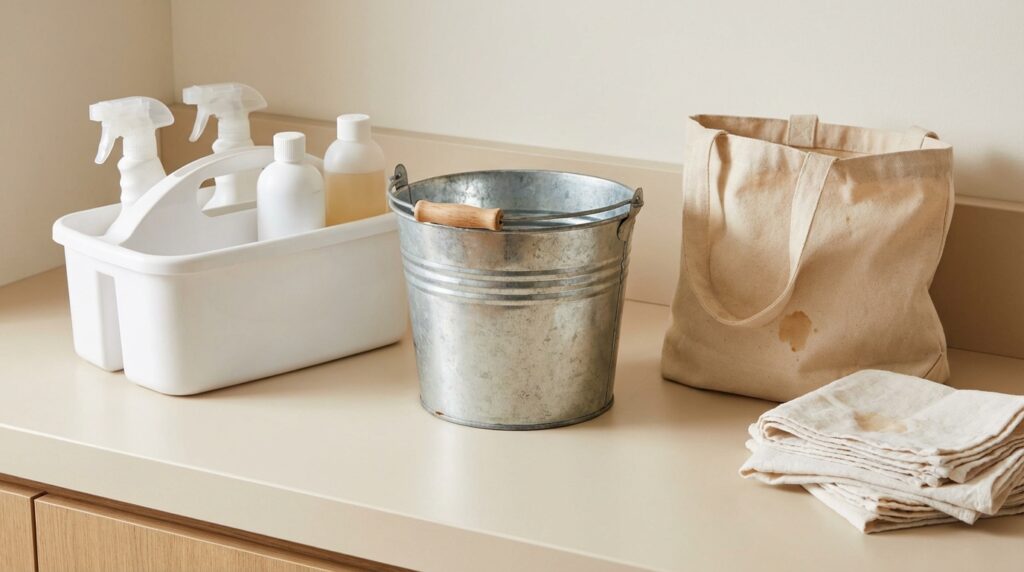
Plastic caddies are lightweight and easy to wipe clean. Metal buckets look charming but can rust if they stay damp. Canvas totes work surprisingly well and fold flat when not in use, though they’re harder to clean if something spills. Pick what suits your style and how much mess you’re willing to tolerate.
Building Your Caddy Step by Step
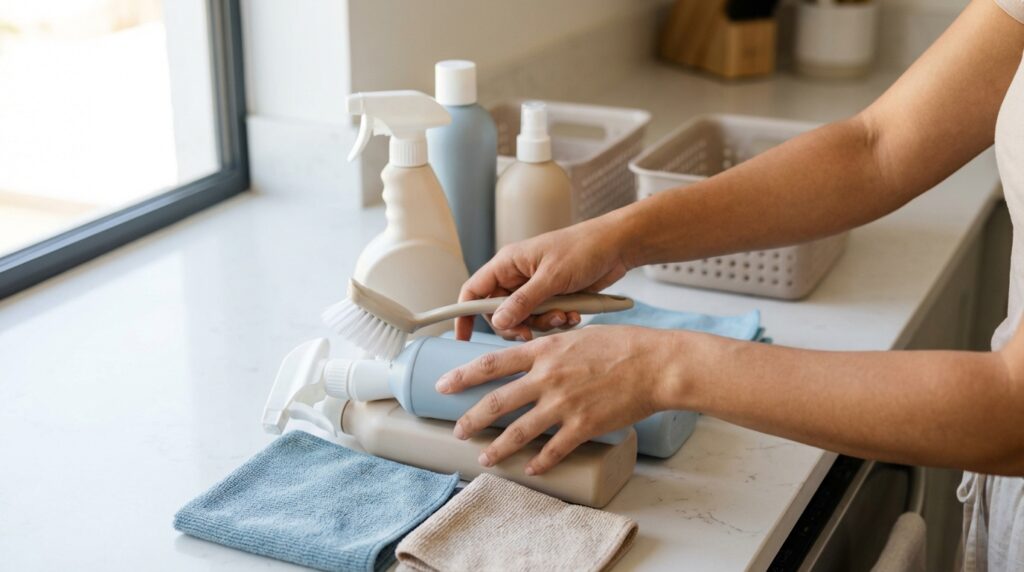
Step 1: Empty out your current cleaning supplies. Yes, all of them. Lay everything on the floor or counter so you can see what you’re working with. This is the moment of truth—most households have at least three half-empty bottles of the same product lurking in different spots.
Step 2: Group similar items together. All-purpose cleaners in one pile, glass cleaners in another, bathroom-specific products in a third. Now look at each group and ask: do I really need more than one of these? Consolidate where you can. Pour two half-empty bottles into one.
Step 3: Select your core products. Stick to 4–6 bottles maximum. If you’re leaning eco-friendly, prioritize concentrated formulas you dilute yourself or simple DIY mixes (vinegar and water for glass, baking soda paste for scrubbing). Fewer products means less plastic, less clutter, and less decision fatigue.
Step 4: Add your cloths and tools. Two or three microfiber cloths handle most jobs. Color-coding helps—maybe blue for glass, green for general surfaces, and an old rag for really grimy tasks like oven grates. Toss in one scrub brush. If you have a squeegee you actually use, include it. If it’s been collecting dust for a year, leave it out.
Step 5: Include a trash solution. A small roll of compostable bags or a reusable silicone pouch lets you collect hair, dust bunnies, and random debris as you clean instead of making separate trips to the bin. This tiny addition speeds things up more than you’d expect.
Step 6: Arrange everything so bottles don’t tip. Heavier items toward the center, cloths tucked along the sides. Give it a test carry around the house. Adjust if anything shifts or feels awkward.
Shortcut If You’re Short on Time
- Skip the full audit—just grab one all-purpose cleaner, one glass cleaner, two cloths, and a brush.
- Use a handled shopping tote you already own instead of buying a new caddy.
- Refill from bulk containers later rather than perfecting your product lineup now.
- Store the caddy wherever you clean most often (usually the bathroom or kitchen).
Common Mistakes to Avoid
Even a simple project like this has pitfalls. Here’s what trips people up.
- Overpacking: If your caddy weighs a ton, you won’t want to carry it. Edit ruthlessly.
- Forgetting to restock: A caddy with empty bottles is useless. Do a quick check every week or two.
- Storing it in an inconvenient spot: If you have to dig it out from behind the vacuum, you’ll skip using it. Keep it accessible.
- Mixing incompatible products: Never combine bleach and ammonia-based cleaners, even in the same caddy. Fumes can be dangerous. Stick to simple, compatible formulas.
- Ignoring the cloths: Dirty microfiber cloths just push grime around. Wash them weekly—toss in the laundry without fabric softener, which clogs the fibers.
Keeping It Eco-Friendly
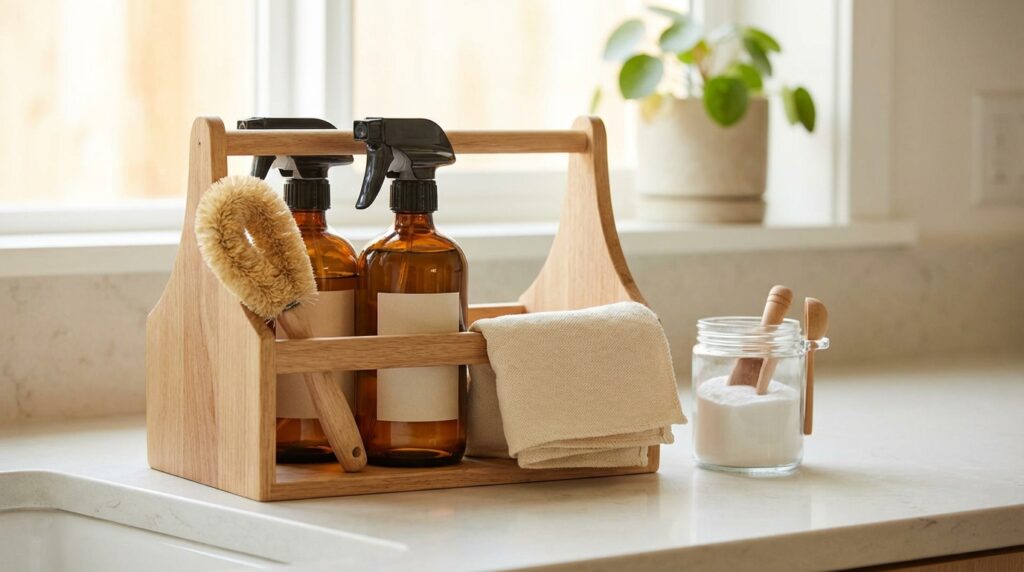
A minimal cleaning caddy naturally aligns with greener habits. Fewer products means less packaging. Concentrated or DIY cleaners reduce plastic waste. Reusable cloths replace paper towels. But you can take it a step further.
Consider refillable bottles from bulk stores or brands that offer concentrate refills. Swap out synthetic sponges for compostable scrub brushes made from plant fibers. If you’re making your own cleaners, simple recipes with vinegar, castile soap, and baking soda cover most needs without harsh chemicals. Just remember: vinegar shouldn’t be used on natural stone surfaces like marble or granite, as it can etch the finish over time.
The eco angle isn’t about perfection. It’s about small swaps that add up. Even choosing one refillable bottle over a new plastic one each month makes a difference across a year.
Summary and Next Step
Building a minimal cleaning caddy for the whole house comes down to editing. Pick a container that’s easy to carry and fits your storage space. Choose 4–6 versatile products instead of a cabinet full of specialty sprays. Add a few reusable cloths, one good brush, and a way to collect trash as you go. Store it somewhere central so grabbing it feels effortless.
Your next step is simple: set a timer for 15 minutes, pull out your current cleaning supplies, and start sorting. You don’t need to finish today—just begin. Once your caddy is ready, cleaning the whole house becomes a single, streamlined loop instead of a scavenger hunt. And that’s a win worth the small effort upfront.