
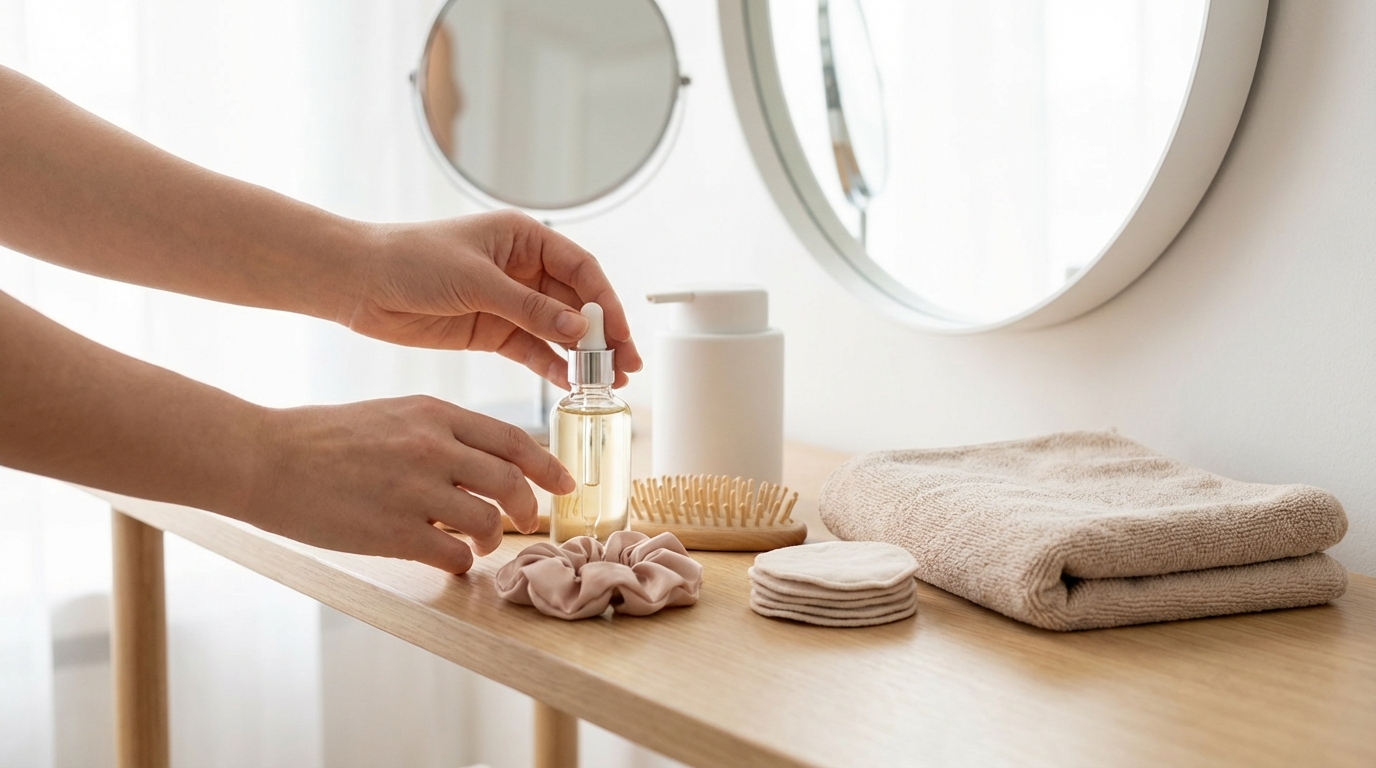
Your bathroom counter is covered in half-empty bottles, and somehow your hair still looks the same as it did three products ago. Sound familiar? Building a minimalist haircare routine on a budget isn’t about depriving your hair—it’s about cutting through the noise and keeping only what actually works. The good news is that healthy, manageable hair doesn’t require a cabinet full of expensive products or a complicated ten-step ritual every morning.
In this guide, you’ll learn which products you actually need (spoiler: it’s fewer than you think), how to build a simple routine that fits your hair type, and where to save money without sacrificing results. Whether you’re tired of overspending or just want to simplify your mornings, this approach can work for almost anyone.
Quick Routine Overview
- Shampoo 2–3 times per week (or less, depending on hair type)
- Condition every wash, focusing on mid-lengths and ends
- Use one leave-in product for moisture or frizz control
- Deep condition once a week or every two weeks
- Skip daily heat styling when possible
What You’ll Need
A minimalist haircare routine relies on a handful of multi-purpose products rather than a drawer full of single-use items. Here’s the short list:
- A gentle shampoo suited to your scalp type (clarifying if oily, hydrating if dry)
- A conditioner that matches your hair’s needs (lightweight for fine hair, richer for thick or curly)
- One leave-in product—either a lightweight oil, a leave-in conditioner, or a serum
- A deep conditioning mask or treatment for occasional use
- A wide-tooth comb or detangling brush
- Optional: a microfiber towel or cotton t-shirt for gentler drying
That’s it. You don’t need separate products for shine, volume, smoothing, and repair. Most of those promises overlap, and layering too many products often leads to buildup rather than better hair.
Building Your Minimalist Haircare Routine Step by Step
Step 1: Figure out how often you actually need to wash. Most people don’t need to shampoo daily. If your scalp gets oily quickly, every other day might work. If your hair is dry, curly, or textured, twice a week—or even once—is often enough. Overwashing strips natural oils, which can make your scalp produce even more oil to compensate. Start by extending the time between washes gradually and see how your hair responds.
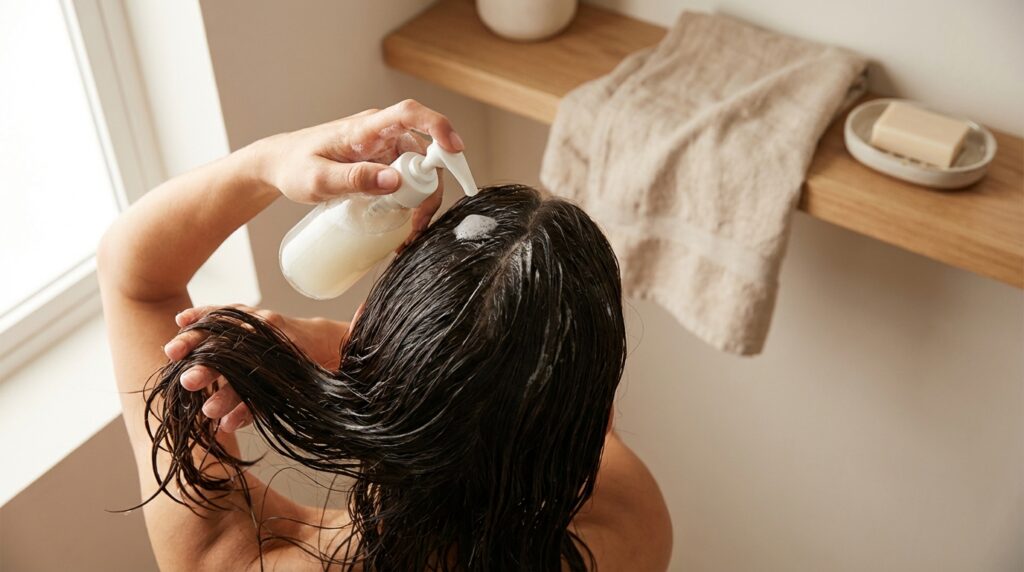
Step 2: Shampoo your scalp, not your ends. The scalp is where oil and product buildup happen. Your ends don’t need direct scrubbing—they’ll get clean enough when you rinse. Use a small amount of shampoo (about the size of a coin) and massage it into your scalp with your fingertips, not your nails. Rinse thoroughly.
Step 3: Condition from mid-lengths to ends. Conditioner is meant to hydrate and smooth the hair shaft, not the scalp. Applying it to your roots can weigh hair down and make it look greasy faster. Squeeze out excess water first, apply conditioner, and let it sit for a minute or two before rinsing. If you’re short on time, even 30 seconds helps.
Step 4: Apply your one leave-in product while hair is still damp. This is where you get to customize. If frizz is your main concern, a lightweight oil or serum works well. If your hair feels dry or tangly, a leave-in conditioner adds moisture without heaviness. Start with a small amount—you can always add more, but too much makes hair limp or greasy.
Step 5: Let your hair air dry when possible. Heat styling is one of the biggest causes of damage over time. If you’re embracing a minimalist routine, letting your hair dry naturally most days will reduce breakage and keep your hair healthier with less effort. If you need to speed things up, use a microfiber towel to gently squeeze out water instead of rubbing with a regular towel.
Step 6: Deep condition once a week or every two weeks. A deep conditioning mask doesn’t need to be expensive. Look for one that suits your hair type and use it in place of your regular conditioner on wash day. Leave it on for five to ten minutes (or longer if the instructions allow), then rinse. This step helps repair and prevent damage without adding daily complexity.
Shortcut if you’re short on time
- Co-wash (conditioner-only wash) on days when your hair isn’t very dirty but needs refreshing
- Apply leave-in product to dry hair between washes to tame frizz or add moisture
- Use a satin or silk pillowcase to reduce friction and extend time between washes
- Tie hair in a loose braid or bun overnight to wake up with manageable waves
- Skip the deep conditioning mask if your hair feels healthy—it’s not mandatory every week
Common Mistakes That Sabotage a Budget Haircare Routine
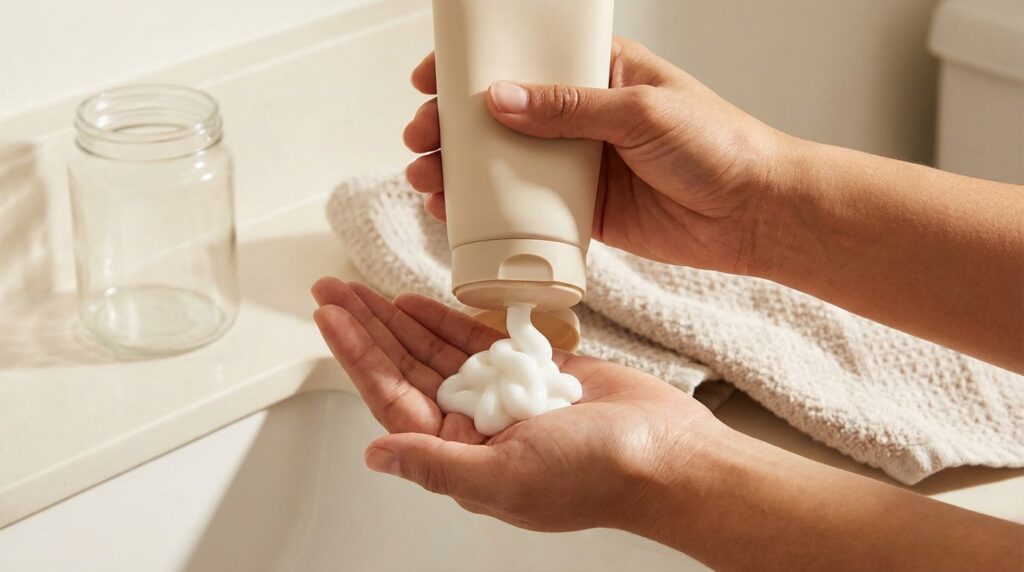
Even with the best intentions, a few habits can undo your progress or drain your wallet. Here are the ones that come up most often:
- Buying products based on marketing claims alone. Words like “miracle,” “repair,” and “transform” are everywhere. Instead, look at the ingredient list and match it to your actual hair needs. A simple, well-formulated product often outperforms a flashy one.
- Using too much product. More isn’t better. Overloading your hair with conditioner, oil, or styling products leads to buildup, which makes hair look dull and heavy. Start small and add only if needed.
- Switching products constantly. It takes a few weeks to see how a product really works for your hair. Jumping from one thing to another means you never get a clear picture of what’s helping and what’s not.
- Ignoring your scalp. A healthy scalp supports healthy hair. If you’re dealing with flakiness, itchiness, or excess oil, address that first. Sometimes a simple clarifying wash once a month is all you need.
- Skipping conditioner to save time. Conditioner isn’t optional for most hair types. Skipping it leads to tangles, breakage, and dryness—which means more products and more effort later.
Making It Work for Your Hair Type
A minimalist routine isn’t one-size-fits-all, but the framework stays the same. Here’s how to adjust based on what you’re working with:
Fine or oily hair
You might need to wash more frequently, but stick with a gentle, lightweight shampoo. Avoid heavy conditioners and oils near your roots. A volumizing leave-in spray can add body without weighing things down. If your hair gets greasy fast, dry shampoo between washes can help extend your routine.
Thick or dry hair
You can probably wash less often—twice a week or even once. Use a richer conditioner and don’t be afraid of oils or butters in your leave-in product. Deep conditioning is especially helpful here. If you live in a dry climate, a little extra moisture goes a long way.
Curly or textured hair
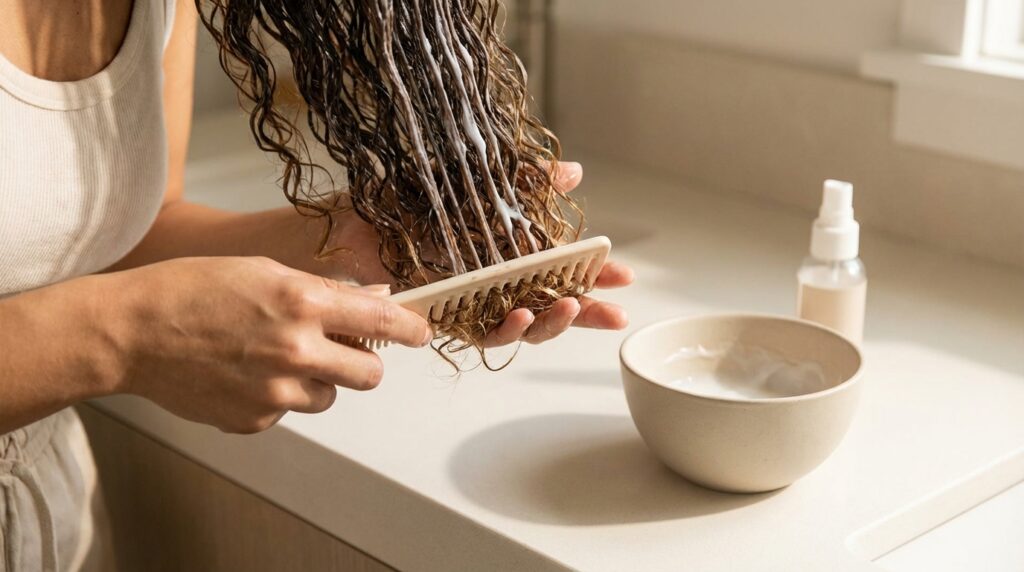
Curls thrive on moisture and minimal manipulation. Co-washing works well for many curl types. Use a leave-in conditioner or curl cream to define and hydrate. Detangle gently with a wide-tooth comb while hair is wet and coated with conditioner. Avoid brushing dry curls unless you want frizz.
Color-treated hair
Color-safe shampoo and conditioner help preserve your color longer, which saves money on touch-ups. Wash less frequently if possible, and use lukewarm water instead of hot—heat opens the hair cuticle and lets color fade faster.
Where to Save (and Where It’s Worth Spending a Little More)
Not all products are created equal, but that doesn’t mean you need to splurge on everything. Here’s a practical breakdown:
- Save on shampoo. A basic, gentle formula does the job. You don’t need fancy ingredients here—shampoo rinses out quickly anyway.
- Spend a bit more on conditioner. This is where ingredients matter more, since conditioner sits on your hair longer. A good conditioner can replace multiple styling products.
- Save on deep conditioning masks. Drugstore options often work just as well as salon brands. Look for ingredients like shea butter, argan oil, or keratin if your hair needs repair.
- Spend wisely on your leave-in. Since this stays in your hair all day, choose one that genuinely suits your hair type. A little goes a long way, so even a pricier bottle lasts months.
Summary and Next Step
A minimalist haircare routine on a budget comes down to fewer products, smarter choices, and consistency. You don’t need ten steps or a shelf full of bottles to have healthy hair. Stick with a gentle shampoo, a good conditioner, one leave-in product, and an occasional deep treatment. Adjust based on your hair type, avoid common mistakes like overusing products, and give your routine a few weeks before deciding if it’s working.
Your next step is simple: take a look at what you already have and decide what’s actually earning its place in your routine. Chances are, you can let go of a few things and still end up with better hair—and a little extra money in your pocket.