
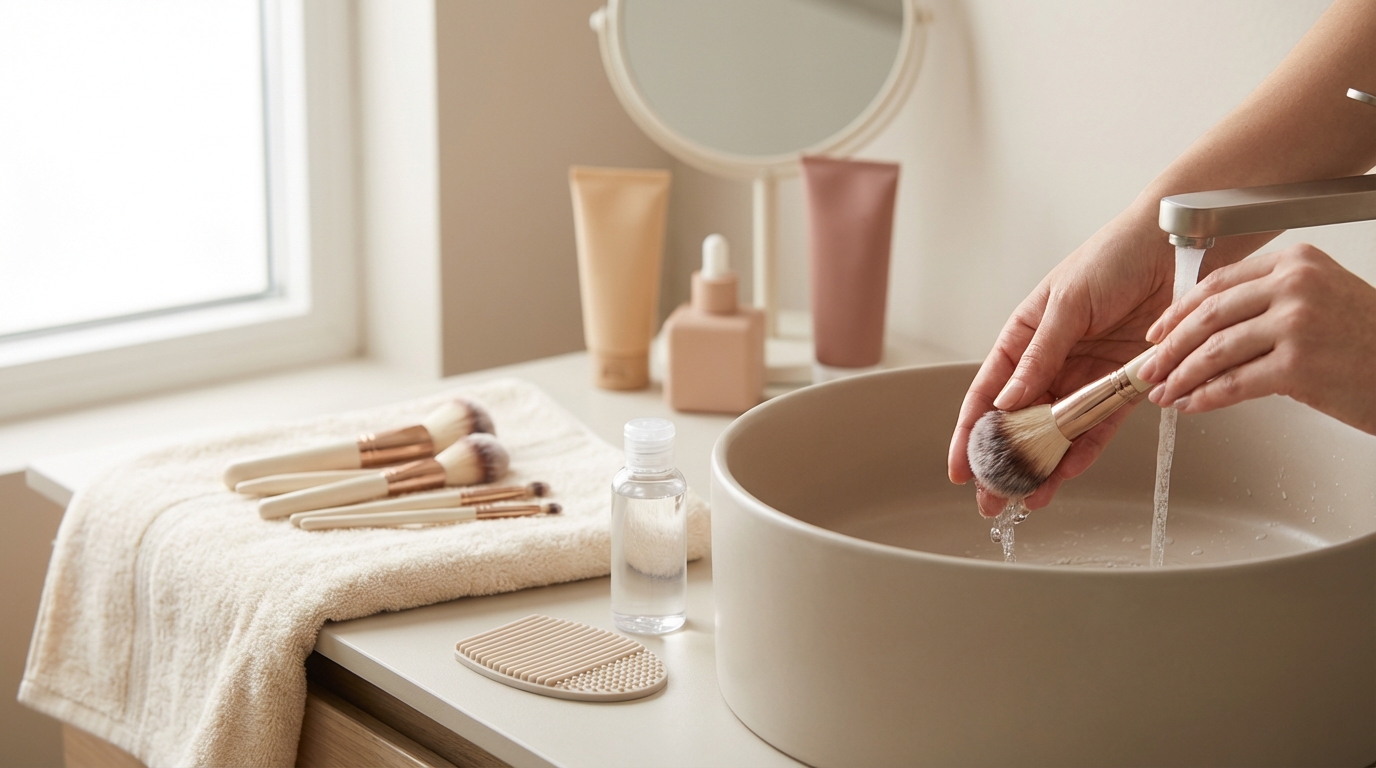
You bought a nice set of makeup brushes, used them faithfully for weeks, and now they look like they’ve been through a dust storm. The bristles feel stiff, your foundation goes on patchy, and you’re pretty sure that eyeshadow brush is holding onto colors from three looks ago. Learning how to clean makeup brushes doesn’t have to be a dreaded chore that you keep pushing to “next weekend.” With the right approach, it takes less time than you think and makes a noticeable difference in how your makeup applies.
This guide walks you through a simple cleaning method that works for most brush types, what supplies you actually need (spoiler: nothing fancy), and a few shortcuts for when life gets busy. You’ll also learn how often to clean them and the mistakes that shorten brush life.
Quick Steps to Clean Makeup Brushes
- Wet bristles under lukewarm water (tips pointing down)
- Apply a gentle cleanser to your palm or a cleaning mat
- Swirl the brush in circular motions to release product
- Rinse until water runs clear
- Squeeze out excess water gently
- Reshape bristles and lay flat to dry
What You’ll Need
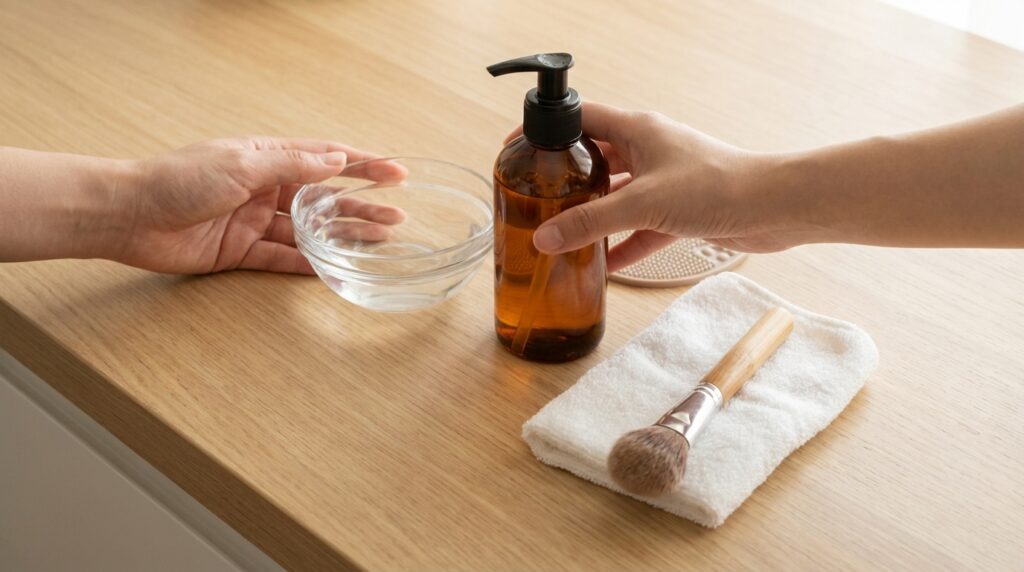
The good news is you probably have most of these items already. No need to order specialty products unless you want to.
- Lukewarm water (not hot—heat loosens the glue holding bristles)
- Gentle cleanser: baby shampoo, mild dish soap, or a dedicated brush cleanser
- A clean towel
- Optional: silicone cleaning mat or textured glove for deeper cleaning
- Optional: small bowl if you prefer not to use your palm
Baby shampoo is a popular choice because it’s gentle on natural and synthetic bristles alike. A drop of olive oil mixed with dish soap can help break down stubborn waterproof formulas, but use this sparingly—too much oil leaves residue.
Step-by-Step: How to Clean Makeup Brushes Properly
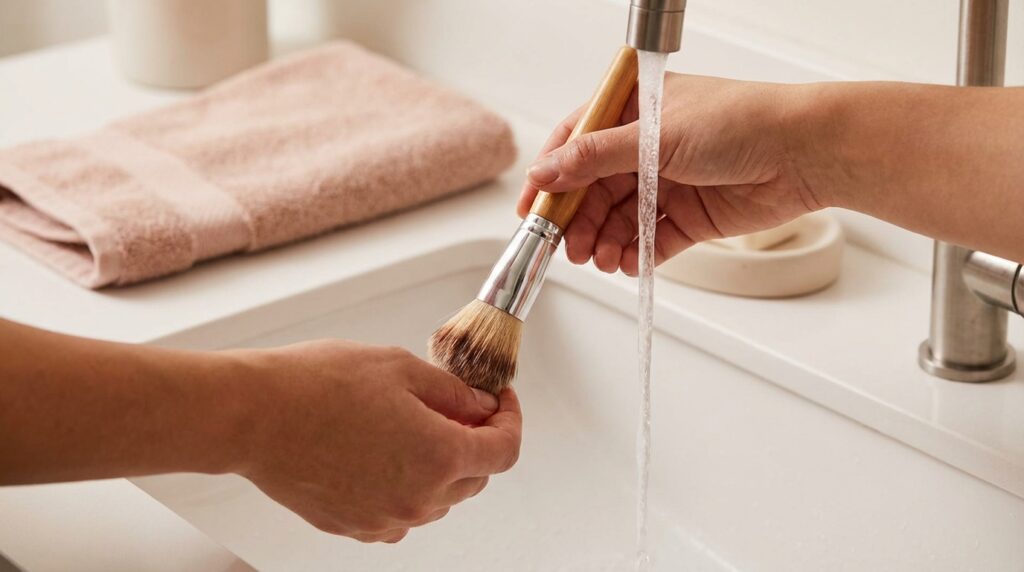
Step 1: Run the bristles under lukewarm water. Keep the brush pointing downward so water flows away from the ferrule (the metal part connecting bristles to the handle). Water seeping into the ferrule is the number one cause of brushes falling apart over time. A common mistake is holding the brush upright under the faucet—avoid this.
Step 2: Place a small amount of cleanser in your palm or on a cleaning mat. A pea-sized drop is enough for most brushes. If you’re using a textured mat, the ridges help work product out of dense bristles faster.
Step 3: Swirl the brush gently in the cleanser using circular motions. You’ll see makeup residue start to release almost immediately. For foundation and concealer brushes, this step might take a bit longer. Don’t press too hard—let the cleanser do the work.
Step 4: Rinse under lukewarm water, again keeping bristles pointing down. Repeat the swirl-and-rinse process until the water runs completely clear. Stubborn brushes might need two rounds of cleanser.
Step 5: Gently squeeze excess water from the bristles using your fingers or a clean towel. Avoid twisting or wringing, which can damage the shape and loosen bristles from the ferrule.
Step 6: Reshape the bristles with your fingers while they’re still damp. This is especially important for tapered brushes and fluffy powder brushes that can dry misshapen if left alone.
Step 7: Lay brushes flat on a clean towel to dry, with the bristles hanging slightly off the edge of a counter if possible. This allows air to circulate and prevents moisture from pooling at the base. Drying time varies—thin brushes might be ready in a few hours, while dense kabuki brushes can take overnight.
Shortcut If You’re Short on Time
- Use a quick-dry brush spray between deep cleans—spray onto a tissue and swirl the brush until no color transfers
- Focus on face brushes first (foundation, concealer, powder) since these touch skin directly and collect the most oil
- Clean eye brushes in batches by swirling several in the same soapy water before rinsing individually
- If a brush is still slightly damp in the morning, a cool hairdryer on the lowest setting can speed things up (keep it moving, don’t concentrate heat)
How Often Should You Clean Makeup Brushes?
The honest answer depends on how often you use them and what products they touch. Brushes used with liquid or cream products—foundation, concealer, cream blush—should ideally be cleaned every week. These formulas create a buildup that harbors bacteria faster than dry powders.
Powder brushes (blush, bronzer, setting powder) can go a bit longer, around every two weeks. Eyeshadow brushes fall somewhere in between; if you’re switching colors frequently, a quick spot-clean after each use prevents muddy shades.
If weekly cleaning sounds like a lot, even a bi-weekly routine makes a difference. Most people notice their makeup applies more smoothly and blends better after the first proper wash. It’s one of those low-effort wins that pays off visually.
Common Mistakes That Ruin Brushes
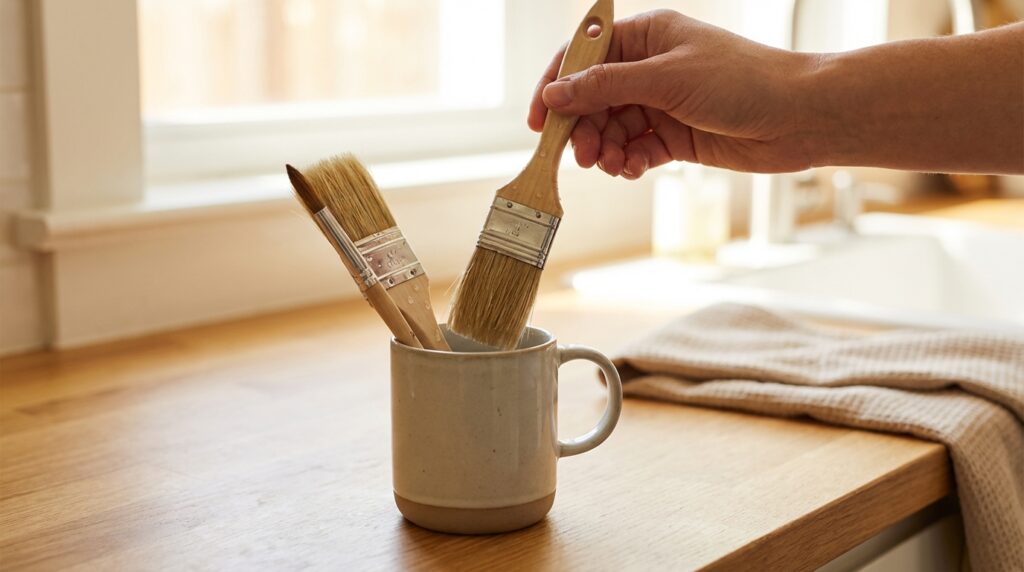
Even with good intentions, a few habits can shorten your brushes’ lifespan or make cleaning less effective.
- Soaking brushes in water: Submerging the entire brush loosens the glue in the ferrule. Only the bristles should get wet.
- Using hot water: It feels like it would clean better, but heat damages both natural hair and synthetic fibers, and weakens adhesive.
- Drying brushes upright in a cup: Water drains down into the handle, causing the same ferrule damage as soaking. Always dry flat or with bristles angled downward.
- Skipping the reshape step: Brushes dry in whatever position you leave them. A flattened powder brush won’t pick up product the same way.
- Using harsh cleansers: Clarifying shampoos, rubbing alcohol (for deep cleaning), or strong dish soaps strip natural oils from bristles and cause them to become brittle over time.
If you’ve made these mistakes before, you’re not alone. The good news is that switching to gentler habits now can extend the life of your current brushes significantly.
Cleaning Natural vs. Synthetic Brushes
Natural hair brushes (often made from goat, squirrel, or pony hair) need a bit more care. They’re more porous, which means they absorb oils and product deeply. A conditioning cleanser or a tiny drop of hair conditioner after washing keeps them soft. Rinse the conditioner out thoroughly.
Synthetic brushes are more forgiving. They don’t absorb as much product, dry faster, and handle most gentle cleansers without issue. They’re also the better choice if you use a lot of cream or liquid formulas, since they release product more easily during cleaning.
If you’re unsure what your brushes are made of, check the handle or packaging. When in doubt, treat them like natural hair—gentler is always safer.
Frequently Asked Questions

Can I use regular soap to clean makeup brushes?
Mild hand soap or dish soap works in a pinch, but avoid anything with heavy fragrance or moisturizing additives that leave residue. Baby shampoo remains the most reliable everyday option because it’s designed to be gentle and rinse clean.
Why do my brushes smell after cleaning?
This usually means they didn’t dry completely before being stored, or moisture got trapped in the ferrule. Make sure brushes are fully dry (check the base of the bristles, not just the tips) before putting them away. If a brush already smells musty, try a deeper clean with a drop of tea tree oil mixed into your cleanser.
How do I know when it’s time to replace a brush?
Signs include bristles that shed constantly, a shape that won’t hold no matter how you reshape it, a loose ferrule, or bristles that feel scratchy even after conditioning. A well-cared-for brush can last years, but nothing lasts forever.
Is it okay to share makeup brushes?
It’s best to avoid sharing, especially brushes used around the eyes or on blemish-prone skin. Bacteria, oils, and even minor skin conditions transfer easily. If sharing is unavoidable, clean the brush thoroughly before and after.
Summary and Next Step
Cleaning makeup brushes the easy way comes down to a few basics: lukewarm water, a gentle cleanser, keeping water away from the ferrule, and drying flat. Once you get into a rhythm—maybe while watching a show or waiting for a face mask to set—it becomes a quick maintenance task rather than a project.
If your brushes haven’t been cleaned in a while, pick two or three that you use most often and start there. You’ll likely notice the difference in your next makeup application, and that’s usually motivation enough to keep the habit going.