
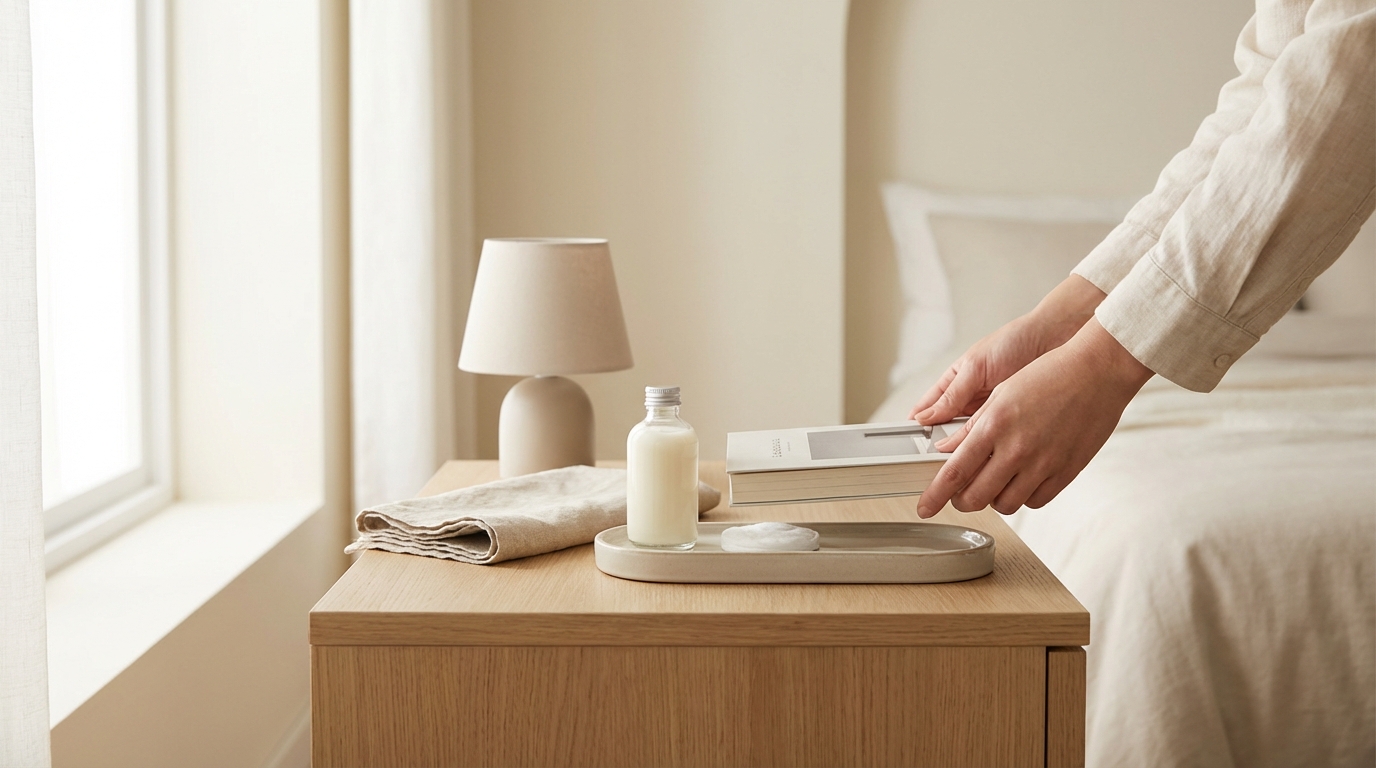
You set your phone down for just a second. Then your water glass joins it. A book you’re halfway through. Some lip balm. A hair tie. Maybe a random receipt from three days ago. Before you know it, your nightstand looks less like a peaceful bedside surface and more like a tiny junk drawer with legs. If you’re trying to keep your nightstand from becoming a catch-all, you’re not alone—it’s one of the most common small space struggles, especially in cozy bedrooms where every surface pulls double duty.
This guide will help you understand why nightstands attract clutter so easily, give you a simple system to prevent the pile-up, and share a few low-effort habits that actually stick. No major overhauls required.
Quick Steps to a Clutter-Free Nightstand
- Decide on 3–5 items that truly belong there (and nothing else)
- Create a “home” for each item so nothing floats around
- Add one small container for tiny essentials
- Do a 30-second nightly reset before bed
- Relocate anything that doesn’t serve your sleep or wind-down routine
What You’ll Need
You don’t need to buy a bunch of organizers or matching trays. Most people already have what they need at home. Here’s a short list:
- A small tray, dish, or shallow box (for corralling small items)
- A coaster or designated spot for your water glass
- A drawer organizer or divider if your nightstand has a drawer
- Optional: a small basket or bin for the lower shelf (if you have one)
That’s it. The goal isn’t to add more stuff—it’s to give the stuff you keep a clear place to live.
Why Nightstands Attract So Much Clutter
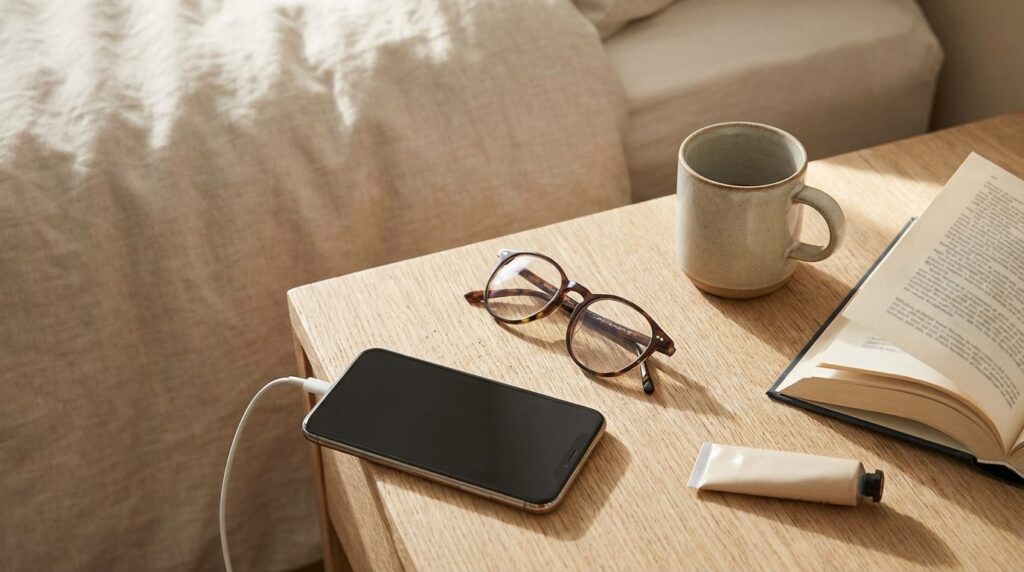
There’s a reason this happens to almost everyone. Your nightstand sits right next to where you start and end your day. It’s within arm’s reach when you’re tired, distracted, or just trying to get into bed quickly. That makes it the default landing zone for anything in your hands.
A common issue is that nightstands are small but expected to do a lot. Phone, charger, lamp, book, skincare, tissues, glasses, earplugs—the list grows fast. And because it’s a horizontal surface at a convenient height, things just… land there. Without a system, the clutter builds up in layers, and suddenly you can’t find your lip balm under the pile of receipts and hair ties.
The fix isn’t about being more disciplined. It’s about making the right choice the easy choice.
Step-by-Step: Setting Up a Nightstand That Stays Tidy
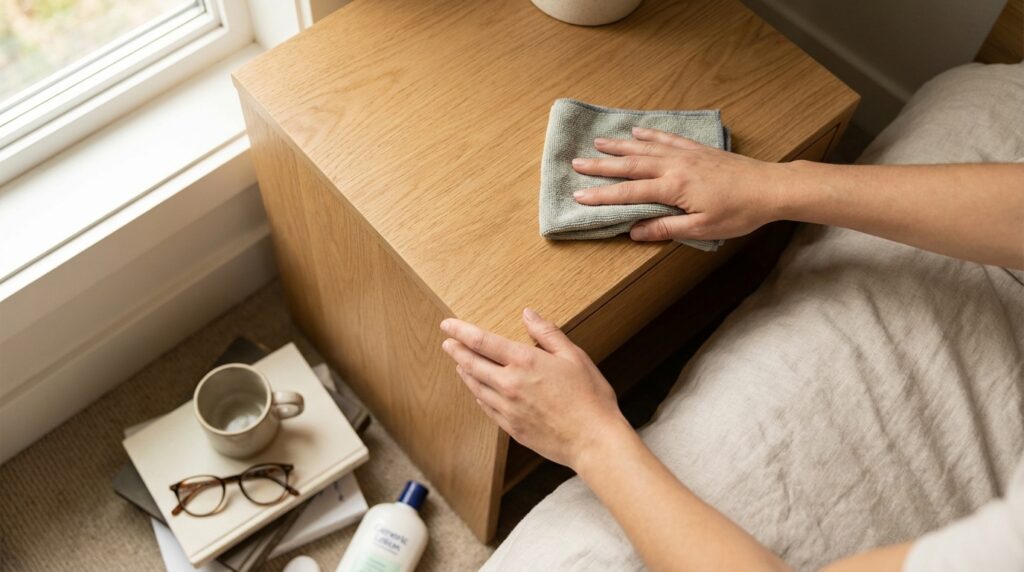
Step 1: Clear everything off your nightstand. Yes, everything. Wipe it down while you’re at it. This gives you a blank slate and helps you see what you’re actually working with.
Step 2: Sort through the pile and ask yourself one question for each item: “Do I use this every single night or morning?” If the answer is no, it doesn’t belong on the nightstand. That novel you finished two months ago? Bookshelf. The lotion you use once a week? Bathroom. Be honest here.
Step 3: Choose your nightstand essentials. For most people, this is somewhere between three and five items. A typical setup might include your phone (with charger), a small lamp, a water glass, and one or two personal items like a book or lip balm. That’s it.
Step 4: Assign each item a specific spot. Your phone always goes on the left. Your water glass always sits on the coaster in the back corner. Your book leans against the lamp. When everything has a home, you’ll notice immediately when something doesn’t belong.
Step 5: Add one small container for the tiny things. A little dish or tray works well for items like hair ties, earplugs, or a ring you take off before bed. This keeps them from scattering across the surface and getting lost.
Step 6: If your nightstand has a drawer, use it wisely. This is a great spot for backup items—extra tissues, a sleep mask, hand cream—but it can also become a hidden junk drawer. A simple divider helps keep categories separate.
Shortcut If You’re Short on Time
- Skip the full clear-out and just remove five things that obviously don’t belong
- Grab any small dish from your kitchen to use as a catch-all tray
- Set a phone reminder for a 30-second nightstand check before bed
- Stick to a “one in, one out” rule—if something new lands there, something else leaves
Common Mistakes (and How to Avoid Them)
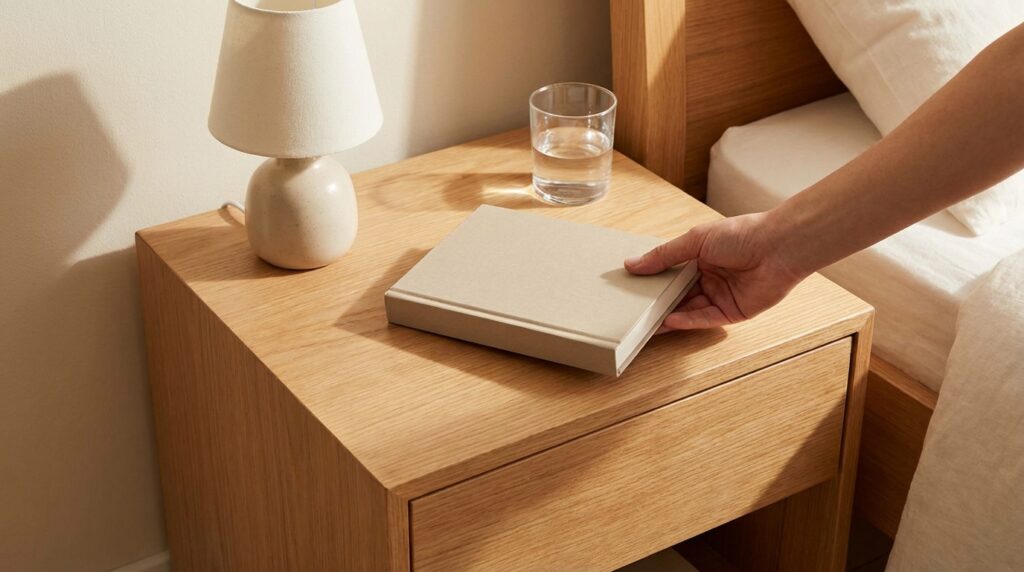
Even with good intentions, a few habits tend to undo all your hard work. Here’s what to watch for:
- Using the nightstand as a “for now” spot. That receipt, that random charger, that thing you’ll “deal with tomorrow”—these are clutter seeds. If it doesn’t belong, walk it to where it does belong. Ten seconds now saves a pile later.
- Keeping too many “just in case” items on top. You probably don’t need three lip balms and two hand creams within arm’s reach. Keep one of each and store backups elsewhere.
- Ignoring the drawer. Out of sight doesn’t mean organized. If your drawer is chaos, it’ll overflow onto the surface eventually.
- Skipping the nightly reset. The 30-second habit of returning items to their spots before bed is what keeps the system working long-term. Without it, things drift.
Making the Habit Stick
Here’s the thing about nightstand clutter: it’s not a one-time problem you solve and forget. It’s an ongoing relationship with a very small surface. The good news is that maintaining it takes almost no effort once you’ve set things up properly.
Try linking your nightstand reset to something you already do every night. If you plug in your phone before bed, take five extra seconds to glance at the surface and move anything that wandered there during the day. If you’re someone who reads before sleep, use closing your book as the cue to do a quick scan.
Another trick that helps: keep a small bin or basket nearby (on a shelf, in a closet, or under the bed) for items that tend to migrate to your nightstand but don’t actually belong there. When you find a stray item, toss it in the bin. Once a week, empty the bin and return things to their real homes. This removes the friction of having to put things away immediately while still keeping your nightstand clear.
Frequently Asked Questions
What if my nightstand is really small?
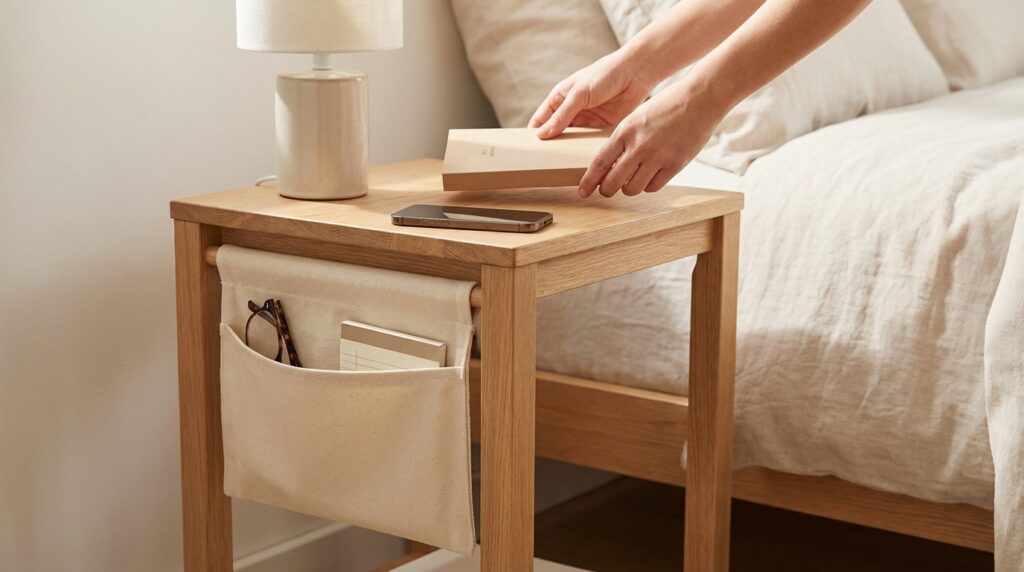
Small nightstands actually make this easier because they force you to be selective. Stick to the absolute essentials—phone, lamp, and maybe one other item. Use a wall-mounted shelf or a small caddy that hangs off the side if you need extra storage without taking up surface space.
Should I keep my phone on my nightstand?
That’s a personal call. Many people find it helpful for alarms and charging, but if late-night scrolling is a problem, moving your phone across the room might improve your sleep. If you do keep it on the nightstand, designate a specific spot so it doesn’t end up buried under other things.
How often should I declutter my nightstand?
If you’re doing the nightly reset, you won’t need major decluttering sessions. A quick weekly check—maybe when you change your sheets—is enough to catch anything that’s crept in. Most people notice the pile-up happens when they skip the small daily habit.
What about shared nightstands?
If you share a nightstand with a partner, divide the surface into zones or agree on a shared tray for communal items. The same principles apply—fewer items, designated spots, and a quick reset habit. Communication helps here, especially if one person tends to be more of a “surface dropper” than the other.
Summary and Next Step
Keeping your nightstand from becoming a catch-all comes down to a few simple ideas: limit what lives there, give each item a home, and build a tiny daily habit to maintain it. You don’t need fancy organizers or a complete bedroom makeover. You just need a system that removes the guesswork.
Your next step? Clear off your nightstand tonight and choose your three to five essentials. Set them up with intention, and commit to the 30-second reset for one week. That small experiment will show you how little effort it actually takes—and how much calmer your bedside can feel.