
You’re standing in the skincare aisle, squinting at a bottle that promises to “visibly transform” your skin in seven days. The one next to it claims to be “dermatologist-tested.” Another boasts “clean beauty” in big letters. Your brain starts to short-circuit. Learning how to read claims on skincare packaging shouldn’t require a law degree, but sometimes it feels that way. The good news? Once you know a few tricks, you can cut through the noise in seconds and actually find products worth your money.
This guide will help you decode the most common marketing phrases, spot red flags before you buy, and build a quick mental checklist you can use on any product. No chemistry background needed—just a healthy dose of skepticism and a few minutes of your time.
Quick Steps to Decode Skincare Claims
- Flip the bottle and read the ingredient list first, not the front label.
- Look for specific, measurable claims rather than vague promises.
- Check if “tested” claims mention who did the testing and how.
- Ignore buzzwords that have no legal definition (like “clean” or “natural”).
- Compare the price per ounce, not just the sticker price.
What You’ll Need Before You Shop

This isn’t a DIY project with a supply list, but a little prep goes a long way. Before your next drugstore run or online scroll, arm yourself with these basics:
- A general idea of your skin type (oily, dry, combination, sensitive).
- One or two specific concerns you want to address (acne, dryness, dullness).
- Your phone—for quick ingredient lookups if something sounds unfamiliar.
- A realistic budget so you’re not swayed by fancy packaging alone.
Most impulse buys happen because we walk in without a plan. If you know you’re looking for a basic moisturizer for dry skin, you can ignore 80% of the shelf immediately.
Understanding Common Skincare Packaging Claims
Dermatologist-Tested vs. Dermatologist-Recommended
“Dermatologist-tested” sounds reassuring, but here’s the catch: it only means a dermatologist looked at the product at some point. It doesn’t mean they approved it, loved it, or would use it on their own face. The testing could have been minimal. A common issue is assuming this phrase equals medical endorsement—it doesn’t.
“Dermatologist-recommended” is slightly stronger, implying some level of approval, but there’s no standard for how many dermatologists need to recommend it or under what conditions. If you’re running late and need a quick filter, these phrases alone shouldn’t be your deciding factor.
Clinically Proven and Clinically Tested
“Clinically proven” suggests there’s data behind the claim. In practice, the quality of that data varies wildly. Some brands run rigorous trials; others test on a handful of people for a week. Look for asterisks or fine print that mentions sample size and duration. If a product says “clinically proven to reduce wrinkles” but the study involved 12 people over 10 days, that’s not exactly groundbreaking evidence.
“Clinically tested” is even vaguer—it just means some kind of test happened in some kind of clinical setting. It’s not a lie, but it’s not a promise either.
Hypoallergenic and Non-Comedogenic
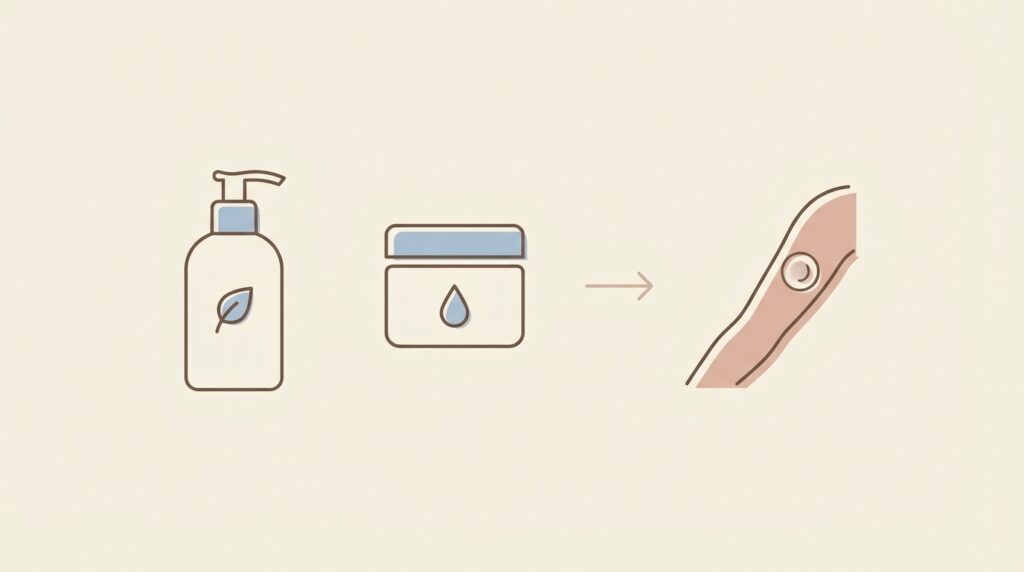
Here’s where things get frustrating. Neither “hypoallergenic” nor “non-comedogenic” has a legal definition enforced by regulators. Brands can slap these terms on packaging without proving anything. That said, products labeled this way are often formulated with fewer common irritants or pore-clogging ingredients. They’re a starting point, not a guarantee.
If you have sensitive or acne-prone skin, these labels can help narrow your options, but always patch test new products. Your skin is the final judge.
Natural, Clean, and Organic
“Natural” means almost nothing in skincare. Water is natural. So is poison ivy. The term isn’t regulated, so brands use it freely. “Clean beauty” is similarly undefined—it’s a marketing category, not a safety standard. Most people notice these labels on prettier packaging with higher price tags, which doesn’t automatically mean better formulas.
“Organic” has slightly more teeth if the product carries a certified organic seal from a recognized body. Without that seal, the word is just decoration. A common mistake is paying extra for “natural” products assuming they’re gentler or safer. In reality, synthetic ingredients are often more stable and less irritating than their plant-based counterparts.
Red Flags to Watch For
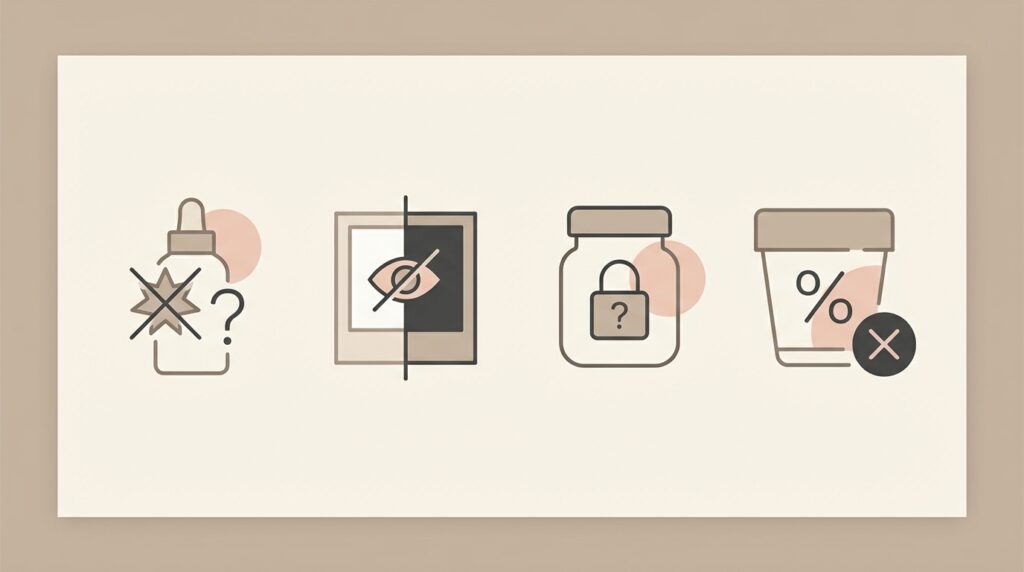
Not every bold claim is a scam, but some patterns should make you pause:
- Miracle language: Words like “miracle,” “instant transformation,” or “erases” are almost always exaggerations. Skincare works gradually.
- Before-and-after photos with different lighting: Lighting, makeup, and angles can fake results. Be skeptical of dramatic visual “proof.”
- Proprietary blends with no details: If a brand hides behind a “secret formula” without listing key ingredients, that’s a red flag.
- Percentages without context: “95% of users saw improvement” sounds impressive until you learn the study had 20 participants who were paid by the brand.
- Fear-based marketing: Claims that other products are “toxic” or “dangerous” without evidence are designed to scare you into buying, not inform you.
If you live in a small apartment with limited storage, you especially don’t want to waste shelf space on products that overpromise and underdeliver. One solid moisturizer beats five mediocre ones.
How to Actually Read the Label
Step 1: Ignore the front of the package entirely for now. Flip it over. The ingredient list is where the truth lives. Ingredients are listed in descending order by concentration, so the first five or six ingredients make up most of the formula.
Step 2: Look for active ingredients near the top. If a product claims to contain vitamin C or hyaluronic acid but those ingredients appear at the very end of the list, you’re getting trace amounts at best.
Step 3: Watch for irritants if you have sensitive skin. Fragrance (sometimes listed as “parfum”) and alcohol (specifically denatured alcohol) are common culprits. They’re not evil, but they’re worth noting if your skin reacts easily.
Step 4: Check the expiration date or period-after-opening symbol (the little jar icon with a number like “12M”). Skincare loses effectiveness over time, and expired products can irritate skin.
Step 5: Compare price per ounce, not just the total price. A $30 bottle that lasts three months might be a better deal than a $15 bottle that lasts three weeks.
Shortcut If You’re Short on Time
- Scan the first five ingredients—if they’re mostly water and fillers, move on.
- Google one unfamiliar ingredient while standing in the aisle. Takes 30 seconds.
- Stick to brands you’ve had good luck with before when you can’t research.
- When in doubt, choose the simpler formula with fewer ingredients.
- Skip anything that makes claims too good to be true—they usually are.
Common Mistakes When Reading Skincare Claims
- Trusting the front label over the ingredient list: Marketing teams design the front; chemists write the back. Read the back.
- Assuming expensive means effective: Price often reflects packaging, branding, and marketing budgets—not formula quality.
- Ignoring your own skin’s feedback: No claim matters if the product breaks you out or dries you out. Your experience trumps any label.
- Buying based on one glowing review: Everyone’s skin is different. Look for patterns across multiple reviews, not outliers.
- Overcomplicating your routine: More products with more claims doesn’t equal better skin. Simple routines are easier to stick with and troubleshoot.
Frequently Asked Questions
Are “fragrance-free” and “unscented” the same thing?
Not quite. “Fragrance-free” means no fragrance ingredients were added. “Unscented” means the product doesn’t have a noticeable smell, but it might contain masking fragrances to neutralize odors from other ingredients. If you’re avoiding fragrance for sensitivity reasons, “fragrance-free” is the safer bet.
Do I need to worry about parabens and sulfates?
These ingredients have gotten a bad reputation, but the science is more nuanced. Parabens are preservatives that prevent bacterial growth; sulfates are cleansing agents. Both have been used safely for decades. Some people find sulfates drying, so avoiding them can make sense for dry or sensitive skin. But “paraben-free” and “sulfate-free” aren’t automatic upgrades—they’re just different formulations.
What does “pH-balanced” actually mean?
Your skin’s natural pH is slightly acidic, around 4.5 to 5.5. “pH-balanced” products are formulated to match or support that range. In short, it means the product shouldn’t disrupt your skin’s natural barrier. Most modern cleansers and moisturizers are already pH-balanced, so this claim is often just stating the obvious.
Is cruelty-free the same as vegan?
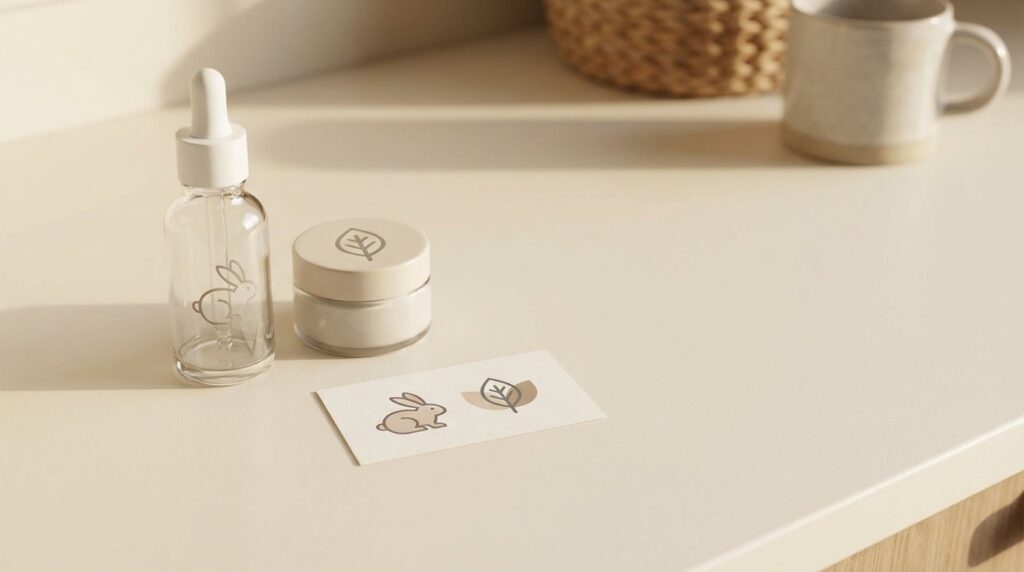
No. “Cruelty-free” means the product wasn’t tested on animals. “Vegan” means it contains no animal-derived ingredients. A product can be one without being the other. If both matter to you, look for certifications from recognized organizations rather than relying on the brand’s word alone.
Summary and Next Step
Reading claims on skincare packaging gets easier once you know what to look for—and what to ignore. Focus on the ingredient list, stay skeptical of vague buzzwords, and remember that your skin’s reaction matters more than any marketing promise. You don’t need to become a cosmetic chemist; you just need a few mental shortcuts to filter out the noise.
Next time you’re shopping, try this: pick up one product you’re considering, flip it over, and spend 60 seconds scanning the first five ingredients. That tiny habit will save you more money and frustration than any “miracle” claim ever could.