
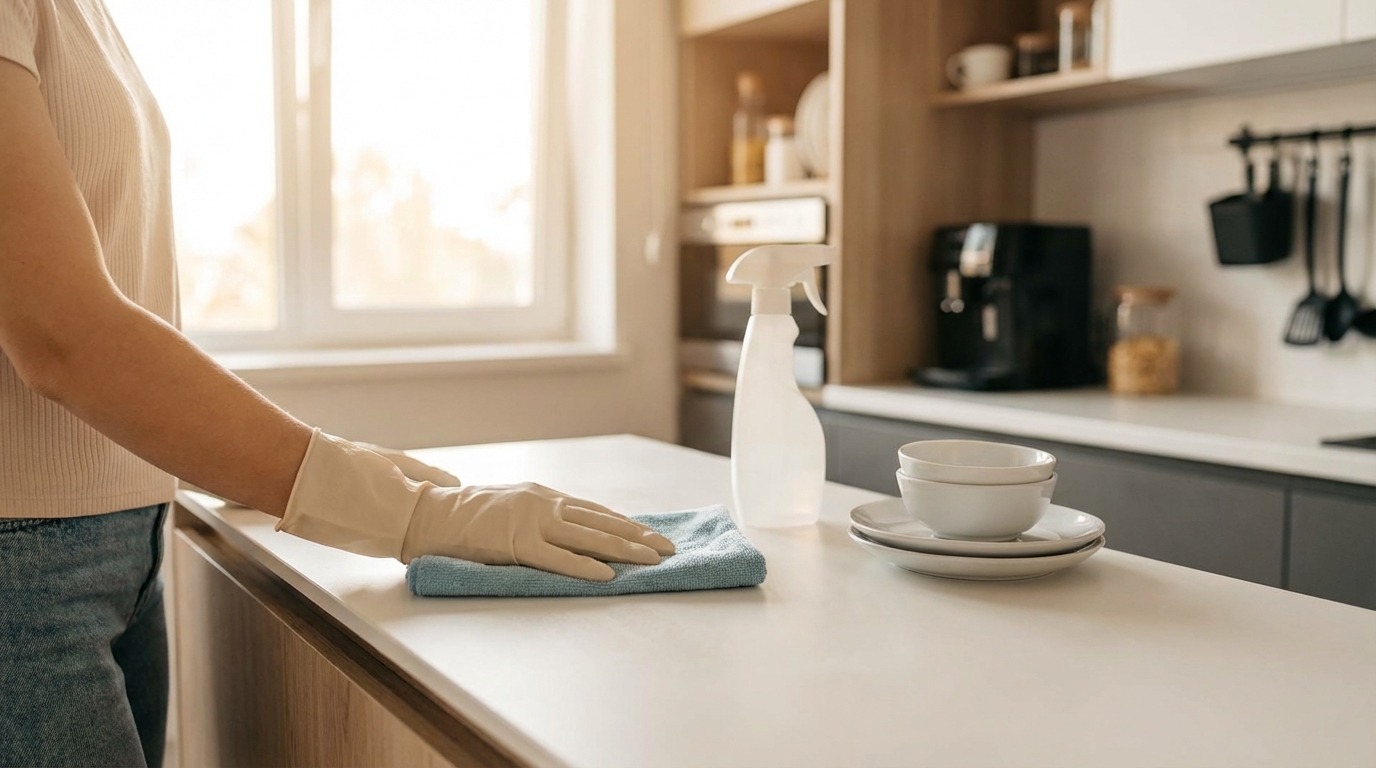
You finally sit down after dinner, and then you see it: the pile of dishes, the sticky stovetop, the crumbs scattered across the counter like confetti nobody asked for. The last thing you want after a long day is a full-blown cleaning session. That’s exactly why having a kitchen cleaning checklist for busy weeknights can be a game-changer. Instead of tackling everything at once (or ignoring it until the weekend), you work through a short, repeatable routine that keeps things manageable.
In this post, you’ll get a realistic checklist you can finish in about 15–20 minutes, eco-friendly swaps that actually work, and a few shortcuts for those nights when even 15 minutes feels like too much.
Quick Routine at a Glance
- Clear and wipe down all counters (2–3 minutes)
- Load or hand-wash dishes immediately after eating (5–7 minutes)
- Wipe stovetop and any splatters (2 minutes)
- Sweep or spot-clean the floor (2–3 minutes)
- Take out trash or compost if needed (1 minute)
- Quick sink scrub and dry (1–2 minutes)
That’s the skeleton. Now let’s break it down so you can adapt it to your own kitchen and energy levels.
What You’ll Need
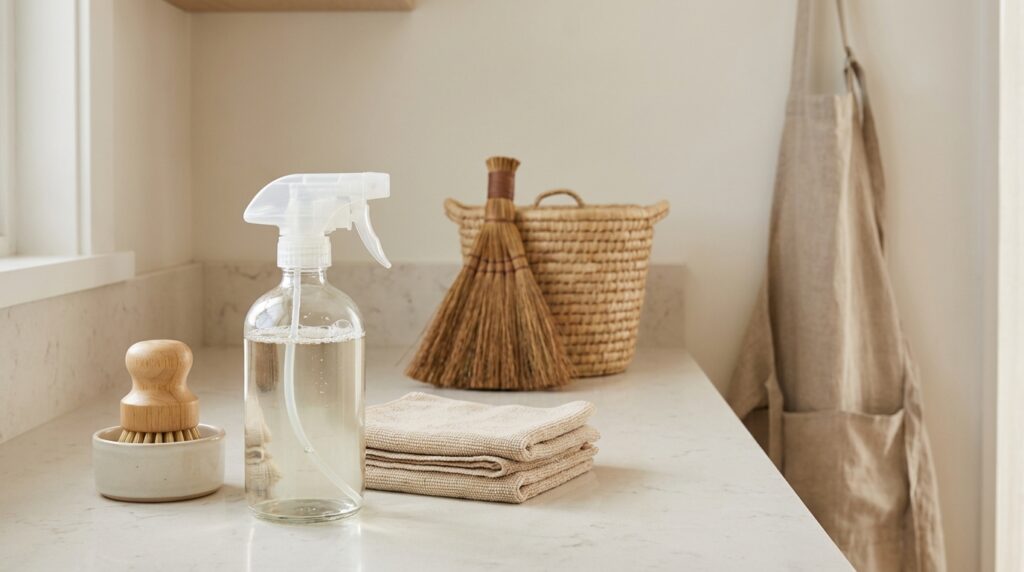
- A reusable microfiber cloth or Swedish dishcloth
- An all-purpose cleaner (a simple DIY mix of water, white vinegar, and a few drops of dish soap works well)
- Dish soap and a scrub brush or sponge
- A small broom or handheld vacuum for crumbs
- A compost bin or lined trash can within easy reach
- Optional: a spray bottle with diluted castile soap for grease
Keeping these items in one spot—under the sink or in a small caddy—saves you from wandering around looking for supplies. That alone can shave a few minutes off your routine.
The Step-by-Step Weeknight Kitchen Cleaning Checklist
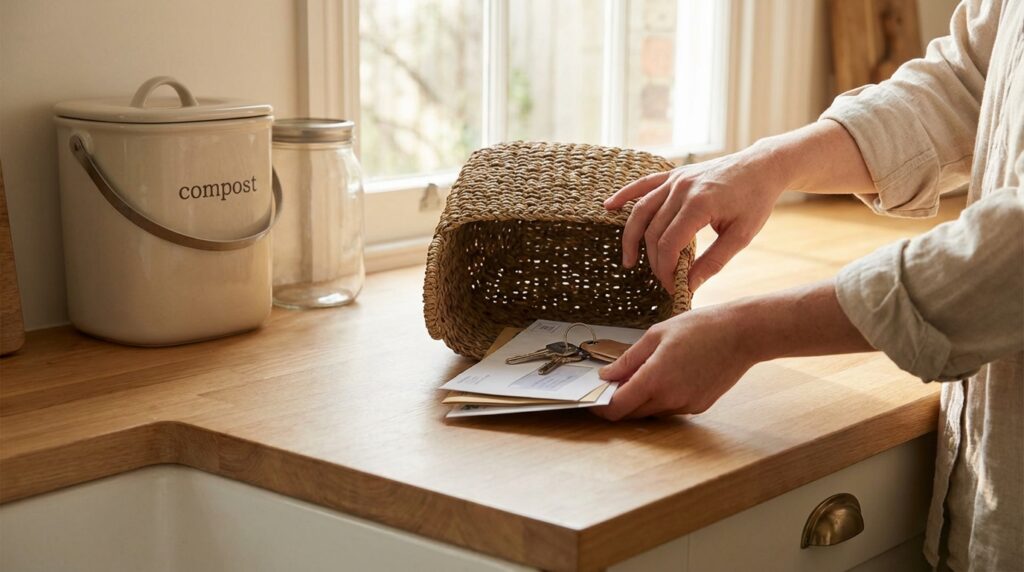
Step 1: Clear the counters first. Move any mail, keys, or random items that migrated to the kitchen during the day. Toss food scraps into the compost or trash. This step is quick but makes everything else easier because you’re not working around clutter.
Step 2: Deal with the dishes right away. If you have a dishwasher, load it immediately after dinner while the food residue is still soft. No dishwasher? Fill the sink with warm soapy water and let things soak for a minute while you wipe counters. Hand-washing goes faster when you’re not scrubbing dried-on pasta sauce.
Step 3: Wipe down the stovetop and any visible splatters. A damp microfiber cloth with a little all-purpose cleaner handles most messes. For stubborn grease spots, let the cleaner sit for 30 seconds before wiping. You don’t need to deep-clean the burners every night—just remove the fresh stuff so it doesn’t bake on.
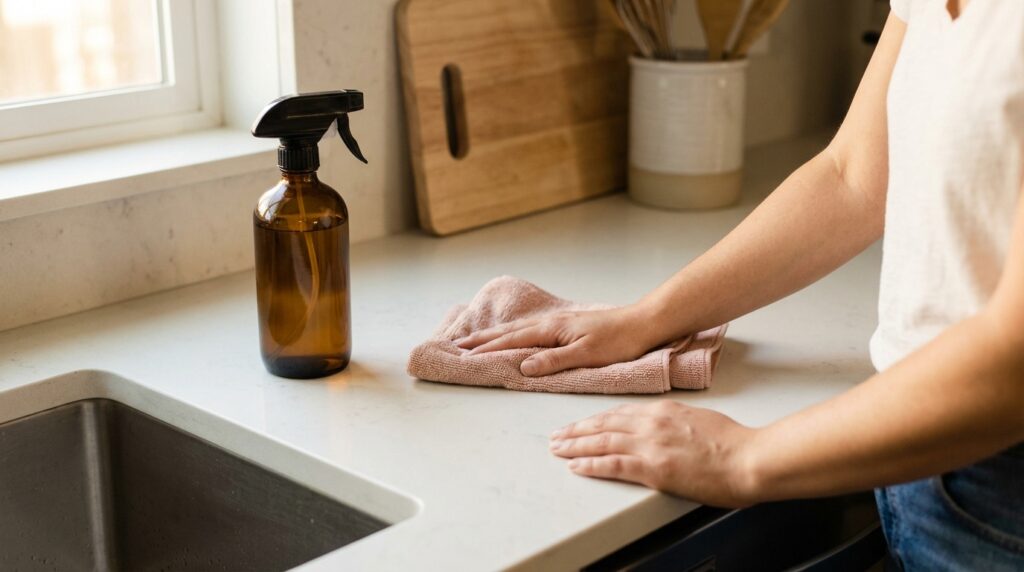
Step 4: Give the counters a proper wipe. Spray your cleaner, wipe in sections, and pay attention to the areas around the stove and sink where grime builds up fastest. If you’re using an eco-friendly DIY spray, it’s safe for most surfaces, but avoid vinegar on natural stone like marble or granite—it can etch over time.
Step 5: Sweep or vacuum the floor, focusing on high-traffic zones. You don’t need to mop every night. A quick sweep under the table and around the stove catches the worst of it. If you spot a sticky patch, a damp cloth on your foot (yes, really) can handle it in seconds.
Step 6: Scrub the sink briefly and dry it. A lot of people skip this, but a quick scrub with dish soap and a rinse keeps odors and stains from building up. Drying the sink with a cloth prevents water spots and that grimy ring around the drain.
Step 7: Take out the trash or compost if it’s getting full. Nothing undoes a clean kitchen faster than an overflowing bin. If you compost, emptying it regularly also prevents fruit flies—especially in warmer months.
Shortcut if you’re short on time
- Skip the floor entirely—just kick visible crumbs toward one corner and deal with them tomorrow.
- Stack dishes neatly in the sink with soapy water; wash them in the morning.
- Use a paper towel for the stovetop if your cloth is already dirty (not the greenest option, but better than skipping it).
- Wipe only the counter space you actually used for cooking.
- Set a 10-minute timer and stop when it goes off—done is better than perfect.
Eco-Friendly Swaps That Fit a Busy Schedule
Since you’re reading this on a green cleaning site, you probably care about reducing waste and avoiding harsh chemicals. The good news is that eco-friendly cleaning doesn’t have to be slower or more complicated.
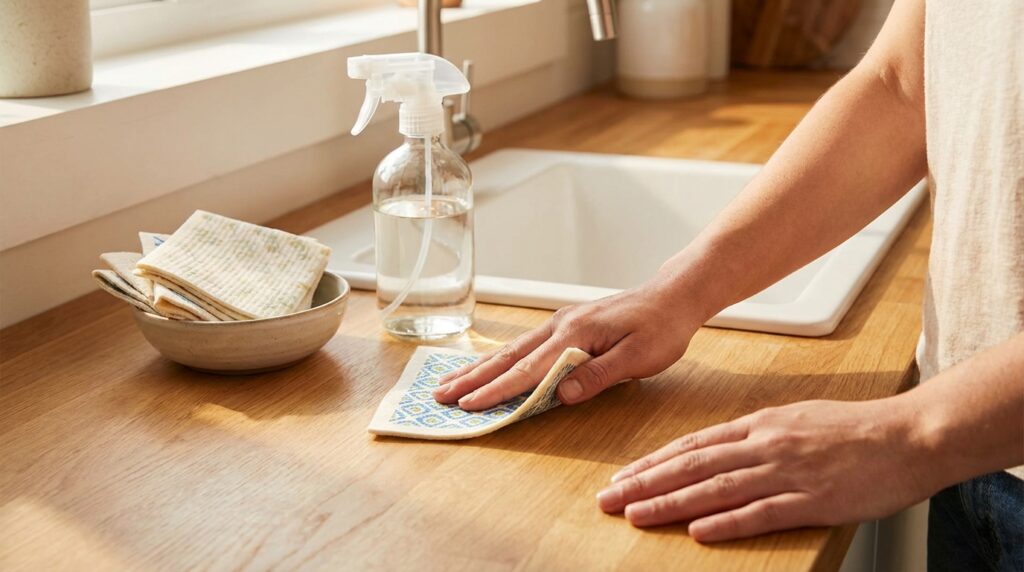
Swap paper towels for reusable cloths. Swedish dishcloths are great because they dry quickly and can be tossed in the washing machine. One cloth can replace dozens of paper towel rolls over its lifespan.
Make your own all-purpose cleaner. A simple mix of one part white vinegar to two parts water, plus a squirt of dish soap, handles most kitchen messes. Add a few drops of lemon essential oil if you want a fresher scent. Store it in a glass spray bottle to avoid plastic.
Choose bar dish soap or refillable liquid soap. Many eco-friendly brands now offer dish soap in bar form or bulk refills, which cuts down on plastic packaging. They work just as well as conventional options.
Compost food scraps instead of tossing them. Even if you don’t have a backyard compost pile, countertop compost bins with charcoal filters keep odors down. Some cities offer curbside compost pickup, which makes it even easier.
Common Mistakes (and How to Avoid Them)
- Waiting until the kitchen is a disaster. A 15-minute nightly routine is easier than a 2-hour weekend deep clean. Small messes stay small if you catch them early.
- Using too much cleaner. More spray doesn’t mean cleaner surfaces—it just means more residue to wipe off. A light mist is usually enough.
- Ignoring the sink. The sink can harbor more bacteria than you’d expect. A quick scrub each night keeps it fresh.
- Letting wet cloths sit in a pile. Damp cloths get smelly fast. Hang them to dry or toss them in the laundry basket right away.
- Overcomplicating the routine. If your checklist has 20 steps, you won’t stick with it. Keep it short and adjust as needed.
Frequently Asked Questions
How often should I deep-clean the kitchen if I follow this nightly routine?
Most people find that a quick nightly routine means they only need a deeper clean every two to four weeks. That deeper session would include things like cleaning inside the microwave, wiping cabinet fronts, and mopping the entire floor.
Is vinegar safe for all kitchen surfaces?
Vinegar works well on most sealed surfaces, stainless steel, and glass. Avoid using it on natural stone (marble, granite, travertine) or unsealed grout, as the acidity can cause damage over time. When in doubt, test a small hidden area first.
What if I really don’t have 15 minutes?
On truly exhausting nights, just do the dishes and wipe the stovetop. Those two tasks prevent the biggest problems: pests and baked-on grime. Everything else can wait a day.
Can I involve kids in this routine?
Absolutely. Younger kids can clear the table and put items in the compost bin. Older kids can load the dishwasher or wipe counters. Splitting tasks makes the whole thing faster and builds good habits.
Summary and Next Step
A kitchen cleaning checklist for busy weeknights doesn’t need to be complicated. The goal is consistency, not perfection. Clear the clutter, handle the dishes, wipe the surfaces, and do a quick floor sweep. That’s it. If you add eco-friendly swaps like reusable cloths and DIY cleaners, you’re also reducing waste without adding extra effort.
Tonight, try timing yourself. Set a timer for 15 minutes and see how much you can get done. You might be surprised at how manageable it feels—and how much nicer it is to wake up to a clean kitchen.