
You’ve probably seen them everywhere lately—those thin, pre-measured laundry sheets promising to clean your clothes while saving the planet. They look sleek, take up almost no space, and the packaging is undeniably prettier than a bulky plastic jug. But here’s the question that keeps popping up: when it comes to laundry sheets vs. liquid detergent, are you actually making a greener choice, or just falling for clever marketing? If you’ve been on the fence about switching, you’re not alone. Let’s break down what actually matters—cleaning power, environmental impact, cost, and convenience—so you can decide what belongs in your laundry room.
By the end of this post, you’ll know whether laundry sheets live up to the hype, where liquid detergent still wins, and which option makes sense for your household and budget.
Quick Verdict: Laundry Sheets vs. Liquid Detergent
- Best for reducing plastic waste: Laundry sheets (cardboard packaging, no jugs)
- Best for heavy-duty cleaning: Liquid detergent (especially for stains and heavily soiled loads)
- Best for small spaces or travel: Laundry sheets (lightweight, compact, no spill risk)
- Best overall value: Liquid detergent (lower cost per load in most cases)
- Best compromise: Powder detergent in cardboard boxes—often overlooked but worth considering
How Well Do Laundry Sheets Actually Clean?
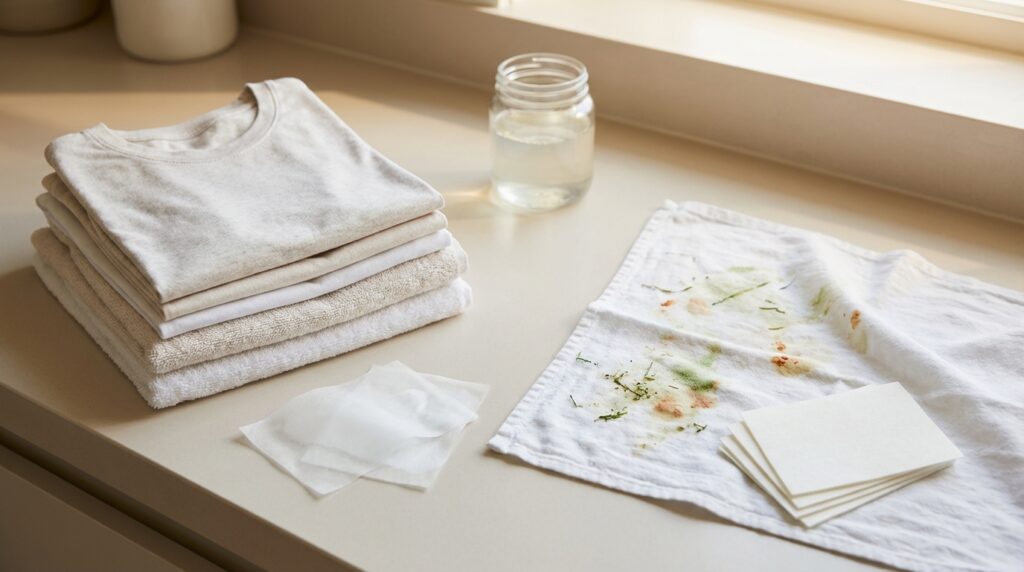
This is where things get a bit uncomfortable for the laundry sheet fan club. Independent testing from consumer organizations has shown mixed results. Some tests found sheets performed reasonably well on lightly soiled everyday loads—think t-shirts, pajamas, and towels that aren’t too grimy. However, when it comes to tougher stains like grass, oil, or food, most sheets struggle compared to traditional liquid detergents.
A common issue is that sheets contain less active cleaning ingredient per load. They’re compressed into a thin strip, which limits how much surfactant (the stuff that actually lifts dirt) can fit. Liquid detergents, especially concentrated formulas, pack more cleaning power into each dose. If your household deals with kids’ sports uniforms, cooking splatters, or outdoor work clothes, you might notice sheets leaving things less fresh than you’d like.
When Sheets Work Fine
If you’re washing lightly worn office clothes, bedding, or delicates, sheets can handle the job without drama. They dissolve reasonably well in both hot and cold water, though some users report residue issues in very cold washes or front-loaders with minimal water. A quick tip: toss the sheet directly into the drum before adding clothes, not into a detergent dispenser.
Common Mistake: Expecting Miracles on Stains
A mistake I see often is people switching entirely to sheets and then wondering why their white shirts look dingy after a few months. Sheets aren’t designed for heavy lifting. If you’re dealing with set-in stains, you’ll likely need a pre-treatment or a liquid detergent boost anyway—which defeats some of the convenience factor.
The Environmental Claims: Green or Greenwashing?
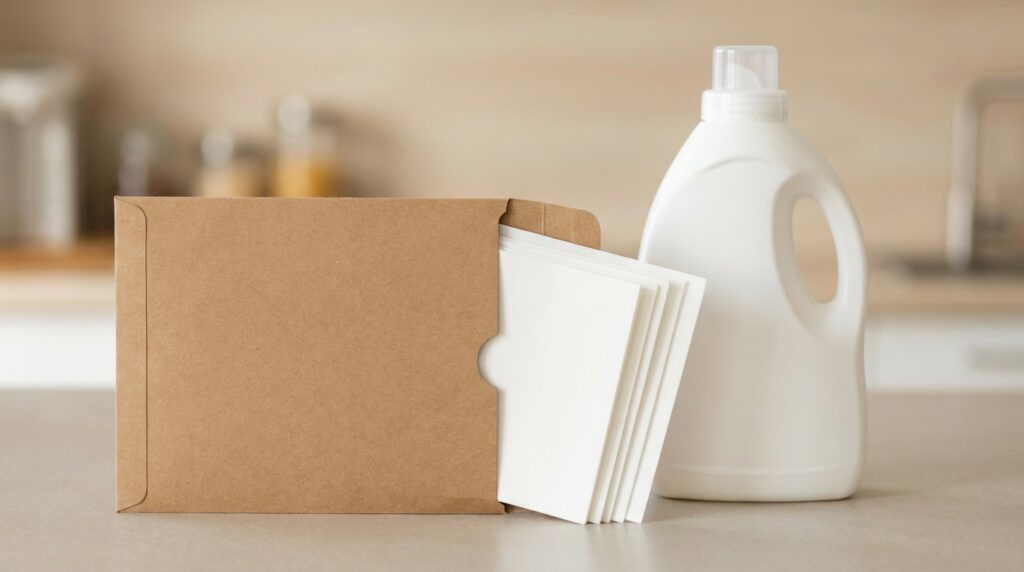
Here’s where the laundry sheets vs. liquid detergent debate gets complicated. The biggest selling point for sheets is the packaging—no plastic jugs, just a slim cardboard envelope. That’s a genuine win. Plastic laundry bottles are recyclable in theory, but in practice, many end up in landfills because they’re not rinsed properly or local facilities don’t accept them.
However, the “eco-friendly” label deserves some scrutiny. Recent investigations have pointed out that while the packaging is better, the sheets themselves aren’t always as green as they appear. Some contain polyvinyl alcohol (PVA), a water-soluble plastic that dissolves but doesn’t fully biodegrade in all wastewater systems. The same ingredient is found in laundry pods, by the way. Whether PVA causes significant environmental harm is still debated, but it’s worth knowing that “plastic-free packaging” doesn’t always mean “plastic-free product.”
What About Carbon Footprint?
Sheets are lighter and more compact, which means lower shipping emissions compared to heavy liquid jugs. That’s a legitimate environmental benefit, especially if you’re ordering online. But here’s a plot twist: traditional powder detergent in a cardboard box offers similar benefits—lightweight, no plastic, and often cleans better than sheets. It’s not as trendy, but it’s been quietly eco-friendly for decades.
The Honest Take
Laundry sheets are a step in the right direction for reducing single-use plastic, but they’re not a perfect solution. If your main goal is cutting plastic waste, they deliver. If you’re hoping for a zero-impact laundry routine, the reality is more nuanced. No detergent is truly “green”—they all contain chemicals that enter waterways. The best approach is using less detergent overall (most people overdose anyway) and washing in cold water when possible.
Cost Comparison: What Are You Actually Paying?
Budget matters, and this is where liquid detergent usually wins. Most laundry sheets cost somewhere between $0.25 and $0.50 per load, depending on the brand and where you buy. Liquid detergent, especially store brands or larger bottles, can drop below $0.15 per load. Over a year of laundry, that difference adds up.
If you’re doing five loads a week, sheets might cost you $65–$130 per year, while liquid could run $40–$60. Not a dealbreaker, but worth considering if you’re watching your household budget closely.
Hidden Costs to Consider
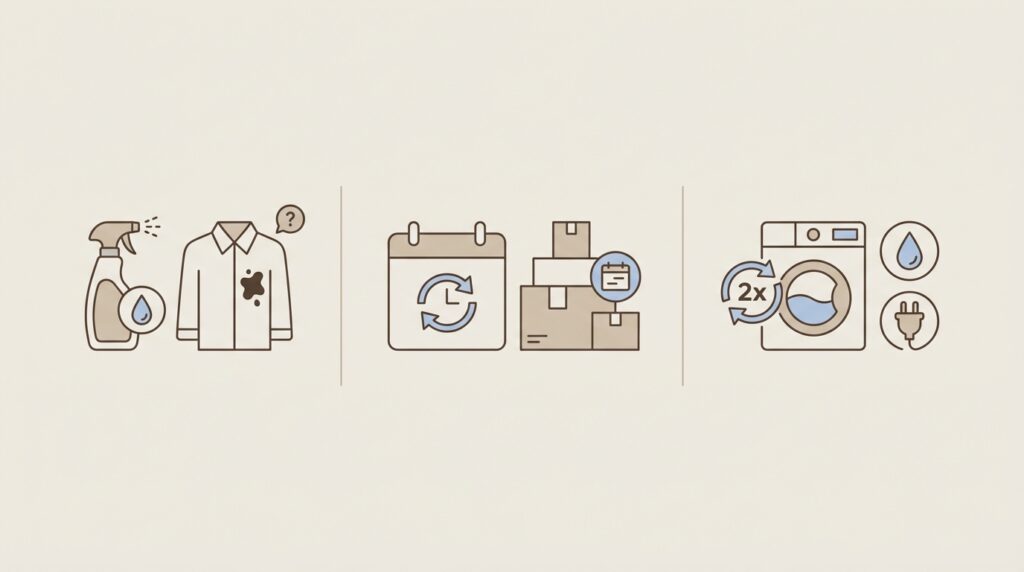
- Pre-treatment products: If sheets don’t handle stains well, you’ll spend extra on stain removers.
- Subscription traps: Many sheet brands push subscriptions. Convenient, but easy to forget and over-order.
- Rewashing: If clothes don’t come out clean, you’re paying twice—in detergent, water, and energy.
Who This Is For (and Who It’s Not)
Laundry Sheets Make Sense If You:
- Live in a small apartment with limited storage
- Travel frequently and want a spill-proof option
- Do mostly light laundry (office wear, loungewear, linens)
- Prioritize reducing plastic packaging above all else
- Use a shared laundry room and hate lugging heavy bottles
Stick With Liquid Detergent If You:
- Have kids, pets, or anyone generating heavily soiled laundry
- Deal with regular stains (food, grass, grease, sweat)
- Want the best cleaning power per dollar
- Prefer buying in bulk to reduce shopping trips
- Already have a recycling system that handles plastic jugs
Consider Powder Detergent If You:
- Want eco-friendly packaging AND solid cleaning performance
- Don’t mind measuring out doses
- Have hard water (powder often performs better than sheets in hard water)
Common Mistakes When Switching to Laundry Sheets
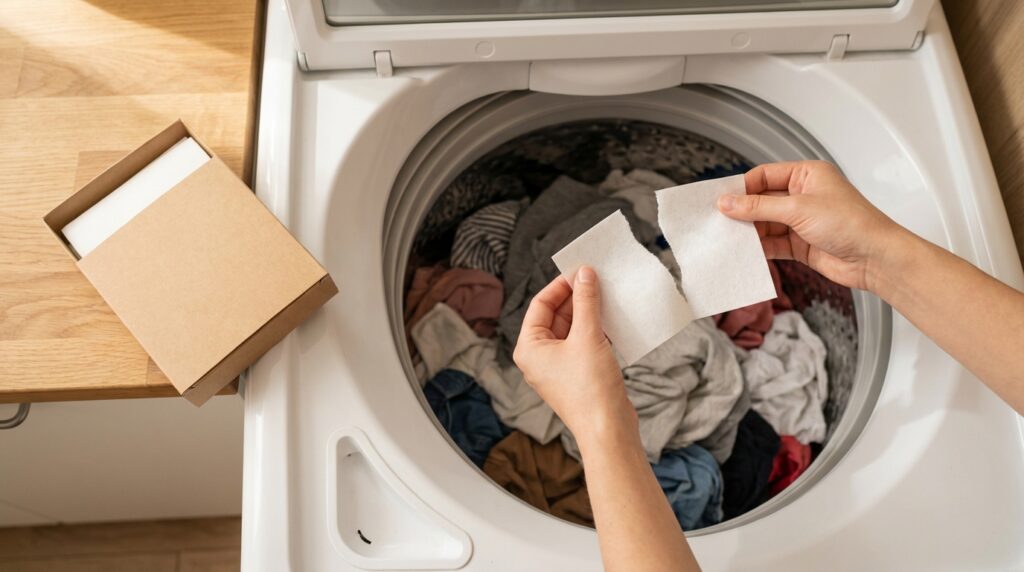
- Using half a sheet for full loads: Some brands suggest this for “light” loads, but it often results in underwhelming results. Use the full dose.
- Storing sheets in humid areas: They can stick together or dissolve prematurely. Keep them in a dry spot.
- Ignoring water temperature: Sheets dissolve best in warm water. If you wash exclusively in cold, test a few loads first.
- Assuming all sheets are equal: Quality varies wildly. A cheap sheet might leave residue or barely clean at all.
- Skipping pre-treatment: Sheets aren’t stain fighters. Treat spots before washing if you want them gone.
Frequently Asked Questions
Do laundry sheets work in cold water?
Most sheets dissolve in cold water, but some users report they don’t break down as completely as in warm water. If you notice residue on clothes, try placing the sheet at the bottom of the drum and running a slightly warmer cycle occasionally.
Are laundry sheets safe for sensitive skin?
Many brands offer fragrance-free or hypoallergenic options, which can work well for sensitive skin. However, always check the ingredient list—some sheets contain dyes or fragrances that might cause irritation. If you have known allergies, patch test a washed garment before committing.
Can I use laundry sheets in a high-efficiency (HE) washer?
Yes, sheets are generally HE-compatible since they’re low-sudsing. Just place the sheet in the drum, not the dispenser drawer, for best results.
Do laundry sheets expire?
They don’t expire in a dangerous way, but they can lose effectiveness over time, especially if exposed to humidity. Use them within a year of purchase and store in a cool, dry place.
Summary and Next Step
So, laundry sheets vs. liquid detergent—green or gimmick? The honest answer is somewhere in between. Sheets offer real benefits: less plastic, lighter shipping, and genuine convenience for certain lifestyles. But they’re not a cleaning powerhouse, and the eco claims deserve a critical eye. Liquid detergent still delivers better results for tough loads and costs less per wash. And if you want the best of both worlds, old-fashioned powder in a cardboard box is worth a second look.
Here’s a low-effort next step: try a small pack of laundry sheets for your lighter loads—towels, sheets, casual clothes—while keeping liquid detergent on hand for anything stained or heavily soiled. That way, you reduce some plastic without sacrificing clean clothes. No need to go all-in on either side.