

You’ve probably seen both terms floating around social media, wellness blogs, and even casual conversations with friends. Self-care and self-improvement sound like they could be the same thing—or at least close cousins. But when you’re scrolling through advice telling you to “treat yourself” one minute and “level up” the next, it gets confusing. Understanding the difference between self-care vs. self-improvement can help you figure out what you actually need on any given day, rather than feeling guilty for resting or pushing yourself when you’re already exhausted.
This post breaks down what each concept really means, where they overlap, and how to use both without burning out or feeling stuck. You’ll walk away knowing when to prioritize one over the other—and why you probably need a mix of both in your life.
Key Takeaways at a Glance
- Self-care is about maintaining your current well-being—rest, recovery, and meeting basic needs.
- Self-improvement is about growth—building new skills, habits, or reaching goals.
- They’re not opposites; they work best together.
- Confusing the two can lead to burnout (pushing when you need rest) or stagnation (resting when you need challenge).
- The “right” balance shifts depending on your season of life.
What Self-Care Actually Means

Self-care has become a bit of a buzzword, often reduced to bubble baths and scented candles. While those things can be part of it, the core idea is simpler: self-care is any action you take to maintain your physical, mental, or emotional health. It’s about keeping yourself functional and okay—not necessarily better, just not worse.
Think of it like charging your phone. You’re not upgrading the software or adding new features. You’re just making sure the battery doesn’t die. Self-care includes things like getting enough sleep, eating regular meals, taking breaks when you’re overwhelmed, saying no to commitments that drain you, and doing small things that bring you comfort.
Examples of Self-Care in Daily Life
If you’re running on four hours of sleep and someone suggests you start a new morning routine at 5 AM, that’s probably not what you need. What you need is rest. Self-care might look like going to bed earlier, skipping the optional social event, or spending twenty minutes doing something that genuinely relaxes you—not something that looks relaxing on Instagram.
A common mistake is treating self-care as another item on the to-do list. “I have to do my skincare routine, meditate for ten minutes, journal, and drink eight glasses of water.” If that feels like pressure, it’s not serving its purpose. Self-care should reduce stress, not add to it.
What Self-Improvement Actually Means
Self-improvement is about growth and change. It’s the intentional effort to become better at something, develop new skills, break old patterns, or reach specific goals. Unlike self-care, which maintains where you are, self-improvement moves you forward.
This could mean learning a new language, working on communication skills in your relationships, building a fitness habit, reading more books, or tackling a fear that’s been holding you back. It requires effort, discomfort, and often some level of discipline. Growth rarely happens in the comfort zone.
Examples of Self-Improvement in Daily Life

If you’ve been wanting to get better at managing your finances, self-improvement might look like tracking your spending for a month, learning about budgeting methods, or setting up automatic savings. It’s not always fun in the moment, but it builds toward something.
The tricky part is that self-improvement can become obsessive. There’s a whole culture around “optimizing” every aspect of life—wake up earlier, be more productive, hustle harder. When self-improvement turns into constant pressure to be better, it stops being healthy. You end up exhausted, chasing a version of yourself that keeps moving further away.
Where They Overlap (and Where They Don’t)
Here’s where it gets interesting: some activities can be both self-care and self-improvement, depending on your intention and current state. Exercise is a good example. If you’re working out to build strength or train for a goal, that’s self-improvement. If you’re going for a walk because you’ve been sitting all day and your body needs movement, that’s self-care.
Reading can go either way too. Reading a challenging book to expand your knowledge? Self-improvement. Reading a cozy novel because it helps you unwind? Self-care. The activity itself isn’t the defining factor—it’s why you’re doing it and what you need in that moment.
The Danger of Mixing Them Up
Problems arise when you confuse the two. If you’re burned out and exhausted, pushing yourself to “improve” can make things worse. You need recovery first. On the flip side, if you’re stuck in a rut and keep telling yourself you just need more rest, you might be avoiding the discomfort that comes with growth.
A common scenario: someone feels unfulfilled, so they double down on self-care—more spa days, more Netflix, more “treating themselves.” But what they actually need is a challenge, a new project, or a change. Self-care becomes avoidance dressed up in wellness language.
Common Mistakes People Make

- Treating self-care as laziness. Rest is productive. Your brain and body need downtime to function well. Skipping recovery doesn’t make you tougher; it makes you less effective.
- Turning self-improvement into punishment. If your inner voice sounds like a drill sergeant, that’s not growth—that’s self-criticism wearing a mask.
- Following someone else’s definition. What counts as self-care or self-improvement varies by person. A morning run might energize one person and drain another.
- Ignoring the season you’re in. After a major life change, illness, or stressful period, you might need months of self-care before you have the capacity for growth. That’s normal.
- Making it all-or-nothing. You don’t have to choose one forever. Most weeks involve a mix of both, and the ratio shifts based on what’s happening in your life.
How to Know Which One You Need Right Now
A simple check-in can help. Ask yourself: “Am I running on empty, or am I feeling stuck?” If you’re exhausted, overwhelmed, or barely keeping up with daily life, lean toward self-care. If you’re bored, restless, or avoiding something you know would be good for you, it might be time for self-improvement.
Another question: “Does this activity fill my cup or build something new?” Both are valuable, but they serve different purposes. Sometimes you need to fill the cup before you can build anything.
A Practical Way to Balance Both
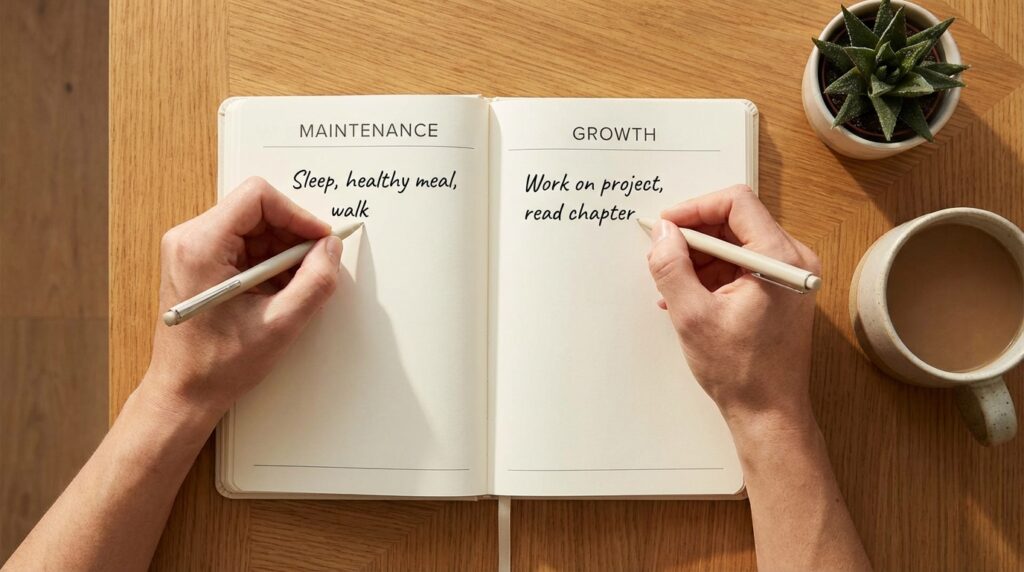
Try thinking in terms of “maintenance” and “growth” days. On maintenance days, your only job is to take care of basics—sleep, food, low-stress activities. On growth days, you tackle something challenging or work toward a goal. Most people do well with more maintenance days than growth days, especially during busy or stressful seasons.
If you’re someone who tends to push too hard, schedule self-care like an appointment. If you’re someone who tends to avoid challenge, schedule one small growth activity per week—something uncomfortable but manageable.
Frequently Asked Questions
Is self-care just an excuse to avoid hard things?
It can be, if you’re using it that way. Genuine self-care meets a real need. If you’re well-rested and still avoiding something, that’s worth examining. But rest and recovery are legitimate needs, not excuses.
Can self-improvement be harmful?
When it becomes obsessive or tied to your self-worth, yes. If you feel like you’re never good enough no matter how much you improve, that’s a sign to step back and focus on acceptance and care instead.
Do I have to choose one over the other?
Not at all. Most balanced lives include both. The key is knowing which one you need more of at any given time, rather than defaulting to one out of habit.
What if I don’t know what I need?
Start with self-care. If you’re unsure, it’s usually safer to rest and recover first. Once you feel more stable, you’ll have a clearer sense of whether you’re ready for growth or still need more recovery time.
Summary and Next Step
Self-care keeps you functioning; self-improvement helps you grow. Both matter, and neither is better than the other. The real skill is learning to read your own signals and respond with what you actually need—not what sounds good or what someone else is doing.
This week, try one small experiment: before you decide how to spend your free time, pause and ask yourself whether you need rest or challenge. Just noticing the difference is a solid first step toward a more intentional approach to both.