
You finally commit to trying self-tanner, follow the instructions on the bottle, and wake up looking like you high-fived a bag of Cheetos. Streaky ankles, patchy knees, and that telltale orange line where your wrist meets your hand. Sound familiar? Learning how to apply self-tanner without streaks isn’t complicated, but it does require a bit of prep work that most people skip entirely. The good news: once you nail the basics, you can get a natural-looking glow at home for a fraction of what a spray tan costs.
This guide walks you through everything from prepping your skin to blending tricky areas like elbows and feet. You’ll also learn the common mistakes that lead to streaks and how to fix them before they happen. No fancy equipment required—just a little patience and the right technique.
Quick Routine at a Glance
- Exfoliate 24 hours before applying
- Shave or wax at least 12 hours ahead
- Apply moisturizer to dry areas (knees, elbows, ankles, hands)
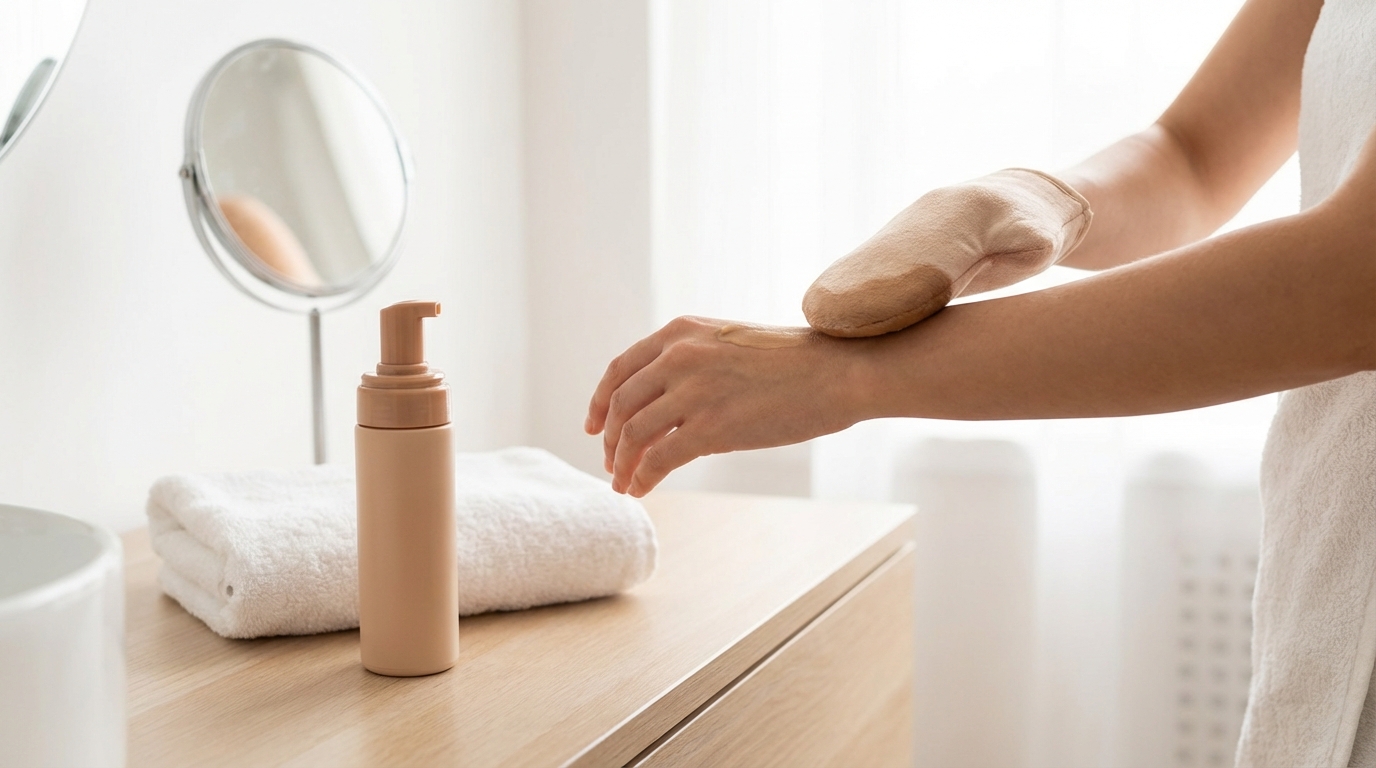
- Use a tanning mitt for even application
- Work in sections from bottom to top
- Blend edges with a damp cloth or leftover product on the mitt
- Wait at least 10 minutes before getting dressed
What You’ll Need
You don’t need a bathroom full of products to get this right. Here’s the short list:
- A self-tanner (mousse, lotion, or gradual formula—your choice)
- An exfoliating scrub or mitt
- A tanning mitt or applicator glove
- A lightweight, fragrance-free moisturizer
- Loose, dark clothing to wear afterward
- A damp washcloth for blending
If you’re on a budget, the tanning mitt is the one thing worth investing in. Applying self-tanner with bare hands almost guarantees orange palms and uneven coverage. A basic mitt costs very little and makes a noticeable difference.
How to Apply Self-Tanner Step by Step
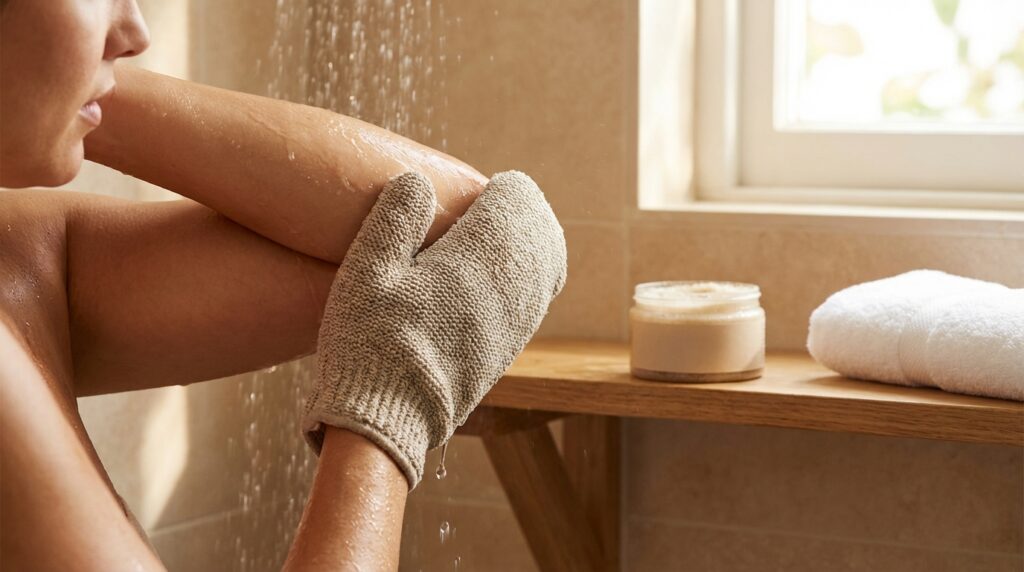
Step 1: Exfoliate the day before. This is the step most people rush or skip, and it’s the main reason for streaks. Dead skin cells grab onto self-tanner unevenly, creating patches. Use a gentle body scrub or an exfoliating mitt in the shower, paying extra attention to rough areas like knees, elbows, and ankles. Don’t exfoliate right before applying—give your skin about 24 hours to settle.
Step 2: Shave or wax ahead of time. If you remove body hair, do it at least 12 hours before tanning. Freshly shaved skin has open pores that can trap product and create tiny dots. Waiting gives your skin time to calm down.
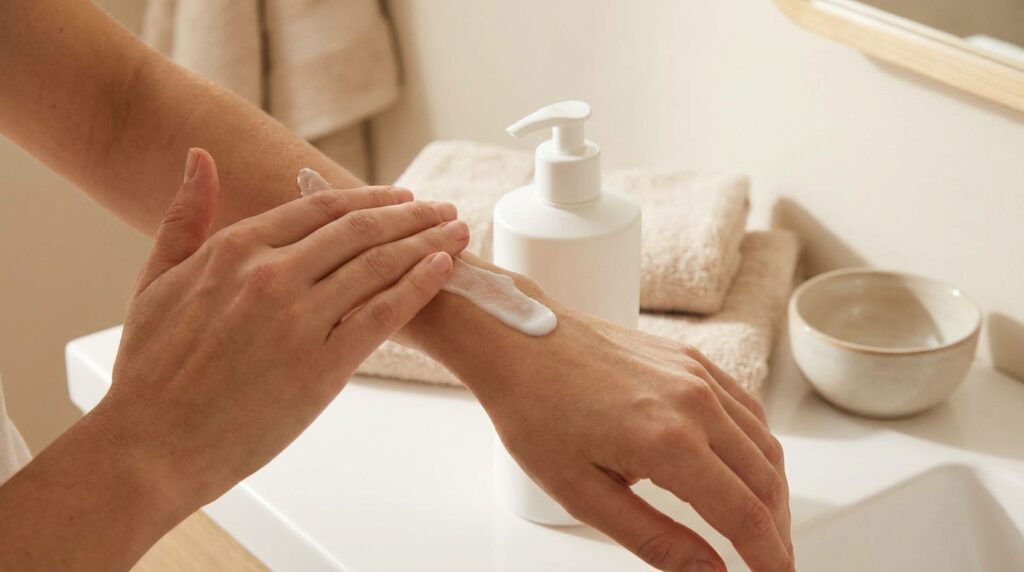
Step 3: Shower and skip the lotion (mostly). On application day, take a quick shower but don’t apply body lotion all over. You want clean, dry skin so the tanner can absorb evenly. The exception: apply a thin layer of moisturizer to your driest spots—knees, elbows, ankles, wrists, and between your fingers. These areas soak up more product and tend to turn darker or streaky without a moisture barrier.
Step 4: Dispense product onto your mitt, not your skin. Squeeze or pump a small amount of self-tanner onto your tanning mitt. Starting with less is smarter—you can always add more, but you can’t take it away once it’s on your skin.
Step 5: Work in sections, bottom to top. Start at your ankles and work your way up. This prevents you from bending over and creasing wet product on your stomach or chest. Use long, sweeping motions and blend in circular patterns. Don’t press too hard—let the mitt glide.
Step 6: Use less product on tricky areas. When you reach your knees, elbows, hands, and feet, use whatever’s left on the mitt rather than adding fresh product. These spots are notorious for grabbing too much color. For your hands, swipe the back lightly and use a damp cloth to blend around your fingers and wrists immediately.
Step 7: Blend your face and neck carefully. If you’re applying to your face, mix a drop of self-tanner with your regular moisturizer for a more forgiving application. Blend down onto your neck and a bit onto your ears—nothing looks stranger than a tan face with a pale neck.
Step 8: Wait before dressing. Give the product at least 10 minutes to dry before putting on clothes. Loose, dark clothing is your friend here. Tight waistbands or bra straps can rub off product and leave lines.
Shortcut If You’re Short on Time
- Use a gradual tanning lotion instead of a full-strength formula—it’s more forgiving and builds color over a few days
- Focus on just your legs and arms if you’re in a rush; skip the torso
- Apply right before bed and rinse off in the morning (check your product’s instructions for development time)
- Keep a pack of makeup wipes nearby to quickly fix any obvious mistakes
- If you notice a streak before it dries, blend it out immediately with a damp cloth
Common Mistakes and How to Avoid Them
Even with good intentions, a few habits can sabotage your results. Here’s what trips people up most often:
- Skipping exfoliation: This is the number one cause of patchiness. No amount of careful application fixes uneven skin texture.
- Applying too much at once: More product doesn’t mean more color—it means more streaks. Build up gradually.
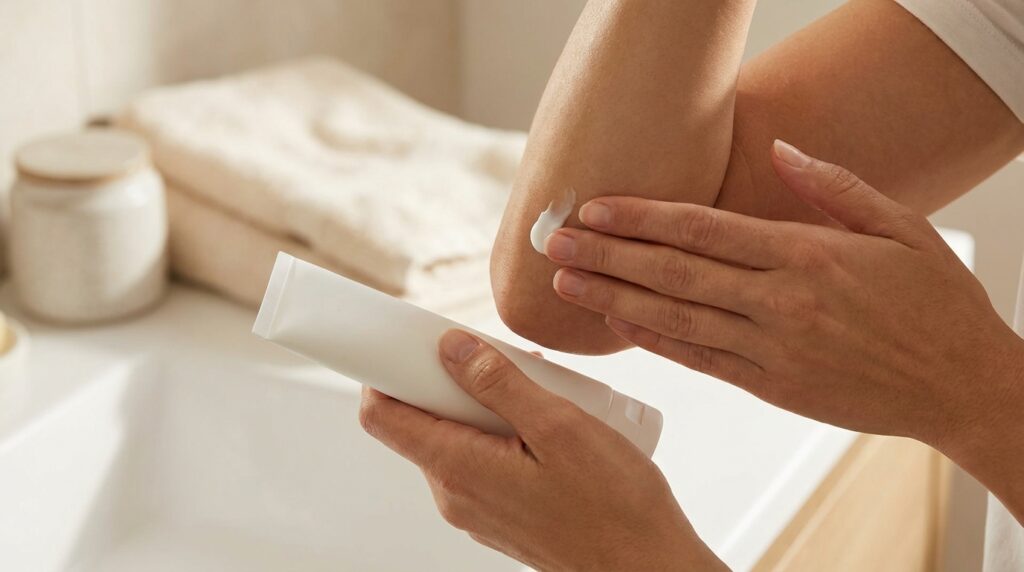
- Forgetting to moisturize dry spots: Knees and elbows will turn noticeably darker without a barrier. A tiny bit of lotion goes a long way.
- Rubbing instead of blending: Aggressive rubbing pushes product into creases. Use light, sweeping motions.
- Wearing tight clothes too soon: Elastic bands and seams will leave marks. Wait until the product is fully dry.
- Ignoring your hands and feet: These areas need the lightest touch. Blend thoroughly and wipe between fingers and toes.
If you do end up with a streak or dark patch, don’t panic. A gentle scrub in the shower or a bit of lemon juice on a cotton pad can help fade mistakes faster. Most self-tanners also fade naturally within a week, so even a mishap isn’t permanent.
A Note on Choosing the Right Formula
Self-tanners come in mousses, lotions, sprays, and gradual formulas. If you’re new to this, a gradual tanning lotion is the most forgiving option. It builds color slowly, so mistakes are less obvious and easier to correct. Mousses tend to dry faster and give more immediate color, which is great once you’re confident but less forgiving for beginners.
For those with sensitive skin, look for formulas without added fragrance. That classic “self-tanner smell” comes from the active ingredient reacting with your skin, but added perfumes can cause irritation for some people. If you notice redness or itching, stop use and try a different product. A patch test on your inner arm is always a smart move before going all-in.
Summary and Next Step
Applying self-tanner without streaks comes down to three things: proper exfoliation, using a mitt, and going easy on dry areas like knees and elbows. The technique matters more than the price tag on the bottle. Once you get the hang of it, the whole process takes about 15 minutes and saves you the cost and hassle of salon spray tans.
Your next step? Try a practice run on just your legs before committing to a full-body application. It’s low-stakes, and you’ll get a feel for how the product works with your skin. From there, you can build up to a full routine with confidence—and without the streaks.