
Picture this: You’re at brunch, your friend pulls out a gorgeous berry lipstick, and asks if you want to try it. Do you politely decline and risk seeming paranoid? Or swipe it on and hope for the best? The answer depends entirely on the product type—and knowing the difference can save you from anything from a minor breakout to a stubborn eye infection.
Shared makeup isn’t automatically dangerous, but certain products carry real risks that others don’t. The good news? Once you know which items fall into each category, you can make quick decisions without overthinking it—or offending anyone.
Why Some Makeup Products Are Riskier Than Others
Bacteria, viruses, and fungi thrive in warm, moist environments. That’s why the formula and packaging of a product matters more than the brand or price tag.
High-risk products share these traits:
- Liquid or cream formulas that stay wet
- Applicators that touch mucous membranes (eyes, lips, inside nostrils)
- Packaging that requires double-dipping
Lower-risk products tend to be:
- Pressed powders with dry surfaces
- Products applied with disposable or easily sanitized tools
- Spray formulas that don’t contact skin directly
The eyes and lips are particularly vulnerable. The thin, sensitive skin around these areas absorbs bacteria quickly, and conditions like conjunctivitis (pink eye), cold sores, and styes spread easily through contaminated applicators.
Products You Can Share (With Precautions)
Not everything in your makeup bag is off-limits. These products carry lower contamination risks—especially with a few smart habits.
Pressed Powder Products
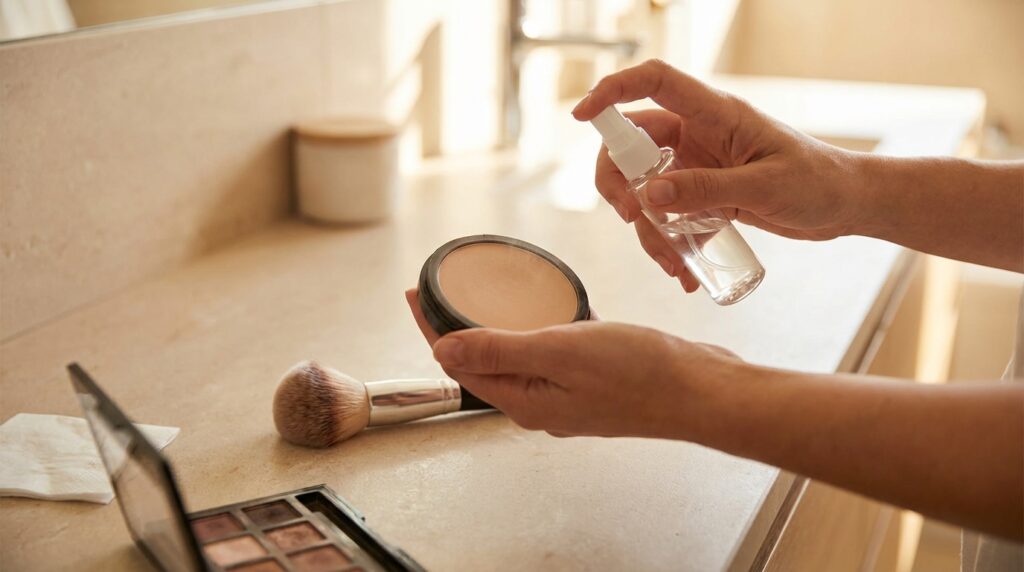
Eyeshadow palettes, powder blushes, bronzers, and setting powders are relatively safe to share. Their dry surface doesn’t support bacterial growth the way liquids do. For extra protection:
- Spray the surface lightly with 70% isopropyl alcohol and let it dry completely
- Use a clean brush rather than the included applicator
- Scrape off the top layer with a tissue if the product looks shiny or “hard-panned”
Pencil Products
Lip liners, eyeliner pencils, and brow pencils can be shared safely if you sharpen them first. Sharpening removes the outer layer that contacted someone else’s skin, exposing fresh product underneath. Keep a small sharpener in your bag for exactly this situation.
Spray Products
Setting sprays, facial mists, and spray-on sunscreens don’t touch skin directly, making them low-risk for sharing. Just avoid letting the nozzle contact anyone’s face.
Lipstick (Bullet Form)
Traditional lipstick in a tube can be shared more safely than glosses. Wipe the top layer off with a clean tissue, then spritz with alcohol and let it dry. This isn’t foolproof—herpes simplex virus (cold sores) can still transmit—but it reduces bacterial contamination significantly.
Smart Tip: If you frequently share makeup at events or with roommates, keep a pack of disposable lip wands and mascara spoolie brushes on hand. They cost around $5 for 50+ applicators and eliminate most sharing risks entirely.
Products You Should Never Share
Some products simply aren’t worth the risk, no matter how close you are to the person asking.
Mascara and Liquid Eyeliner
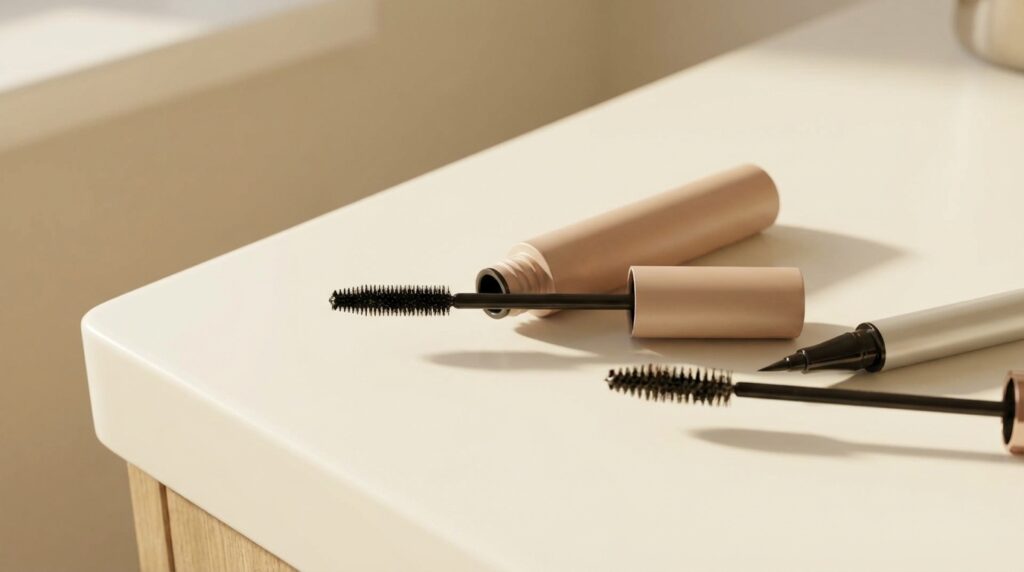
These are the biggest offenders. The wand goes from the product to your lash line (or waterline) and back into the tube repeatedly, creating a breeding ground for bacteria. Sharing mascara has been linked to:
- Bacterial conjunctivitis
- Styes and chalazions
- Fungal eye infections
Even “just one use” introduces new bacteria into the tube, where it multiplies in the dark, moist environment. There’s no effective way to sanitize a mascara wand without ruining the product.
Lip Gloss with Doe-Foot Applicators
Unlike bullet lipsticks, glosses with built-in wand applicators can’t be sanitized between uses. The applicator touches lips, goes back into the tube, and contaminates the entire product. Cold sores, bacterial infections, and even oral herpes spread easily this way.
Cream Products in Jars
Cream blushes, concealers, and lip masks in open jars require finger-dipping—which introduces bacteria from hands directly into the product. If you must share, scoop product onto a clean spatula or the back of a sanitized hand first. But honestly? These are better kept personal.
Makeup Sponges and Brushes
Beauty sponges absorb product, water, and bacteria deep into their pores. Even thorough washing doesn’t fully sanitize them. Brushes are slightly better but still hold onto oils and dead skin cells. Sharing these is essentially sharing someone else’s skin microbiome.
Shared Makeup: Myth vs. Reality
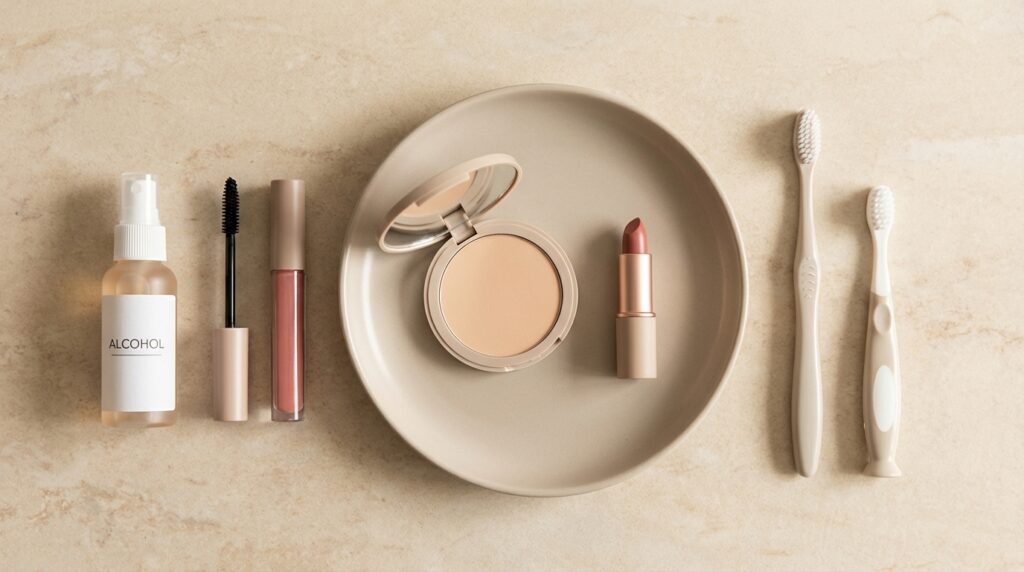
Myth: Spraying alcohol on any product makes it safe to share.
Reality: Alcohol sanitizes surfaces but can’t penetrate liquid formulas or porous applicators. It works for pressed powders and lipstick bullets—not mascaras, glosses, or cream products.
Myth: Sharing with family members is fine because you’re already exposed to the same germs.
Reality: Family members can carry dormant infections (like cold sores) without active symptoms. You might share a home but not share immunity to every pathogen.
Myth: Brand-new products are sterile.
Reality: Testers at makeup counters are notoriously contaminated. Studies have found E. coli, staph bacteria, and even fecal matter on store testers. Always use disposable applicators at beauty counters—or ask for a fresh sample.
Myth: If it doesn’t smell bad, it’s still safe.
Reality: Bacteria don’t always produce noticeable odors. A product can look and smell fine while harboring harmful microorganisms, especially in the first few weeks of contamination.
How to Handle Sharing Requests Gracefully
Saying “no” to a friend doesn’t have to be awkward. A few approaches that work:
- Offer an alternative: “I don’t share mascara, but you can totally use my powder blush—let me grab a clean brush.”
- Blame hygiene, not the person: “I’m weird about eye products since I got a stye last year.”
- Come prepared: Carry disposable applicators so you can say yes without the risk.
Most people understand once you frame it as a general hygiene habit rather than a personal judgment.
Quick Reference Checklist
Safe to share (with precautions):
- Pressed powders – sanitize surface with alcohol spray
- Pencil products – sharpen before sharing
- Bullet lipsticks – wipe and spray with alcohol
- Spray products – keep nozzle away from skin
Never share:
- Mascara
- Liquid or gel eyeliner
- Lip gloss with wand applicators
- Cream products in jars (unless using a clean spatula)
- Beauty sponges
- Personal brushes
Final Thoughts
Sharing makeup isn’t inherently dangerous—it just requires knowing which products can handle it and which can’t. Pressed powders and pencils? Usually fine with basic sanitization. Anything with a wand that touches your eyes or lips? Keep it personal.
The easiest fix is keeping a small stash of disposable applicators wherever you store your makeup. They’re cheap, take up almost no space, and let you share generously without worrying about what you might be passing along—or picking up.
Take a quick look at your makeup bag today. Anything in there that’s been shared without sanitizing? Might be time for a replacement.