

You’ve probably seen those sculpted cheekbones on social media—sharp, dramatic, and looking like they took about forty-five minutes to blend. And then there’s you, standing in front of the mirror at 7:30 AM, wondering if soft everyday contour is even worth the effort when you’re just heading to work or running errands. It’s a fair question. Contouring has this reputation for being complicated, time-consuming, and honestly a bit intimidating.
Here’s the thing: everyday contour doesn’t have to look like you’re prepping for a photoshoot. When done lightly, it can add subtle dimension to your face in under two minutes. In this post, you’ll learn whether soft contour actually makes a difference for daily wear, how to do it without looking overdone, and when you might want to skip it entirely.
Key Takeaways
- Soft everyday contour is about subtle shadows, not dramatic sculpting—think “I woke up with great bone structure.”
- You don’t need special products; a matte bronzer or even a cool-toned eyeshadow works.
- It takes 60–90 seconds once you know your face shape.
- Some face shapes and skin types benefit more than others.
- If you hate the look or feel of it, skipping contour is completely valid.
What Soft Everyday Contour Actually Is
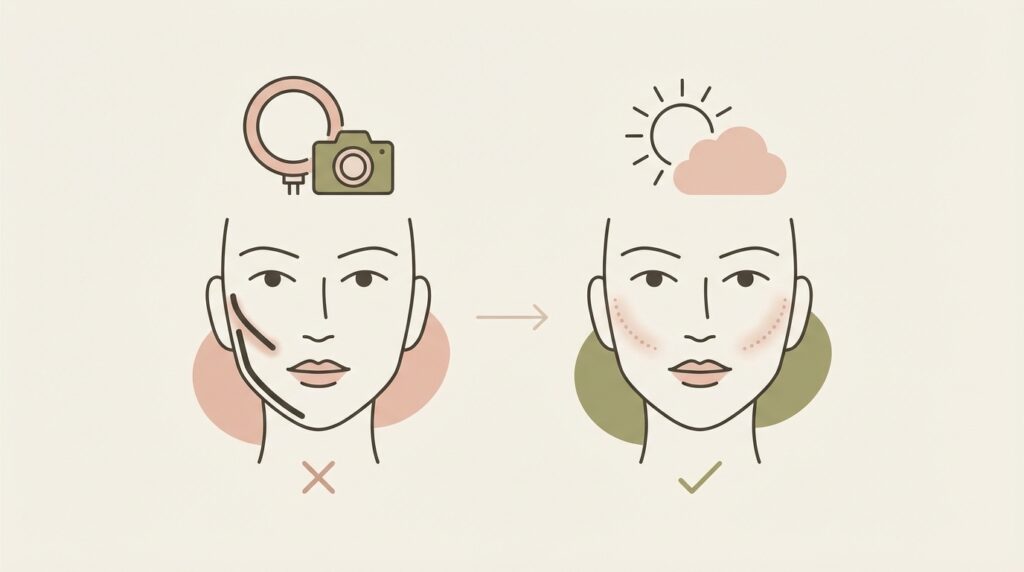
Let’s clear up a common misconception first. Soft contour isn’t the same as the heavy, Instagram-style sculpting that requires seventeen brushes and a ring light. That technique is designed for photography and video, where harsh lighting flattens everything. In real life, under normal lighting, that level of contour often looks muddy or costume-like.
Soft everyday contour is much simpler. You’re adding a whisper of shadow to areas where your face naturally has depth—under the cheekbones, along the hairline, maybe the sides of the nose. The goal isn’t to reshape your entire face. It’s to enhance what’s already there, so you look a bit more “awake” or defined without anyone being able to pinpoint why.
The Difference Between Contour and Bronzer
A lot of people use these terms interchangeably, but they serve different purposes. Bronzer adds warmth and a sun-kissed glow—it’s usually applied to the high points of the face where the sun would naturally hit. Contour creates shadow, so it works best in cool or neutral tones that mimic natural shadows. If you’re using a warm, shimmery bronzer as contour, you might end up with orange stripes instead of subtle definition. A matte product in a shade that’s a couple of tones deeper than your skin (with gray or taupe undertones) works much better for this purpose.
Do You Actually Need It?
Honestly? No. You don’t need contour the way you might need sunscreen or a good moisturizer. It’s purely optional, and plenty of people have beautiful, polished makeup looks without ever touching a contour product. But “need” and “benefit from” are different things.
Soft contour tends to make the biggest difference if you have a rounder face shape and want to add a bit of angular definition, or if you feel like your features look flat in photos. It can also help balance out a fuller face or add structure when you’re wearing a lot of blush or highlighter. If you’re running late and only have time for mascara and lip balm, contour is definitely not the priority.
When Skipping It Makes Sense
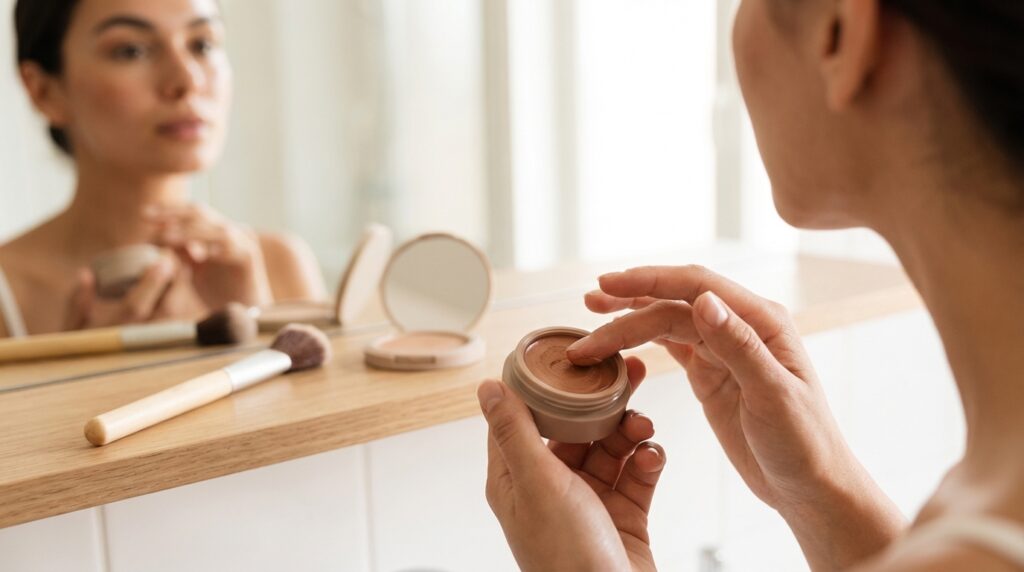
If you have naturally prominent cheekbones or a more angular face, heavy contour can actually make you look gaunt or tired. Same goes for very dry skin—powder contour products can cling to dry patches and emphasize texture. In those cases, a light cream bronzer on the cheeks might give you the warmth you’re looking for without the sculpted effect. There’s no rule that says everyone needs to contour. If it doesn’t suit your face or your style, leave it out.
How to Do Soft Everyday Contour in Under Two Minutes
Step 1: Choose your product. A matte bronzer, a contour stick, or even a cool-toned matte eyeshadow can work. Avoid anything with shimmer or glitter—that defeats the purpose of creating a shadow.
Step 2: Find your cheekbone. Make a “fish face” (suck in your cheeks) and feel for the hollow beneath your cheekbone. That’s where the shadow goes. Start from the ear and blend toward the corner of your mouth, but stop about two fingers’ width away from your lips.
Step 3: Blend immediately. Use a fluffy brush or a damp sponge to diffuse the edges. The key to soft contour is that there are no harsh lines—everything should look like a natural shadow, not a stripe.
Step 4: Optional extras. If you want, add a tiny bit of the same product along your hairline at the temples and under your jawline. This frames the face without adding much time.
Shortcut If You’re Short on Time
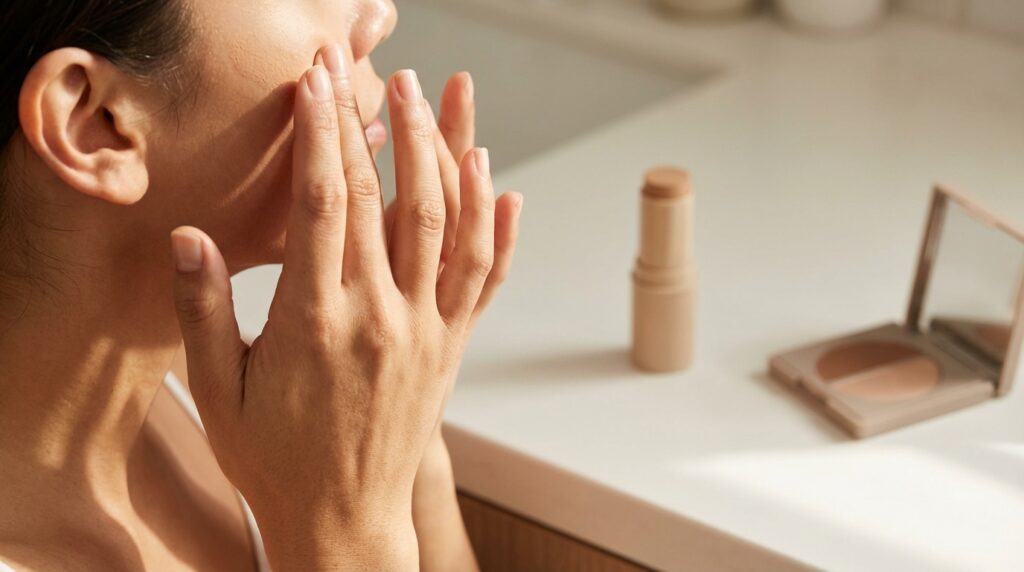
- Use a cream contour stick—it blends faster than powder and you can use your fingers.
- Skip the jawline and temples; just do the cheekbones.
- Apply contour before foundation if you want an even softer, more diffused effect.
- Pick a multi-use product that works as bronzer and contour so you’re not switching between items.
Common Mistakes
- Going too dark: The shade should be only 1–2 tones deeper than your skin. If it looks like a brown stripe, it’s too dark.
- Placing it too low: Contour belongs under the cheekbone, not on the apple of your cheek. Placing it too low drags the face down.
- Forgetting to blend: Harsh lines are the fastest way to make contour look unnatural. Blend until you can barely see where the product starts and ends.
- Using shimmer: Shimmer catches light; contour is supposed to create shadow. Stick to matte formulas.
- Overdoing it for daytime: What looks subtle in your bathroom mirror can look heavy in natural daylight. Less is more for everyday wear.
Frequently Asked Questions
Can I contour with just bronzer?
You can, but results vary. If your bronzer is matte and not too warm or orange, it can double as a soft contour. Shimmery or very warm bronzers won’t create a convincing shadow effect, though—they’ll just add warmth and glow, which is a different look.
What if I have sensitive skin?
Most contour products are gentle, but if you’re prone to reactions, patch test any new product on your inner arm first. Cream formulas with minimal fragrance tend to be safer bets. If you notice irritation, stop using the product and give your skin a break.
Does contour work on darker skin tones?
Absolutely. The key is finding a shade with the right undertone—look for cool or neutral browns rather than ashy grays. Many mainstream contour palettes are designed with lighter skin in mind, so you may need to seek out brands that offer deeper shade ranges.
Is cream or powder better for everyday?
Cream blends faster and looks more natural on most skin types, making it great for quick, everyday application. Powder lasts longer and works well over a full foundation look. If you have oily skin, powder might stay put better throughout the day.
Summary and Next Step
Soft everyday contour isn’t a makeup essential, but it can be a nice-to-have if you enjoy a bit of extra dimension without the drama. The trick is keeping it light, blending well, and choosing the right shade for your skin tone. If you’ve been intimidated by contouring in the past, try it with just one product and one placement (the cheekbones) and see how you feel. You might find it becomes a quick, easy part of your routine—or you might decide it’s not for you, and that’s perfectly fine too.
If you want to experiment, start with a product you already own—a matte bronzer or a taupe eyeshadow—before investing in anything new. Give it a week of casual practice, and you’ll know pretty quickly whether soft contour earns a permanent spot in your makeup bag.