
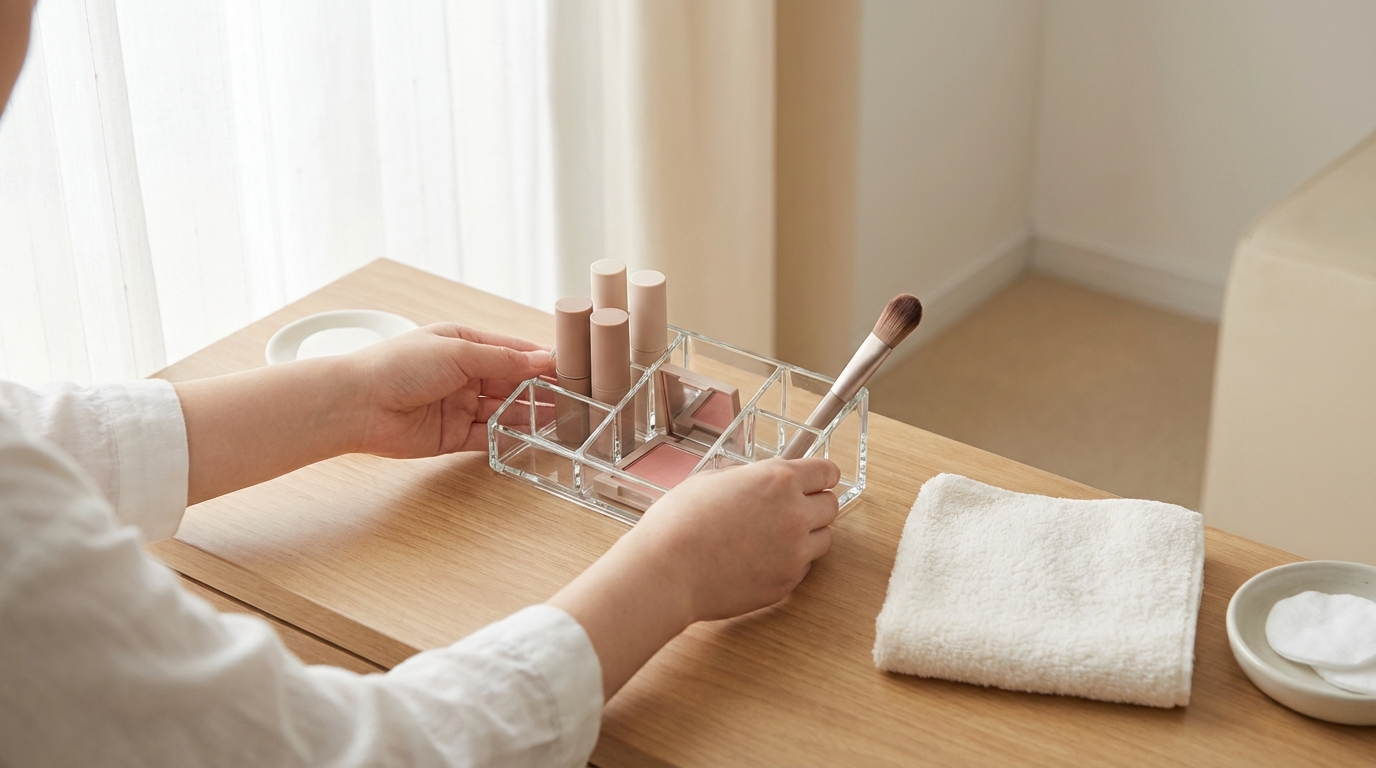
You open your makeup bag or drawer, and somehow it’s overflowing again. There are three nearly-empty mascaras, a foundation shade that hasn’t matched your skin in two years, and a lipstick you bought because it looked amazing on someone else. Sound familiar? Learning how to declutter your makeup collection doesn’t require a full weekend or a degree in organization. It just takes a simple system and a bit of honesty about what you actually use.
By the end of this guide, you’ll know exactly how to sort through your products, decide what stays and what goes, and set up a system that keeps the clutter from creeping back. The goal isn’t a minimalist vanity with five products—it’s a collection that works for your real life.
Quick Steps to Declutter Your Makeup
- Empty everything out so you can see what you actually own
- Check expiration dates and toss anything past its prime
- Sort into keep, toss, and maybe piles
- Be honest about duplicates and “someday” products
- Organize what remains by category or frequency of use
- Set a quick maintenance habit to prevent future buildup
What You’ll Need
- A clean, flat surface (your bed, desk, or bathroom counter)
- A trash bag or bin for expired and unusable items
- A small box or bag for products to give away
- Rubbing alcohol and cotton pads for sanitizing keepers
- Storage containers, a makeup bag, or drawer dividers (optional but helpful)
- Good lighting so you can actually see product conditions
The Step-by-Step Decluttering Process
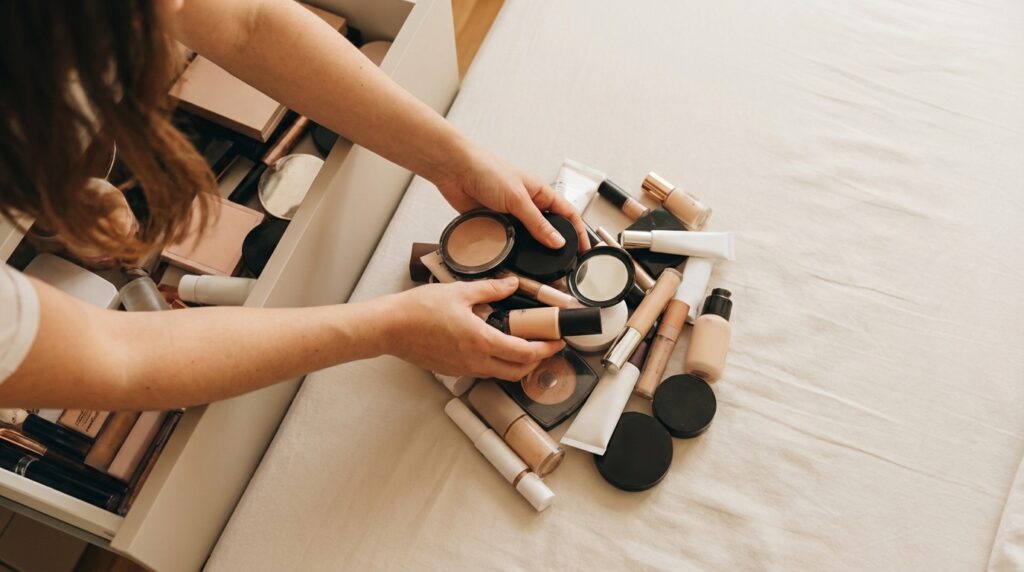
Step 1: Pull everything out. Yes, everything. That includes the random lipstick in your purse, the eyeshadow palette shoved in a drawer, and the samples you grabbed at the store six months ago. Pile it all in one spot. This part feels chaotic, but it’s essential. Most people underestimate how much makeup they own until they see it all together. If you’re thinking “this is a lot,” you’re not alone.
Step 2: Check expiration dates and product condition. Makeup doesn’t last forever, even if it looks fine. Mascara and liquid eyeliner typically need replacing every three to six months. Liquid foundations and concealers last about a year. Powder products like eyeshadow and blush can go longer—up to two years if stored properly. Look for the small jar symbol on packaging with a number inside (like 12M for 12 months). If you can’t remember when you bought something and it smells off, has changed texture, or separated, it’s time to let it go.
Step 3: Create three piles—keep, toss, and maybe. The keep pile is for products you use regularly and genuinely enjoy. The toss pile is for anything expired, broken, or in bad condition. The maybe pile is for things you’re unsure about. Be careful with that maybe pile—it’s where clutter hides. A good rule: if you haven’t reached for it in six months and it’s not a special-occasion product, it probably belongs in the toss or donate pile.
Step 4: Deal with duplicates honestly. Three nude lipsticks that look almost identical? You probably have a favorite. Keep that one. Two foundations in the same shade? Keep the formula you prefer. Duplicates happen because we forget what we own or we’re chasing a slightly better version of something we already have. Letting go of extras doesn’t mean you failed—it means you’re making space for what actually works.
Step 5: Address the “someday” products. These are the bold lip colors you bought for a future version of yourself, the glitter eyeshadow for parties you never attend, or the trendy product that looked great on a influencer. If you’ve owned something for over a year and never worn it outside your bathroom, ask yourself why. Sometimes the answer is “it’s just not me,” and that’s okay. Unused products in good condition can often be given to friends or donated to organizations that accept sealed cosmetics.
Step 6: Sanitize and organize what remains. Wipe down compacts, palettes, and product exteriors with a cotton pad dampened with rubbing alcohol. Sharpen pencils to remove the outer layer. For items you’re keeping, group them by category—lips together, eyes together, face products together. You can also organize by how often you use them: daily essentials in an accessible spot, occasional products stored separately.
Shortcut If You’re Short on Time
- Focus on one category only (just lip products or just eye products)
- Do a quick “expired items only” sweep—takes ten minutes
- Use the “would I buy this again today?” test for fast decisions
- Set a timer for 20 minutes and stop when it goes off—progress beats perfection
- Tackle your everyday makeup bag first since that’s what you actually use
Common Mistakes When Decluttering Makeup
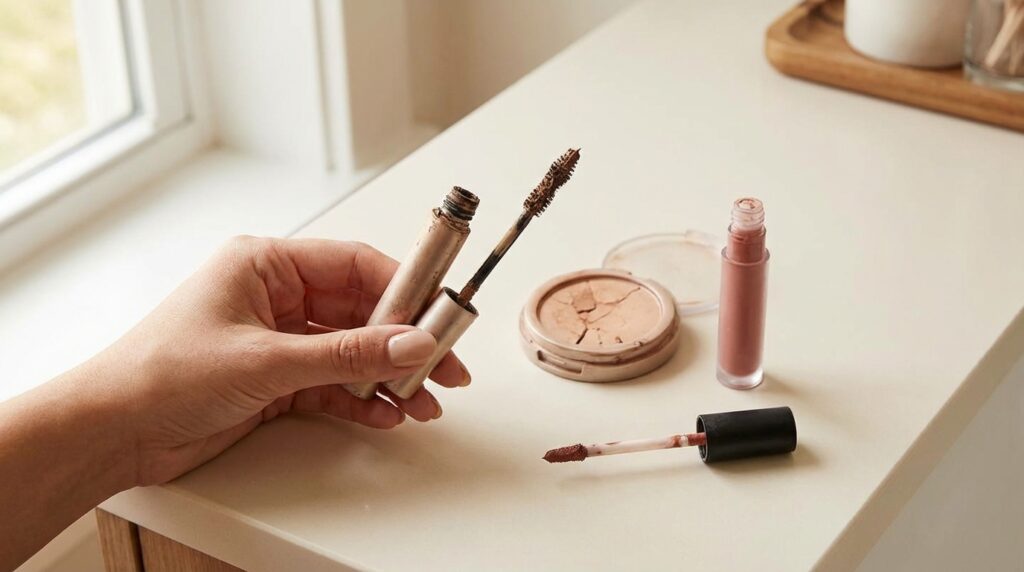
A common issue is keeping products out of guilt. Maybe it was expensive, or a gift, or you only used it twice. Guilt doesn’t make a product work better for you. If it’s sitting untouched, it’s just taking up space and making your collection harder to navigate.
- Keeping dried-out products “just in case” — dried mascara won’t magically rehydrate, and old products can irritate your skin or eyes
- Organizing before decluttering — buying cute containers for a bloated collection just makes organized clutter
- Being too aggressive — if you toss everything and regret it, you’ll just rebuy; be thoughtful, not ruthless
- Ignoring samples and minis — these pile up fast and often expire before you get to them
- Skipping the “maybe” pile review — set a reminder to revisit it in two weeks; if you didn’t miss anything, let it go
How to Keep Your Collection Under Control
Decluttering once feels great, but the real win is not ending up back at square one in six months. A few small habits make a big difference.
Try the “one in, one out” approach. When you buy something new, let go of something similar. This keeps your collection from growing endlessly. It also makes you think twice before impulse purchases—do you really need another rosy nude blush?
Store products where you can see them. Makeup shoved in a deep drawer or opaque bag gets forgotten. Clear containers, open trays, or shallow drawers help you remember what you own. When you can see your collection at a glance, you’re less likely to buy duplicates.
Do a quick five-minute check every few months. Toss anything that’s expired or gone off, and notice what you haven’t touched. This prevents the big overwhelming declutter sessions because you’re handling things in small doses.
Frequently Asked Questions
How do I know if makeup is expired if there’s no date?
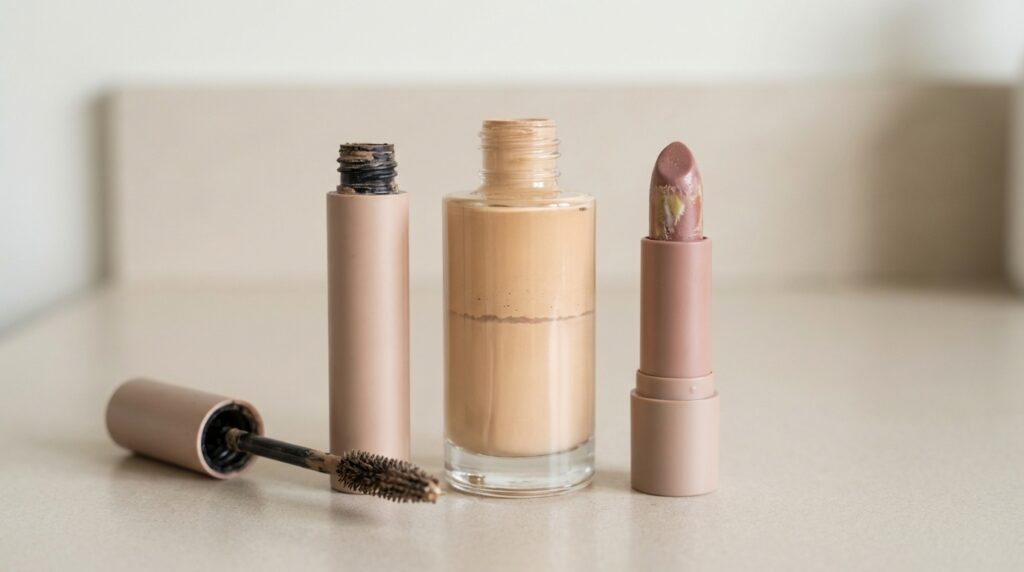
Look for changes in smell, texture, or color. Foundations that have separated, mascaras that smell off, or lipsticks with a waxy film are past their prime. When in doubt, especially with eye products, it’s safer to replace them. Eye infections from old mascara aren’t worth the risk.
Can I donate used makeup?
Most donation centers only accept sealed, unused products for hygiene reasons. Lightly used items in good condition can sometimes go to friends or family who want them. Some organizations accept gently used cosmetics for specific programs—check local guidelines. Anything expired or in poor condition should be discarded.
What if I declutter and regret getting rid of something?
This happens occasionally, and it’s usually not as bad as it feels. If you genuinely miss a product, you can replace it. But most people find they don’t actually miss the things they let go—they just worried they would. Start with obvious tosses (expired, broken, wrong shade) and be more cautious with items you’re unsure about.
How often should I declutter my makeup collection?
A thorough declutter once or twice a year works well for most people. If you buy makeup frequently, a quick check every season helps. The goal is catching expired products before they become a problem and staying aware of what you actually own.
Summary and Next Step
Decluttering your makeup collection comes down to a few straightforward actions: see everything you own, remove what’s expired or unused, and organize what’s left in a way that makes sense for your routine. The process doesn’t need to be dramatic or take all day. Even a focused 30-minute session makes a noticeable difference.
Your next step? Pick one spot—your everyday makeup bag, your bathroom drawer, or that one shelf—and start there. Pull everything out, check dates, and be honest about what you actually reach for. A smaller, curated collection isn’t about restriction. It’s about making your morning routine easier and actually enjoying the products you have.