
You’ve probably walked past the hair care aisle a hundred times, grabbed a conditioner, and wondered if there’s a way to get salon-style results without the salon price tag. Good news: budget-friendly hair masks using store-bought products are not only possible but surprisingly effective when you know what to look for and how to use them properly. This post covers which affordable products work well as masks, how to apply them for maximum benefit, and a few clever combinations that can address common hair concerns like dryness, frizz, and dullness.
The trick isn’t finding some magical high-end formula. It’s about using what’s already available at your local drugstore or supermarket in smarter ways. Let’s get into it.
Quick Routine Overview
- Choose a base product: deep conditioner, hair treatment sachet, or a thick regular conditioner
- Apply to damp, towel-dried hair from mid-lengths to ends
- Leave on for 10–30 minutes (longer isn’t always better)
- Rinse with cool or lukewarm water
- Use once a week for most hair types, twice for very dry or damaged hair
What You’ll Need
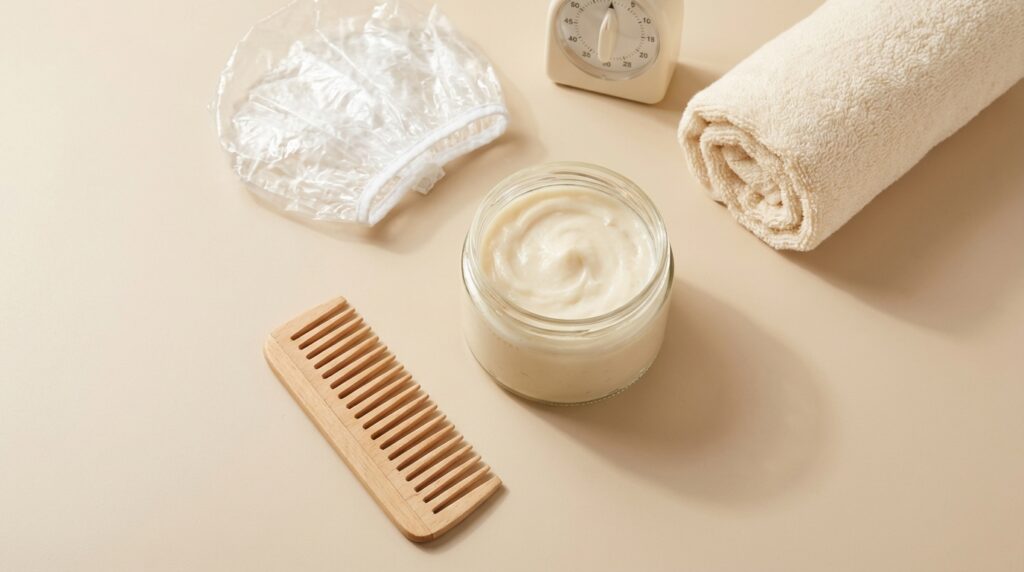
The beauty of store-bought hair masks is that you don’t need a cabinet full of specialty items. Here’s a basic list to get started:
- A deep conditioning product or thick conditioner (look for terms like “intensive,” “repair,” or “moisture”)
- A wide-tooth comb for even distribution
- A shower cap or plastic wrap (optional but helpful for heat retention)
- A clean towel
- A timer or your phone
That’s it. No fancy tools, no expensive gadgets. If you want to boost your mask’s effectiveness, a warm towel wrapped around your head can help the product penetrate better, but it’s not required.
How to Apply a Store-Bought Hair Mask Properly
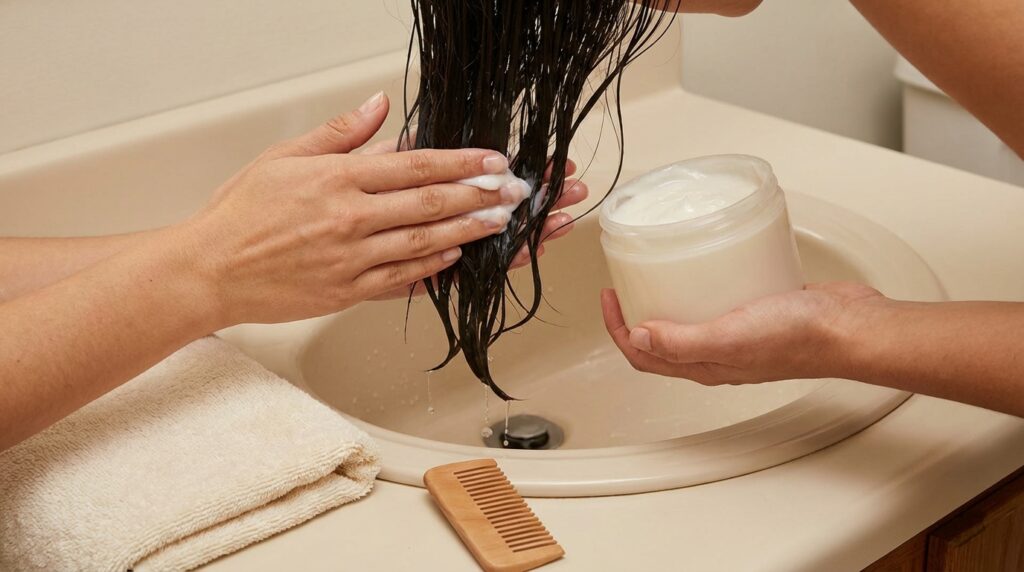
Step 1: Start with clean, damp hair. Shampoo first to remove buildup, then gently squeeze out excess water with a towel. Your hair should be wet but not dripping. This helps the mask absorb without getting diluted.
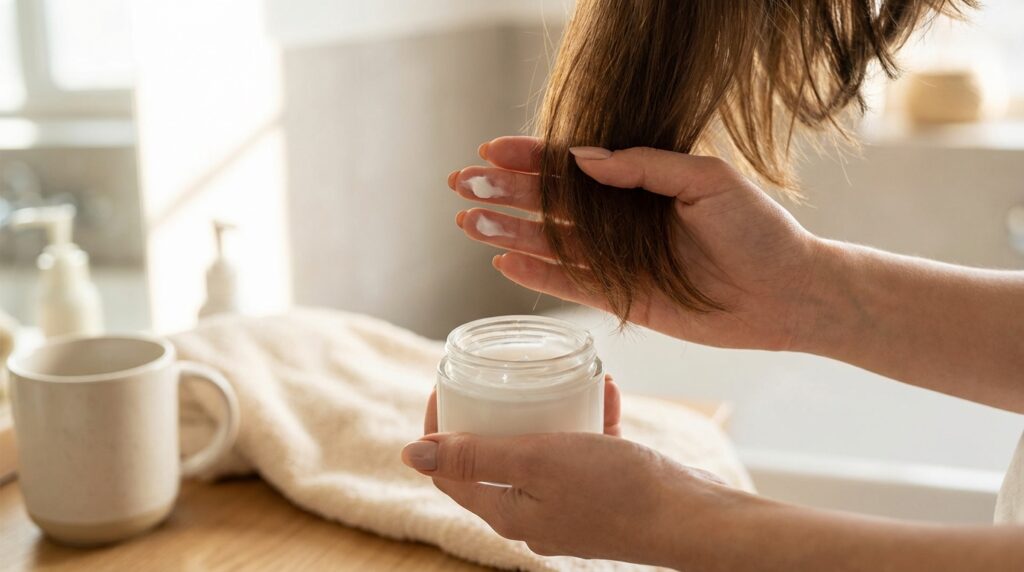
Step 2: Scoop out a generous amount of product. For shoulder-length hair, think about a tablespoon or two. Longer or thicker hair needs more. A common mistake is being too stingy here—if your hair isn’t fully coated, you won’t see much difference.
Step 3: Apply from mid-lengths to ends first. This is where hair is oldest and most damaged. Work the product through with your fingers, then use a wide-tooth comb to distribute evenly. If your scalp tends to be dry (not oily), you can apply a small amount to your roots, but most people should skip this area.
Step 4: Let it sit. Most store-bought masks work well in 10–20 minutes. If the packaging says 5 minutes, you can usually leave it a bit longer without issues. Covering your hair with a shower cap traps body heat and can improve absorption.
Step 5: Rinse thoroughly with cool or lukewarm water. Hot water can strip away the conditioning benefits you just added. Make sure no product residue remains, especially near the scalp, to avoid greasiness.
Shortcut If You’re Short on Time
- Apply the mask before your shower routine, then do everything else (shave, wash your face, etc.) while it sits
- Use a leave-in conditioning spray on dry hair between wash days instead of a full mask
- Keep single-use sachet masks on hand—they’re often under two dollars and perfect for quick treatments
- Apply mask to dry hair before shampooing for a “pre-poo” treatment that protects strands during washing
Choosing the Right Product for Your Hair Type
Not every budget-friendly mask works for every hair type. Here’s how to narrow down your options without getting overwhelmed in the store.
For Dry or Damaged Hair
Look for products with ingredients like shea butter, argan oil, coconut oil, or keratin. These tend to be thicker and more emollient. Avoid anything labeled “volumizing” or “clarifying”—those are designed to remove buildup, not add moisture.
A practical tip: if a conditioner is so thick it barely pours out of the bottle, it probably works well as a mask. You can use a regular deep conditioner and simply leave it on longer than the instructions suggest.
For Fine or Oily Hair
Heavy masks can weigh down fine hair and make oily scalps worse. Look for lightweight formulas, often labeled “weightless,” “light,” or “for fine hair.” Protein-based treatments can help strengthen without adding heaviness, but don’t overdo them—too much protein makes hair brittle.
If you’re running late and worried about greasiness, apply the mask only to your ends and skip everything above ear level.
For Frizzy or Curly Hair
Frizz usually signals that hair needs moisture. Thick, creamy masks with humectants like glycerin or honey work well. Many people with curly hair find that leaving a small amount of conditioner in (not fully rinsing) helps define curls and reduce frizz throughout the week.
Common Mistakes to Avoid
Even with simple products, there are a few ways things can go sideways. Here’s what to watch for:
- Using too little product: If you can’t feel the mask coating your strands, add more. Thin application equals thin results.
- Applying to soaking wet hair: Water dilutes the formula. Towel-dry first.
- Leaving it on overnight: Unless the product specifically says it’s safe for overnight use, don’t do this. Over-conditioning can make hair limp, mushy, or prone to breakage.
- Skipping the rinse: Residue buildup leads to dull, heavy hair. Rinse until your hair feels slippery but not coated.
- Masking too often: Once or twice a week is plenty for most people. Daily masking can actually backfire.
Budget-Friendly Combinations That Work
Sometimes layering or mixing affordable products creates better results than using one expensive treatment. Here are a few approaches that tend to work well:
The Double Conditioning Method
Apply a lightweight conditioner first, rinse, then follow with a thicker mask. This works well for very dry hair that seems to “drink up” product without showing results. The first layer preps the hair shaft, and the second layer seals in moisture.
The Oil Pre-Treatment
Apply a small amount of a basic hair oil (like coconut or olive oil from your kitchen) to dry hair 20 minutes before washing. Then shampoo and use your regular conditioner or mask. This protects hair from the stripping effects of shampoo and adds extra softness.
The Protein-Moisture Balance
If your hair feels gummy or overly soft, it might need protein. If it feels straw-like and snaps easily, it needs moisture. Alternating between a protein-based treatment one week and a moisture-focused mask the next can help maintain balance without overdoing either.
Frequently Asked Questions
Can I use regular conditioner as a hair mask?
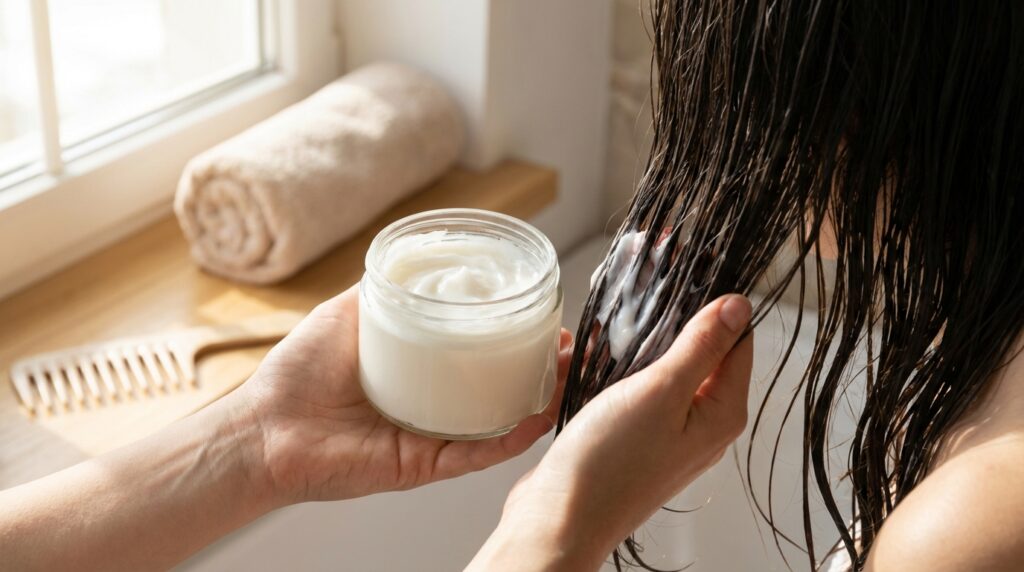
Yes, especially if it’s a thick, creamy formula. The main difference between conditioners and masks is concentration and recommended leave-on time. A regular conditioner left on for 15–20 minutes can work similarly to a dedicated mask, though results may be milder.
How do I know if a product is too heavy for my hair?
If your hair looks greasy, flat, or limp after drying—even though you rinsed well—the product is probably too heavy. Switch to a lighter formula or use less product next time.
Are expensive hair masks worth it?
Not necessarily. Many drugstore options contain similar active ingredients to high-end versions. The difference is often in fragrance, packaging, and marketing. If a budget product works for your hair, there’s no need to upgrade.
Should I use heat with my hair mask?
Gentle heat can help products absorb better, but it’s not required. A warm towel or shower cap is enough. Avoid using a blow dryer directly on product-coated hair, as this can cause uneven drying or damage.
Summary and Next Step
Budget-friendly hair masks using store-bought products are a practical way to improve your hair’s condition without spending a fortune. The key points: choose a product suited to your hair type, apply generously to damp hair, leave it on for at least 10 minutes, and rinse thoroughly. Avoid common pitfalls like over-conditioning or using products that are too heavy.
Your next step is simple: check what you already have in your bathroom. That thick conditioner you bought on sale might be all you need for your first at-home mask session this week. Start there, pay attention to how your hair responds, and adjust from there.