
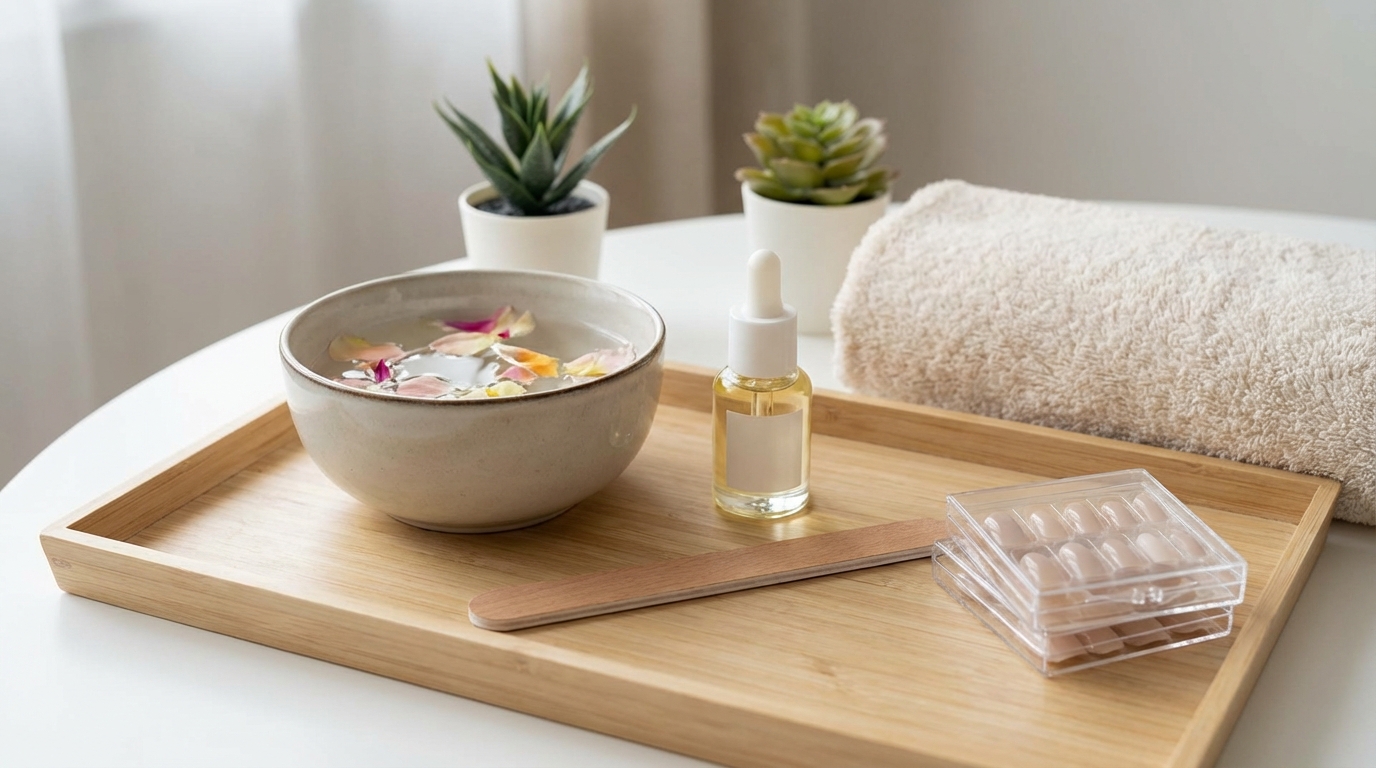
You finally have a free Saturday with no plans, no obligations, and nowhere to be. Instead of feeling relieved, there’s this nagging voice suggesting you should be doing something more “productive” or social. Sound familiar? Self-care ideas for introverts often get overlooked because so much wellness advice assumes you want to be out in the world—at a spa, in a fitness class, or brunching with friends. But if your idea of recharging involves your couch, a closed door, and zero small talk, you’re in the right place.
This post covers practical, low-effort ways to take care of yourself without leaving your home or pretending to be someone you’re not. You’ll find ideas that actually restore your energy, a few common traps to avoid, and permission to enjoy your own company guilt-free.
Quick Ideas to Start Today
- Create a “no phone” hour with a book, puzzle, or journaling
- Take a long shower or bath with the lights dimmed
- Rearrange one small corner of your space to feel fresh
- Cook a meal you actually want to eat, not just what’s fast
- Queue up a comfort show and watch it without multitasking
- Sit outside (balcony, porch, backyard) for 10 minutes with a warm drink
Why Introverts Need Different Self-Care

Most mainstream self-care content leans heavily toward social activities or experiences that require leaving the house. Spa days, group yoga, weekend getaways—these can be wonderful, but they’re not universally restorative. For introverts, being around people (even in relaxing settings) can drain energy rather than replenish it.
The key difference is where you draw energy from. If solitude feels like a relief rather than loneliness, your self-care routine should reflect that. There’s nothing wrong with you for preferring a quiet evening at home over a night out. The goal is to stop forcing yourself into activities that look like self-care but feel like obligations.
A common mistake is treating alone time as “doing nothing” and then filling it with scrolling or passive consumption that doesn’t actually recharge you. Intentional solitude is different from just being alone by default. The ideas below focus on that distinction.
Low-Energy Self-Care for Quiet Days
Sensory comfort without leaving your room
Sometimes the simplest self-care is making your immediate environment feel better. Change your sheets, light a candle, open a window for fresh air, or put on clothes that feel soft against your skin. These tiny adjustments signal to your brain that you’re allowed to relax.
If you’re someone who gets overstimulated easily, consider a “sensory reset.” Turn off overhead lights, put your phone in another room, and sit in relative quiet for 15-20 minutes. No meditation app required—just stillness. Most people notice they feel calmer after even a short break from constant input.
Reading, watching, and listening with intention
There’s a difference between mindlessly scrolling through streaming options for an hour and actually watching something you chose on purpose. Pick one book, one show, or one album and commit to it without checking your phone. This sounds basic, but fragmented attention is exhausting, and giving yourself permission to be fully absorbed in something is genuinely restorative.
If you’re running low on energy, audiobooks and podcasts work well because you can close your eyes or do something gentle with your hands (like folding laundry or stretching) while you listen. The key is choosing content that feels like a treat, not homework.
Creative and Hands-On Ideas
Making things without pressure
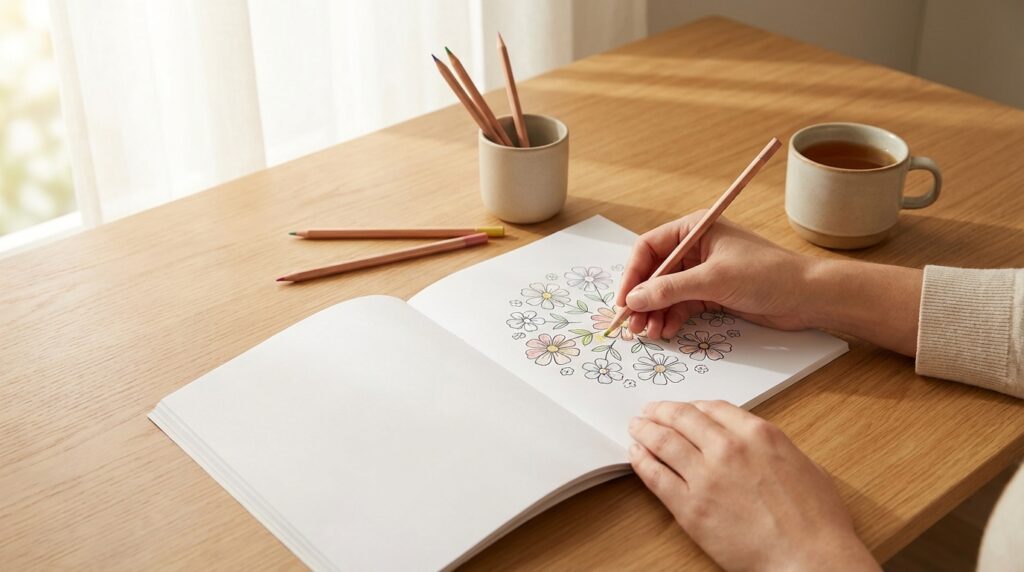
Creative hobbies get a bad reputation because people assume they need to be good at them. You don’t. Doodling, journaling, baking, knitting, arranging flowers from the grocery store, building something with your hands—these activities work because they occupy your mind in a gentle way. The goal isn’t a finished product. It’s the process itself.
If you haven’t done anything creative in a while, start embarrassingly small. Color in a coloring book. Write three sentences about your day. Make a playlist. The bar is on the floor, and that’s the point.
Cooking or baking as a solo ritual
Preparing food can feel like a chore or a form of self-care depending on your mindset. The difference usually comes down to whether you’re rushing or taking your time. On a day when you have space, pick a recipe that sounds appealing (not impressive, just appealing) and make it slowly. Put on music. Taste as you go. Eat without standing over the sink.
A common trap here is overcomplicating things. You don’t need a three-course meal to count as self-care. A really good grilled cheese made with attention counts. So does a smoothie you actually enjoy instead of one you’re choking down because it’s “healthy.”
Movement That Doesn’t Require Leaving Home
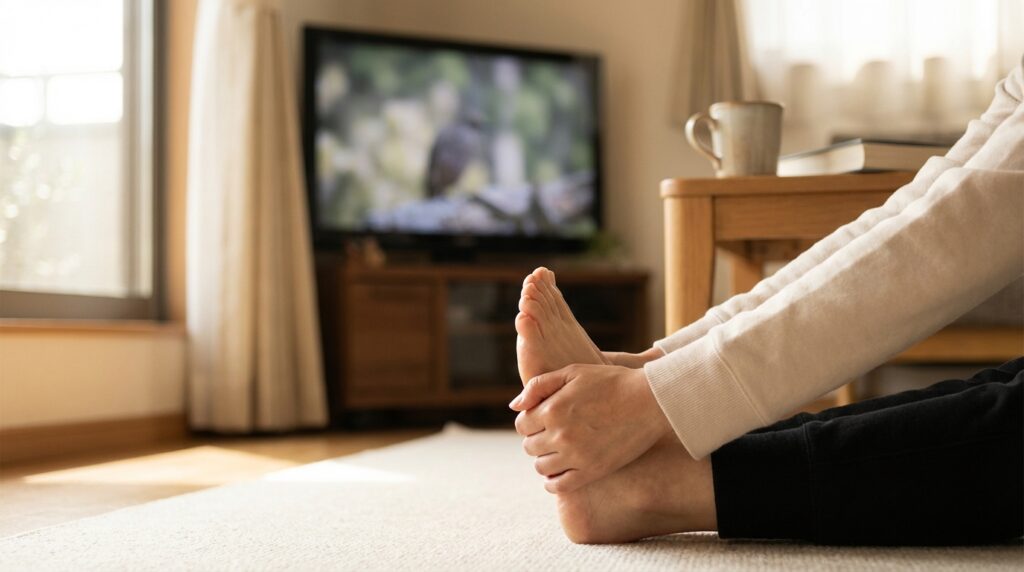
Exercise advice often assumes you want to go somewhere—a gym, a class, a running trail. But movement at home can be just as effective and far more sustainable for people who find public exercise draining.
Stretching is underrated. Ten minutes of gentle stretching while watching TV or listening to a podcast can release tension you didn’t realize you were holding. Yoga videos work well if you enjoy them, but even just lying on the floor and moving however feels good counts.
Dancing alone in your kitchen is free, requires no equipment, and is surprisingly effective at shifting your mood. Close the blinds if you’re self-conscious. No one is watching, and that’s the beauty of it.
Shortcut if you’re short on time
- Set a timer for 5 minutes and stretch whatever feels tight
- Do a “body scan” lying down—just notice where you’re holding tension
- Walk around your home slowly and intentionally for 2-3 minutes
- Shake out your hands and roll your shoulders between tasks
Common Mistakes Introverts Make with Self-Care
- Confusing isolation with restoration: Alone time is healthy, but completely withdrawing for days can tip into avoidance. Check in with yourself about whether solitude is helping or hiding.
- Filling quiet time with noise: Background TV, endless podcasts, constant music—sometimes silence is what you actually need.
- Feeling guilty for staying in: If your social battery is empty, forcing yourself out won’t help. Rest is productive.
- Waiting for the “perfect” time: You don’t need a full free day to practice self-care. Fifteen minutes counts.
- Comparing your rest to someone else’s: Your extroverted friend might recharge at a party. You might recharge in a bath. Both are valid.
Frequently Asked Questions
Is it okay to spend most of my free time alone?
Yes, as long as it feels restorative rather than like avoidance. Introverts genuinely need solitude to recharge, and there’s nothing unhealthy about preferring your own company. If you notice you’re isolating because of anxiety or low mood rather than preference, that’s worth paying attention to.
How do I explain my need for alone time to others?

Keep it simple and confident. Something like “I recharge better on my own” or “I need some quiet time this weekend” is enough. You don’t owe anyone a detailed explanation for taking care of yourself.
What if I feel guilty for not being more social?
Guilt often comes from comparing yourself to extroverted norms. Remind yourself that rest looks different for everyone. You’re not being antisocial—you’re being realistic about what you need.
Can self-care at home become too much of a comfort zone?
It can, if you’re using it to avoid things that matter to you. The test is whether your alone time leaves you feeling restored or stuck. If you’re avoiding life rather than recharging for it, consider small steps back into connection.
Summary and Next Step
Self-care for introverts doesn’t need to look like anyone else’s version. The best routine is one that actually restores your energy—whether that’s a quiet morning with coffee, an afternoon of reading, or an evening spent cooking something you love. The ideas here are starting points, not prescriptions. Pick what resonates and ignore what doesn’t.
Your next step is small: choose one thing from this list and do it this week. Not perfectly, not for hours—just once, with intention. That’s enough to start building a self-care practice that fits who you actually are.