
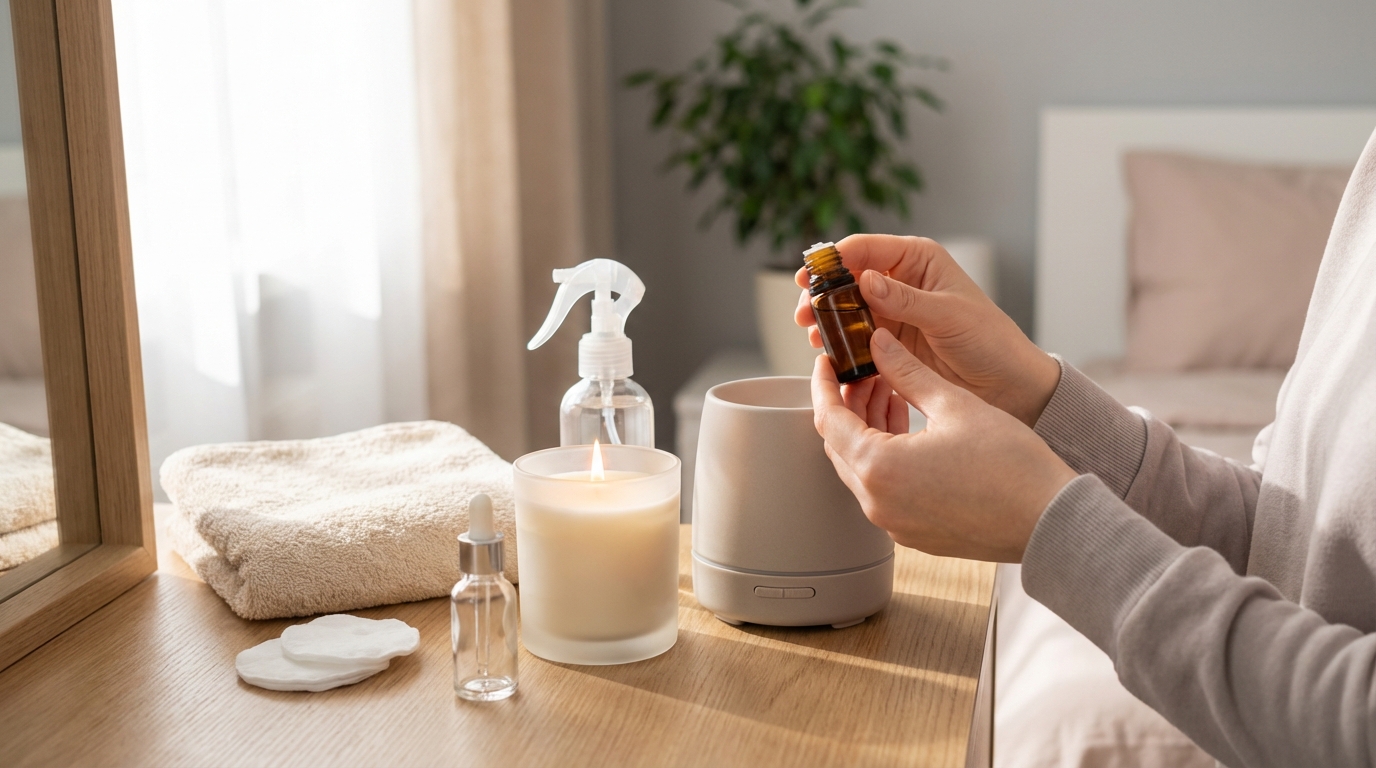
The front door closes, the bag drops, and the day’s chaos is still buzzing in your head. Then a familiar scent hits—maybe lavender, maybe something woodsy—and your shoulders drop half an inch. That tiny shift? It’s not imaginary. Learning how to use scent in your self-care routine can turn an ordinary evening into genuine decompression time, without spending a fortune or overhauling your schedule.
Candles, room sprays, and essential oils each have their strengths. The trick is matching the right format to your lifestyle, your space, and the mood you’re chasing. Below is a practical breakdown—no incense-waving rituals required.
Why Scent Actually Affects Your Mood
Smell is the only sense that travels directly to the brain’s limbic system, the region tied to emotion and memory. That’s why a whiff of sunscreen can teleport you to a beach vacation, or why certain perfumes remind you of specific people.
For self-care purposes, this means scent can act as a shortcut. Instead of waiting 20 minutes for a bath to relax you, a familiar calming aroma can signal your brain: wind-down time starts now. It’s not magic—it’s conditioning. The more consistently you pair a scent with relaxation, the faster your nervous system gets the memo.
Counter-Intuitive Insight: Stronger isn’t better. Overpowering fragrance can trigger headaches or sensory fatigue, which defeats the purpose entirely. A subtle, consistent scent works harder than a room that smells like a candle store exploded.
Candles vs. Sprays vs. Oils—Quick Comparison
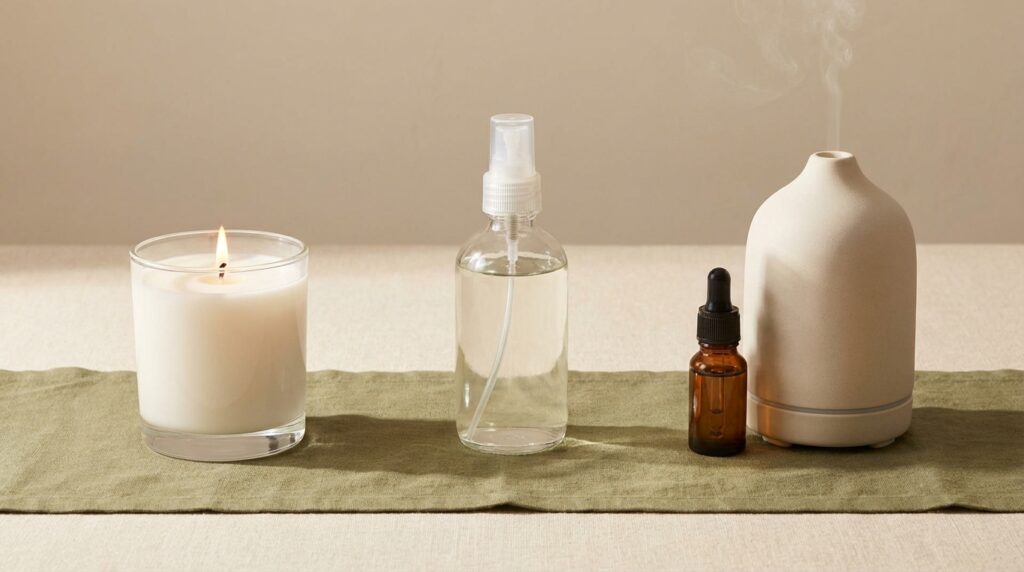
Each format has trade-offs. Here’s a realistic look:
| Format | Best For | Drawbacks | Cost Per Use |
|---|---|---|---|
| Candles | Ambiance, longer sessions (baths, reading) | Fire hazard, soot, requires supervision | $0.30–$0.80/hour |
| Room Sprays | Instant refresh, small spaces, on-the-go | Scent fades in 30–60 min, can contain alcohol | $0.10–$0.25/spray |
| Essential Oils (diffuser) | Continuous scent, customizable blends | Upfront diffuser cost, some oils irritate pets | $0.05–$0.15/session |
Who should pick what:
- Candles: Great if you enjoy the visual flicker and have 30+ minutes to unwind. Skip if you have curious pets or small children.
- Room Sprays: Perfect for renters who can’t burn candles, or anyone who wants a quick mood reset between tasks.
- Essential Oils: Best for regular users who want control over intensity and scent combinations. The diffuser pays for itself after a few months of use.
How to Build Scent Into Your Self-Care Routine
The goal isn’t to add another task—it’s to layer scent into habits you already have. Here’s a step-by-step approach:
What You’ll Need
- One scent format (candle, spray, or oil + diffuser)
- 1–2 scents maximum to start (one calming, one energizing)
- A designated “me time” spot (bedroom corner, bathroom, reading chair)
- Optional: a small tray or dish to keep supplies organized
Steps to Get Started
- Pick your anchor moment. Choose one existing routine—morning coffee, post-work decompression, or bedtime skincare. This becomes your scent trigger.
- Match scent to intention. Calming scents (lavender, chamomile, sandalwood) work for evening wind-down. Citrus or peppermint suit morning energy boosts.
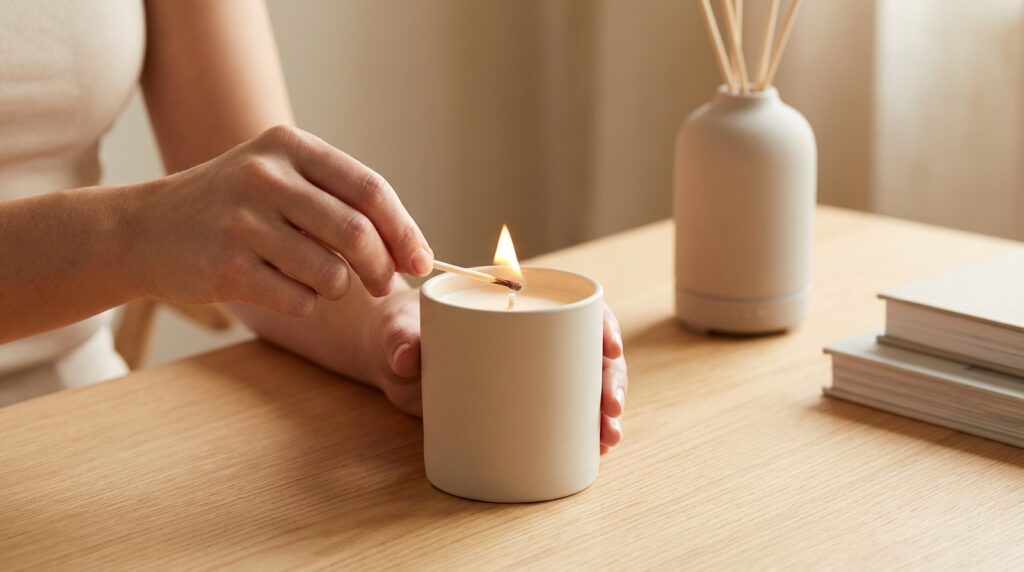
- Start the scent before the activity. Light the candle or turn on the diffuser 5–10 minutes before you sit down. This lets the fragrance build without overwhelming.
- Keep it consistent for two weeks. Your brain needs repetition to form the association. Switching scents constantly weakens the conditioning effect.
- Adjust intensity. If you stop noticing the scent after 15 minutes, that’s normal (olfactory fatigue). Don’t add more—your brain is still registering it subconsciously.
Smart Tip: Store essential oils away from direct sunlight and heat. Oxidized oils lose potency and can irritate skin if used topically. A cool, dark drawer extends shelf life by 6–12 months.
Expected Result
Within two weeks of consistent use, most people notice faster mental transitions into relaxation mode. The scent becomes a cue—similar to how putting on workout clothes can mentally prep you for exercise. Don’t expect instant zen; expect a gentler on-ramp to calm.
Room-by-Room Scent Ideas
Different spaces call for different approaches:
Bathroom (bath or shower time): Eucalyptus oil in a diffuser or a few drops on the shower floor creates a spa-like steam effect. Candles work well here too, but keep them away from water splash zones.
Bedroom (sleep prep): Lavender or cedarwood in a diffuser set on a timer. Avoid candles if you tend to fall asleep quickly—never leave flames unattended.
Living room (evening unwind): A mid-sized candle or reed diffuser provides steady background scent without constant attention. Vanilla, amber, or light florals feel cozy without being overpowering.
Home office (focus breaks): A quick spritz of citrus or rosemary spray between tasks can reset mental energy. Keep the bottle in a desk drawer for easy access.
Common Mistakes That Sabotage the Experience
Even simple routines can go sideways. Watch for these:
- Too many scents at once. Layering candle + spray + diffuser creates sensory chaos. Stick to one source per room.
- Ignoring allergies or sensitivities. Some essential oils (like tea tree or cinnamon) can irritate airways or skin. Always do a patch test before applying oils topically, and ventilate rooms if anyone in the household has respiratory issues.
- Burning candles in short bursts. Candles need to burn long enough for the entire top layer to melt (usually 1–2 hours). Otherwise, you get tunneling—wasted wax around the edges.
- Using synthetic fragrances expecting aromatherapy benefits. Cheap candles with artificial scents smell nice but don’t offer the same limbic-system response as pure essential oils. If relaxation is the goal, check ingredient labels.
Budget-Friendly Ways to Experiment
No need to invest heavily upfront:
- DIY room spray: Mix 10–15 drops of essential oil with 1 cup of water and 1 tablespoon of witch hazel in a spray bottle. Total cost: under $3 for dozens of uses.
- Cotton ball hack: Add 2–3 drops of essential oil to a cotton ball and tuck it inside a pillowcase or dresser drawer. Subtle, long-lasting, zero equipment needed.
- Candle sample sets: Many brands sell mini candles or sampler packs. Test scents before committing to full-size versions.
Safety note: If using essential oils on skin (like adding to a bath), always dilute with a carrier oil first. Undiluted oils can cause irritation or burns, especially citrus varieties.
Frequently Asked Questions
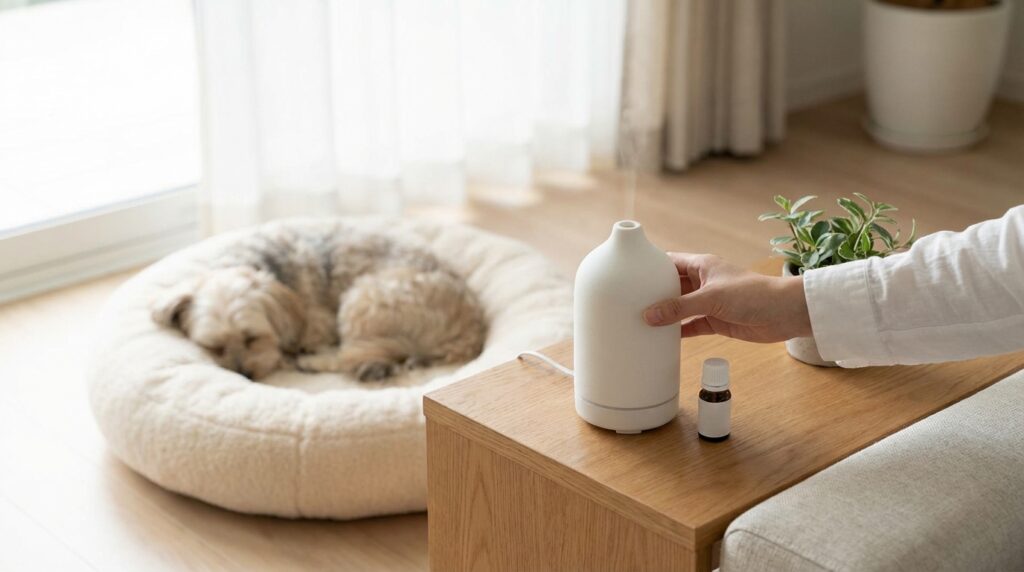
Can I use scented products around pets?
Some essential oils are toxic to cats and dogs—tea tree, peppermint, and citrus oils are common culprits. Diffuse in well-ventilated areas and ensure pets can leave the room. When in doubt, consult a vet.
How long should I run a diffuser?
30–60 minutes is usually enough. Most diffusers have auto-shutoff features. Running one continuously can lead to scent fatigue and wasted oil.
Do expensive candles work better than cheap ones?
Not always, but quality matters. Soy or beeswax candles burn cleaner than paraffin. The real difference is in the fragrance oil concentration—cheap candles often skimp here, resulting in weak scent throw.
Can scent actually help with sleep?
Studies suggest lavender may improve sleep quality for some people, but it’s not a cure for insomnia. Think of it as one tool in a larger sleep hygiene toolkit, not a standalone fix.
Wrapping Up
Using fragrance in self-care routines isn’t about transforming your home into a day spa. It’s about creating small, repeatable cues that help your brain shift gears. Pick one scent, one moment, and one format. Give it two weeks of consistency before judging results.
Check what you already have—maybe there’s a forgotten candle in a drawer or an essential oil sample from a gift set. Start there. The best self-care tools are the ones you’ll actually use.