
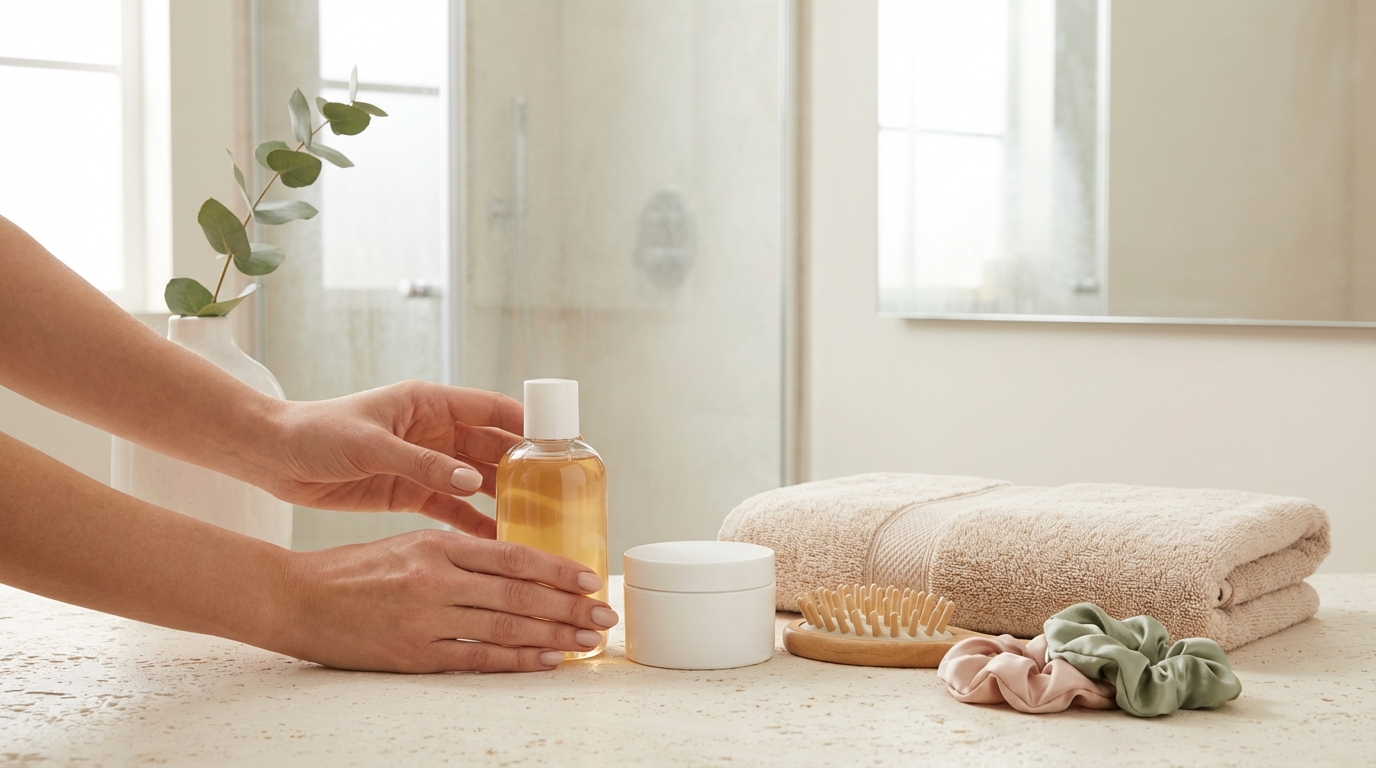
You wash your hair regularly, use decent products, and still something feels off. Maybe your strands look dull, feel weighed down, or your conditioner just doesn’t seem to absorb anymore. That buildup you can’t quite see? It’s real, and it’s probably why your hair has been acting strange. A monthly hair reset with a clarifying wash and deep conditioning routine can bring back bounce, shine, and that fresh-start feeling without overhauling your entire hair care approach.
This routine works for most hair types and takes about 30–45 minutes once a month. You’ll learn how to strip away product residue properly, restore moisture without making hair greasy, and keep your scalp balanced between resets. No fancy tools required—just the right technique and a bit of patience.
Quick Routine Overview
- Clarifying shampoo to remove buildup (1–2 washes)
- Rinse thoroughly with lukewarm water
- Apply deep conditioner from mid-lengths to ends
- Let it sit 10–20 minutes (with or without heat)
- Rinse with cool water to seal the cuticle
- Follow with a light leave-in if needed
What You’ll Need
- A clarifying shampoo (look for one without heavy silicones)
- A deep conditioning mask or treatment
- A wide-tooth comb or detangling brush
- A shower cap or plastic cap (optional, for heat trapping)
- A microfiber towel or old t-shirt for drying
- A lightweight leave-in conditioner (optional)
You don’t need to spend a fortune here. A basic clarifying shampoo from the drugstore works fine—just check that it’s actually clarifying and not a “daily gentle” formula labeled misleadingly. For the deep conditioner, anything marketed as a “mask” or “intensive treatment” will be richer than your regular conditioner.
Why Your Hair Needs a Monthly Reset
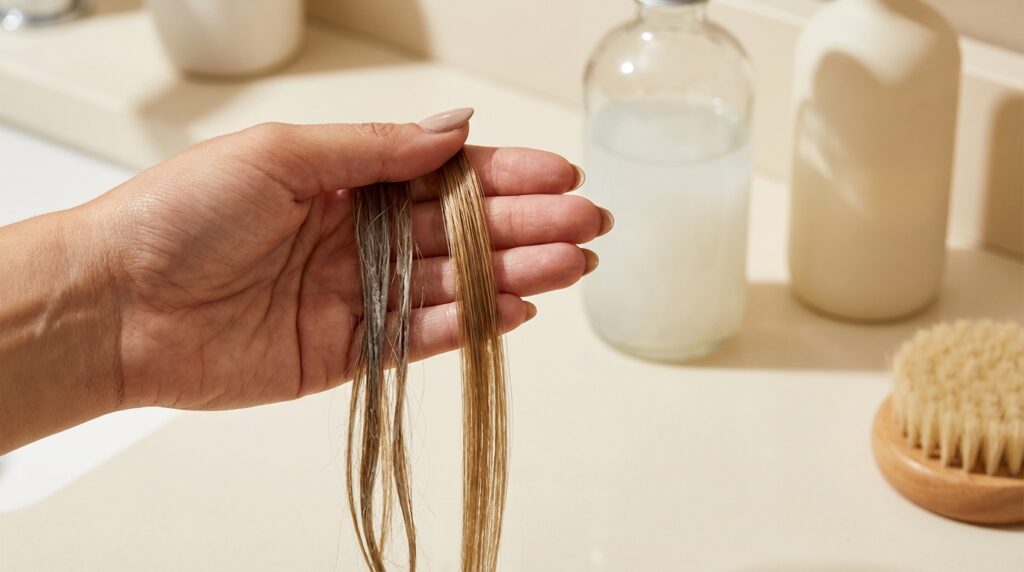
Even if you don’t use a lot of styling products, buildup happens. Dry shampoo, leave-ins, serums, hard water minerals, and even some conditioners leave residue that accumulates over weeks. Your regular shampoo isn’t designed to cut through all of that—it’s meant for everyday dirt and oil.
When buildup sits on your hair, a few things go wrong. Moisture can’t penetrate the strand properly, so your hair feels dry even after conditioning. Products stop working as well because they’re sitting on top of residue instead of your actual hair. Your scalp might feel itchy or flaky because it’s not getting properly cleansed either.
A clarifying wash strips all of that away. Think of it like a deep clean for your kitchen—you still wipe the counters daily, but every so often you need to scrub the corners and get rid of the grime that regular cleaning misses.
How Often Should You Clarify?
Once a month works for most people. If you use a lot of heavy styling products, dry shampoo daily, or have hard water, you might benefit from clarifying every two to three weeks. If your hair is color-treated, very dry, or naturally curly, stick to once a month or even every six weeks to avoid stripping too much moisture.
A common mistake is clarifying too often because it feels so satisfying. That squeaky-clean feeling is nice, but overdoing it leads to dry, brittle hair that’s harder to manage. The goal is balance, not constant stripping.
Step-by-Step Clarifying Wash and Deep Conditioning Routine
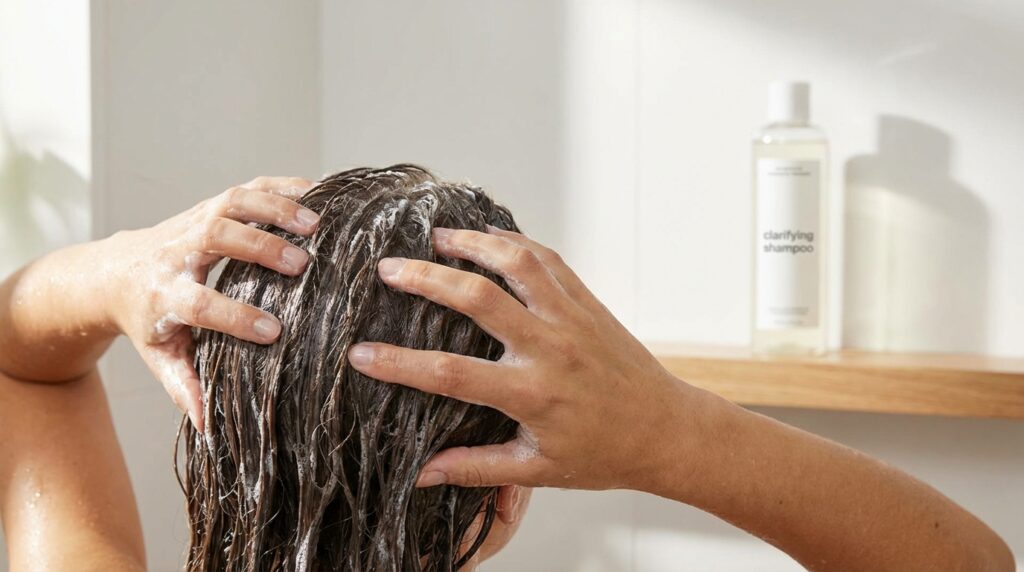
Step 1: Wet your hair thoroughly with lukewarm water. Hot water feels nice but opens the cuticle too aggressively and can dry out your scalp. Spend a full minute just letting water run through your hair to loosen surface dirt.
Step 2: Apply clarifying shampoo to your scalp first. Use about a quarter-sized amount for medium-length hair, more if your hair is very long or thick. Focus on massaging your scalp with your fingertips—not your nails—in small circular motions. The scalp is where most buildup lives.
Step 3: Work the lather down through your lengths, but don’t scrub aggressively. The shampoo running down your strands during rinsing will clean them enough. Scrubbing mid-lengths and ends can cause tangles and unnecessary friction.
Step 4: Rinse completely, then repeat the shampoo if your hair felt particularly coated. Most people notice the second wash lathers much better—that’s a sign the first round cut through the buildup.
Step 5: Gently squeeze out excess water. Your hair should feel almost squeaky at this point, which is normal after clarifying. This is exactly why the deep conditioning step matters so much.
Step 6: Apply a generous amount of deep conditioner from your mid-lengths to your ends. Avoid the roots unless your scalp is extremely dry—most people don’t need conditioner there, and it can make roots look greasy faster.
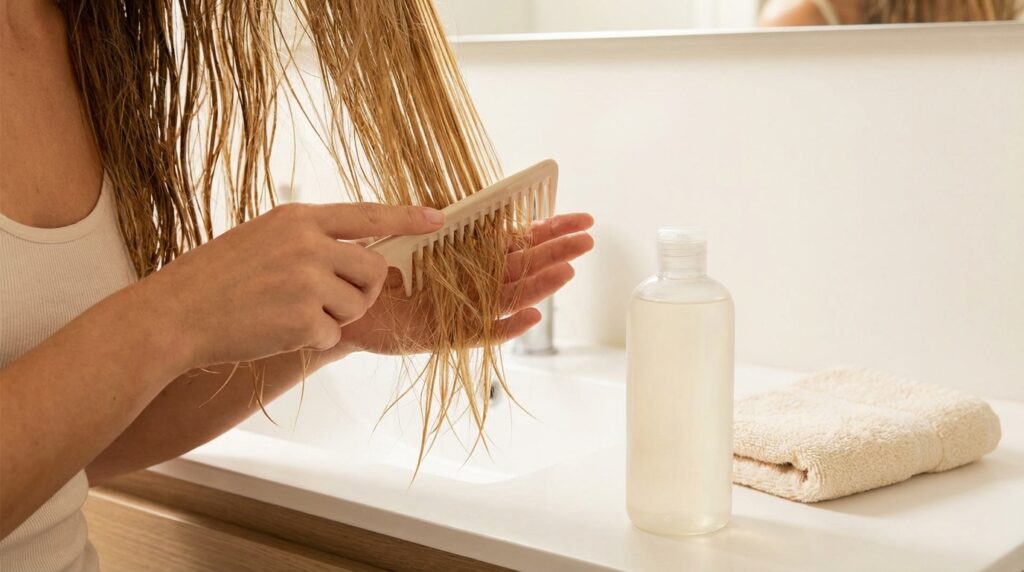
Step 7: Use a wide-tooth comb to distribute the product evenly. This also helps detangle while your hair is protected by the conditioner. Start from the ends and work your way up to avoid breakage.
Step 8: Let the conditioner sit for 10–20 minutes. If you want deeper penetration, cover your hair with a shower cap. Your body heat gets trapped underneath and helps the product absorb better. Some people sit under a hooded dryer or use a warm towel, but it’s not required.
Step 9: Rinse with cool or lukewarm water until the water runs clear. Cool water helps seal the hair cuticle, which locks in moisture and adds shine. You don’t need an ice-cold rinse—just noticeably cooler than your shower temperature.
Step 10: Gently squeeze out water with a microfiber towel or t-shirt. Regular terry cloth towels create friction that can rough up the cuticle and cause frizz. Pat and squeeze rather than rubbing.
Shortcut If You’re Short on Time
- Do one clarifying wash instead of two—still effective for light buildup
- Apply deep conditioner and clip your hair up while you finish showering (5–7 minutes is better than nothing)
- Skip the shower cap if you’re in a rush; it helps but isn’t mandatory
- Use a spray leave-in instead of a cream if you’re air-drying and need to get out the door
- Focus conditioner only on your ends if time is tight—they need it most anyway
Common Mistakes to Avoid
- Skipping the deep condition after clarifying: Clarifying shampoo is stripping by design. Without following up with moisture, your hair will feel like straw.
- Using clarifying shampoo as your regular shampoo: It’s too harsh for frequent use and will dry out your hair over time.
- Applying deep conditioner to soaking wet hair: Squeeze out excess water first so the product can actually absorb instead of sliding off.
- Not rinsing the clarifying shampoo thoroughly: Residue from the clarifying shampoo itself can cause irritation and dullness.
- Conditioning your scalp when you don’t need to: Unless your scalp is flaky and dry, keep conditioner on your lengths and ends only.
Frequently Asked Questions
Can I use apple cider vinegar instead of clarifying shampoo?
An apple cider vinegar rinse can help with some buildup and adds shine, but it doesn’t replace a true clarifying shampoo. It works better as an occasional boost between clarifying sessions rather than a substitute. If you try it, dilute one part vinegar with three to four parts water and rinse it out thoroughly—the smell fades once hair dries.
Will clarifying shampoo strip my hair color?
It can fade color faster than regular shampoo, especially if used too often. If your hair is color-treated, clarify no more than once a month and follow immediately with a color-safe deep conditioner. Some people prefer to clarify right before a color appointment so the dye absorbs better.
My hair still feels dry after deep conditioning. What’s wrong?
A few possibilities: you might need a longer processing time, your hair may need protein rather than just moisture, or the deep conditioner isn’t rich enough for your hair type. Try leaving it on for the full 20 minutes with a shower cap. If dryness persists, look for a mask that contains both protein and moisturizing ingredients.
Do I need to clarify if I don’t use styling products?
Probably still yes, just less often. Hard water minerals, natural oils, and even some conditioners leave residue over time. If your hair ever feels coated, heavy, or like products aren’t absorbing well, that’s your sign.
Summary and Next Step
A monthly clarifying wash and deep conditioning routine keeps your hair fresh, bouncy, and actually responsive to the products you use. The process is simple: strip away buildup with a clarifying shampoo, then restore moisture with a deep conditioner. Most people notice an immediate difference—hair feels lighter, looks shinier, and styles more easily.
If you haven’t clarified in a while, try this routine this weekend. Pick up a basic clarifying shampoo and a deep conditioning mask, set aside 30 minutes, and see how your hair responds. You might be surprised how much better your regular products work once that invisible buildup is gone.