
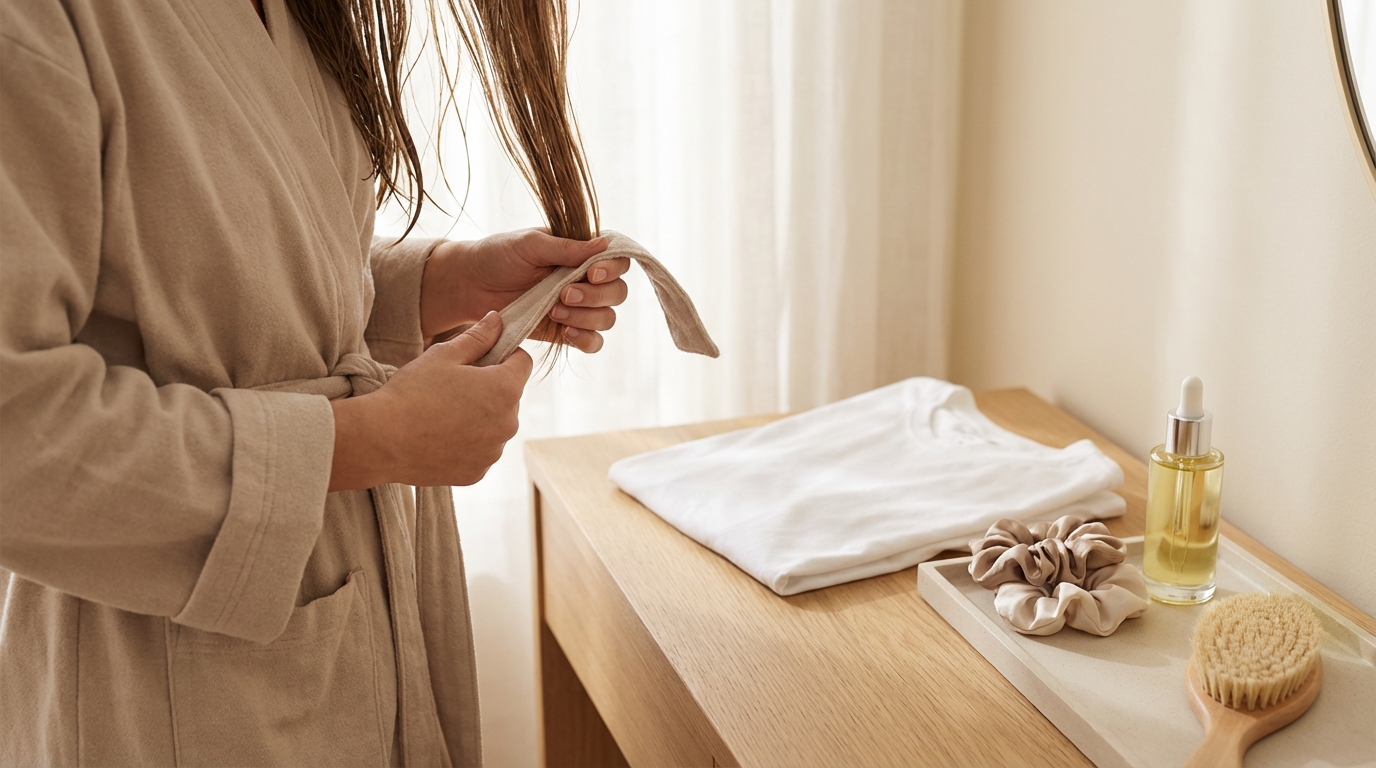
You’ve probably seen those effortless, beachy waves all over social media and wondered how people get them without a curling iron. The good news? You can make heatless waves with a t-shirt or robe belt using items you already own—no special tools, no damage, no fuss. This method works while you sleep, so you wake up with soft, bouncy waves instead of flat, lifeless hair. In this guide, you’ll learn exactly how to prep your hair, wrap it properly, and troubleshoot the most common issues that leave people with crimped or uneven results.
Whether you’re trying to give your hair a break from hot tools or you simply forgot to charge your curling wand, this technique is a reliable backup that costs nothing and takes just a few minutes before bed.
Quick Routine Overview
- Start with damp (not soaking wet) hair
- Place a t-shirt or robe belt on top of your head like a headband
- Wrap sections of hair around the fabric, working away from your face
- Secure the ends and sleep on it
- Unwrap in the morning and shake out for soft waves
What You’ll Need
- A soft cotton t-shirt or a long robe belt (silk or satin works too)
- A few bobby pins or small hair clips
- A light leave-in conditioner or styling mousse (optional)
- A spray bottle with water if your hair dries quickly
- A silk or satin pillowcase to reduce frizz overnight
You don’t need anything fancy here. An old t-shirt you’d normally use for cleaning works perfectly. The robe belt method tends to create slightly tighter, more defined waves, while the t-shirt gives a looser, more relaxed result. Pick based on the look you’re going for.
Step-by-Step: How to Make Heatless Waves with a T-Shirt
Step 1: Start with hair that’s about 70-80% dry. Freshly washed hair works best, but you can also dampen dry hair with a spray bottle. If your hair is dripping wet, the waves won’t set properly and you’ll wake up with damp, limp strands. A common mistake is wrapping soaking hair—this almost always leads to disappointment.
Step 2: Apply a small amount of leave-in conditioner or lightweight mousse if you want extra hold. Skip heavy creams or oils, which can weigh down the waves before they even form. If you have fine hair, less product is more. For thicker or coarser hair, a bit of mousse helps the waves hold their shape longer.
Step 3: Roll or twist your t-shirt into a long rope shape. Place it on top of your head like a headband, with the ends hanging down on either side of your face. You can secure it at the back with a bobby pin if it keeps slipping.
Step 4: Take a one-inch section of hair from the front, near your face. Wrap it around the t-shirt fabric, moving away from your face. Keep wrapping until you reach the end of that section, then use a small clip or bobby pin to secure it. Repeat on the other side.
Step 5: Continue working your way back, section by section, wrapping each piece around the t-shirt. Try to keep the sections roughly the same size for even waves. If you’re running late in the morning and want a quicker unwrap, use larger sections—just know the waves will be looser.
Step 6: Once all your hair is wrapped, tie the ends of the t-shirt together at the back of your head or tuck them in so nothing comes loose while you sleep. Put on a silk or satin pillowcase if you have one; it reduces friction and keeps frizz at bay.
Step 7: In the morning, gently unwrap each section. Don’t rush this part—yanking the fabric out can create tangles and mess up the wave pattern. Once everything is out, flip your head upside down and shake gently. Use your fingers to separate the waves, but avoid brushing unless you want a more blown-out look.
Shortcut If You’re Short on Time
- Use a blow dryer on low heat for 5-10 minutes to speed up drying before bed
- Wrap only the front sections of your hair and leave the back loose for a half-up wavy style
- Try this method during the day while you work from home—a few hours can be enough for looser waves
- Use a silk scarf instead of a t-shirt for faster wrapping and a slightly sleeker finish
The Robe Belt Method for Tighter Waves
If you prefer more defined, almost curly waves, the robe belt technique is worth trying. The thinner fabric creates tighter coils, which is great for anyone with hair that tends to fall flat quickly.
How It Differs from the T-Shirt Method
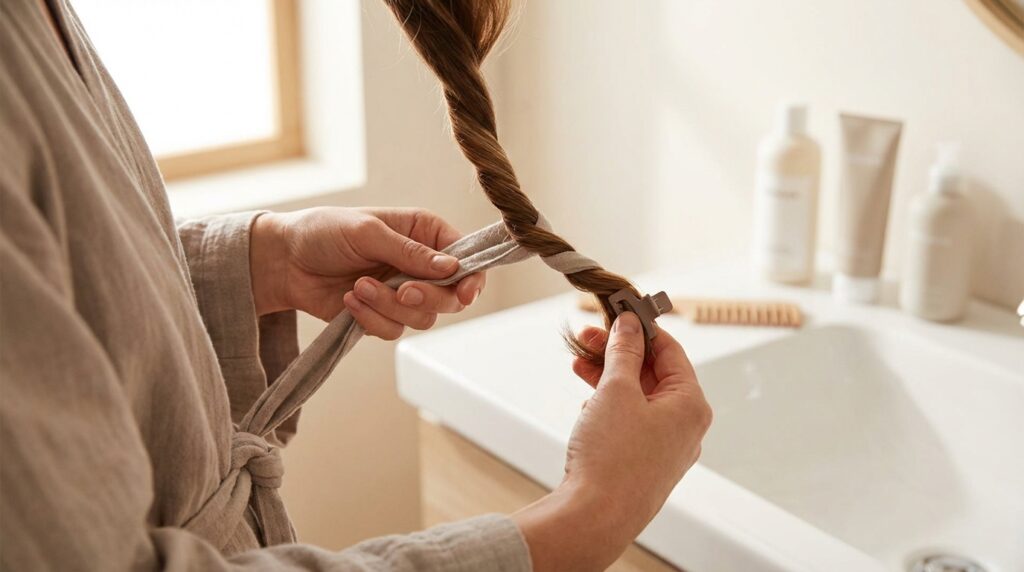
Instead of placing fabric across your head like a headband, you’ll split your hair into two sections and wrap each one around a robe belt like a candy cane stripe. Start at the top of each section and twist the hair around the belt all the way down, then secure the end with a hair tie or clip.
This method works especially well for medium to long hair. If your hair is on the shorter side, stick with the t-shirt version—robe belts can be tricky to secure with less length to work with.
Common Mistakes with the Robe Belt
- Wrapping too tightly, which can leave creases or kinks instead of smooth waves
- Using a belt that’s too thick—thin, flexible fabric works best
- Forgetting to secure the ends properly, leading to unraveling overnight
Troubleshooting: Why Your Heatless Waves Aren’t Working
If you’ve tried this method and ended up with flat, frizzy, or uneven results, you’re not alone. A few small adjustments usually fix the problem.
Hair Dried Too Fast
If you live in a dry climate or have fine hair, your strands might dry before the waves have a chance to set. Try starting with slightly wetter hair or spritzing sections with water as you wrap. Some people find that applying a light gel helps the waves hold even after the hair dries.
Waves Fell Out by Noon
This usually means the hair wasn’t damp enough to begin with, or you skipped styling product entirely. A small amount of mousse or texturizing spray before wrapping gives the waves something to grip onto. You can also refresh them midday with a quick scrunch of sea salt spray.
Uneven or Crimped Sections
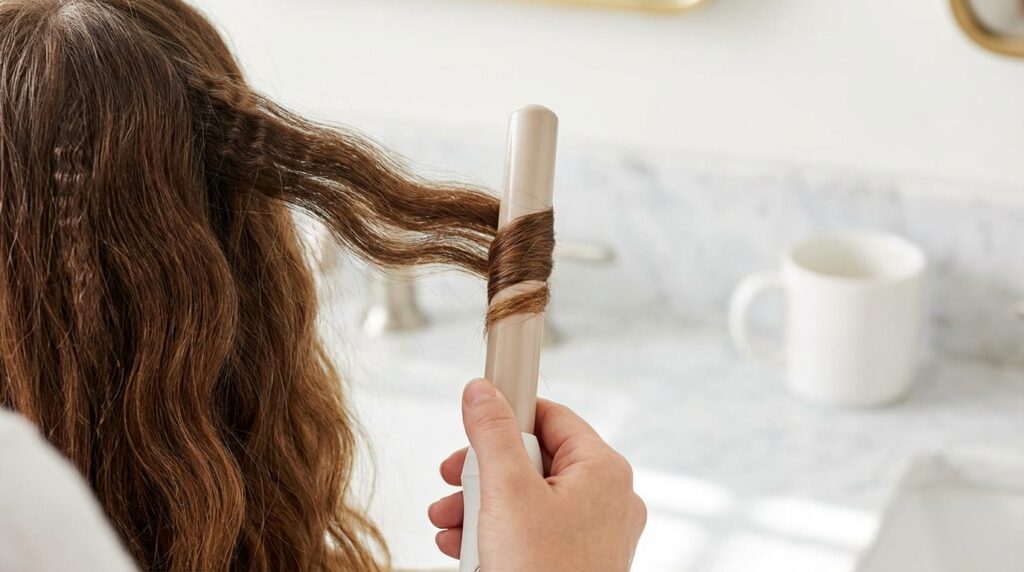
Uneven waves often come from inconsistent section sizes or wrapping some pieces tighter than others. Take your time and try to keep each section roughly the same thickness. If you notice crimps at the roots, you’re probably starting the wrap too close to your scalp—leave a little space at the top.
Frequently Asked Questions
Does this method work on all hair types?
Most hair types can get some level of wave from this technique, but results vary. Fine, straight hair tends to hold waves for a shorter time, while wavy or textured hair often gets longer-lasting results. If your hair is very resistant to holding curl, adding a lightweight mousse and ensuring hair is properly damp will help.
Can I do this on dry hair?
You can, but the results won’t be as defined. Dry hair needs moisture to reshape, so at minimum, mist your hair with water before wrapping. Some people spray a mixture of water and leave-in conditioner for better hold.
How long do the waves last?
For most people, heatless waves last one to two days. Using a silk pillowcase and avoiding heavy touching helps extend the style. A light hairspray in the morning can also add staying power without making hair stiff.
Is this method actually better for my hair than heat styling?
Skipping heat reduces the risk of dryness, breakage, and split ends over time. While one curling session won’t ruin your hair, regular heat exposure adds up. Heatless methods are a gentler alternative, especially if you style your hair frequently.
Summary and Next Step
Making heatless waves with a t-shirt or robe belt is one of those low-effort tricks that actually delivers. The key is starting with damp hair, wrapping evenly, and giving it enough time to set—ideally overnight. If your first attempt isn’t perfect, adjust your moisture level or section sizes and try again. Most people get the hang of it after two or three tries.
Tonight, grab an old t-shirt and give it a shot. You might be surprised how much you like waking up with waves already done—no heat, no damage, no morning rush.