
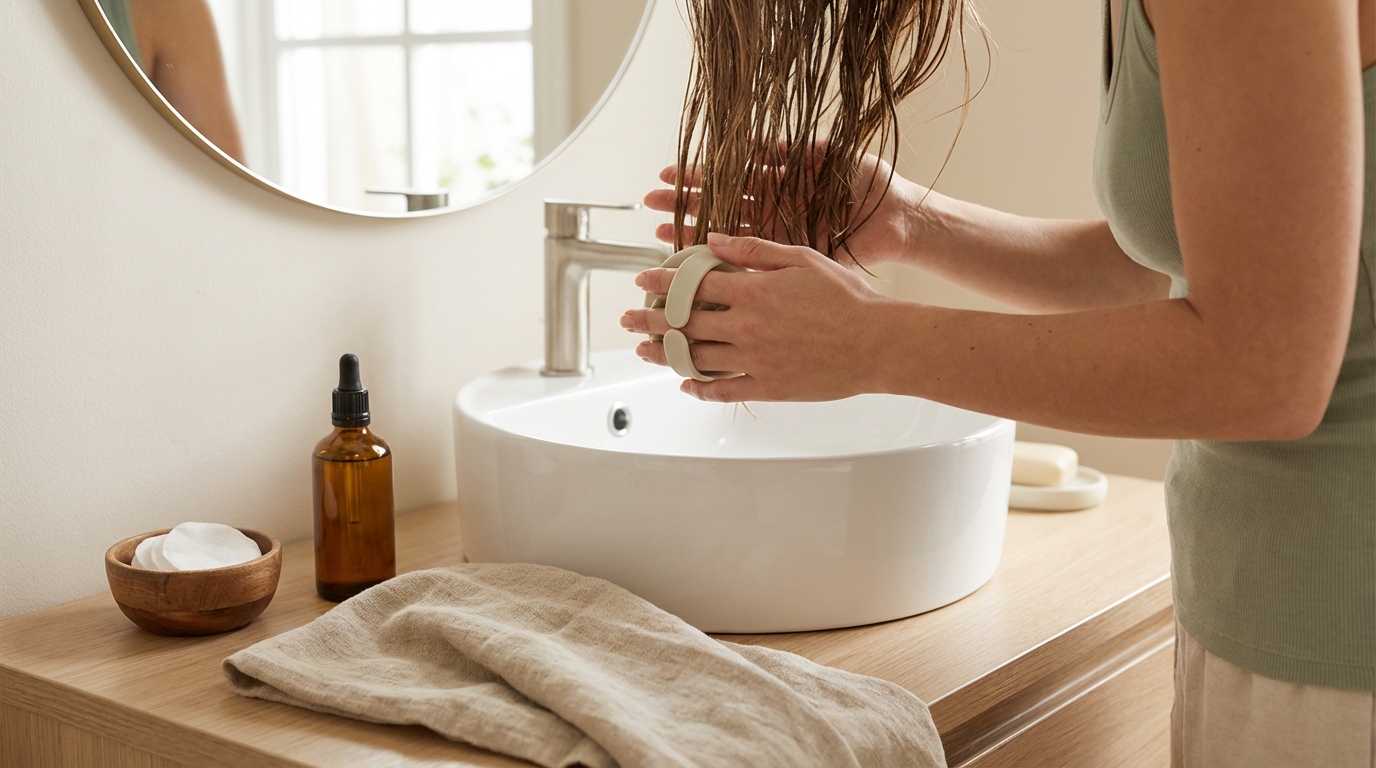
That tingly, almost-too-good feeling when someone plays with your hair? A scalp massager brush delivers that same sensation—except you control the pressure, the timing, and you don’t have to bribe anyone with snacks. Using a scalp massager brush at home takes about three minutes, costs nothing after the initial purchase, and can genuinely improve how your scalp feels and how well your shampoo works.
Whether you’re dealing with product buildup, a tight scalp from stress, or just want that spa-like moment in your shower, this simple tool earns its spot in your routine. Here’s exactly how to use it without overdoing it or wasting your time.
Why Bother With a Scalp Brush?
Before jumping into technique, it helps to understand what this tool actually does—and what it doesn’t.
What it does well:
- Loosens product buildup, dead skin cells, and excess oil that regular shampooing misses
- Increases blood circulation to hair follicles (this won’t regrow hair, but healthy circulation supports scalp health)
- Distributes shampoo more evenly, so you use less product
- Relieves tension headaches that start at the scalp
- Feels genuinely relaxing—like a mini head massage
What it won’t do:
- Cure hair loss or make hair grow faster (no tool can promise that)
- Replace medical treatment for conditions like psoriasis or seborrheic dermatitis
- Work miracles overnight
Think of a scalp massage brush as a better way to shampoo—not a treatment device.
What You Need
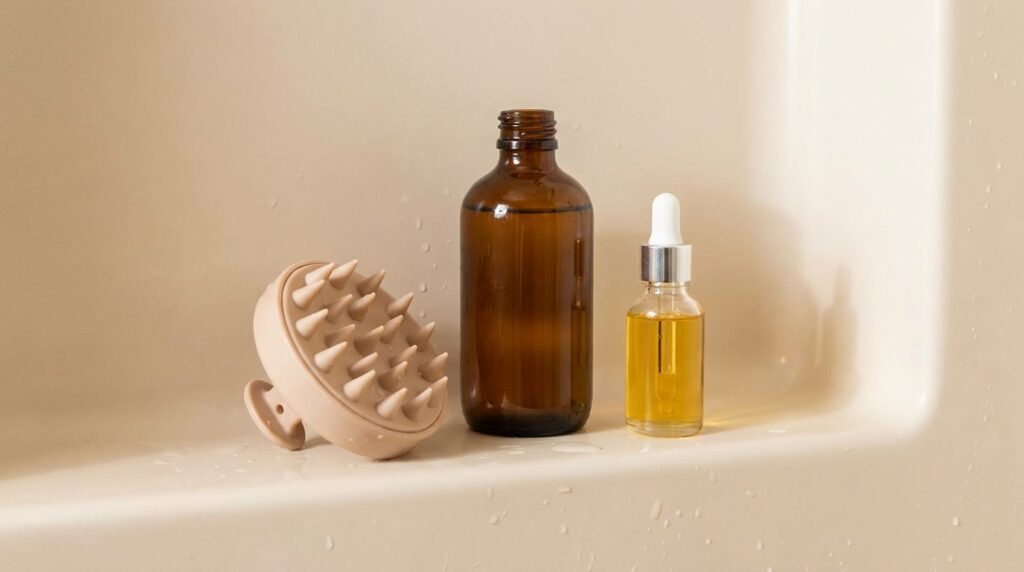
- A silicone scalp massager: Look for soft, flexible bristles. Stiff plastic ones can scratch and irritate.
- Your regular shampoo: No special formula required.
- A few minutes in the shower: This works best on wet hair with shampoo applied.
- Optional: A lightweight scalp oil (like jojoba or rosemary-infused oil) for dry scalp massage outside the shower.
Most silicone scalp brushes cost between $5 and $15. The pricier versions aren’t necessarily better—soft, flexible bristles matter more than brand name.
How to Use a Scalp Massager Brush (Step-by-Step)
- Wet your hair thoroughly. The brush glides better on saturated hair and won’t tug or pull.
- Apply shampoo to your scalp. Focus on the roots, not the lengths. You need enough slip for the brush to move smoothly.
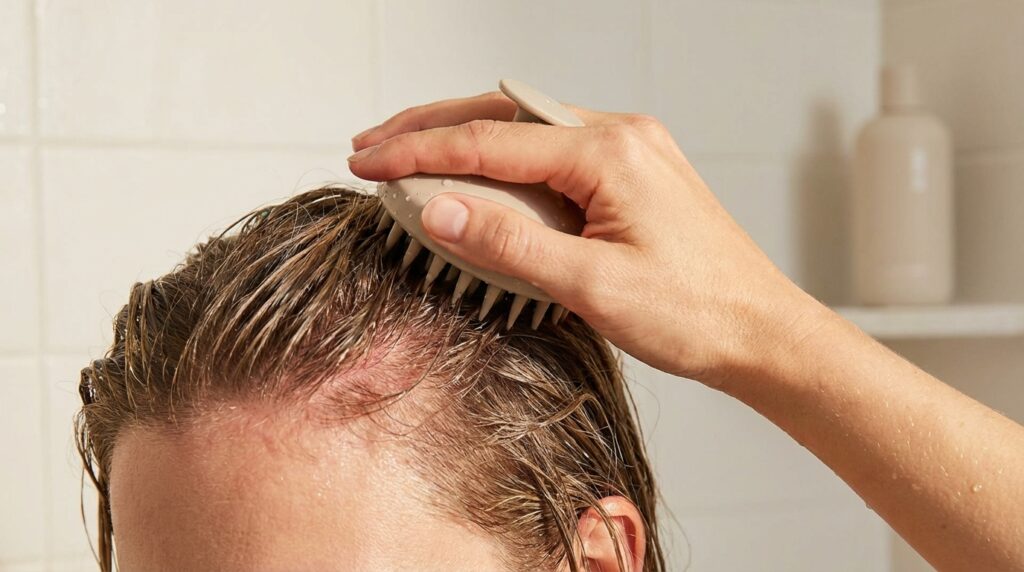
- Place the brush flat against your scalp. Don’t dig the tips in at an angle—keep the bristles perpendicular to your head so pressure distributes evenly.
- Move in small, gentle circles. Start at your hairline and work toward the crown, then down to the nape. Each section gets about 15-20 seconds of attention.
- Use light to medium pressure. If it hurts, you’re pressing too hard. The goal is stimulation, not exfoliation. Your scalp isn’t a dirty pan.
- Cover the entire scalp. Don’t forget behind your ears and along the nape—these areas collect buildup but often get ignored.
- Rinse thoroughly. Spend an extra 30 seconds rinsing to remove all loosened debris and shampoo residue.
- Clean your brush after each use. Rinse it under running water, shake off excess, and let it air dry bristle-side down.
Total time: 2-4 minutes. That’s it.
Smart Tip: If you have long or thick hair, section it with clips before starting. This ensures the bristles actually reach your scalp instead of just moving hair around on top.
Dry Scalp Massage: A Different Approach
Using a scalp brush on dry hair works too—but the technique changes slightly.
When to try it:
- Before washing, to pre-loosen buildup
- At night, for relaxation and tension relief
- When applying scalp treatments or oils
How to do it:
- Apply a few drops of lightweight oil to your fingertips and distribute across your scalp (optional but reduces friction).
- Use the brush in the same circular motions, but even gentler—dry hair tangles more easily.
- Focus on areas that feel tight: temples, crown, and base of skull.
- Limit dry brushing to 2-3 minutes to avoid irritation.
Dry massage works well for stress relief but won’t clean your scalp. Save the deeper work for shower sessions.
Common Mistakes That Backfire
Pressing too hard: Aggressive scrubbing irritates the scalp and can cause micro-tears. If your scalp feels raw or stings afterward, dial back the pressure significantly.
Using it daily on sensitive scalps: For most people, 2-3 times per week is plenty. Daily use can overstimulate and lead to increased oil production—the opposite of what most people want.
Skipping the rinse: The brush loosens debris, but water washes it away. A quick rinse defeats the purpose. Spend at least 60 seconds rinsing after using the brush.
Using on tangled hair: Always detangle first if you have longer hair. Dragging a brush through knots causes breakage and hurts.
Ignoring brush hygiene: A dirty brush redeposits old buildup onto your clean scalp. Rinse after every use; deep clean weekly with a drop of shampoo.
What Results to Actually Expect
After the first use, your scalp will likely feel cleaner and slightly tingly. Some people notice their hair looks more voluminous at the roots because buildup has been removed.
After 2-3 weeks of consistent use (2-3 times weekly), expect:
- Less visible flaking if you had mild buildup
- Reduced scalp tightness and tension
- Shampoo lathering better with less product
- A generally “fresher” feeling scalp
What you probably won’t see: dramatic hair growth, thicker strands, or cured dandruff. If you have a persistent scalp condition, a brush helps but won’t replace proper treatment. Consult a dermatologist for ongoing issues.
Frequently Asked Questions
Can a scalp massager damage hair?
Not if used correctly. Gentle pressure and smooth silicone bristles won’t harm healthy hair. Avoid using on extremely tangled or fragile hair without detangling first.
How often should you use a scalp brush?
Two to three times per week works for most people. Those with oily scalps may benefit from more frequent use; sensitive scalps may need less.
Does it help with dandruff?
It can help remove visible flakes and improve the effectiveness of medicated shampoos by ensuring better scalp contact. It won’t cure the underlying cause of dandruff, though.
Can you use it with conditioner?
Yes, but only on the scalp if you apply conditioner there (most people shouldn’t). Using it to distribute conditioner through lengths can cause tangles. Stick to shampoo for best results.
Is an electric scalp massager better?
Electric versions offer vibration, which some find more relaxing. For cleaning and basic massage, a manual silicone brush works just as well at a fraction of the cost.
The Bottom Line
A scalp massager brush is one of those rare tools that’s cheap, easy to use, and actually delivers on its basic promises. It won’t transform your hair overnight, but it will make shampooing more effective and your scalp more comfortable.
Start with light pressure, stick to 2-3 times per week, and clean the brush regularly. That’s the entire strategy.
If you already have one collecting dust in your shower caddy, tonight’s a good time to actually use it. If you don’t, a basic silicone version costs less than a fancy coffee—and lasts for years.