
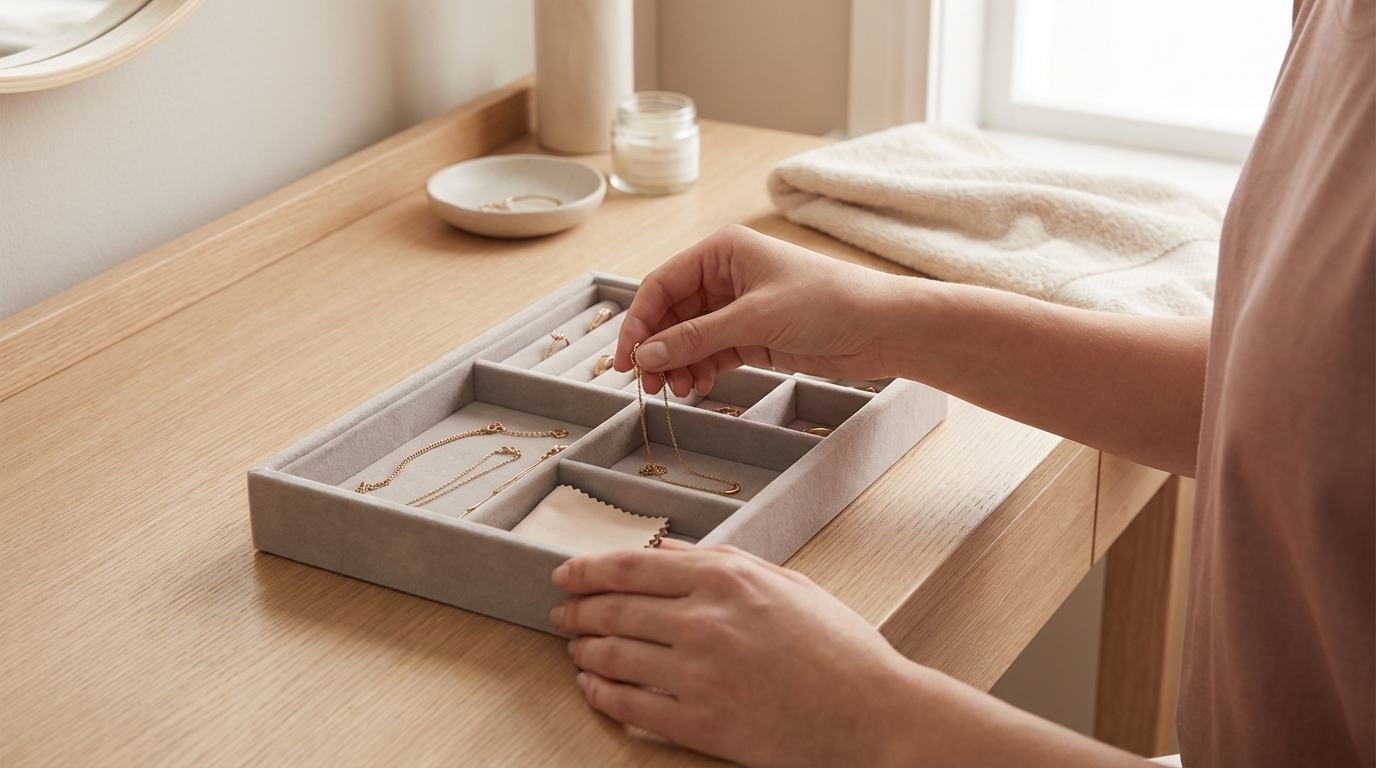
That moment when you reach for your favorite necklace and pull out what looks like a tiny metal bird’s nest—chains wrapped around chains, a pendant somehow knotted through an earring hook. Ten minutes of careful untangling later, you’re late and wearing something else entirely.
Learning how to store jewelry to avoid tangles and tarnish doesn’t require fancy organizers or a walk-in closet. A few simple habits and budget-friendly storage solutions can keep everything from delicate chains to statement earrings ready to wear in seconds. Most of these fixes cost under $10—or nothing at all if you raid your kitchen and bathroom cabinets.
Why Your Jewelry Keeps Tangling and Turning Dark
Understanding the enemy helps you fight it. Tangles happen when chains have freedom to move and twist. Toss a few necklaces in a drawer, and gravity plus friction does the rest. The thinner the chain, the worse the knots.
Tarnish is a chemical reaction. Silver reacts with sulfur compounds in the air (and in certain foods, lotions, and perfumes). Gold-plated and brass pieces oxidize when exposed to moisture and oils from skin. Humidity speeds everything up.
Counter-intuitive insight: Storing jewelry in the bathroom seems convenient, but the humidity from showers accelerates tarnishing faster than almost any other household environment. That cute ring dish by the sink? Move it to the bedroom.
What You’ll Need for Tangle-Free, Tarnish-Free Storage
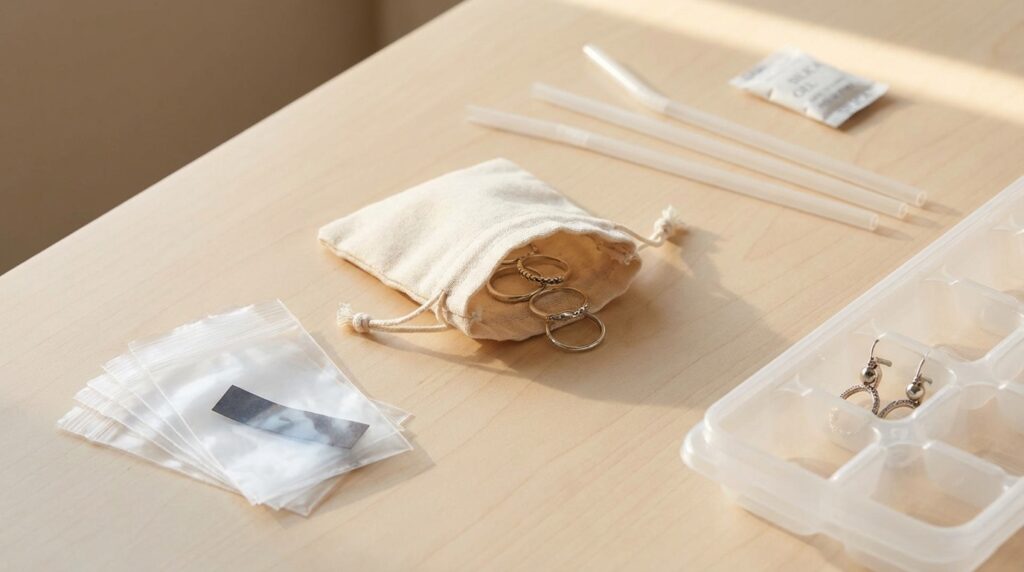
No need to buy a $200 jewelry armoire. These everyday items work just as well:
- Small zip-lock bags (snack size or smaller)
- Anti-tarnish strips or chalk pieces
- Soft cloth pouches or microfiber cloths
- A cork board, small hooks, or command strips
- Ice cube trays or pill organizers
- Drinking straws (for delicate chains)
- Silica gel packets (save these from shoe boxes and vitamin bottles)
Total investment if starting from scratch: roughly $15–$25. But most households already have half of these items lying around.
How to Store Necklaces and Chains Without Knots
Chains are the biggest troublemakers. Here’s the method that actually works:
- Hang them individually. Each necklace needs its own hook. Command hooks on the inside of a closet door, a small cork board, or even a row of pushpins work perfectly. The key: chains hang straight with zero contact between pieces.
- Use the straw trick for travel or drawers. Thread the chain through a drinking straw, then clasp it. The rigid straw prevents the chain from folding back on itself. Cut straws shorter for chokers, leave them full-length for longer pendants.
- Clasp before storing. Always fasten the clasp. Open clasps catch on everything—other jewelry, fabric, themselves.
- Separate by length. Hang shorter necklaces higher, longer ones lower. This prevents them from swinging into each other.
Smart Tip: A simple tension rod inside a drawer, paired with S-hooks, creates a hidden necklace organizer for under $8. Necklaces hang flat in the drawer without tangling, and everything stays dust-free when closed.
Expected Result
Chains stay straight and separated. Grabbing a specific necklace takes two seconds instead of two minutes. Delicate chains last longer because they’re not being stressed by constant detangling.
Storing Rings, Earrings, and Bracelets
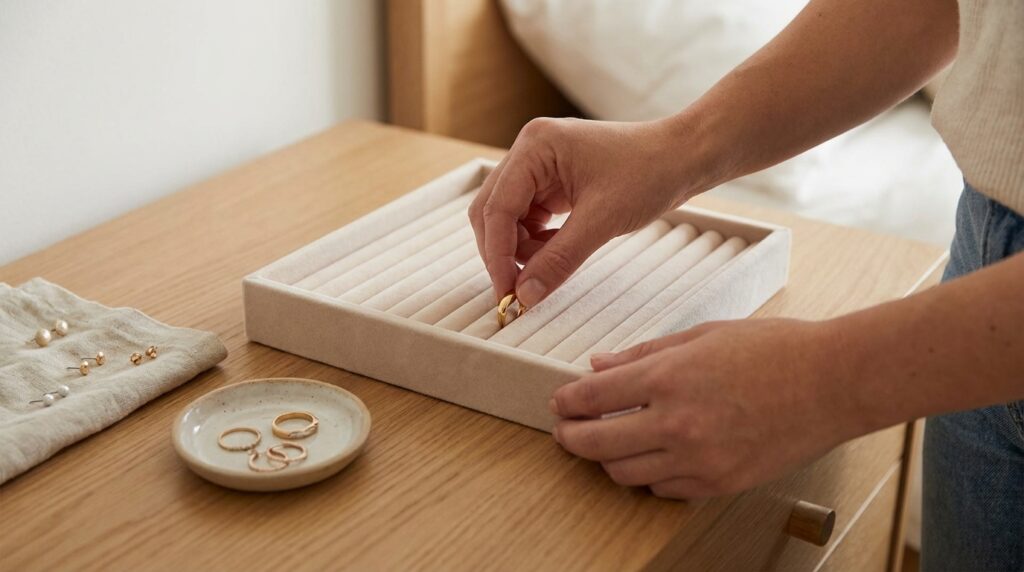
These pieces tangle less but still need organization to prevent scratches and lost pairs.
Rings: A ring dish works for daily-wear pieces. For larger collections, use a velvet-lined tray with slots, or repurpose an ice cube tray lined with felt. Keep diamond rings separate—diamonds scratch other gemstones and metals.
Earrings:
- Studs: Push them through a piece of mesh fabric, window screen material, or even a button. Store the backing on the post immediately.
- Hoops and dangles: Hang on a small jewelry tree or hook them through holes in a decorative frame with mesh backing.
- Travel hack: A pill organizer keeps pairs together and visible.
Bracelets: Store flat in a lined drawer or hang on a vertical paper towel holder. Bangles can stack; chain bracelets should hang or lay flat without overlapping.
Preventing Tarnish on Silver and Plated Jewelry
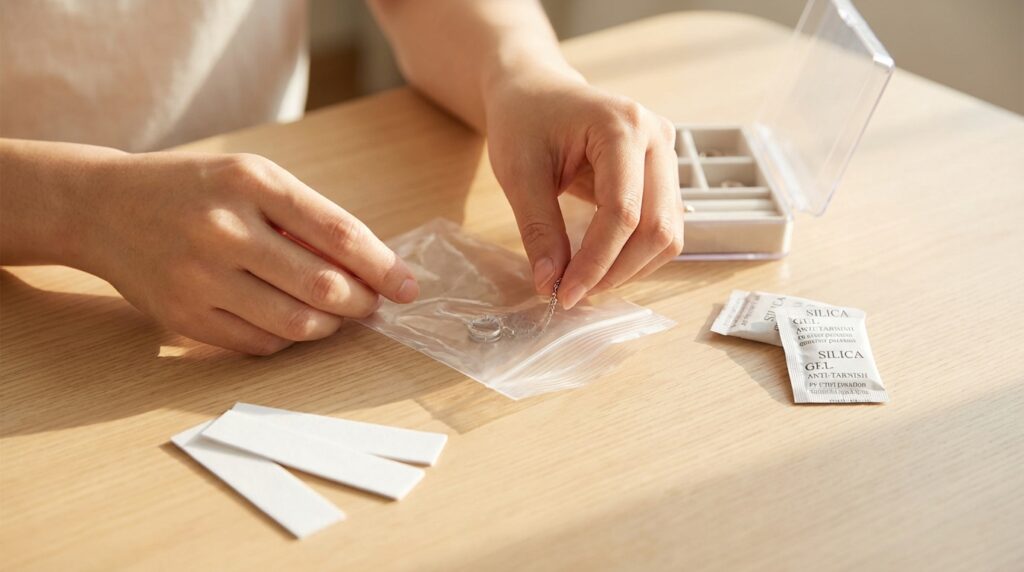
Proper storage for jewelry means controlling air exposure and moisture. Here’s how to keep pieces shiny longer:
- Use anti-tarnish strips. These absorb sulfur compounds from the air. One strip per storage container lasts about six months. Available at craft stores for a few dollars per pack.
- Store in airtight containers or zip-lock bags. Push out excess air before sealing. This alone dramatically slows tarnishing.
- Add silica gel packets. These absorb moisture. Toss one in your jewelry box or drawer.
- The chalk trick. A piece of plain white chalk absorbs moisture and sulfur. Drop one in your jewelry box—it’s practically free and lasts months.
- Wrap in anti-tarnish cloth. For heirloom or expensive pieces, individual wrapping in treated cloth provides the best protection.
What to avoid: Rubber bands (sulfur content accelerates tarnish), cardboard boxes (acids in paper damage metals over time), and direct sunlight (fades certain gemstones and pearls).
A Note on Gold-Plated and Costume Jewelry
Plated pieces need extra care because the base metal underneath reacts faster than solid gold or silver. Store these completely dry—wipe with a soft cloth after wearing to remove skin oils. Keep them in individual soft pouches to prevent the plating from scratching off.
Quick Fixes for Already Tangled Chains
Prevention is easier, but here’s how to rescue a knotted mess:
- Unclasp everything first. Open every clasp in the tangle.
- Lay the tangle flat on a hard, light-colored surface.
- Apply a tiny drop of baby oil or olive oil to the knot. This lubricates the metal.
- Use two straight pins or needles to gently work the knot apart. Patience beats force—pulling tightens knots.
- Once untangled, wash the chain with mild dish soap and water to remove the oil. Dry completely before storing.
Time investment: 5–15 minutes depending on severity. Worth it to save a favorite piece.
Frequently Asked Questions
Can I store all my jewelry together in one box?
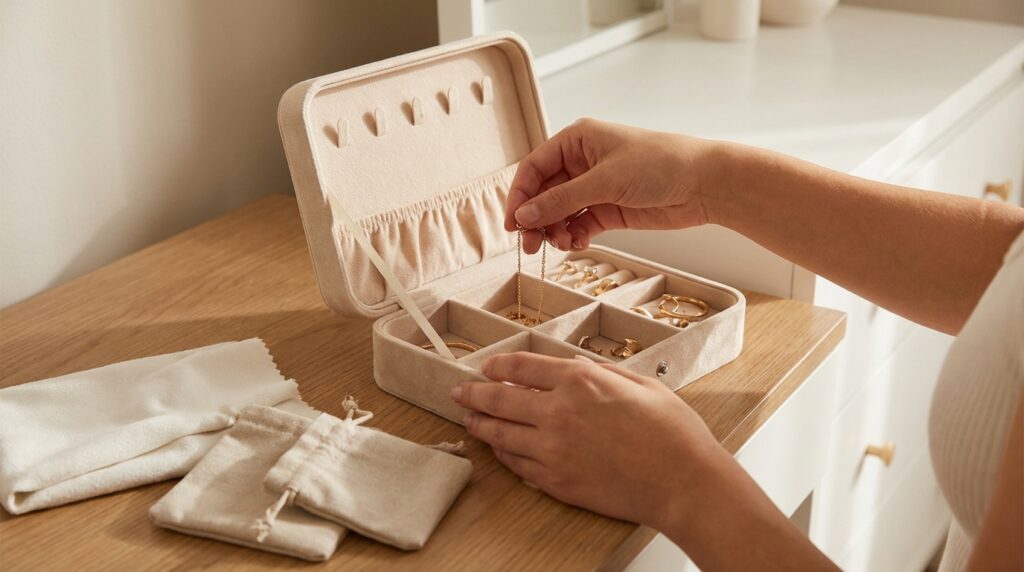
Only if pieces are separated by compartments or individual pouches. Metals scratch each other, chains tangle, and gemstones can chip softer stones. A divided organizer or individual bags solve this.
How often should I clean jewelry before storing?
Wipe pieces with a soft cloth after each wear to remove oils and lotions. Deep cleaning every few months is enough for most pieces. Always store jewelry completely dry.
Does storing silver in plastic cause damage?
Regular plastic is fine for short-term storage. For long-term, use bags labeled “anti-tarnish” or add an anti-tarnish strip to regular zip-locks. Avoid PVC plastic, which can release chemicals that damage metals.
What’s the best way to store jewelry when traveling?
A small zip-lock bag for each piece, straws for chains, and a hard-sided case to prevent crushing. Pill organizers work great for earrings and rings.
Putting It All Together
Keeping jewelry organized and tarnish-free comes down to three principles: separate pieces so they can’t tangle or scratch, control moisture and air exposure, and store away from humidity and direct light.
Start with what you have—zip-lock bags, a few hooks, maybe some chalk from a junk drawer. Upgrade to anti-tarnish strips and proper organizers as needed. The goal isn’t Instagram-perfect organization; it’s grabbing the right necklace without a five-minute detangling session.
Take ten minutes this week to sort through your jewelry. Hang the chains, bag the silver, and toss a silica packet in the drawer. Future-you, running late but wearing exactly the right earrings, will be grateful.