

The gifts are half-wrapped, the fridge is overflowing with ingredients for dishes you haven’t started, and somewhere between the office party and your cousin’s potluck, you forgot to eat lunch. Sound familiar? The holiday season has a sneaky way of turning joy into exhaustion before you even notice it happening.
Here’s the thing about holiday self-care ideas to avoid burnout: they don’t need to involve spa weekends or expensive retreats. Most of them cost nothing, take under fifteen minutes, and can happen while the cookies are in the oven. The goal isn’t perfection—it’s preservation. Keeping enough energy in your tank to actually enjoy the moments that matter.
Why Burnout Hits Harder During the Holidays
Holiday stress isn’t just regular stress with tinsel on it. It’s a specific cocktail of social obligations, financial pressure, family dynamics, and the unspoken expectation that you should feel magical about all of it. When reality doesn’t match the Hallmark movie in your head, guilt piles on top of exhaustion.
The American Psychological Association has consistently found that a majority of people report increased stress during the holiday season. The triggers are predictable: money, time, and the pressure to create perfect experiences for everyone else.
Recognizing this pattern is the first step. You’re not failing at the holidays—you’re responding normally to an abnormal amount of demands crammed into a few weeks.
Self-Care Ideas for the Holidays That Take 15 Minutes or Less
Forget the two-hour bubble bath fantasy. Real self-care during busy seasons looks like stolen moments, not blocked calendars. These micro-practices add up.
The Morning Buffer
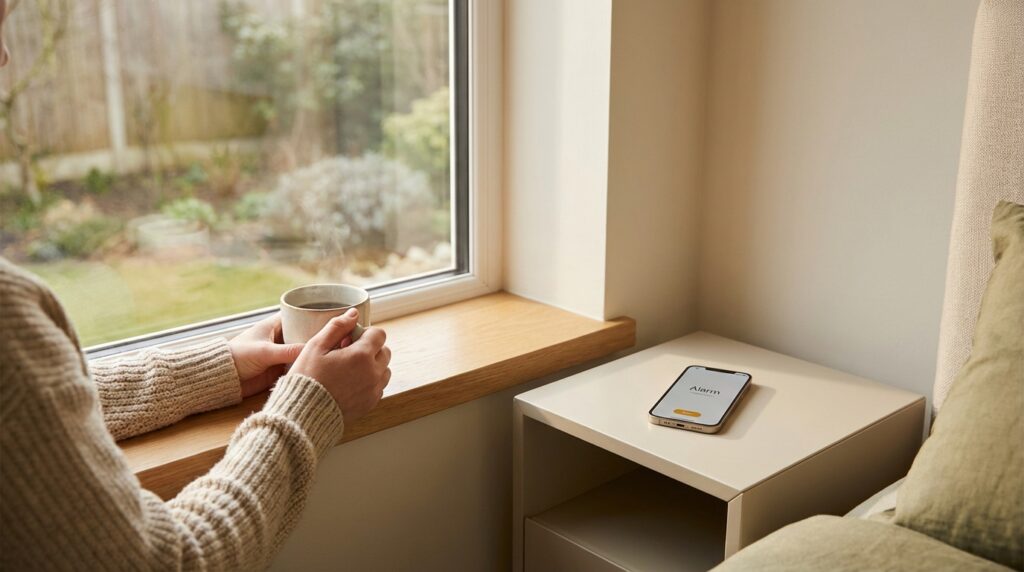
Wake up just ten minutes before you need to. Not to be productive—to do absolutely nothing productive. Drink something warm. Stare out the window. Let your brain boot up slowly instead of launching straight into task mode.
What you need:
- Your phone alarm set 10 minutes earlier
- A pre-prepared drink (coffee ready to brew, tea bag in mug)
- A designated “no scrolling” rule for those 10 minutes
The 5-4-3-2-1 Reset
When overwhelm hits mid-party or mid-shopping-trip, this grounding technique takes under two minutes. Name five things you can see, four you can hear, three you can touch, two you can smell, one you can taste. It interrupts the stress spiral and brings you back to the present moment.
The Car Decompression
Before walking into the next event, sit in your parked car for five minutes. No phone. Just breathe. This tiny transition ritual prevents emotional carryover from one obligation to the next.
Smart Tip: Keep a small “reset kit” in your car or bag during the holiday season—a travel-size hand lotion with a scent you love, a piece of dark chocolate, and earbuds. These sensory anchors can shift your mood faster than willpower alone.
Budget-Friendly Ways to Recharge Without Spending More
The irony of most “treat yourself” advice is that it involves spending money during a season that’s already draining your wallet. These alternatives cost little to nothing.
The Free Entertainment Swap
Instead of adding another streaming subscription or buying a new book, revisit something you already own and loved. Rewatch a comfort movie. Reread a favorite novel. Familiarity is soothing to an overstimulated brain, and there’s zero decision fatigue involved.
The Kitchen Spa

You likely have DIY face mask ingredients in your pantry right now.
What you need for a simple honey mask:
- 1 tablespoon raw honey
- Optional: 1/2 teaspoon cinnamon (skip if you have sensitive skin)
- 10 minutes of uninterrupted time
- Apply honey to clean, dry skin, avoiding the eye area.
- Leave on for 10 minutes.
- Rinse with warm water and pat dry.
Expected result: Skin feels softer and slightly more hydrated. This isn’t a miracle treatment—it’s a sensory pause that signals to your brain that you matter too. Always patch test on your inner arm first if you’ve never used honey topically.
The Movement Snack
You don’t need a gym session. A seven-minute walk around the block, a single YouTube yoga video, or dancing to three songs in your kitchen counts. Movement releases tension that accumulates in your shoulders and jaw during stressful conversations.
Setting Boundaries Without Becoming the Grinch
Here’s a counter-intuitive insight: saying no to some things makes you more present for the things you say yes to. Boundaries aren’t selfish—they’re capacity management.
The “One Less” Rule
Look at your holiday calendar and remove one thing. Just one. The world will not collapse. That cookie exchange you dread? Send your regrets and a nice note. The third weekend gathering in a row? Pick two and skip one.
Scripts That Actually Work

Boundary-setting is easier with pre-planned language:
- “That sounds lovely, but I’m at capacity this week. Can we plan something in January?”
- “I’d love to see everyone, but I can only stay for an hour this time.”
- “We’re keeping things low-key this year, but I appreciate the invitation.”
Notice none of these include apologies or lengthy explanations. A simple, warm decline is complete on its own.
Protecting Sleep Like It’s Valuable (Because It Is)
Late nights stack up fast in December. Guard at least three nights per week where you’re in bed at your normal time. Sleep deprivation amplifies every negative emotion and shrinks your patience to the size of a candy cane.
Holiday Self-Care for Different Energy Levels
Not every day offers the same capacity. Match your self-care to your actual energy, not some idealized version of yourself.
When you have 5 minutes:
- Step outside and take ten deep breaths of cold air
- Text one person something kind (giving boosts mood too)
- Stretch your neck and shoulders
When you have 30 minutes:
- Take a bath or long shower with the door locked
- Call a friend who makes you laugh
- Sit somewhere quiet with a warm drink and no agenda
When you have an evening:
- Cancel plans guilt-free and do whatever sounds restful
- Cook a simple meal you actually want to eat (not party leftovers)
- Go to bed embarrassingly early
Frequently Asked Questions
How do I practice self-care when I’m hosting and have no time?
Micro-moments matter most when time is scarce. Lock the bathroom door for three minutes of deep breathing. Eat something before guests arrive so you’re not running on fumes. Accept help when offered instead of insisting you’ve got it handled.
What if my family doesn’t understand boundaries?

You can set a boundary without getting buy-in. State it kindly, then follow through. Repeat as needed. Some people will push back—that’s about them, not about whether your boundary is valid.
Is it selfish to skip holiday events for self-care?
Showing up depleted and resentful isn’t a gift to anyone. Choosing rest so you can be genuinely present elsewhere is the opposite of selfish—it’s strategic and honest.
How do I recover from holiday burnout after it’s already happened?
January exists for a reason. Lower your expectations for the first week of the new year. Sleep more. Say no to social plans. Eat vegetables. Burnout recovery isn’t instant, but it does happen with consistent small choices.
Making It Through With Energy to Spare
The holidays will end. The decorations will come down. The question is whether you’ll arrive at January feeling like you survived something or like you actually lived through something worth remembering.
Pick one idea from this list and try it today. Not all of them—just one. Maybe it’s the ten-minute morning buffer. Maybe it’s finally saying no to that event you’ve been dreading. Small acts of self-preservation, repeated consistently, are what prevent burnout from stealing the season.
Your presence—rested, grounded, and genuinely there—is the best gift you can offer anyone, including yourself.