
Why Skipping This5-Minute Step Costs You More Than Money
That beautiful new serum sitting on the bathroom counter? It could be the best thing for your skin—or the reason you’re hiding indoors for a week with an angry red rash. Learning how to patch test new skincare products takes less than five minutes and can save you from days of irritation, wasted products, and emergency concealer runs. Here’s exactly how to do it right, every single time.
The truth is, most people either skip patch testing entirely or do it wrong. They swipe a product on the back of their hand, wait five seconds, and call it good. That’s not a patch test—that’s wishful thinking. A proper test mimics how the product will actually behave on your face over time. And yes, even “natural” or “sensitive skin” formulas can cause reactions.
What You’ll Need for a Proper Patch Test
Good news: this doesn’t require any fancy equipment. Everything you need is probably already within arm’s reach.
- The new skincare product you want to test
- Clean skin (freshly washed, no other products applied)
- A mirror with decent lighting
- A phone or notebook to track the date and product name
- 24-48 hours of patience (the hardest part)
That’s it. No cotton pads, no special patches, no fancy timers. Just the product, your skin, and a little self-control to wait before slathering it everywhere.
How to Patch Test Skincare Products Step by Step
Follow these steps exactly. Rushing through or improvising defeats the purpose.
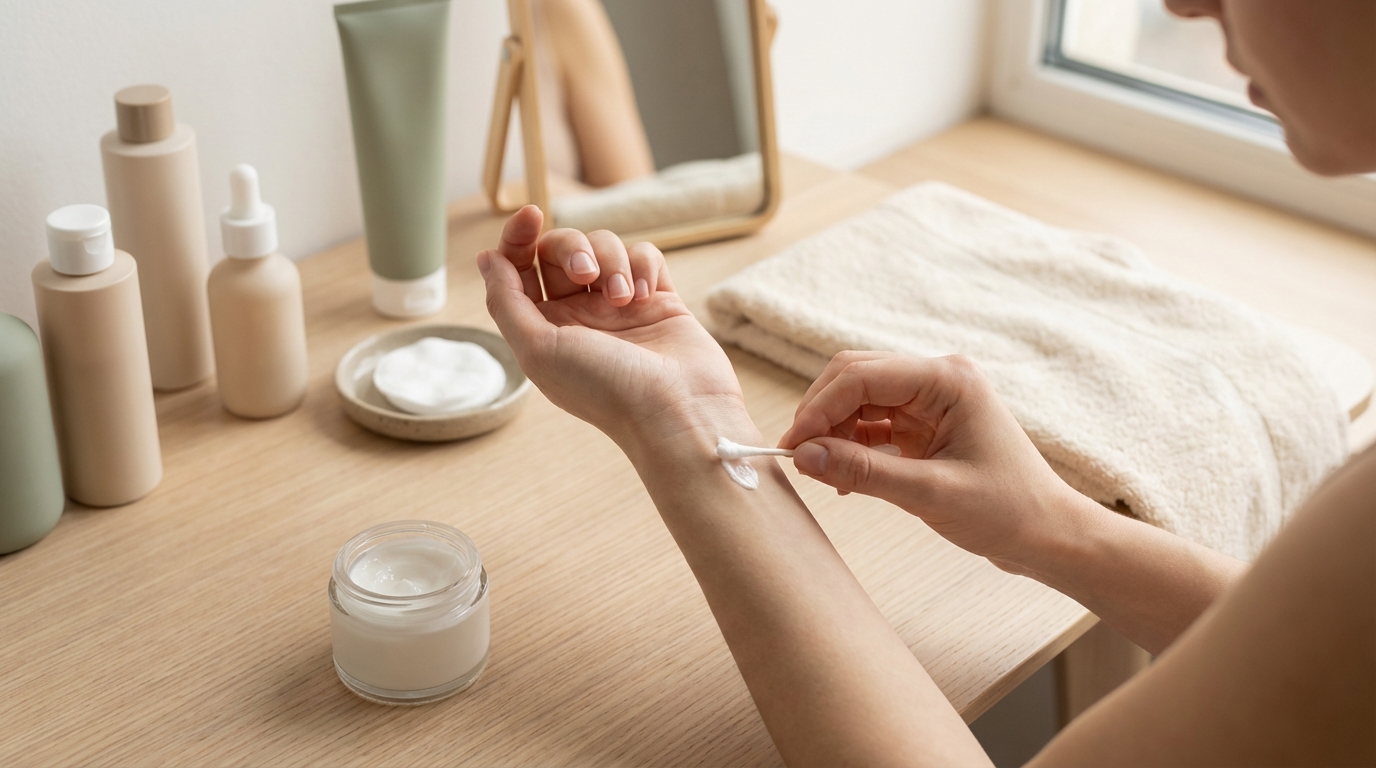
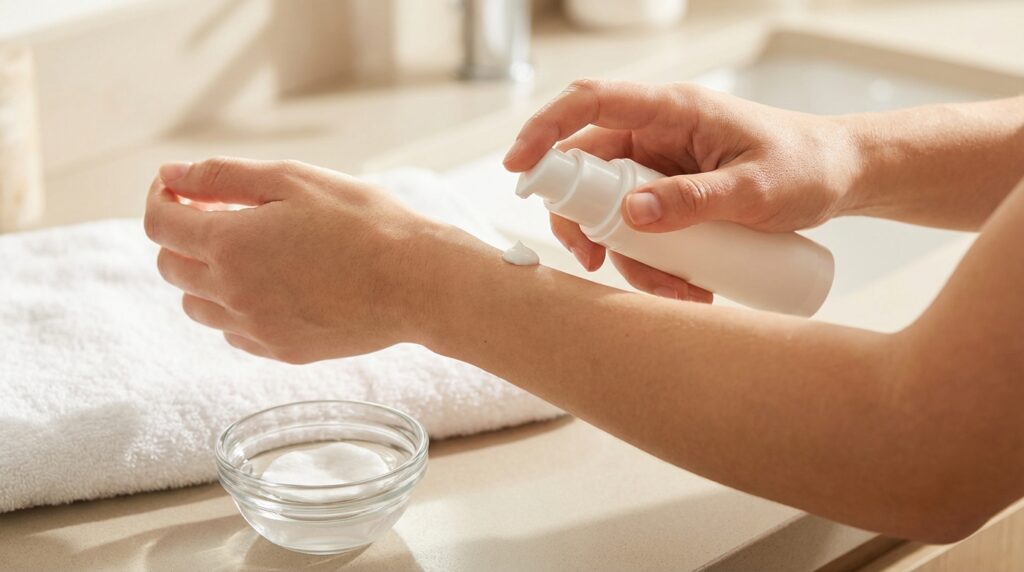
- Choose your test spot wisely. The inner forearm is the classic location—it’s convenient and sensitive enough to show reactions. However, if you’ve had facial reactions before, test on your jawline near the ear instead. Facial skin can react differently than arm skin.
- Clean the area thoroughly. Wash with your regular cleanser and pat dry. Don’t apply any other serums, moisturizers, or treatments. You want a blank canvas so you know exactly what’s causing any reaction.
- Apply a small amount. About a dime-sized amount for creams or2-3 drops for serums. Spread it in a small patch roughly the size of a quarter. Don’t rub it in aggressively—gentle application mimics normal use.
- Leave it alone for 24-48 hours. This is where most people fail. Twenty-four hours is the minimum for detecting delayed reactions. Forty-eight hours is better, especially for active ingredients like retinol, acids, or vitamin C.
- Check for reactions at multiple intervals. Look at the area after 1hour, 12 hours, 24 hours, and 48 hours. Some reactions show up immediately; others take a full day to appear.
- Know what you’re looking for. Redness, itching, burning, bumps, dryness, or swelling all signal a problem. Even slight discomfort counts. If the area feels “off,” that’s your answer.
Smart Tip: If you’re testing an active ingredient like glycolic acid or retinol, a mild tingling sensation for the first minute or two can be normal. But if tingling turns to burning, or if it doesn’t fade within a few minutes, wash it off immediately with cool water.
The Jawline Method for Sensitive Faces
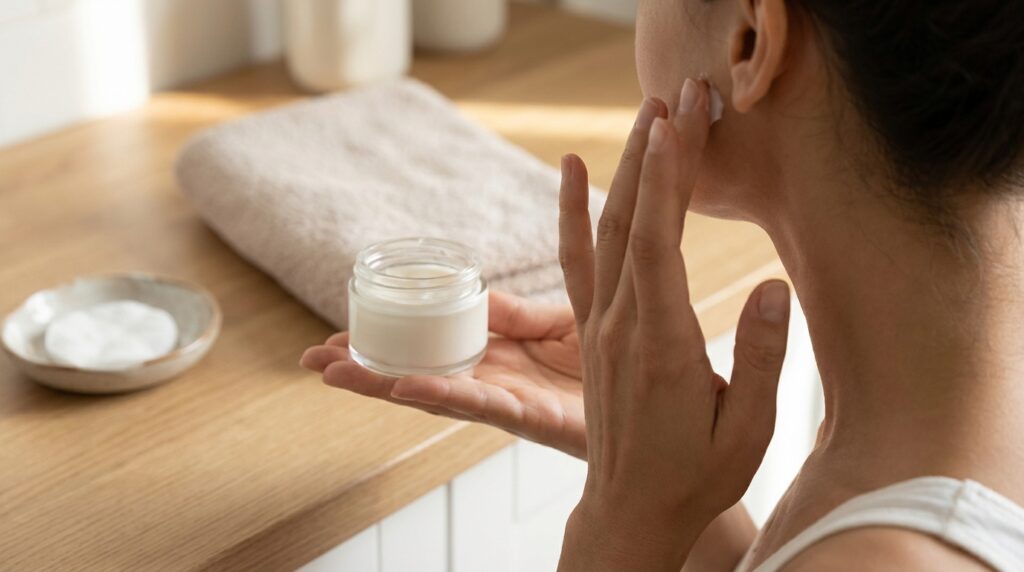
For anyone with a history of facial breakouts or reactions, the forearm test isn’t quite enough. The skin on your face has more oil glands, different thickness, and unique sensitivities compared to your arm. After passing the forearm test,do a secondary patch behind your ear or along your jawline.
This takes an extra day, yes. But it’s infinitely better than applying a new product all over your face and discovering you’re allergic when you have a work presentation in the morning.
When Patch Testing Is Non-Negotiable
Some products deserve extra caution. These categories should always get the full 48-hour treatment:
- Anything with retinol or retinoids – These can cause significant irritation even in people without sensitivities
- Chemical exfoliants – AHAs, BHAs, and PHAs vary wildly in strength
- Vitamin C serums – Concentration and formulation matter enormously
- Essential oil-based products – “Natural” doesn’t mean “can’t cause a reaction”
- New brands you’ve never tried – Different manufacturers use different preservatives and fillers
- Products purchased abroad or online from unfamiliar sellers – Formulations may differ by region
On the flip side, if you’re repurchasing an identical product you’ve used for years from the same brand, you can probably skip the full patch test. But if the packaging says “new formula” or “improved”? Test it again. Companies reformulate more often than they advertise.
Counter-Intuitive Truth: Reactions Aren’t Always Immediate
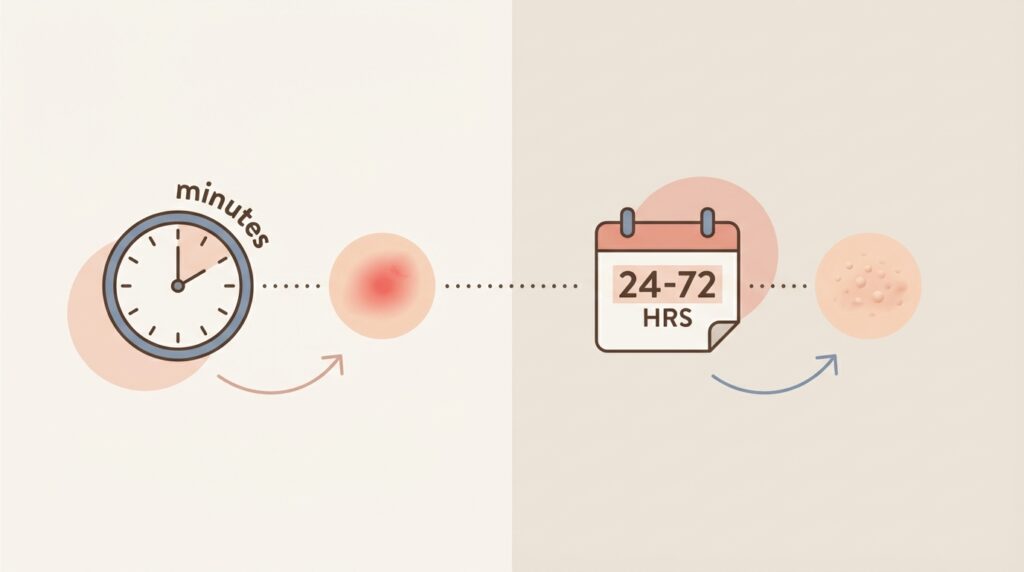
Here’s something that surprises most people: allergic reactions and irritant reactions work on completely different timelines.
Irritant reactions usually show up within minutes to hours. The product is too harsh, too acidic, or contains something that directly damages skin cells. You’ll feel stinging, burning, or see immediate redness.
Allergic reactions can take 24-72 hours to appear—sometimes even longer with repeated exposure. Your immune system needs time to recognize the ingredient, mount a response, and cause visible symptoms. This is why that48-hour waiting period exists. A product that seemed fine at hour six can turn into a bumpy, itchy disaster by hour thirty.
This also explains why some people develop allergies to products they’ve used for months or years. The immune system finally hits its threshold and says “no more.” Regular patch testing when introducing anything new helps prevent pushing your skin toward that tipping point.
What to Do If You React
First: don’t panic. Most patch test reactions are localized and fade within a few days.
- Wash the area immediately with cool water and a gentle, fragrance-free cleanser
- Apply a bland moisturizer – look for ceramides or plain petroleum jelly
- Avoid the product entirely – don’t try to “push through” or assume your skin will adjust
- Note the product name and ingredients – if you react to multiple products, you can start identifying the common culprit
- See a dermatologist if symptoms worsen – spreading redness, blistering, or swelling beyond the test area warrants professional attention
For mild irritation, over-the-counter hydrocortisone cream can help, but don’t use it for more than a few days without medical guidance.
Building a Patch Test Habit
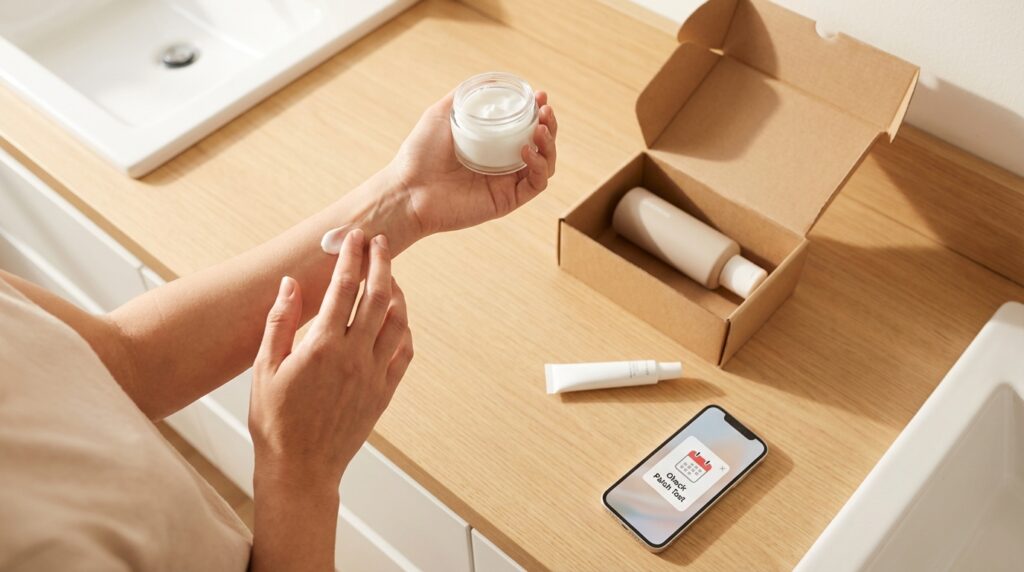
The easiest way to make patch testing automatic? Do it immediately when a new product arrives. Unbox it, patch test that evening, and set a phone reminder to check in 24 and 48 hours. By the time you’re actually ready to incorporate it into your routine, you’ll already know it’s safe.
Keep a simple note on your phone with products you’ve tested and the results. Over time, you’ll build a personal database of what works, what doesn’t, and potentially which ingredients are your triggers.
Expected Results
When you patch test correctly, the area should look and feel exactly like the surrounding skin after 48 hours. No redness, no itching, no texture changes. Boring is good here—boring means safe. If you’re testing an exfoliating product, slightdryness or mild flaking in the test patch is expected, but burning or persistent redness is not.
A negative patch test doesn’t guarantee you’ll love the product, of course. It just confirms you won’t have an adverse reaction. Whether it actually improves your skin takes longer to evaluate—usually 4-6 weeks of consistent use.
FAQ
Can I patch test multiple products at once?
Technically yes, but only if you use different body locations for each and keep careful notes. Testing on both forearms simultaneously is fine. But don’t test two new products on the same area—you won’t know which one caused a reaction.
Does patch testing work for haircare products?
Absolutely, and it should be done the same way. Hair dyes especially require patch testing 48 hours before use, as they contain potent allergens. Test behind the ear or on the inner elbow.
What if the product is meant to tingle, like a peel?
Mild tingling that fades within 1-2 minutes is often expected with acids and active treatments. Burning, prolonged stinging, or tingling that intensifies rather than fades signals a problem. When in doubt, rinse it off.
Do I need to patch test if I have no history of sensitive skin?
Yes. Sensitivities can develop at any age, and new products contain new ingredients you’ve never encountered. The five minutes spent testing today could save days of regret later.
The Bottom Line
Testing skincare before full application takes almost no time and costs nothing extra. That new serum will still be there in 48 hours—but your skin will thank you for waiting. Tonight, grab any new product that’s been sitting unused, clean a small spot on your forearm, and apply. Set a reminder. Check it tomorrow. It’s the smallest habit that prevents the biggest skincare regrets.