

The average household wastes roughly $1,800 per year on impulse buys and items that never get used. That’s a vacation, a solid emergency fund boost, or 150 decent takeout dinners—gone. The good news? Smart shopping habits that save money over time don’t require extreme couponing or living like a monk. They’re small, repeatable shifts that compound quietly in the background while life carries on as usual.
This isn’t about deprivation. It’s about spending with intention so the money goes where it actually matters.
The 24-Hour Rule (And Why It Works Better Than Willpower)
Impulse purchases account for a surprising chunk of wasted spending—some estimates put it at 40% of all online shopping. The fix isn’t complicated: wait 24 hours before buying anything non-essential over $25.
Here’s what typically happens during that pause:
- The “must-have” feeling fades by about 70%
- Better alternatives surface with minimal research
- The item gets forgotten entirely (which proves it wasn’t needed)
Smart Tip: Add items to your cart but don’t check out. Many retailers send discount codes within 24-48 hours to recover “abandoned” carts—turning patience into an automatic 10-15% off.
This single habit can redirect hundreds of dollars annually without feeling restrictive. The purchase isn’t denied; it’s just delayed long enough for logic to catch up with emotion.
Unit Price Math: The 30-Second Skill That Pays Off

Bigger packages aren’t always cheaper. That “family size” detergent? Sometimes it costs more per ounce than the regular bottle. Retailers know most shoppers don’t do the math.
The unit price (cost per ounce, per count, per 100 sheets) is usually printed in small text on shelf tags. Comparing unit prices takes about 30 seconds and can save $3-8 per shopping trip. Over a year of weekly grocery runs, that’s $150-400 in savings from a habit that becomes automatic after a few tries.
Counter-intuitive insight: Store brands often have identical unit prices to name brands when the name brand is on sale. The “deal” sometimes just brings the premium product down to what the generic costs every day. Check both before assuming the sale tag means savings.
Quick Unit Price Wins
- Toilet paper: Compare price per sheet, not per roll (roll sizes vary wildly)
- Cleaning supplies: Concentrated formulas often beat “ready to use” by 60%+ per actual use
- Snacks: Multi-packs frequently cost more per item than buying singles in bulk
Strategic Timing: When You Shop Matters
Prices fluctuate predictably throughout the year. Shopping against the seasonal grain saves 20-50% on the same items.
| Item Category | Best Time to Buy | Typical Savings |
|---|---|---|
| Winter coats & boots | February-March | 40-60% off |
| Outdoor furniture | August-September | 30-50% off |
| Small appliances | November (Black Friday week) | 25-40% off |
| Fitness equipment | February-March | 20-35% off |
| Bedding & linens | January (White Sales) | 30-50% off |
This doesn’t mean waiting six months for everything. It means planning ahead for predictable needs. Need a new winter coat? Buy it in late winter for next year. The coat doesn’t expire.
Myth vs. Reality: Shopping “Truths” That Cost Money
Myth: Buying in bulk always saves money.
Reality: Bulk only saves money if the item gets fully used before expiring or going stale. A 5-pound bag of flour that goes rancid before it’s finished costs more than two smaller bags bought as needed. Bulk works for shelf-stable items with consistent use (toilet paper, dish soap, rice). It backfires for perishables and “maybe I’ll use this” purchases.
Myth: Sales mean it’s a good time to buy.
Reality: A sale on something unneeded is still spending, not saving. The $40 sweater marked down to $25 costs $25—not “saving $15.” True savings happen when a planned purchase aligns with a price drop.
Myth: Expensive products last longer and cost less over time.
Reality: Sometimes. But plenty of mid-range products perform identically to premium versions. The $200 blender and the $80 blender often use similar motors. Research specific items rather than assuming price equals quality.
The List System That Actually Sticks
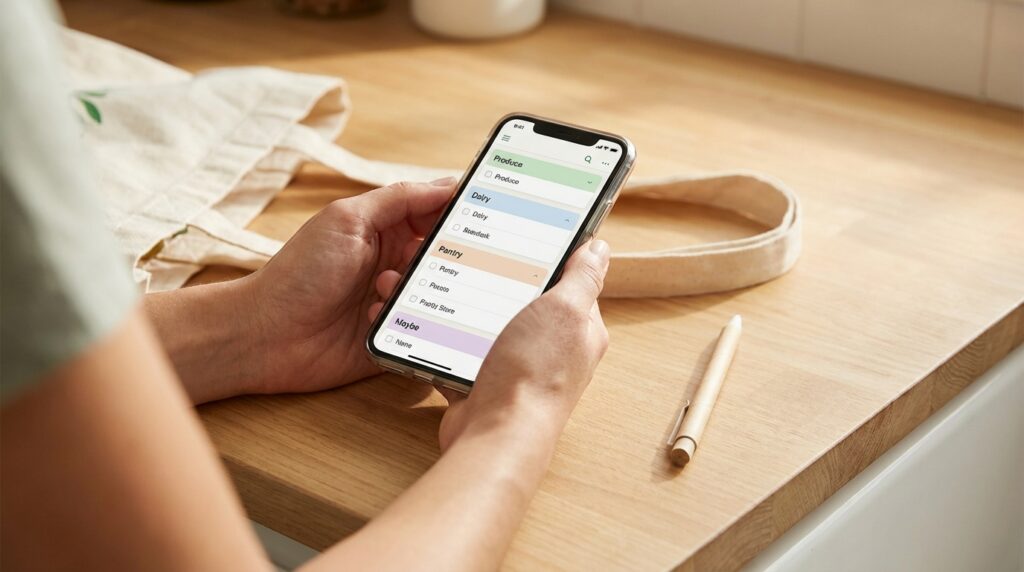
Shopping lists work—when they’re used. The problem is most lists get abandoned mid-trip or forgotten entirely. A sustainable list system needs three components:
- A running list in one consistent place (phone notes app, magnetic notepad on the fridge, whatever gets used)
- Categories that match store layout (produce, dairy, cleaning supplies) to reduce wandering through temptation aisles
- A “maybe” section for items to consider but not commit to—this satisfies the urge to add things without guaranteeing purchase
Shoppers who stick to lists spend 20-25% less per trip than those who browse freely. The list isn’t about restriction; it’s about entering the store with a plan instead of letting the store’s layout dictate the cart.
The One-In-One-Out Rule
Before buying something new in a category where there’s already plenty (clothes, kitchen gadgets, decor), one existing item has to go. This forces a quick mental audit: “Do I want this enough to get rid of something I already own?”
Usually, the answer is no. The closet is full. The kitchen drawers are stuffed. The new item would just add to the pile. This rule prevents accumulation creep and the eventual “decluttering purge” where barely-used items get donated or trashed.
Cashback and Price Tracking: Low-Effort Money Back
Browser extensions and apps that track prices or offer cashback require about 5 minutes of setup and zero ongoing effort. They run in the background and occasionally return money or alert to price drops.
Realistic expectations:
- Cashback apps: 1-5% back on purchases already planned (not a reason to buy more)
- Price trackers: Useful for big-ticket items; set alerts and wait for drops
- Store loyalty programs: Worth joining for stores visited regularly; skip the rest to avoid inbox clutter
These tools work best as passive helpers, not active shopping motivators. The goal is recovering a few dollars on necessary purchases—not hunting for deals that justify unnecessary ones.
Quick Fix Checklist: Money-Saving Shopping Habits
- Wait 24 hours before non-essential purchases over $25
- Compare unit prices, not package prices
- Shop off-season for predictable needs
- Use a categorized shopping list every trip
- Apply the one-in-one-out rule for cluttered categories
- Set up one cashback tool and one price tracker (then forget about them)
- Question “sale” prices—discounts on unneeded items aren’t savings
- Buy bulk only for items with guaranteed, consistent use
Wrapping Up
Building better spending habits doesn’t require a complete lifestyle overhaul. These adjustments are small enough to stick and powerful enough to matter over months and years. The 24-hour pause alone can save hundreds annually without any sense of sacrifice.
Start with one habit this week. The easiest entry point: add items to your online cart, close the tab, and revisit tomorrow. Notice how many “must-haves” suddenly feel optional. That’s the shift—and it compounds from there.