
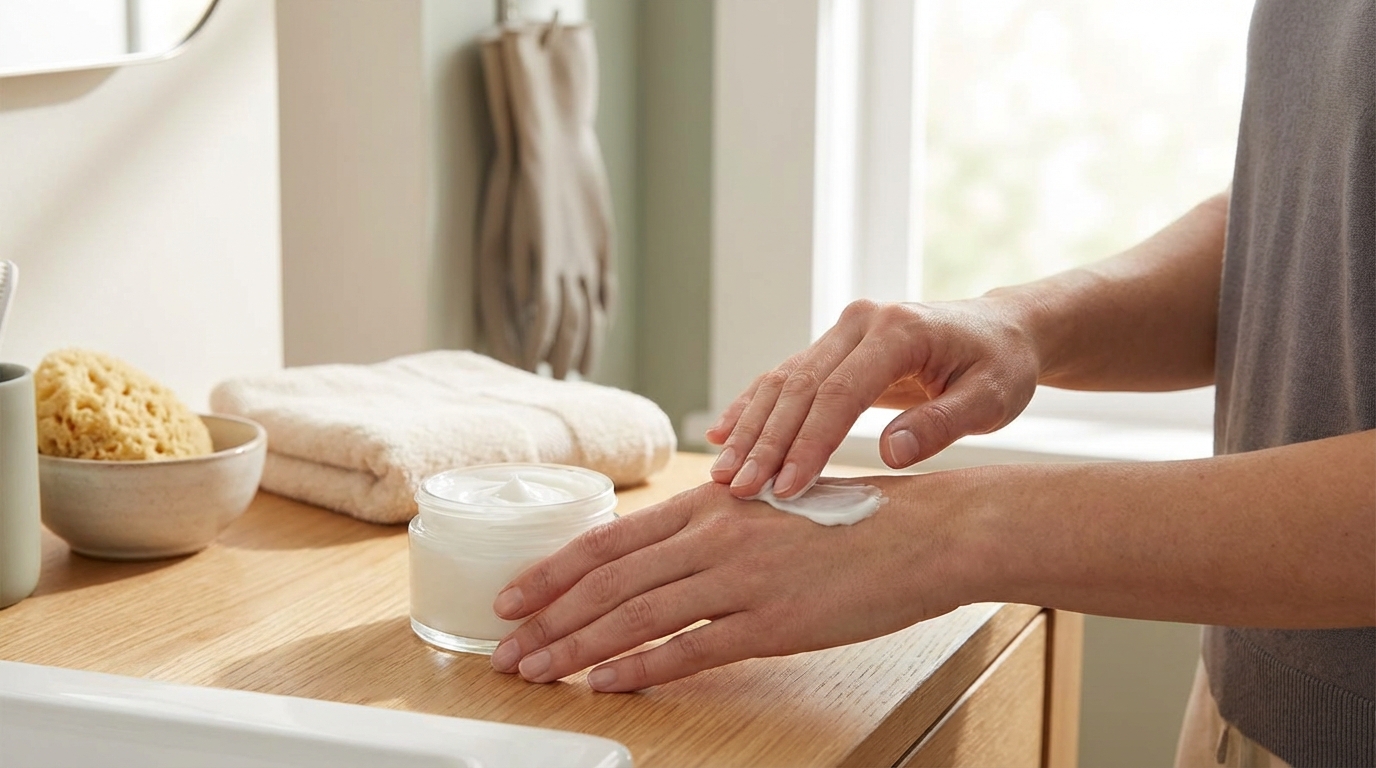
Your hands are cracked, dry, and feel like sandpaper by the end of the day. Sound familiar? If you’re someone who washes dishes multiple times a day—whether you’re a parent, a home cook, or just someone without a dishwasher—your skin is taking a beating. A solid hand care routine for people who wash dishes a lot can make a real difference, and it doesn’t require expensive products or complicated steps. By the end of this post, you’ll know exactly what’s stripping your skin, how to protect it during dishwashing, and how to repair the damage with a simple daily routine.
The good news? Most of the fixes are cheap, quick, and easy to stick with. Let’s get into it.
Quick Routine Overview
- Wear gloves every time you wash dishes (non-negotiable)
- Use lukewarm water instead of hot
- Apply a light hand cream immediately after drying your hands
- Do a thicker overnight treatment 2–3 times per week
- Keep a small tube of cream next to the sink so you actually use it
Why Dishwashing Wrecks Your Hands
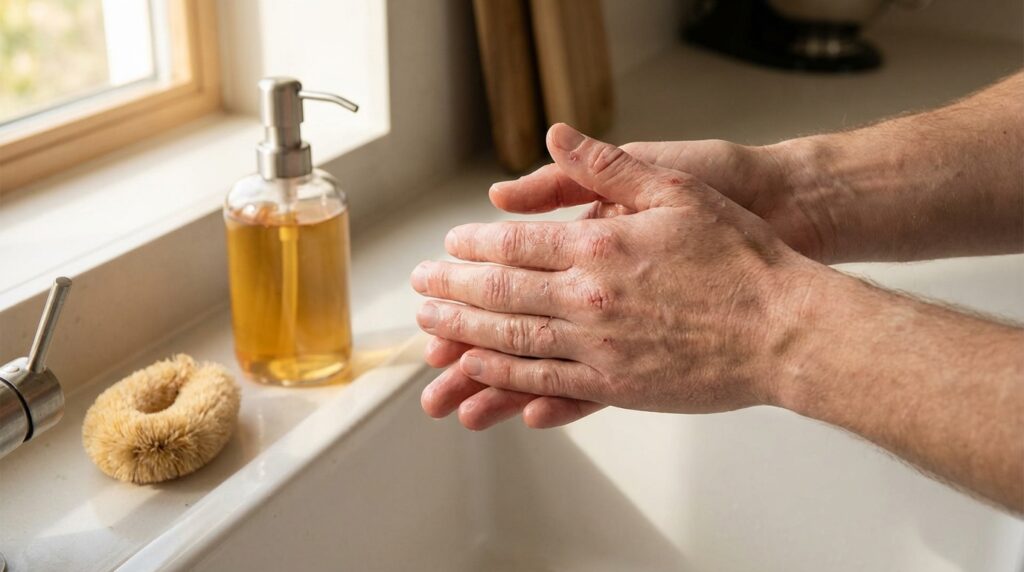
Dish soap is designed to cut through grease and food residue. That’s great for your plates, but terrible for your skin. The same surfactants that dissolve oil on your dishes also strip the natural oils from your hands. Add hot water to the mix, and you’re basically fast-tracking moisture loss.
Most people notice the damage builds up over time. One wash won’t ruin your hands, but three or four sessions a day? That’s when the dryness, cracking, and irritation start to show. If you’re also using cleaning sprays or handling other household products, the effect multiplies.
A common issue is that people wait until their hands are already cracked before doing anything about it. By then, you’re playing catch-up. The goal is to prevent the damage in the first place—and repair what’s already there with minimal effort.
What You’ll Need
- Rubber or nitrile dishwashing gloves (reusable or disposable)
- A gentle, fragrance-free hand cream for daytime use
- A thicker balm or ointment for overnight repair
- Optional: cotton gloves for sleeping
- Optional: a mild, moisturizing hand soap
You don’t need to spend a lot here. Drugstore hand creams work just fine. Look for ingredients like glycerin, shea butter, or ceramides on the label. Avoid anything with a strong fragrance if your skin is already irritated—fragrance can make things worse.
Your Daily Hand Care Routine for Dish-Heavy Days
Step 1: Put on gloves before you touch the water. This is the single most effective thing you can do. Gloves create a barrier between your skin and the soap, so your hands stay protected. If you hate the feel of rubber gloves, try nitrile ones—they’re thinner and less sweaty.
Step 2: Use lukewarm water, not hot. Hot water feels nice, but it strips your skin faster. Lukewarm is enough to get dishes clean, especially if you’re using decent dish soap.
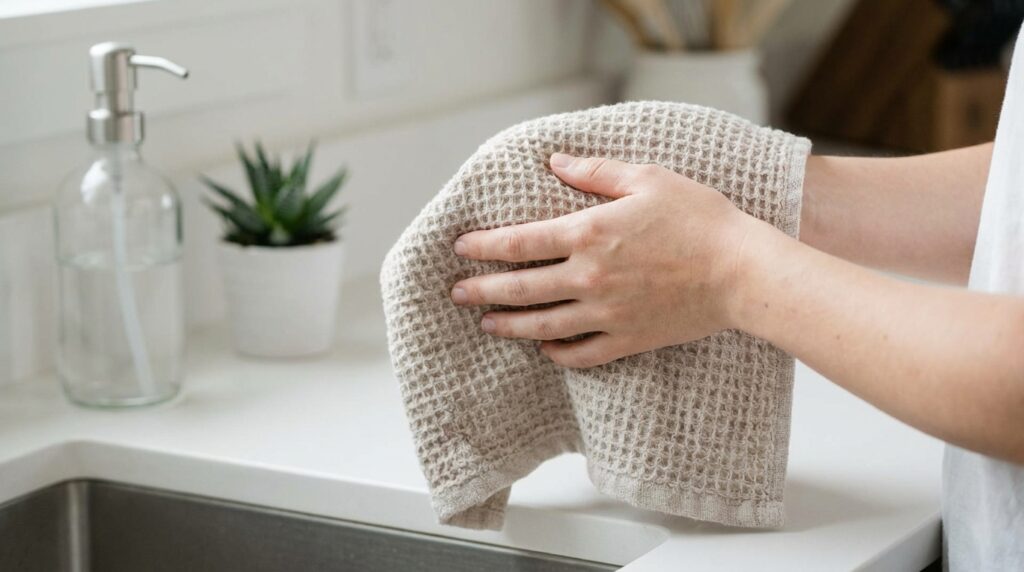
Step 3: Dry your hands thoroughly after washing. Leaving them damp might seem harmless, but water evaporating off your skin actually pulls moisture out with it. Pat dry with a clean towel—don’t rub aggressively.
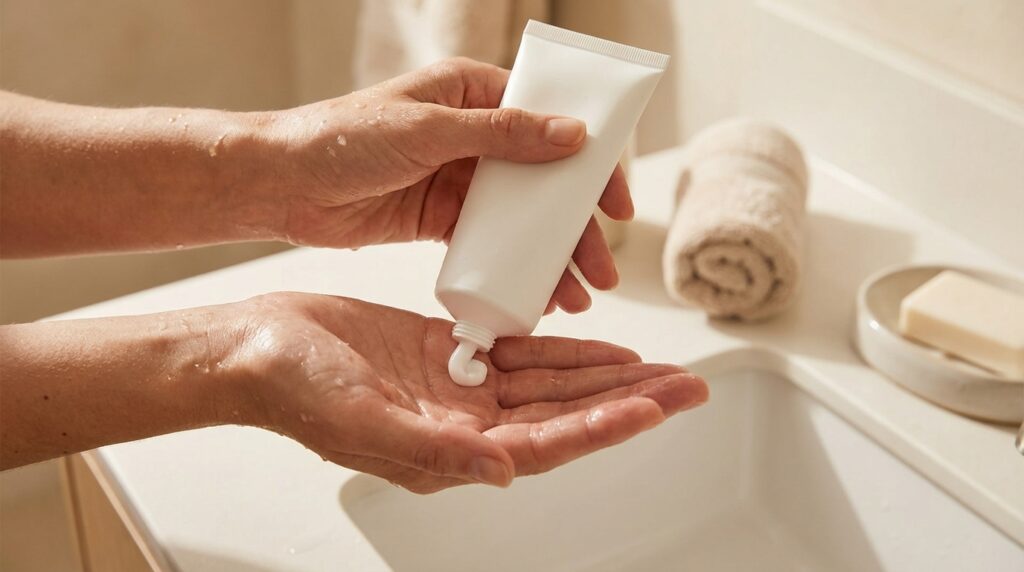
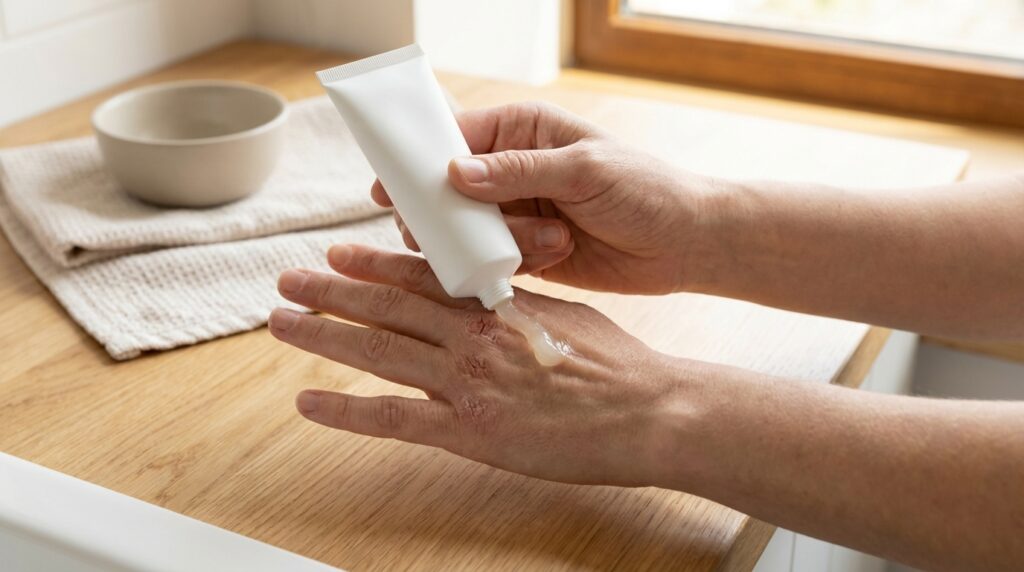
Step 4: Apply hand cream immediately. This is when your skin absorbs moisture best. Keep a tube right next to the sink so you don’t skip this step. A lightweight, fast-absorbing cream works well during the day since you’ll probably need to use your hands again soon.
Step 5: Do an overnight treatment 2–3 times per week. Before bed, apply a thicker balm or ointment—something with petrolatum or lanolin works well for sealing in moisture. If you want to go the extra mile, wear cotton gloves over the top. You’ll wake up with noticeably softer hands.
Shortcut If You’re Short on Time
- At minimum, always wear gloves and apply cream after drying
- Keep a travel-size hand cream in your pocket or bag for reapplication
- If you skip the overnight treatment, at least apply a thicker layer before bed
- Switch to a moisturizing hand soap to reduce stripping throughout the day
- On really busy days, even a quick swipe of petroleum jelly on knuckles helps
Common Mistakes That Make Things Worse
Even with good intentions, a few habits can undo your progress. Here’s what to watch out for:
- Skipping gloves “just this once”: One unprotected wash might not seem like a big deal, but it adds up. If you’re washing dishes multiple times a day, every exposure counts.
- Using antibacterial soap constantly: These tend to be harsher than regular soap. Unless you have a specific reason to use them, a gentle hand soap is kinder to your skin.
- Applying cream to wet hands: It might feel like you’re locking in moisture, but you’re actually diluting the product. Dry first, then apply.
- Ignoring cracked cuticles: The skin around your nails is often the first to crack. Rub a little balm into your cuticles when you moisturize—it only takes a few seconds.
- Waiting until hands are painful: Prevention is easier than repair. Start the routine before your hands get bad, not after.
Budget-Friendly Tips That Actually Work
You don’t need fancy products to keep your hands in good shape. Here are some low-cost wins:
If you’re running low on hand cream, a thin layer of petroleum jelly works as a nighttime occlusive. It’s not glamorous, but it’s effective and costs almost nothing. Coconut oil is another option, though some people find it doesn’t absorb well—test it and see how your skin responds.
Buy gloves in bulk. Reusable rubber gloves last a while, but if you prefer disposable nitrile gloves, a box of 100 is usually affordable and lasts months. Replace reusable gloves when they start to crack or smell funky inside.
Look for hand creams at discount stores or during sales. The ingredient list matters more than the brand. A basic cream with glycerin and no fragrance will do the job just as well as something expensive.
Frequently Asked Questions
Can I use body lotion instead of hand cream?
You can, but hand creams are usually formulated to be thicker and more protective. Body lotions tend to be lighter and may not provide enough barrier for hands that are constantly exposed to water and soap. In a pinch, body lotion is better than nothing.
How long until I see results?
Most people notice softer hands within a few days of consistent glove use and moisturizing. If your hands are already cracked, it might take a week or two for the skin to fully heal. Stick with it—the improvement is gradual but real.
What if my hands are cracked and bleeding?
Deep cracks that bleed or don’t heal may need more than a basic routine. Consider using a healing ointment designed for cracked skin, and if the problem persists, it’s worth checking in with a healthcare professional to rule out other issues.
Are there gloves that don’t make my hands sweaty?
Nitrile gloves are thinner and breathe a bit better than thick rubber gloves. Some people also dust the inside of reusable gloves with a little cornstarch to reduce moisture. If sweating is a big issue, try shorter dishwashing sessions with breaks in between.
Summary and Next Step
A hand care routine for people who wash dishes a lot doesn’t have to be complicated. The essentials are simple: wear gloves, use lukewarm water, dry thoroughly, and moisturize right after. Add an overnight treatment a few times a week, and your hands will thank you. Most of these steps take seconds, and the products don’t need to be expensive.
Your next step? Grab a pair of gloves and a tube of hand cream, and put them right next to your sink. When they’re visible, you’re far more likely to actually use them. Start tonight, and you’ll feel the difference within days.