
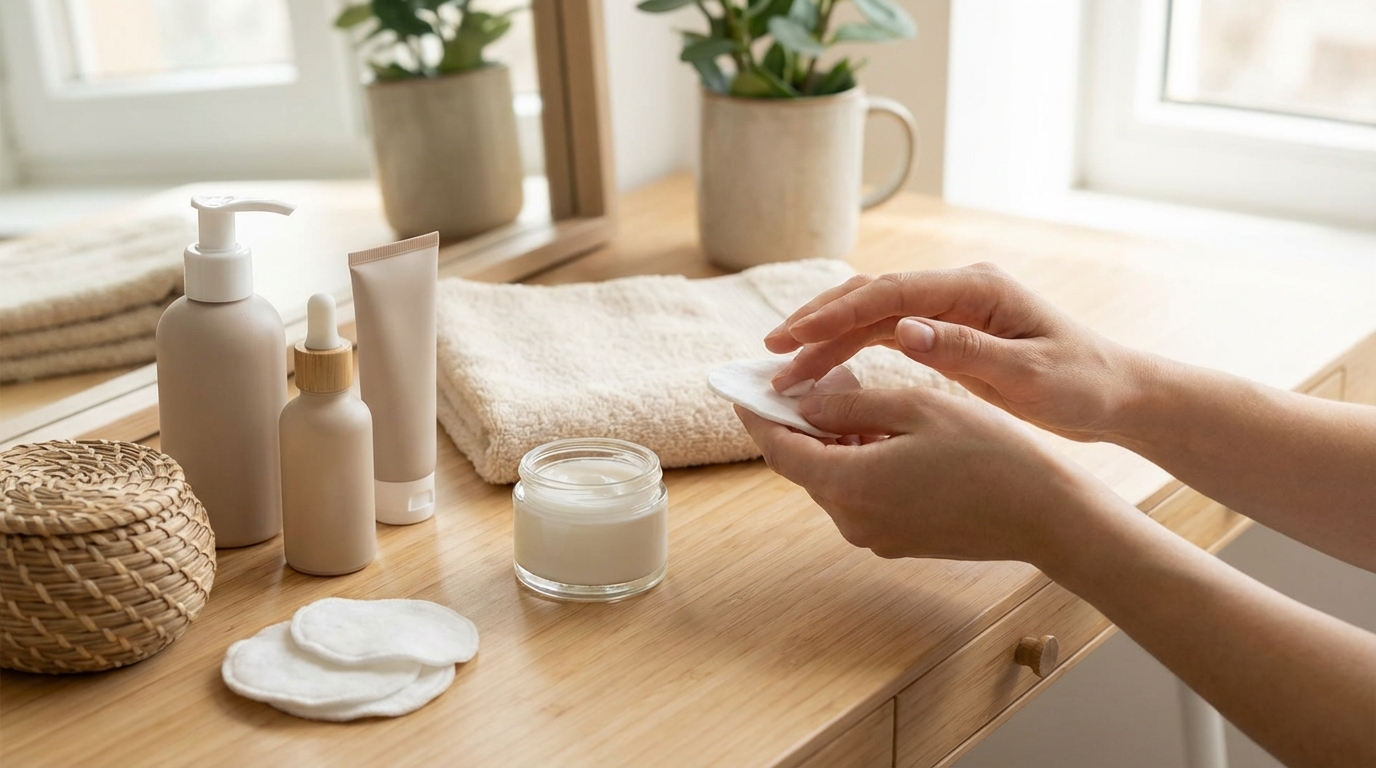
You wake up, check the time, and realize you have exactly twelve minutes before you need to leave. Breakfast is negotiable. Skincare? That elaborate ten-step routine you bookmarked three months ago isn’t happening. If this sounds familiar, you’re not alone. A simple skincare routine for busy women on a budget isn’t about doing less because you don’t care—it’s about doing what actually matters without draining your wallet or your morning.
This guide breaks down a realistic routine that takes under five minutes, uses affordable products, and still delivers results. You’ll learn which steps are non-negotiable, which ones you can skip guilt-free, and how to stretch your products further. No complicated layering charts required.
Quick Routine Overview
- Morning (2-3 minutes): Cleanser or water rinse → Moisturizer with SPF
- Evening (3-4 minutes): Cleanser → Treatment (optional) → Moisturizer
- Weekly add-on: Gentle exfoliation once or twice
- Budget tip: Three core products can cover all your basics
What You’ll Need

Here’s the good news: a solid budget skincare routine doesn’t require a bathroom cabinet full of products. Most people overcomplicate things and end up with half-used bottles collecting dust. Stick to these essentials and you’re covered.
- A gentle cleanser (gel or cream, depending on your skin type)
- A basic moisturizer without heavy fragrance
- Sunscreen or a moisturizer with SPF 30+
- Optional: one treatment product for your main concern (like a simple serum)
- Optional: a gentle exfoliant for weekly use
That’s it. Five items maximum, and honestly, you can start with just the first three. Drugstore options work perfectly well for most people. The fancy packaging on expensive products doesn’t mean they work better—it often just means you’re paying for marketing.
The Morning Routine Step by Step
Step 1: Cleanse your face. If your skin isn’t oily when you wake up, a simple splash of lukewarm water works fine. If you tend toward oiliness or wore heavy products the night before, use a gentle cleanser. The goal is to remove overnight buildup without stripping your skin. Avoid hot water—it feels nice but can leave skin dry and irritated.
Step 2: Apply moisturizer. While your skin is still slightly damp, smooth on your moisturizer. This helps lock in hydration. If you’re using a separate sunscreen, apply moisturizer first and let it absorb for a minute.
Step 3: Sunscreen. This is the step most people skip, and it’s the one that matters most for preventing premature aging and protecting your skin long-term. If mornings are chaotic, a moisturizer with built-in SPF 30 or higher saves time and still gets the job done. Apply enough to actually cover your face—most people use too little.
Shortcut if you’re short on time
- Use a tinted moisturizer with SPF to combine three steps into one
- Keep your products next to your toothbrush so you don’t forget
- Skip the morning cleanse entirely if your skin isn’t oily—water is enough
- Apply products while your coffee brews instead of scrolling your phone
- Prep the night before by setting out what you need
The Evening Routine Step by Step
Step 1: Cleanse properly. Evening cleansing matters more than morning because you’re removing sunscreen, makeup, pollution, and everything else your skin collected during the day. If you wear makeup or heavy sunscreen, consider a double cleanse: first with an oil-based cleanser or micellar water, then with your regular cleanser. If you skip makeup most days, one thorough cleanse is enough.
Step 2: Apply any treatment products. This is where you’d use a serum or treatment for specific concerns like dark spots, fine lines, or acne. But here’s the thing—this step is optional, especially when you’re starting out or watching your budget. A good cleanser and moisturizer routine will do more for your skin than a dozen serums used inconsistently.
Step 3: Moisturize. Your evening moisturizer can be the same as your morning one, or you might prefer something slightly richer since you don’t need to worry about makeup or sunscreen layering on top. Apply to damp skin for better absorption.
A common mistake is piling on too many products at night because it feels like “self-care.” In practice, your skin can only absorb so much. If you’re layering five different serums, most of that product is sitting on top of your skin, not working into it. Keep it simple and your products last longer too.
Budget-Friendly Tips That Actually Work

Stretching your skincare budget isn’t about buying the cheapest thing you can find—it’s about being strategic. Here’s what works in real life.
Buy multi-tasking products. A moisturizer with SPF saves you from buying two separate products. A gentle cleanser that removes light makeup means you might not need a separate makeup remover. Look for products that do double duty.
Use the right amount. Most people use way too much product. A pea-sized amount of cleanser is usually enough. A nickel-sized dollop of moisturizer covers your whole face. Using more doesn’t make it work better—it just empties the bottle faster.
Don’t chase trends. That new ingredient everyone’s talking about on social media? You probably don’t need it. Skincare basics haven’t changed much in decades. Cleanse, moisturize, protect from sun. Everything else is extra.
Store products properly. Keep them away from direct sunlight and humidity (so maybe not right next to your shower). Products last longer when stored correctly, which means better value for your money.
If you’re tempted by expensive products, ask yourself: what is this actually doing that my current routine isn’t? Sometimes the answer is “nothing much.” Sometimes a targeted treatment makes sense. But impulse buying because something has pretty packaging or a celebrity endorsement rarely pays off.
Common Mistakes to Avoid
- Skipping sunscreen to save time or money. Sun damage is cumulative and shows up years later. This is the one product worth prioritizing.
- Switching products constantly. Give a product at least four to six weeks before deciding it doesn’t work. Your skin needs time to adjust.
- Over-exfoliating. Once or twice a week is plenty for most people. Daily scrubbing damages your skin barrier and creates more problems.
- Assuming expensive means effective. Plenty of affordable products contain the same active ingredients as luxury brands.
- Copying someone else’s routine exactly. What works for your coworker or favorite influencer might not suit your skin type, climate, or lifestyle.
When to Add More (and When Not To)
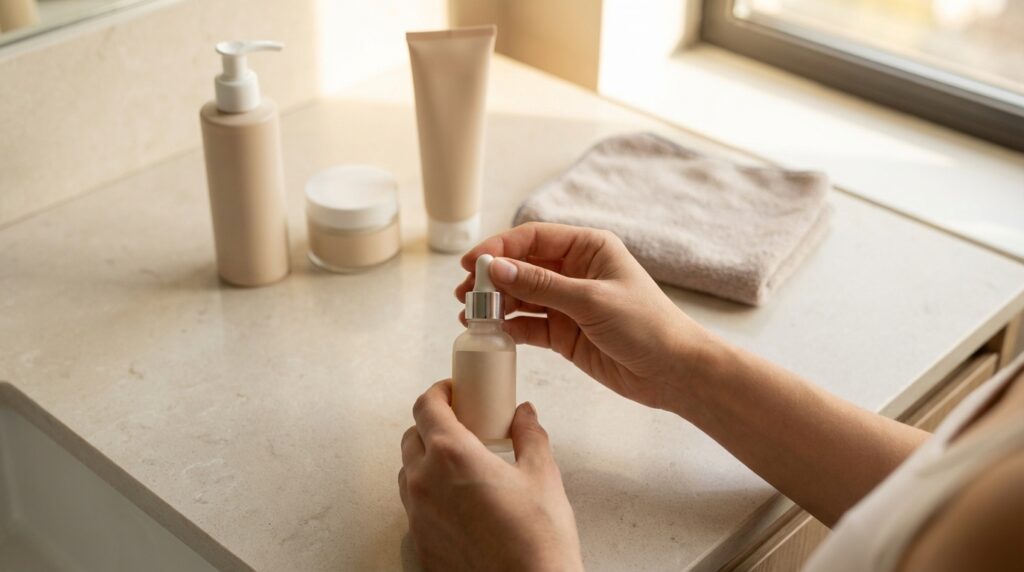
Once you’ve nailed the basics and stuck with them for a couple of months, you might want to address specific concerns. That’s a reasonable time to add one targeted product—maybe a vitamin C serum for brightness, or a retinol product for texture. Introduce new products one at a time so you can tell what’s actually helping.
But here’s the honest truth: many people see significant improvement just from consistent cleansing, moisturizing, and sun protection. If your skin looks and feels good with three products, you don’t need to complicate things. More steps don’t automatically mean better skin.
If you notice persistent issues like ongoing breakouts, unusual dryness, or reactions that don’t calm down, it’s worth checking in with a dermatologist rather than buying more products. Sometimes the solution isn’t another serum—it’s professional guidance.
Summary and Next Step
A simple skincare routine for busy women on a budget comes down to three non-negotiables: cleanse, moisturize, and protect from the sun. Everything else is optional. You don’t need ten products, thirty minutes, or a big budget to take care of your skin. Consistency beats complexity every time.
Your next step is small: look at what you already have and identify your three core products. Use them consistently for the next two weeks—morning and night. That’s it. Once the habit sticks, you can decide if you want to add anything else. But chances are, keeping it simple will feel like a relief, not a compromise.