
You pull a shirt out of the closet, give it a quick sniff, and… yikes. Maybe it’s that lingering gym smell, a hint of mildew from sitting damp too long, or the ghost of last week’s cooking adventure. Whatever the culprit, learning how to remove common odors from clothes at home can save you from awkward moments and unnecessary dry cleaning bills. In this guide, you’ll discover which household items actually work, how to tackle specific smells, and a few tricks to keep odors from coming back.
The good news? Most clothing odors don’t require fancy products or professional help. A few pantry staples and some simple adjustments to your laundry routine can handle the majority of stubborn smells.
Quick Steps to Remove Odors from Clothes
- Identify the odor type (sweat, mildew, smoke, food, etc.)
- Pre-treat with white vinegar, baking soda, or a soak
- Wash in cool or warm water with your regular detergent
- Air dry when possible, or tumble dry on low
- Repeat if needed—some smells take two rounds
What You’ll Need
Before you start, gather these common household items. You probably have most of them already.
- White distilled vinegar
- Baking soda
- A basin or bucket for soaking
- Your regular laundry detergent
- Optional: oxygen-based bleach (color-safe)
- Optional: a few drops of essential oil if you like a light scent
A quick note on fabric softener: it can actually trap odors in synthetic fabrics, so skip it when you’re dealing with stubborn smells. You can add it back once the odor is gone.
Step-by-Step: Getting Rid of Clothing Odors
Step 1: Identify what you’re dealing with. Different odors respond to different treatments. Sweat and body odor usually need an acidic solution like vinegar. Mildew requires something that kills bacteria. Smoke and cooking smells often need a longer soak. Take a moment to figure out what caused the smell—it’ll help you choose the right approach.
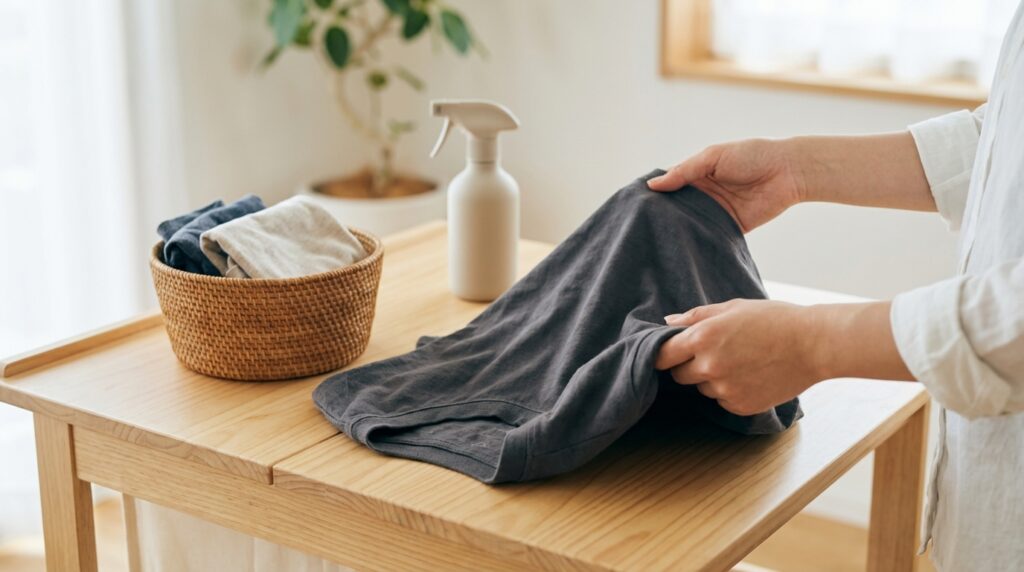
Step 2: Turn clothes inside out. Most odor-causing bacteria live on the inside of your clothes, where they’ve been in contact with your skin. Flipping garments inside out ensures the treatment reaches where it’s needed most.
Step 3: Pre-treat or soak. For mild odors, add half a cup of white vinegar directly to your washing machine during the rinse cycle. For stronger smells, fill a basin with cool water, add one cup of vinegar or half a cup of baking soda, and let the clothes soak for 30 minutes to an hour. If you’re dealing with mildew, the soak is especially important—don’t skip it.
Step 4: Wash as usual. After pre-treating, run a normal wash cycle with your regular detergent. Use cool or warm water rather than hot, especially for synthetic fabrics. Hot water can actually set some odors into the fibers, making them harder to remove later.
Step 5: Check before drying. Here’s where most people go wrong. They toss clothes in the dryer without checking if the smell is actually gone. Heat from the dryer can lock in any remaining odor, so give your clothes a sniff first. If there’s still a hint of something funky, repeat the soak and wash before drying.
Step 6: Air dry when possible. Sunlight is a natural deodorizer and mild disinfectant. If you can hang clothes outside or near a sunny window, do it. The UV rays help break down odor-causing bacteria. For items that can’t be sun-dried, tumble dry on low heat.
Shortcut If You’re Short on Time
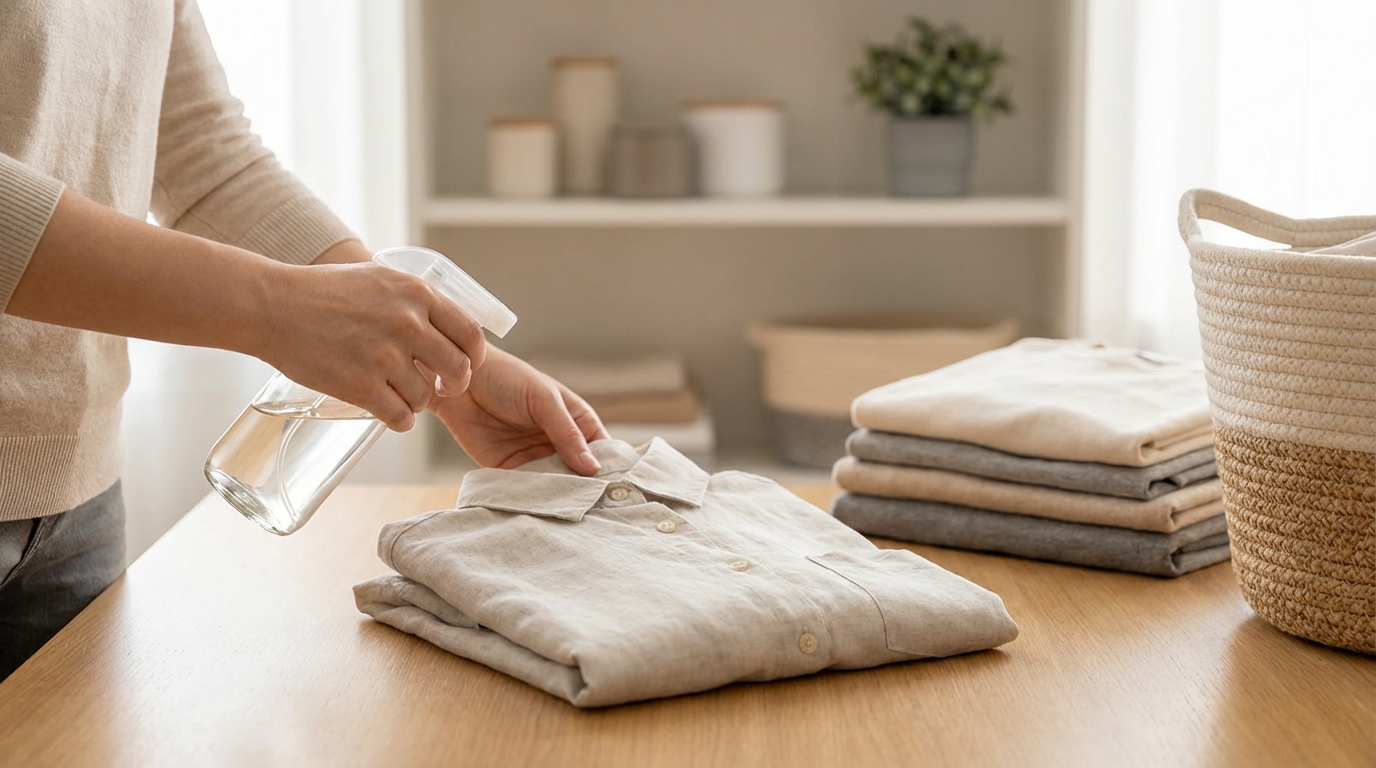
- Spray a 1:1 mix of water and white vinegar directly on smelly areas, let sit for 10 minutes, then wash
- Toss clothes in the dryer with a damp cloth and a few drops of essential oil for a quick refresh (not a deep clean, but helps in a pinch)
- Freeze delicate items overnight—cold kills some odor-causing bacteria
- Hang clothes in a steamy bathroom while you shower; steam loosens odor molecules
- Keep a small spray bottle of diluted vinegar in your laundry area for quick spot treatments
Tackling Specific Odors
Sweat and Body Odor
This is the most common complaint, especially with workout clothes and synthetic fabrics. The issue is that polyester and nylon trap oils and bacteria more than cotton does. A vinegar soak works well here. For really stubborn gym clothes, try soaking in a mixture of one part vinegar to four parts water for an hour before washing.
A common mistake is using too much detergent, thinking more soap equals more cleaning power. In reality, excess detergent leaves residue that traps odors. Use the recommended amount or even slightly less.
Mildew and Musty Smells
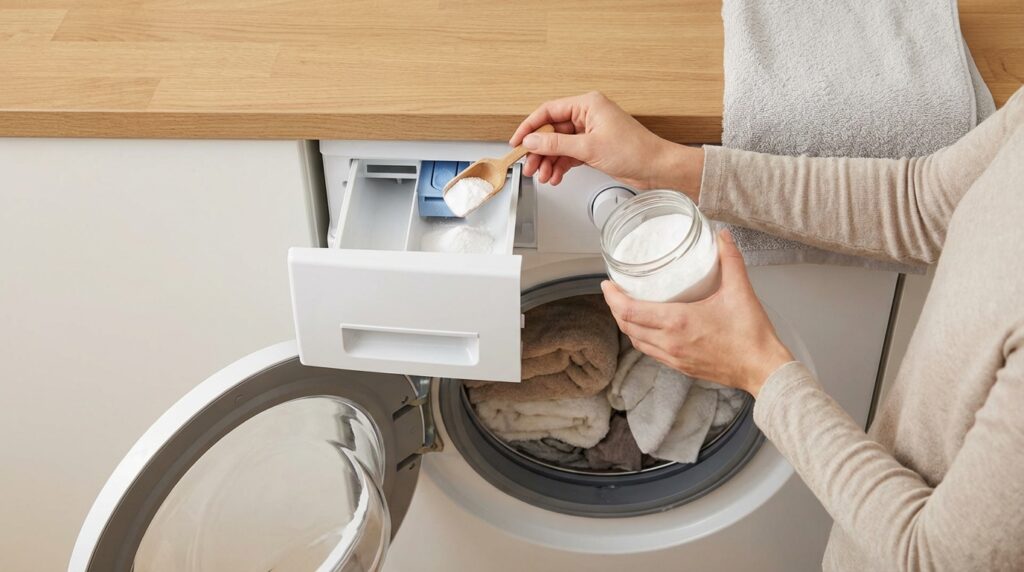
That damp, basement-y smell usually happens when clothes sit wet for too long—either in the washer or in a gym bag. Baking soda is your friend here. Add half a cup directly to the wash cycle along with your detergent. For severe cases, soak in a solution of one cup baking soda per gallon of water for a few hours.
If you’re dealing with mildew on white fabrics, oxygen-based bleach can help. Avoid chlorine bleach on colors, though—it’ll damage the fabric and won’t necessarily fix the smell.
Smoke Odors
Whether it’s cigarette smoke, campfire, or kitchen smoke, these smells cling to fabric fibers stubbornly. A longer soak is usually necessary. Try overnight in a vinegar solution, then wash with an extra rinse cycle. For delicate items that can’t be soaked, hanging them outside in fresh air for a day or two can help significantly.
Food and Cooking Smells
Garlic, onion, and fried food odors love to settle into clothes. The vinegar method works well here too. If you’re dealing with grease alongside the smell, add a tablespoon of dish soap to your soak—it helps break down oils that hold onto odors.
Common Mistakes That Keep Odors Coming Back
- Overloading the washer: Clothes need room to move and rinse properly. A stuffed machine means detergent and odors don’t wash out completely.
- Leaving wet clothes sitting: Even an hour in a closed washer can start the mildew process. Set a timer if you tend to forget.
- Using fabric softener on activewear: It coats synthetic fibers and traps bacteria. Use vinegar in the rinse cycle instead for softness without the buildup.
- Skipping the sniff test: Always check clothes before drying. The dryer is not a second chance—it’s an odor-sealing machine if the smell isn’t gone.
- Storing clothes while still slightly damp: Even a little moisture in a closed drawer or closet creates the perfect environment for musty smells.
Preventing Odors in the First Place
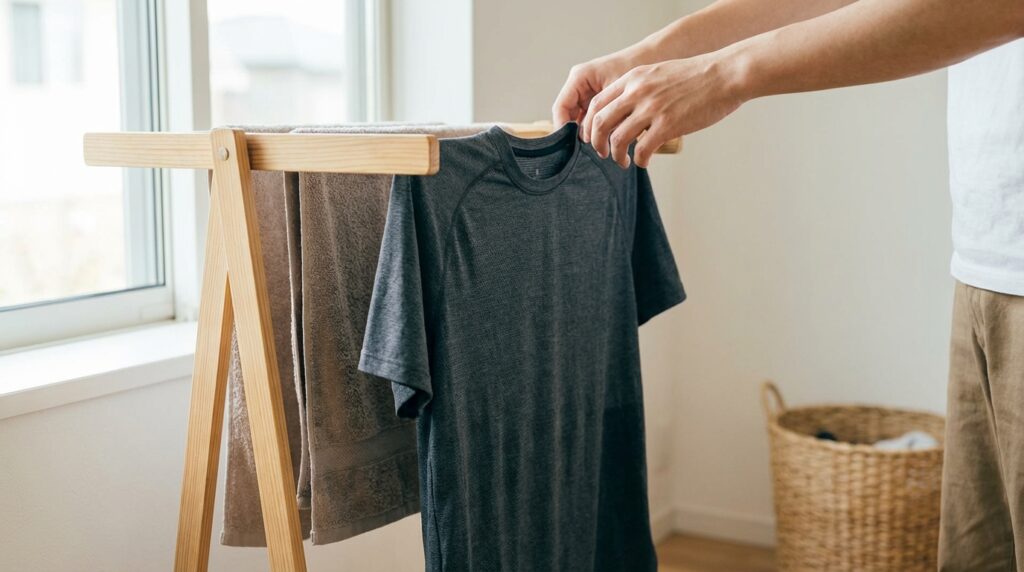
A little prevention goes a long way. If you tend to sweat a lot, consider wearing a breathable undershirt to protect outer layers. Let workout clothes air out before tossing them in the hamper—a closed hamper with damp clothes is basically a bacteria incubator.
Clean your washing machine monthly by running an empty hot cycle with two cups of vinegar. Residue builds up inside the drum and can transfer smells to your clothes. If your machine has a rubber gasket around the door, wipe it down regularly—that’s a common hiding spot for mildew.
For clothes you don’t wash after every wear (jeans, sweaters, jackets), hang them in open air for a few hours before putting them back in the closet. This lets moisture evaporate and prevents that stale smell from developing.
Frequently Asked Questions
Will vinegar make my clothes smell like vinegar?
No, the vinegar smell disappears completely once clothes are dry. It evaporates along with the water, leaving no scent behind. If you’re nervous, start with a smaller amount and work up.
Can I use these methods on delicate fabrics?
For most delicates, a gentle soak in cool water with a small amount of vinegar is safe. However, avoid soaking silk for extended periods, and always check care labels first. When in doubt, spot test on an inconspicuous area.
How do I remove odors from dry-clean-only clothes?
Try airing them outside for a day or two. You can also place them in a sealed bag with baking soda overnight—the baking soda absorbs odors without touching the fabric. For persistent smells, a professional cleaner is your best bet.
Why do my clothes still smell after washing?
Usually it’s one of three things: the washer itself needs cleaning, you’re using too much detergent, or clothes aren’t drying quickly enough after washing. Address all three and the problem typically resolves.
Summary and Next Step
Removing odors from clothes at home doesn’t require expensive products or complicated techniques. White vinegar and baking soda handle most situations, and simple habit changes—like not overloading the washer and always checking before drying—prevent smells from becoming permanent. The key is matching your approach to the specific odor and being patient enough to repeat the process if needed.
Your next step? Pick one smelly item that’s been bothering you and try the vinegar soak method today. Once you see how well it works, you’ll feel confident tackling any laundry odor that comes your way.