
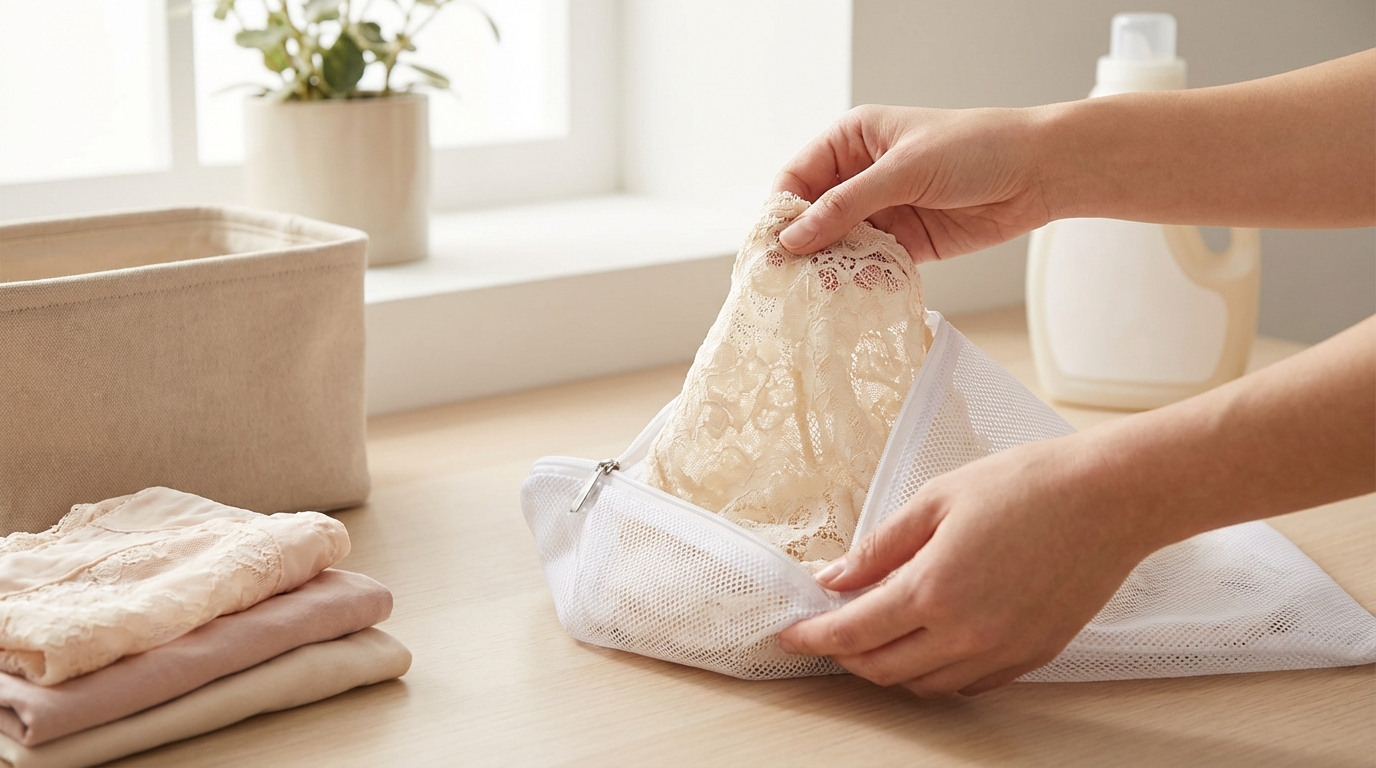
You finally splurged on a nice lace bralette or a silk blouse, and within two washes it looks like it survived a wrestling match. Sound familiar? The culprit is often the washing machine itself—or more specifically, how delicate items tumble around unprotected. Learning how to use laundry bags for delicates can genuinely extend the life of your favorite pieces, save you money on replacements, and keep fabrics looking fresh far longer than you’d expect.
In this guide, you’ll learn which items actually need a laundry bag, how to load them properly, and a few tricks that make the whole process nearly effortless. Whether you’re protecting lingerie, knitwear, or those annoying items with hooks and straps, there’s a simple system that works.
Quick Routine for Using Laundry Bags
- Sort delicates by fabric weight (lightweight silks separate from heavier knits).
- Place one to three items per bag—never overstuff.
- Zip or close the bag completely before tossing it in the machine.
- Wash on a gentle or delicate cycle with cold water.
- Remove items promptly and reshape before drying.
What You’ll Need
- Mesh laundry bags in at least two sizes (small for bras and underwear, medium or large for blouses and sweaters)
- A gentle or delicate-friendly detergent
- Access to a washing machine with a gentle cycle setting
- A flat drying rack or clean towel for air-drying
You don’t need anything fancy here. A basic set of mesh bags costs very little and lasts for years. If you’re working with an older machine that only has standard cycles, you can still use laundry bags—just opt for the shortest, coldest wash available.
Which Items Actually Need a Laundry Bag
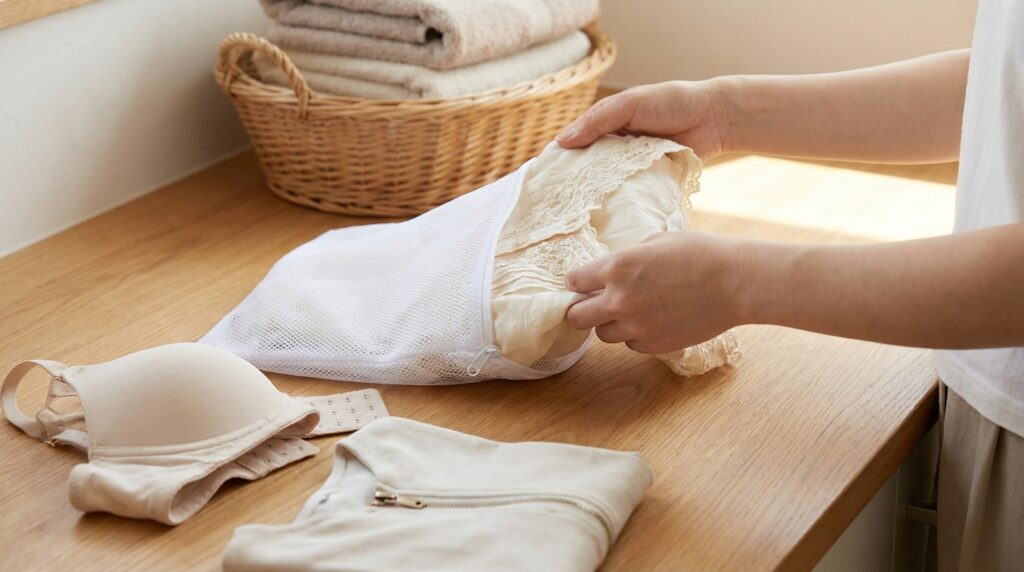
Not everything in your closet requires this extra step, so let’s be practical about it. Laundry bags are most useful for items that snag easily, have delicate construction, or feature hardware that can catch on other fabrics.
Always Use a Bag For
- Bras (especially underwire or molded cups)
- Lace underwear and lingerie
- Silk or satin blouses
- Sheer fabrics and chiffon
- Tights, stockings, and hosiery
- Items with sequins, beading, or embroidery
- Lightweight knit sweaters
Consider a Bag For
- Activewear with mesh panels
- Swimsuits
- Items with drawstrings or ties that tangle
- Baby clothes with tiny snaps or delicate fabrics
A common mistake is assuming only “fancy” clothes need protection. In reality, that basic cotton bralette you wear constantly will last much longer in a bag than bouncing around loose with jeans and towels.
Step-by-Step: How to Use Laundry Bags Properly
Step 1: Sort your delicates before you even reach for a bag. Group items by fabric type and weight. Putting a heavy knit cardigan in the same bag as a sheer camisole defeats the purpose—the heavier item will still rough up the lighter one inside the bag.
Step 2: Check each item for stains or spots. Pre-treat anything that needs attention before bagging. Once an item is zipped inside a mesh bag, stain removers won’t penetrate as effectively, so handle this first.
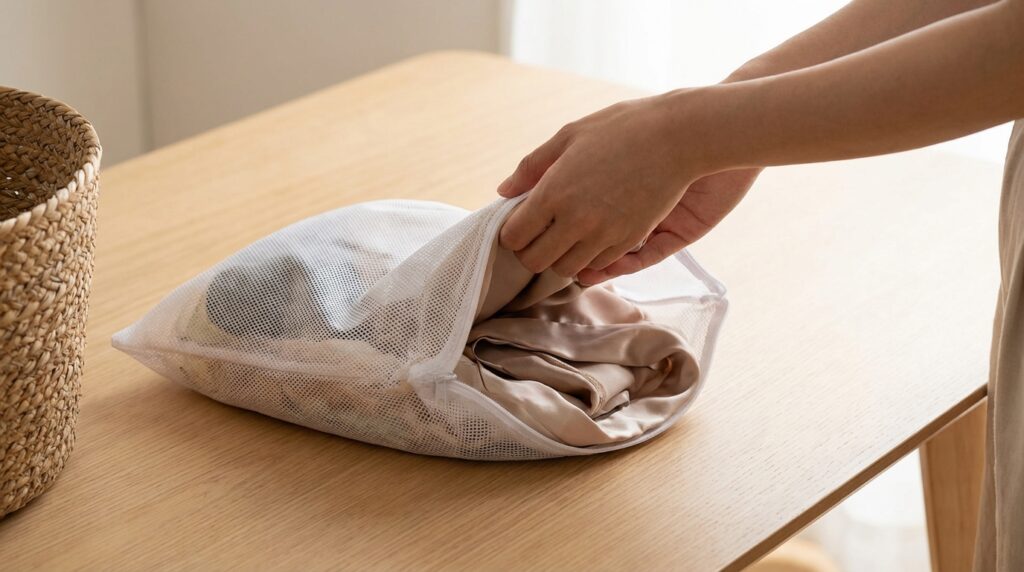
Step 3: Place items loosely in the bag. This is where most people go wrong. Cramming six bras into one small bag means they can’t move freely, water can’t circulate properly, and you end up with items that aren’t fully clean. One to three items per bag is a good rule, depending on size.
Step 4: Close the bag completely. If your bag has a zipper, make sure it’s zipped all the way and ideally tucked into a small fabric flap if there is one. A partially open bag lets items escape mid-cycle, which is both annoying and counterproductive.
Step 5: Add the bags to your washing machine. You can wash them alongside regular laundry, but avoid mixing with heavy items like jeans, towels, or anything with rough zippers. A load of t-shirts and lightweight pants is usually fine.
Step 6: Select a gentle cycle with cold water. Warm or hot water can damage elastic, warp delicate fibers, and cause colors to bleed. Cold water is gentler and honestly cleans just as well for lightly soiled items.
Step 7: Remove items promptly when the cycle ends. Leaving wet delicates sitting in the machine encourages mildew and can set wrinkles into fabrics. Reshape bras by smoothing the cups, lay knits flat, and hang or flat-dry anything that shouldn’t go in the dryer.
Shortcut If You’re Short on Time
- Keep a small laundry bag hanging in your closet or bathroom—toss delicates in as you undress so they’re pre-sorted.
- Wash the entire bag without removing items if you’re in a rush (just don’t let this become a habit for heavily soiled pieces).
- Use a quick wash or express cycle if your machine has one—it’s gentler than a full cycle anyway.
- Skip the dryer entirely and hang bags on a doorknob or shower rod to air dry inside the mesh.
Common Mistakes and How to Avoid Them
Even with the best intentions, a few habits can undermine your efforts. Here’s what tends to go wrong.
- Overstuffing bags: If items can’t move, they won’t get clean. Worse, friction inside a packed bag can still cause pilling and wear.
- Using the wrong bag size: A bra rattling around in an oversized bag can still get tangled or misshapen. Match the bag size to the item.
- Forgetting to zip: An open bag is basically useless. Items slip out, straps wrap around the agitator, and you’re back to square one.
- Washing with rough fabrics: Even inside a bag, delicates can get battered if they’re sharing a load with denim, towels, or items with metal hardware.
- Using too much detergent: Excess soap doesn’t rinse out well through mesh and can leave residue on delicate fabrics. Use about half the amount you’d use for a regular load.
- Ignoring the dryer: Mesh bags protect items in the wash, but heat damage happens in the dryer. Most delicates should air dry regardless of whether they were bagged.
If you notice your delicates still coming out tangled or damaged, check these habits first. Usually, one small adjustment fixes the problem.
Choosing the Right Laundry Bag
Not all mesh bags are created equal, and picking the right one makes a difference.
For bras and structured items, look for bags with internal dividers or padded sections. These keep cups from getting crushed and prevent underwires from bending. A cylindrical or dome-shaped bag designed specifically for bras is worth having if you wear them regularly.
For flat items like underwear, camisoles, or tights, a simple rectangular mesh bag works perfectly. Choose a fine mesh if you’re washing very delicate fabrics—coarse mesh offers less protection against snagging.
If you’re washing multiple small items together (like a handful of underwear), a bag with a double-layer zipper guard prevents the zipper from catching on lace or elastic.
Most people do well with a set of three to five bags in mixed sizes. That’s enough to handle a typical week’s worth of delicates without running out.
Frequently Asked Questions
Can I put laundry bags in the dryer?
Technically yes, but it’s usually not recommended for the items inside. The bag itself can handle dryer heat, but most delicates shouldn’t be tumble dried. If you must use the dryer, choose a no-heat or air-fluff setting and remove items while still slightly damp.
How often should I wash the laundry bags themselves?
They get cleaned every time you use them, so there’s no need for separate washing. If they start to look dingy or develop an odor, turn them inside out and run them through a hot cycle empty, or hand wash with a bit of detergent.
Do laundry bags work in top-loaders and front-loaders?
Yes, they work in both. Front-loaders are generally gentler on delicates overall, but a mesh bag provides protection in either machine type. In top-loaders with a center agitator, bags are especially helpful for preventing items from wrapping around the post.
Can I wash regular clothes in a laundry bag?
You can, but there’s usually no benefit. Laundry bags are designed to protect fragile items from agitation and friction. Sturdy everyday clothes don’t need that protection and will actually get cleaner with full water and detergent exposure.
Summary and Next Step
Using laundry bags for delicates is one of those small habits that pays off quietly over time. Your bras keep their shape, your silk stays smooth, and you stop replacing items that wore out too soon. The key points: don’t overstuff, match bag size to item size, always zip completely, and skip the dryer for anything truly delicate.
If you don’t already have a set of mesh bags, grab a few in different sizes and start with your most-worn delicates. Once it becomes routine, you won’t think twice about it—and your clothes will thank you.