

You finally splurged on that perfect white blouse—and now you’re staring at a tiny tag covered in hieroglyphics, wondering if the washing machine will destroy it. Those little icons aren’t there to confuse you. They’re actually a shortcut to keeping your clothes looking new longer. This beginner’s guide to laundry symbols breaks down every squiggle into plain English, so you can stop guessing and start washing with confidence.
Here’s the good news: there are only five basic symbol categories. Once you recognize those shapes, the rest is just variations. Ten minutes of learning now can save you hundreds in ruined clothes over the years.
The Five Symbol Families You Need to Know
Every laundry care symbol falls into one of five categories, each with its own distinct shape:
| Symbol Shape | What It Means | Quick Memory Trick |
|---|---|---|
| Tub (bucket shape) | Washing instructions | Tub = water = washing |
| Square | Drying instructions | Square like a dryer door |
| Triangle | Bleaching instructions | Think “caution” sign |
| Iron shape | Ironing instructions | Looks exactly like an iron |
| Circle | Professional dry cleaning | Circle = “leave it to the pros” |
That’s it. Five shapes. Everything else—the dots, lines, and X marks—just modifies these base symbols. A line underneath means “gentle.” An X through it means “don’t do this.” Dots indicate temperature levels.
Decoding Washing Symbols
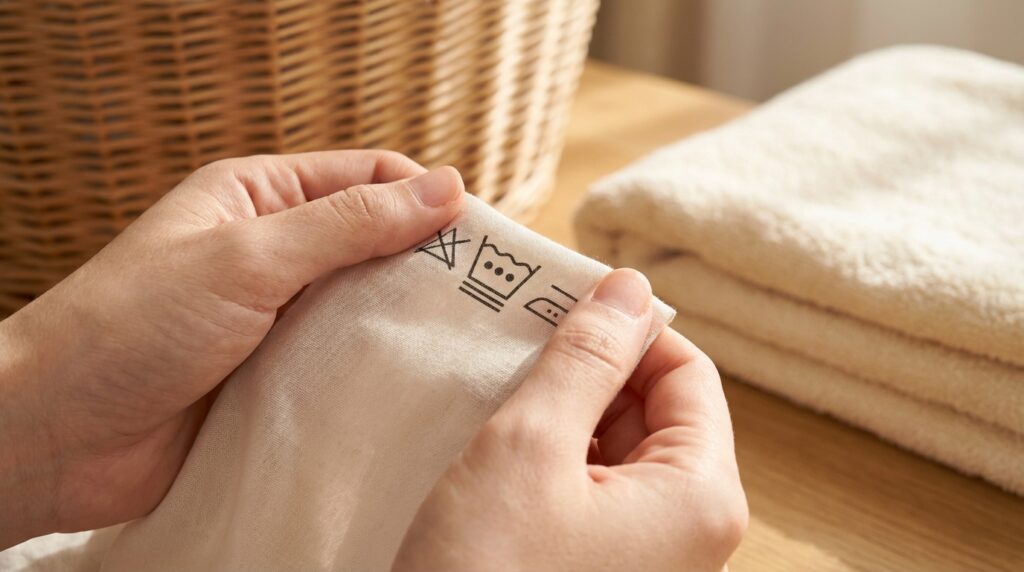
The tub symbol appears on almost every garment. Here’s what the variations mean:
Temperature dots inside the tub:
- One dot = cold wash (up to 30°C/86°F)
- Two dots = warm wash (up to 40°C/104°F)
- Three dots = hot wash (up to 50°C/122°F)
- Four dots = very hot (up to 60°C/140°F)
- Five or six dots = sanitize cycle (rare, usually for whites)
Some labels skip dots and just print the temperature number inside the tub—even easier.
Lines underneath the tub:
- No line = normal cycle
- One line = permanent press/synthetic cycle (gentler agitation)
- Two lines = delicate/hand wash cycle (minimal agitation)
Hand in the tub: Hand wash only. Use cool water and a mild detergent, then gently squeeze—never wring.
X through the tub: Do not wash at home. This garment needs professional cleaning.
Smart Tip: When in doubt, default to cold water and the delicate cycle. You might not get the deepest clean on heavily soiled items, but you won’t shrink or damage the fabric either. Cold water also cuts energy costs by up to 90% per load compared to hot.
Drying Symbols Explained
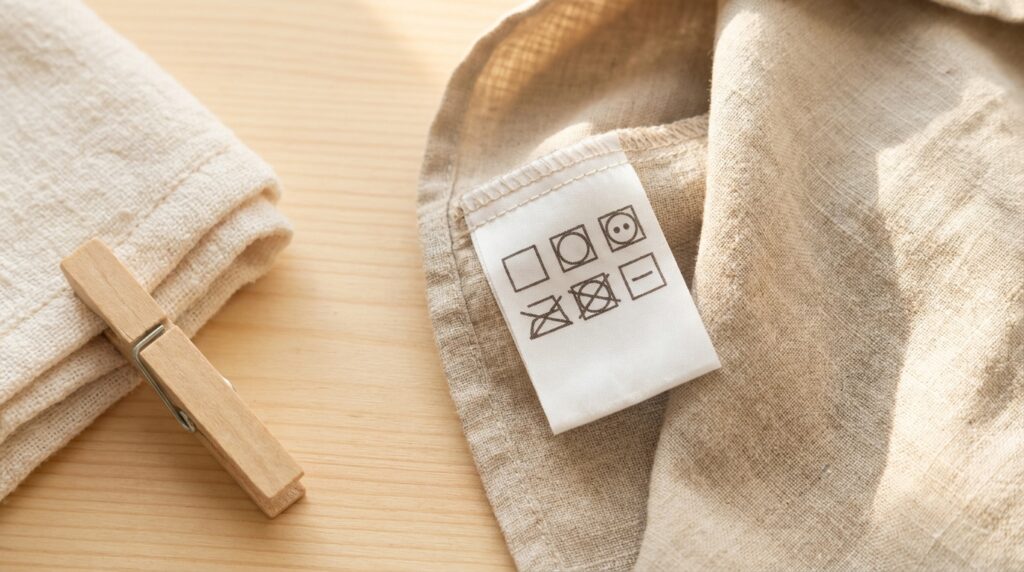
The square symbol covers all drying methods—tumble dryers, line drying, and flat drying.
Circle inside the square = tumble dry allowed
- One dot inside circle = low heat
- Two dots = medium heat
- Three dots = high heat
- Empty circle = any heat setting
- Filled/black circle = tumble dry no heat (air only)
X through the square with circle: Do not tumble dry. Air dry only.
Natural drying variations:
- Square with curved line at top = line dry (hang on a clothesline)
- Square with horizontal line inside = dry flat (for sweaters and knits that stretch)
- Square with three vertical lines = drip dry (hang while soaking wet, no wringing)
A diagonal line in the corner of any drying symbol means “dry in shade”—keep it out of direct sunlight to prevent fading.
Here’s a counter-intuitive insight: over-drying damages clothes more than washing does. That crispy, stiff feeling after the dryer? That’s fiber damage. Remove items while slightly damp and let them finish air drying to extend their lifespan significantly.
Ironing and Bleaching: The Quick Reference
Iron symbols are straightforward—they look like an iron:
- One dot = low heat (synthetics, silk)
- Two dots = medium heat (wool, polyester blends)
- Three dots = high heat (cotton, linen)
- X through iron = do not iron
- X under the iron = do not steam
Triangle symbols handle bleaching:
- Empty triangle = any bleach is fine
- Triangle with two diagonal lines = non-chlorine bleach only (oxygen-based bleach)
- Solid/filled triangle with X = do not bleach
Most everyday clothes fall into the “non-chlorine only” category. Chlorine bleach is harsh and reserved mainly for white cotton items. When the label says no bleach at all, even “color-safe” oxygen bleach can cause damage—skip it entirely.
Professional Care Symbols
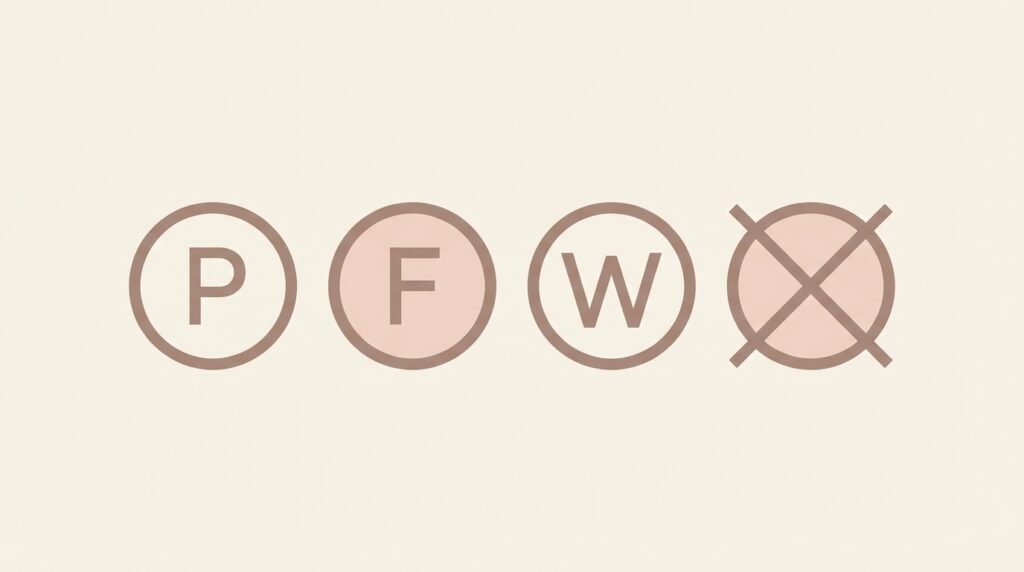
The circle symbol indicates dry cleaning. Letters inside tell the cleaner which solvents to use:
- P = dry clean with perchloroethylene (standard dry cleaning)
- F = dry clean with petroleum solvents only
- W = professional wet cleaning
- X through circle = do not dry clean
You don’t need to memorize these letters—your dry cleaner will. Just know that a circle means “take this to a professional” and an X through it means the garment can’t handle dry cleaning chemicals.
Myth vs. Reality
Myth: “Dry clean only” means you absolutely cannot wash it at home.
Reality: “Dry clean only” is often a manufacturer’s safest recommendation, not a hard rule. Many items labeled this way—like unlined wool sweaters or simple silk blouses—can be hand washed in cold water with a gentle detergent. However, structured garments (blazers, suits) and anything with embellishments should go to the cleaner.
Myth: Hot water cleans better than cold.
Reality: Modern detergents are formulated to work effectively in cold water. Hot water can actually set protein-based stains (blood, sweat, eggs) and cause shrinkage. Reserve hot water for sanitizing towels, bedding, and heavily soiled work clothes.
Myth: More detergent = cleaner clothes.
Reality: Excess detergent doesn’t rinse out completely. It builds up in fabric fibers, trapping dirt and bacteria, making clothes look dingy and smell musty over time. Use the recommended amount—or slightly less for smaller loads.
Your Quick-Reference Cheat Sheet
Print this or screenshot it for laundry day:
- Tub shape = washing (dots = temperature, lines = gentleness)
- Square shape = drying (circle inside = tumble dry okay)
- Triangle = bleaching (empty = any, lines = oxygen only, X = none)
- Iron shape = ironing (dots = heat level)
- Circle = dry clean (letters are for the cleaner, not you)
- X through anything = don’t do that thing
- Lines underneath = be gentler
When Labels Are Missing or Faded
Older clothes or items with cut-out tags need a judgment call. Use this fallback approach:
- Check the fiber content if any tag remains (cotton tolerates more heat than synthetics)
- Default to cold water, gentle cycle, and low-heat drying
- Test a hidden area first if using any stain remover or bleach
- When truly uncertain, hand wash and lay flat to dry—it’s the safest universal method
Natural fibers (cotton, linen, wool) generally handle higher temperatures but may shrink. Synthetics (polyester, nylon, spandex) resist shrinking but can melt or warp under high heat. Blends require you to treat them according to the most delicate fiber in the mix.
Putting It Into Practice
Understanding laundry care symbols doesn’t require memorization—just pattern recognition. The shapes tell you what action, the dots tell you how much heat, and the lines tell you how gentle. An X means stop.
Next time you’re sorting laundry, flip a few tags and practice identifying the symbols. Within a week or two, reading them becomes automatic. Your clothes will last longer, fit better, and you’ll waste less money replacing items that shrunk, faded, or fell apart too soon.
Start with one load today. Check the tags, match them to this guide, and wash accordingly. That’s all it takes to break the guessing habit for good.